На сайте используются cookie файлы
The site uses cookie files
Данный сайт имеет возрастное ограничение!
This site has age restrictions!
Я подтверждаю, что мне, увы, уже давно исполнилось 18 лет

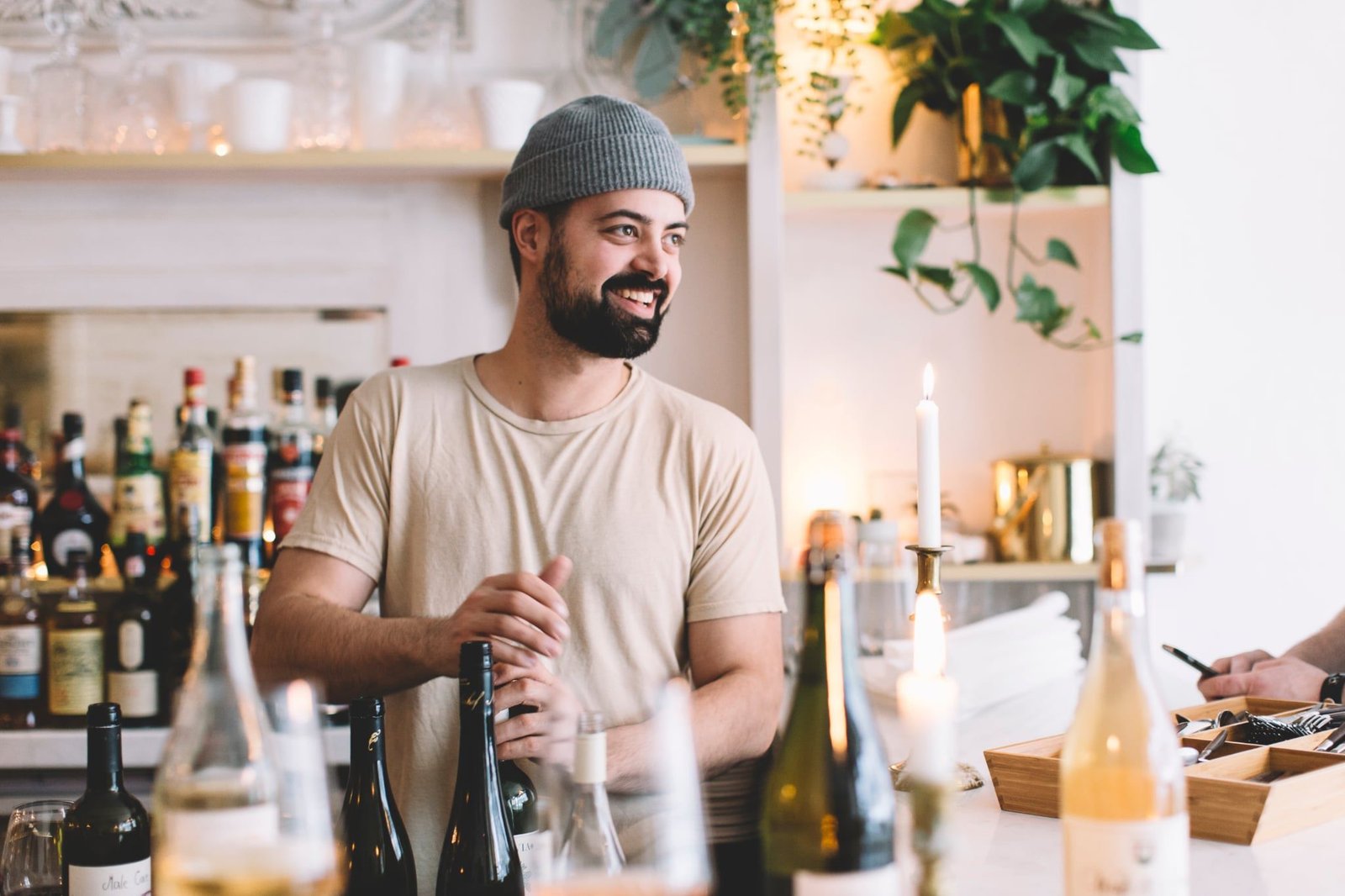
One of seven new Masters of Wine named in August 2026, a restaurant wine director with nearly twenty years in hospitality and roots in Ukrainian Bukovina, on how one of Canada’s most complicated wine markets is changing.
In March 2025, Ontario’s wine market was handed a stress test no one could have designed on purpose. In retaliation for US tariffs, the LCBO stopped buying American alcohol and pulled it from both its shelves and its wholesale catalogue. More than 3,600 products from 35 states disappeared, a category worth up to C$965 million a year. Restaurants and bars could no longer reorder either.
For a wine director, the consequence is brutally simple: when a chunk of your usual wines is gone, the list has to be rebuilt.
Jake Skakun didn’t learn this from a press release. He’s spent almost two decades in the restaurant business and is now a partner and wine director across several Toronto projects: Grey Gardens, Le Swan, Bar Vendetta and General Public. His job is not just about what’s in the glass. It is about price, supply, guest behaviour and the most practical question of all: what will actually sell?
In August 2026 he added two letters to that experience, becoming one of seven new Masters of Wine. There are now 427 active MWs in 31 countries, including winemakers, buyers, writers, educators, and consultants.
That combination of restaurant practice, market research and the industry’s most demanding qualification makes his view worth hearing. He isn’t a theorist watching the market from the sidelines, and he isn’t simply someone who writes wine lists.
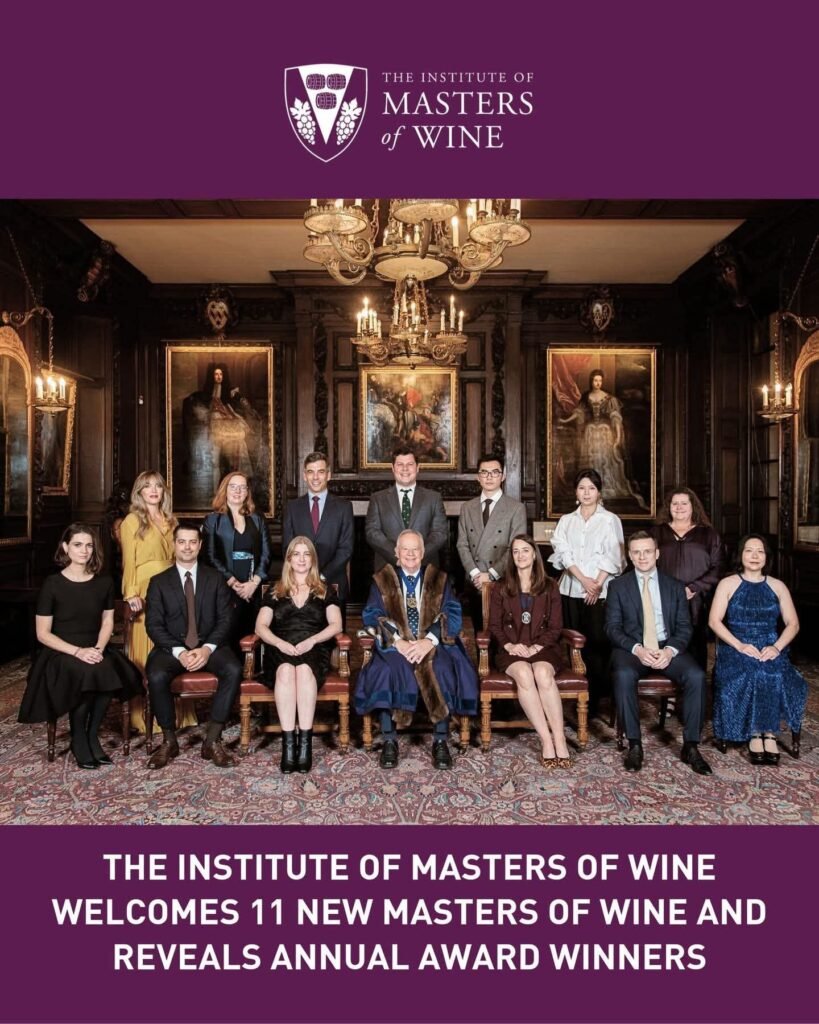
Photo: The Institute of Masters of Wine
When America vanishes from the list
Jake’s restaurants never relied heavily on American wine, so the ban didn’t force a wholesale rethink. But some gaps still had to be filled.
“I increased the local listings of pinot noir and chardonnay,” he says, “and European selections like Right Bank Bordeaux and Cahors replaced fuller-bodied Californian reds.”
The bigger story was happening beyond any single list. “Many local wineries are seeing a massive boost in sales because of this retail shift coupled with a nationalist sentiment from consumers.” Two forces were at work: less American wine on offer, and a stronger urge among Canadians to buy their own.
The LCBO’s figures show the scale. In the year to 31 March 2026, sales of Ontario VQA wines, made entirely from Ontario-grown grapes, rose 44%. Reds rose 53% and whites 42%. Demand for French, Australian and Italian wines grew too, and over the same year the LCBO added 291 new VQA wines to its range.
The American space on the shelf didn’t stay empty for long. Local producers and other wine countries split it among themselves.
It’s a sharp reminder of how quickly a political decision can redraw the competitive map. Consumer taste didn’t change overnight. Availability did, and choice followed.
Scroll through social media, and you could be forgiven for thinking every drinker is chasing natural wine, skin contact and grapes nobody can pronounce. In restaurants, the picture is more nuanced.
“We have definitely seen a swing back towards classic styles,” says Jake.
Natural wine hasn’t disappeared, but the label alone no longer earns a free pass. “Natural wine still has a presence, but I look for cleaner examples where the volatile acidity and mouse taint are in check.”
His reliable sellers read almost like a classic textbook: Burgundy, Bordeaux, Beaujolais, Loire Chenin and Sauvignon Blanc, German Riesling and Italian whites.
Curiosity hasn’t gone anywhere, though. “I always like to include some obscure picks for people who are looking to try something new.” Lately that has meant whites and reds from the Canary Islands, Galician reds, Austrian whites, orange wines and dry Tokaj.
It’s a telling balance. Guests still want discovery, but novelty alone no longer sells the bottle. Increasingly, it has to come with cleanliness, quality and a style people understand.
Ontario: first, convince your own
Jake grew up in British Columbia, worked in Vancouver for several years and moved to Toronto about thirteen years ago. The contrast hit him immediately. “I found the difference in support for the local wine industry very stark,” he recalls. BC restaurants championed BC wine, while Ontario restaurants were far less enthusiastic about theirs.
Diners were harsher still. “There was also a general sentiment among diners that Ontario wine was terrible. I was surprised by this because there were some very good wines.”
He sees that reputation as a hangover from the early days of commercial winemaking in the province, one the baby boomer generation was slow to shake off. Younger drinkers are far more open. And it isn’t only the audience that has changed: “I believe the wines have improved drastically over the past decade and buyers and consumers are embracing Ontario wines more.”
He believes the categories that have earned real international recognition are sparkling wine, Riesling, Chardonnay, Cabernet Franc, and Icewine. Ontario Chardonnay is a personal favourite, and he regularly attends i4C, the International Cool Climate Chardonnay Celebration in Niagara.
This is no longer a niche bought out of local loyalty. In the year to 31 March 2026, VQA wines accounted for 47.4% of the value of Ontario-made wine sales, and local wineries’ sales to restaurants topped C$74 million. The trade dispute didn’t create this momentum. It simply hit the accelerator.
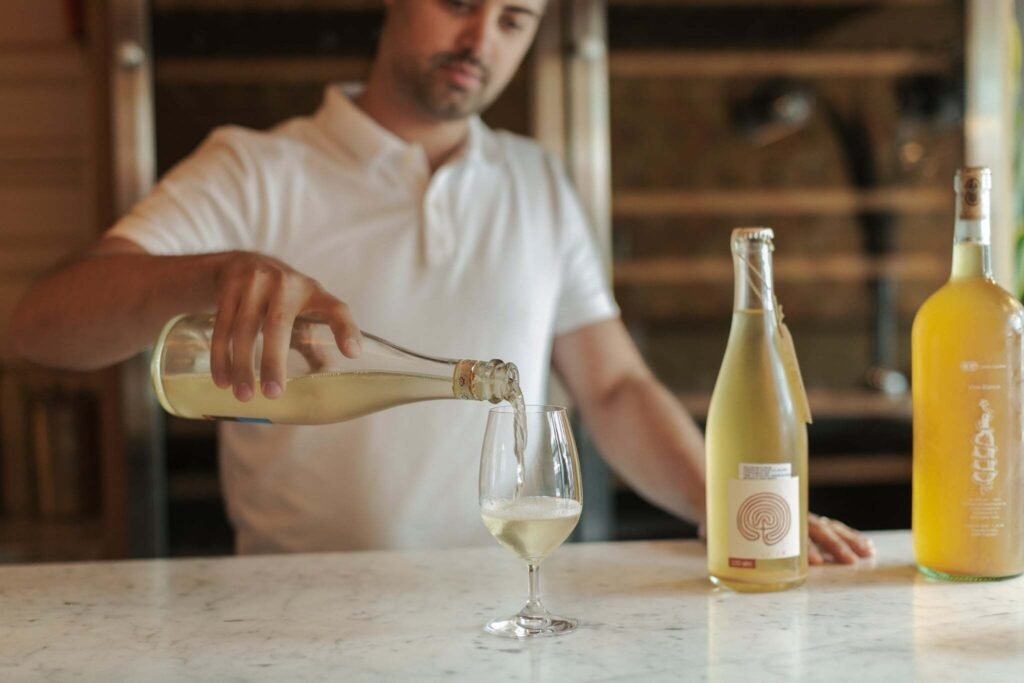
There’s no romantic origin story here: no family vineyard, no single bottle that changed everything overnight. The reason was refreshingly practical.
“My wine journey started through working in restaurants,” he says. “I wanted to be considered for better positions and knew that I needed to learn about wine to help my career. I signed up for a wine class and enjoyed it so much that I kept going with it.”
One of his early teachers was Barbara Philip MW. His first loves were, in his words, “the typical fruit-forward and sweet-spiced crowd-pleasing wines.” The bottle that shifted his palate was Marcel Lapierre’s 2005 Morgon, which set him on a path to seek subtlety and elegance.
He completed the WSET Diploma in 2010, but the MW took another decade. “I had revered the Institute of Masters of Wine since my early days of being taught by Barbara Philip MW, but never seriously considered applying for entrance into the programme until COVID happened. We had an extended lockdown in Toronto, and I found myself with extra spare time and decided to apply and see how far I could go.”
Even after nearly twenty years in the trade, the programme reshaped how he sees the industry. “Having finished the program, I have a much bigger-picture understanding of wine than I did before, particularly when it comes to the business of wine.”
It also keeps candidates grounded. “The program really does a good job of humbling you and squashing any ego you might have pretty quickly.”
For a restaurant professional, the real value isn’t just more knowledge. Wine starts to read as one system, from vineyard and winery through logistics, pricing and sales to the guest at the table.
The popular image of an MW is someone who can name grape, region and vintage blind with near-magical precision. Jake sees it differently.
“I’m not sure if this is a misconception, but there is certainly a lot less granular regional appellation memorisation than, say, the Court of Master Sommeliers testing.” Instead, candidates need to understand every tier of the wine business and the issues shaping it today, plus “a surprising amount of detail on the handling of wine (or everything between fermentation and bottling).”
In other words, it’s not just tasting, geography and grape varieties. It’s production, trade, marketing, contemporary challenges and the ability to explain cause and effect.
For Jake, the WSET Diploma was the entry ticket. Today, he believes, it does far more to prepare students for the next step: “I don’t remember doing a research paper as part of the WSET diploma when I did it, but I know it is a part of the program today.”
His first advice to anyone considering the MW is to find a tasting group. In Toronto he trained with up to eight other MW students. They took turns setting six- or twelve-wine mock exams, poured into 100 mL bottles and handed out weekly. “This amount of tasting practice is crucial and it would be expensive to do on your own.”
The second practical reality is cost: tuition plus travel. An employer’s support helps enormously. Bursaries and scholarships exist, but none are guaranteed.
For his research paper, Jake chose the most practical side of the business: VQA wine on tap, and the people who buy wine for Toronto restaurants.
He has poured local wine from kegs for years and sees it as the natural format for wine by the glass. “In Toronto, almost every restaurant is pouring at least some Niagara wines by the glass. It feels wasteful to be packaging wine in glass bottles when it is being opened immediately to be poured by the glass an hour away and most of the consumers aren’t even seeing the bottles.”
Reusable kegs may also offer environmental benefits, alongside cost and service advantages.. Yet the research led him to a bigger question: how do restaurants decide which winery to work with in the first place?
The answer surprised even him. According to Jake’s research, the relationship with the producer was more than three times as important as the next most significant factor for the buyers surveyed. As he puts it, that “highlights how crucial it is for producers to be nurturing relationships with buyers.”
For producers, the lesson is blunt: making good wine and waiting for the market to find it isn’t enough. You have to build relationships with the people who make the decisions: introduce them to the wines, come back with every new vintage, stay in touch, keep supply reliable. That lesson reaches well beyond Ontario.
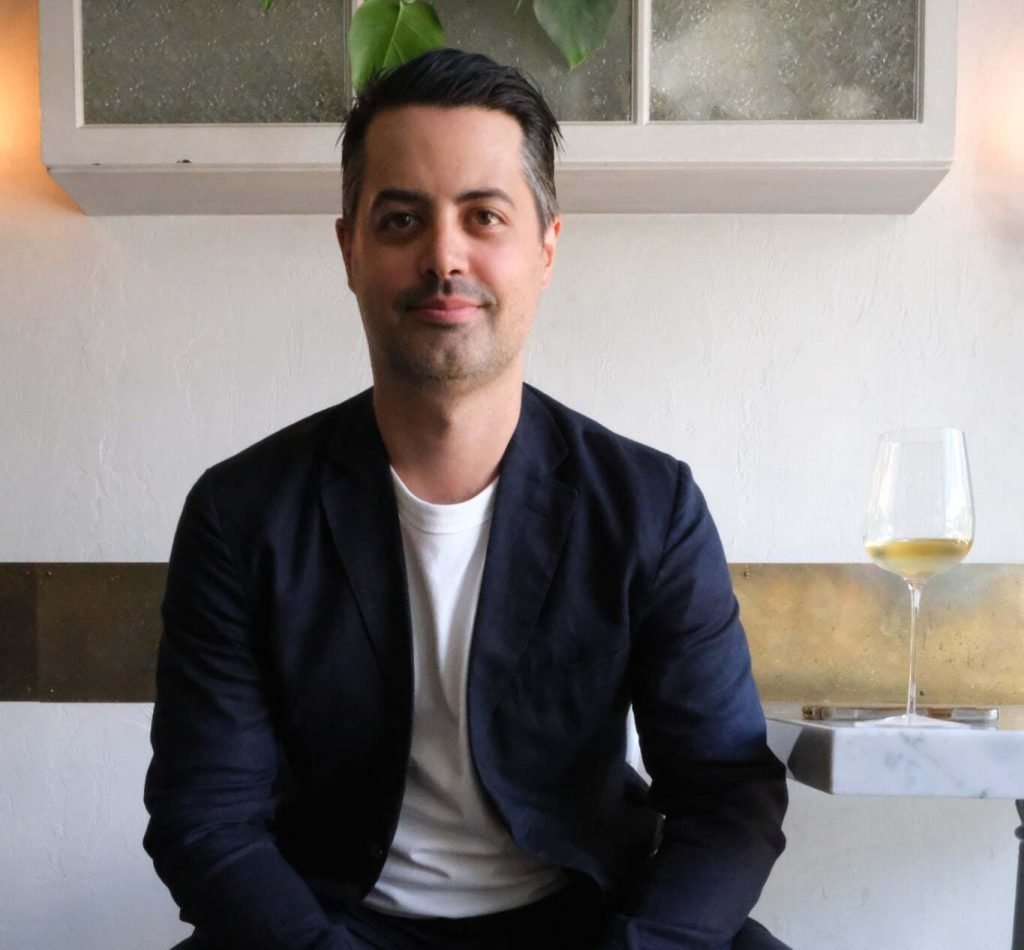
To a Ukrainian reader, the surname Skakun hardly sounds accidental. Jake’s ancestors came from Bukovina and around 1900 settled in a small farming community north of Edmonton, Alberta.
Ukrainian culture wasn’t part of everyday life at home, but it returned on visits to his grandparents in northern Alberta. There were nalysnyky, pedaheh and holubtsi (“probably Canadianized versions”), and the Ukrainian Orthodox church on holidays and at weddings.
Today, Ukraine is far more visible in Toronto. “People in Canada are very supportive of Ukraine. It is not uncommon to see Ukrainian flags in the windows of houses and apartments or bumper stickers on cars in Toronto.” He sees that support extending to the new cafés and restaurants that have opened in recent years, and to the annual Ukrainian street festival in Toronto’s Runnymede neighbourhood.
Ukrainian wine is another story. “Sadly, I have never had the chance to taste Ukrainian wine!” he admits. “None of the import agencies I work with currently bring it into Canada.”
That doesn’t mean Ukrainian wine is absent from Canada. In Ontario, the LCBO carries Bolgrad Select Chardonnay and wines from Chateau Chizay, and elsewhere in the country producers such as Kolonist and Beykush are represented.
The point is subtler: being physically present in a market is not the same as being visible to the people who shape it. The LCBO shelf is retail, while restaurants largely buy through importers. It’s almost a textbook illustration of Jake’s own research on the power of professional relationships.
In recent years he has seen far more high-quality wine arriving from Hungary, Slovakia, Czechia and Serbia, and sees no reason Ukraine couldn’t follow the same path. His criteria are refreshingly simple:
“Were it available, as long as the wines offered value and had personality, I imagine that they would quickly make their way onto the lists of wine bars and restaurants with more interesting selections in the city.”
Since our conversation, the story has moved on. Jake asked for recommendations of Ukrainian wineries, and several producers and their Canadian representatives have already agreed to set up a tasting for him. Perhaps that illustrates his research better than any data table: sometimes entering a professional market starts with the right bottle reaching the right person.
With the title now after his name, Jake still decides which Ontario Chardonnay goes by the glass, what replaces a Californian red, whether a particular natural wine deserves its place on the list, and whether guests are ready for an unfamiliar region. What has changed is a habit: he no longer looks for simple answers where none exist.
As Jake puts it: “Ultimately, you learn that the answer to most questions about wine is: it depends.”
⇒ Join our social networks
⇒ Optimistic D+ editors will take this as a compliment
⇒ Every like is taken as a toast!
30.10.2026