На сайте используются cookie файлы
The site uses cookie files
Данный сайт имеет возрастное ограничение!
This site has age restrictions!
Я подтверждаю, что мне, увы, уже давно исполнилось 18 лет
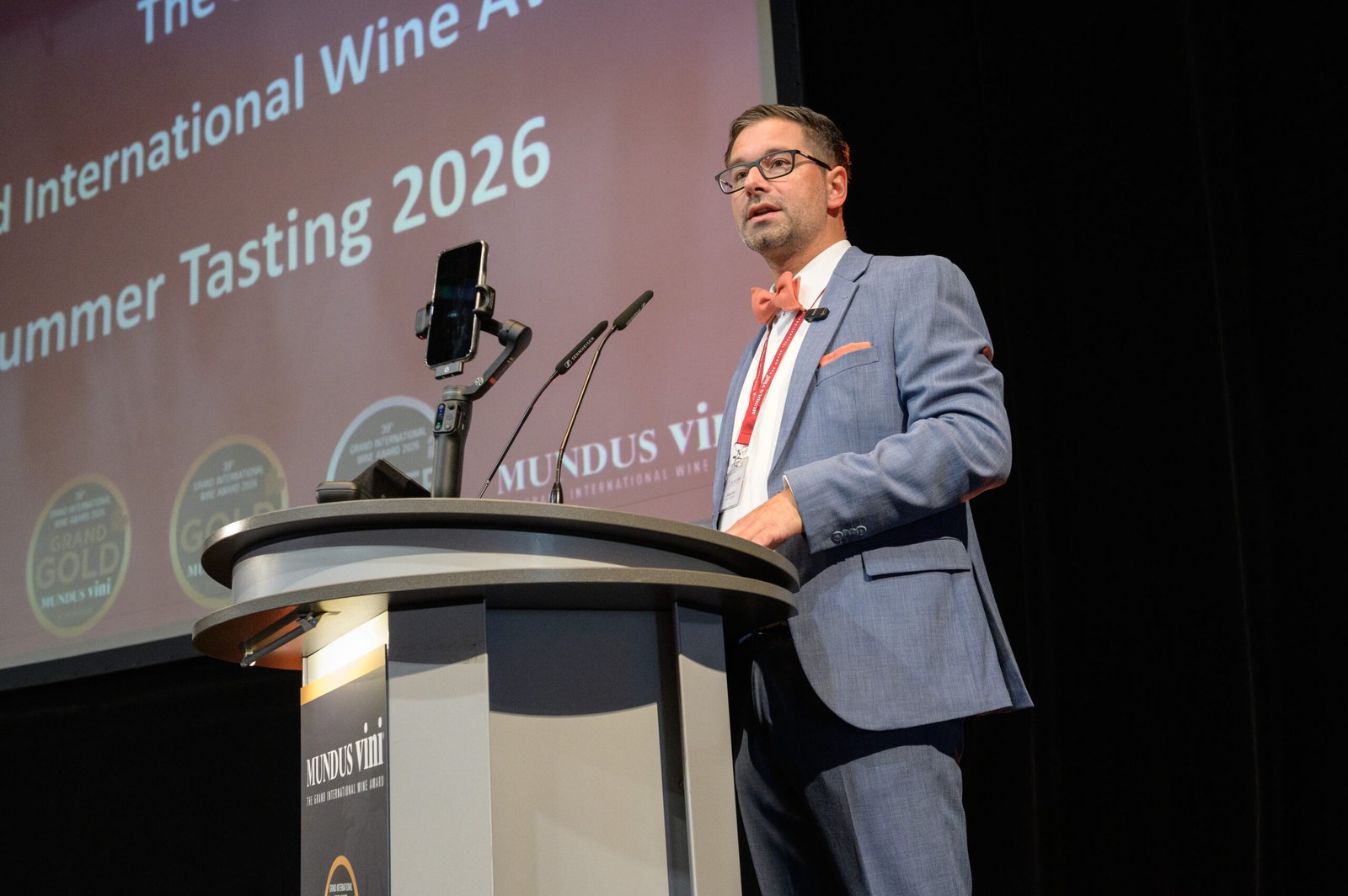
In Germany, Kindergeld, the monthly child benefit, can in certain cases be paid to parents until their children turn 25 – when they are, at last, considered fully grown up. With MUNDUS VINI, one of the world’s most reputable international wine tasting competitions held in the German Neustadt-an-der-Weinstrasse, things are much more dynamic.
Celebrating its 25th anniversary this year, MUNDUS VINI has achieved considerably more than the average German by the same age. Over 25 years, it has grown into one of the world’s leading wine competitions, bringing together thousands of jury members from every continent, assessing hundreds of thousands of wines from around the globe, and awarding more than 60,000 medals for professionalism, quality and excellence. The 2026 anniversary Summer Tasting brought more than 100 tasters from 43 countries to Neustadt to assess nearly 3000 wines.
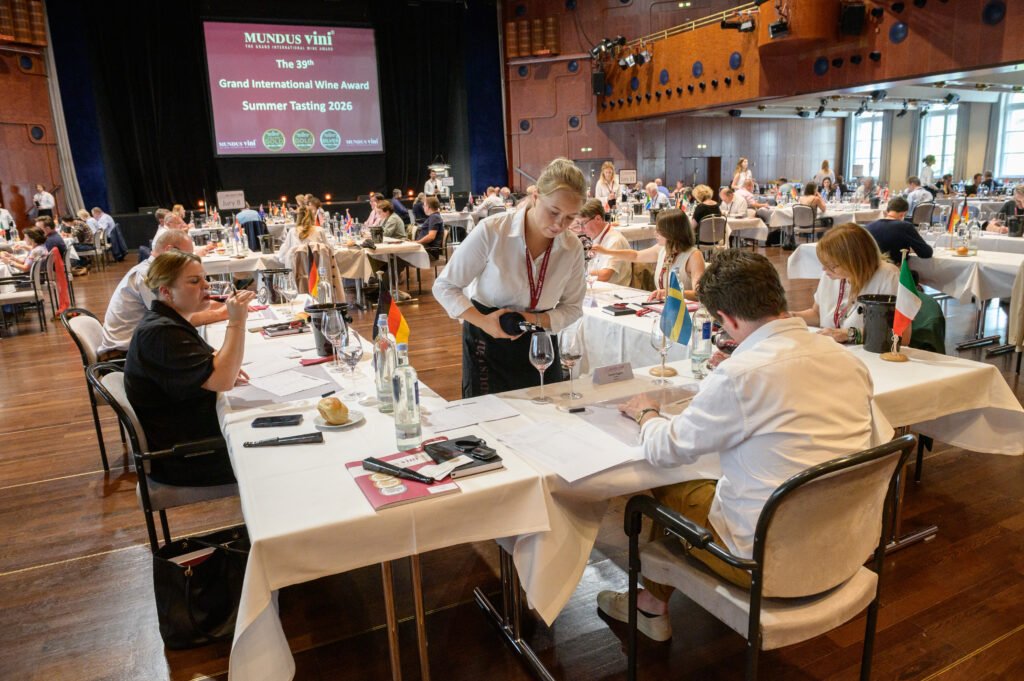
Seasoned in character yet young at heart, MUNDUS VINI is constantly evolving. “Twenty years ago, if you won a Gold Medal at one of the major wine competitions, you could expect to sell out your wine. Today, we see that this is no longer necessarily the case. That’s why we decided to add more to the competition,” comments Christian Wolf, Degustation Director, with whom our observer Victoria Makarova spoke during the latest MUNDUS VINI Summer Tasting.
Victoria Makarova: It was a great tasting, despite the challenging times. Are you satisfied?
Christian Wolf: I think we had a really good Summer Tasting, especially considering everything that’s happening in the world, and in the wine industry in particular. I hope that, with the impressive results from this tasting, we can show just how fantastic wine can be and the quality it has to offer. It’s not just about alcohol. Wine is part of a lifestyle, and when you choose a wine awarded by MUNDUS VINI, you know you’re getting something really special.
V.M.: Imagine I’m a producer who is still hesitating about whether to submit my wines to MUNDUS VINI. What would you tell me?
There are a lot of wine competitions around the world, and as a producer, you can choose the ones where you say, “I trust this competition and I get a medal which has value.” Ultimately, it comes down to reputation. That is what MUNDUS VINI has built over 25 years: clear evaluation and award standards, a professional and knowledgeable jury, and a strong focus on giving the winners visibility within the industry.
When we were planning this year’s tastings, we asked ourselves what more we could offer wine producers – something beyond simply winning a medal. Twenty years ago, if you won a Gold at one of the major wine competitions, you could expect to sell out your wine. Today, we see that this is no longer necessarily the case. That’s why we decided to add more to the competition, an additional marketing push. In our communication, we put it as: “Award meets visibility.”

Christian Wolf, MUNDUS VINI Degustation Director
MUNDUS VINI is based in Germany. So if you’re interested in the German market, which has a substantial capacity despite the world’s declining consumption numbers, we can help you very effectively. Behind MUNDUS VINI is the Meininger publishing house, with major magazines covering the German wine business and wine industry. We have one of the biggest networks of local experts, buyers, restaurant owners and other wine professionals, which is, basically, an entry ticket to the German market.
But that does not only relate to Germany, which is important. Our jury members come from over 50 countries, and they include international buyers, importers and representatives of major retailers. We also publish Meiningers International, and we have cooperations with other wine media, such as Drinks+ in Ukraine and other wine media and many countries. So we can spread the message and say: “Here are 50 great wines from Romania, 20 great wines from Hungary, or 300 great wines from Italy.” We publish those lists and make recommendations to wine importers, restaurants and sommeliers. So we’re helping to spread the message about your success at MUNDUS VINI.
V.M.: In recent years your policy for inviting jurors has evolved. What is the current concept?
C.W.: The most important thing to be part of MUNDUS VINI is that you are an industry professional, a certified wine expert with deep knowledge of grape varieties and regions. And, of course, you need to have proved that you are a very good taster – that you can identify great wine quality and distinguish it from wines of lower quality in various categories and segments. That’s the basic requirement.
About three years ago, we started to rethink our invitation policy and bring more young people into the competition. We can see that wine styles have changed a lot over the past ten years, and there is a new generation coming into the wine business: wine buyers, wine journalists, content creators and influencers. So, of course, we want to invite more of these younger people. We want the MUNDUS VINI brand to be present in these channels as well – on Instagram, LinkedIn and other platforms – and to catch the attention of younger consumers.
The idea is that when they see a bottle with a MUNDUS VINI medal on it, they think, “Oh, okay, I know that. I’ve seen it before.” And that familiarity can influence their decision to buy the wine. I wouldn’t call it exactly “flirting with Generation Z.” We manage to maintain a very clear balance between the highest level of expertise – people with 50 years of experience behind them – and younger professionals who may already have WSET diplomas while being under 30. I find that really impressive.
V.M.: For years, you have been partners with ProWein. How is your collaboration developing, and who profits from it more now?
C.W.: ProWein and MUNDUS VINI are two German brands, both are internationally renowned. MUNDUS VINI is closely connected to the owning family, the Meininger family, and to the Meininger publishing house. For me, MUNDUS VINI and Meininger are one.
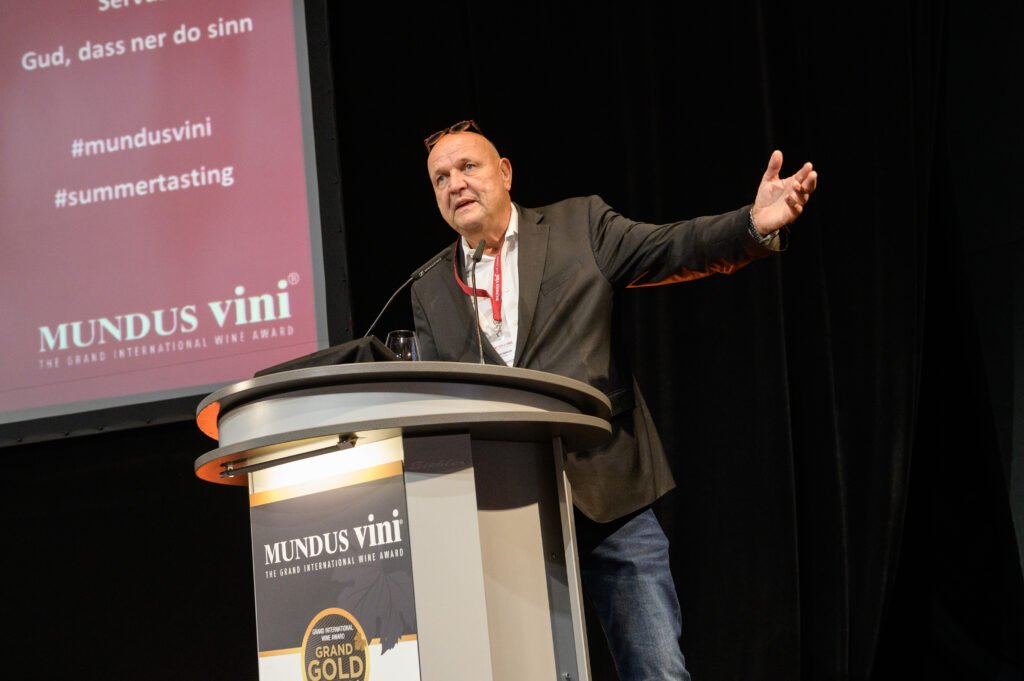
Christoph Meininger, German publisher and head of the media company
ProWein, which has been taking place in Germany for more than 25 years, has become the most important wine fair in Germany and Europe, and in the meantime it has developed into a leading wine trade fair worldwide.
But the business has changed a lot – not only for ProWein, but also for MUNDUS VINI. Sales channels are different, and people get their information in very different ways compared with ten years ago. This requires changes in the marketing policy, and we are both working on that.
Twenty-five years ago, the Meininger publishing house and ProWein started a fantastic cooperation. The idea was to discuss how the two events could work together to support the wine industry with more information, better education and a better understanding of wine markets – including wine styles, pricing, positioning etc.
There are three core parts to our cooperation. One is the Meininger Awards, which are held on the opening evening before ProWein. That was a great success in 2026, and we’re now adding even more value to the 2027 edition.
What makes me especially proud is the ProWein Zero tasting area, created four years ago through a joint initiative between ProWein and the Meininger publishing house. The ProWein team took care of the exhibitors and provided this great space, while we focused on the educational side, the presentation and the free tasting area. Visitors had the opportunity to taste around 250 different non-alcoholic wines. The idea was not just to show the five top products on the market, but to give people a real overview of what is actually available – what sells well, what doesn’t, and where the quality stands.
And it’s not only about Germany, although I have to say that Germany is still a pioneer in this field. But look at Torres in Spain, for example. They are investing millions to make their No/Lo production even better and bigger. Or Giesen in New Zealand, which is now one of the biggest non-alcoholic wine producers in the world.
What I think is especially important for the ProWein 2027 Zero edition is that we’re going to take a closer look at the rosé and sparkling-tea category, which is developing at an incredible speed. We’ll also give more visibility to the low-alcohol category, which I think is still something different from no alcohol – and perhaps somewhat underestimated, even though the quality can be much better.
With no-alcohol wines, there is still no clear definition of what “low alcohol” actually means. Is 11% already low or not? Is it technically partially dealcoholised? Or, for example, if you have a German Spätlese with 6% alcohol and 100 grams of residual sugar, does that count as low alcohol? I think the wine industry needs to define this category more clearly, so that we know precisely what we are talking about – and what we are not. We need to differentiate low-alcohol wines from other categories.
That will be something highly interesting at ProWein next year, and I would definitely call it our USP.
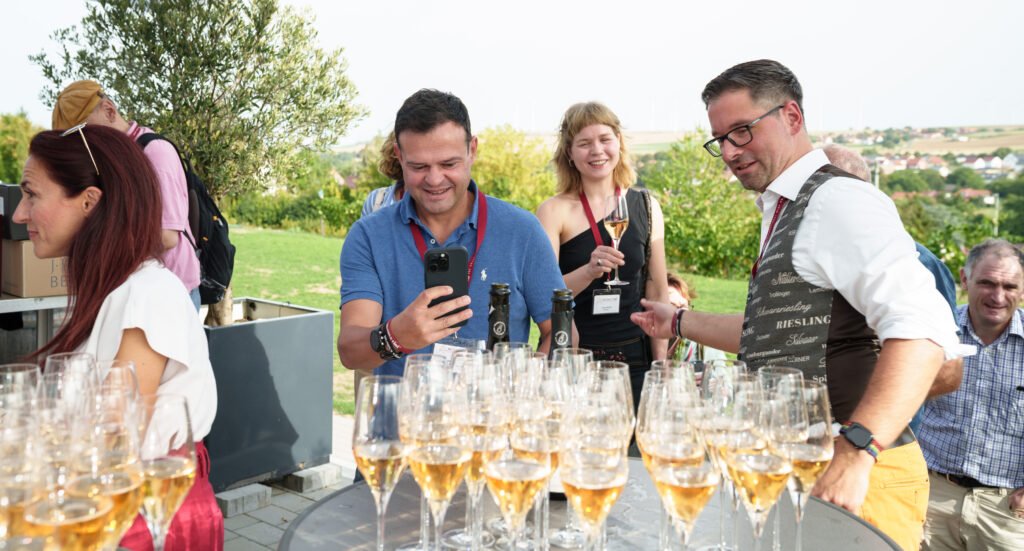
Photo: Ad Lumina, Victoria Makarova
⇒ Join our social networks ⇒ Optimistic D+ editors will take this as a compliment.
⇒ Every like is taken as a toast!
18.09.2026