На сайте используются cookie файлы
The site uses cookie files
Данный сайт имеет возрастное ограничение!
This site has age restrictions!
Я подтверждаю, что мне, увы, уже давно исполнилось 18 лет

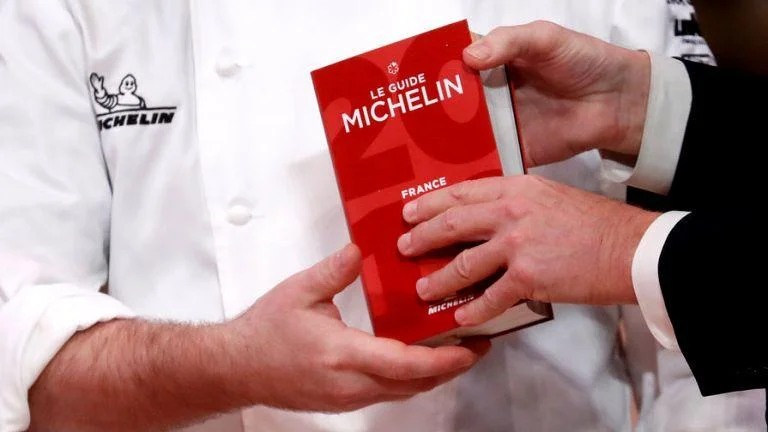
The sensational invasion of the Michelin Guide into the world’s vineyards, announced the other day, has raised many questions, among which the following three are the loudest. Will grape “bunches” be as popular as restaurant “stars” or hotel “keys”? Will winemaking become a lifeline for Michelin? Will Michelin Grapes crowd out Parker’s 100-point system?
Time will tell, but for now, a little more detail. Sensational rumors that have been circulating for weeks have now been officially confirmed: the Michelin Guide, the world’s most influential guide to restaurants (with its iconic “stars”) and hotels (with “keys”), is expanding again.
This time, attention – in the world of wine. In fact, according to Drinks+, the Michelin Guide for restaurants has long been unevenly breathing on the wine topic. This is evidenced by the introduction of the subscription system Wine Access x MICHELIN and active reviews of the wine lists of such famous restaurants as, for example, Eleven Madison Park, located in New York and which has 3 Michelin stars and is owned by chef Daniel Hamm.
Starting in 2026, Michelin is introducing a new rating system dedicated to wineries: Michelin Grapes, which are awarded on a scale of 1 to 3. This is the first time in its 125-year history that Michelin will rate wineries as independent entities, placing winemakers, estates and their viticultural and winemaking heritage on the same level as haute cuisine and luxurious hospitality.
Time will tell whether ” bunches” will be as popular as restaurant “stars” or hotel “keys”, but the introduction of Michelin Grapes hints at a long-term ambition: to unite the assessment of wine, gastronomy and hospitality under a single global standard. On the other hand, there are skeptics among observers of the benchmarking market. They argue that such an expansion of the “Red Guide” is more a way to escape its own crisis, which restaurant critics have been discussing more frequently in recent times.
Will wine become a lifeline for Michelin? There is reason to doubt, because the decision came at a time when the global wine industry is facing a decline in consumption and rising anti-alcohol sentiment. It is also struggling with overproduction and growing economic turbulence around the world. In addition, according to Drinks+ observers, the psychological portrait of the wine community is significantly different from the restaurant community.
She is generally more self-confident and not as psychologically vulnerable as restaurateurs who were willing to hang themselves for being stripped of their stars by the relentless Michelin inspectors. So, in this context, Michelin’s decision seems clearly bold. But, given the supposed long-standing problems in the field of restaurant evaluation, transferring the activity from restaurant halls to vineyards may make sense. Regardless of the motives, the introduction of Michelin Grapes could revolutionize the world of wine awards and, in general, the way wine producers are perceived and valued internationally.
According to the publishers, the existing world wine awards have not been enough for this. Michelin’s official press release describes the new system as “a benchmark for discovering and showcasing the talents of winemakers around the world.” The guide aims to highlight both the vineyards and the people behind them – the producers, families and teams whose skills embody tradition, innovation and craftsmanship. According to Gwendal Poullennec, international director of the Michelin Guide: “This benchmark is designed for both curious enthusiasts and discerning experts. It recognizes the men and women who build the most meticulous and high-quality vineyards in the world.”
Let’s explore how the Michelin Grapes system of coordinates will be evaluated.
The experienced guide proposes five main vectors:
Agronomic excellence
Evaluation of soil viability, vineyard balance, biodiversity and general vine care – factors directly linked to wine quality and sustainability.
Technicality
A precise assessment of the winemaking process.
Michelin strives for precision, rigor and purity in execution, wines that clearly embody the grape varieties and terroir.
Identity
The winery’s ability to reflect authenticity, a sense of place, cultural heritage and personality.
The producer must demonstrate a unique voice and style.
Balance
Harmony between the key structural components – acidity, tannins, alcohol, sweetness and oak.
Technically impeccable balance is essential for the highest distinctions in a wine.
Consistency
Wines must demonstrate quality over several vintages, even in difficult years.
The guide will reward producers who have achieved depth, complexity and consistency of age over time.
Michelin Grapes Award System:
⭐ 3 Bunches (Michelin Grapes)
These will be awarded to exceptional producers.
Wine lovers can rely on their bottles with absolute confidence, regardless of the vintage. These wineries are the pinnacle of world excellence.
⭐ 2 Bunches
Producers who stand out for their quality and consistency, positioned among the best in their region.
⭐ 1 Bunch
Very good producers who create wines
with character and style, especially strong in top vintages.
⭐ Selected
Reliable producers who offer quality wines that provide a recognized level of quality, which is regularly checked by inspectors.
The first testing ground for Michelin Grapes, of course, was chosen as the leaders of the Fine Wine world – Burgundy and Bordeaux. Then, according to the publishers of the guide, the expansion should spread to Italy, Spain, the USA, Germany, Australia etc.
However, the authoritative media wine-intelligence.com asks another question on this subject: what about The Wine Advocate – does the new rating system not create a conflict of interest? At least it is strange that Michelin has not yet mentioned the consequences of this novelty for The Wine Advocate – a prestigious magazine founded by Robert Parker, which was once bought out and is now owned by the Michelin group. After all, this gives rise to internal competition and, in general, a question for industry operators: will the new Michelin wineries rating system ultimately complement or even replace the 100-point rating model created by Parker?
Meanwhile, as new stars light up in the global rating sky and passions flare up, the Drinks+ media group announces the anniversary, fifth year of the international wine and food tourism award Wine Travel Awards 2025-2026, which already unites operators and influential people from 45 countries. Join our friendly community, where competition does not prevail, but common constructive goals!

By the way, let’s spoil a little: in 2026 our activities will also unfold in Burgundy))). But we will report on this in more detail later.
⇒ Join our social networks
⇒ Optimistic D+ editors will take this as a compliment.
⇒ Every like is taken as a toast!
20.02.2025
25.06.2024