На сайте используются cookie файлы
The site uses cookie files
Данный сайт имеет возрастное ограничение!
This site has age restrictions!
Я подтверждаю, что мне, увы, уже давно исполнилось 18 лет

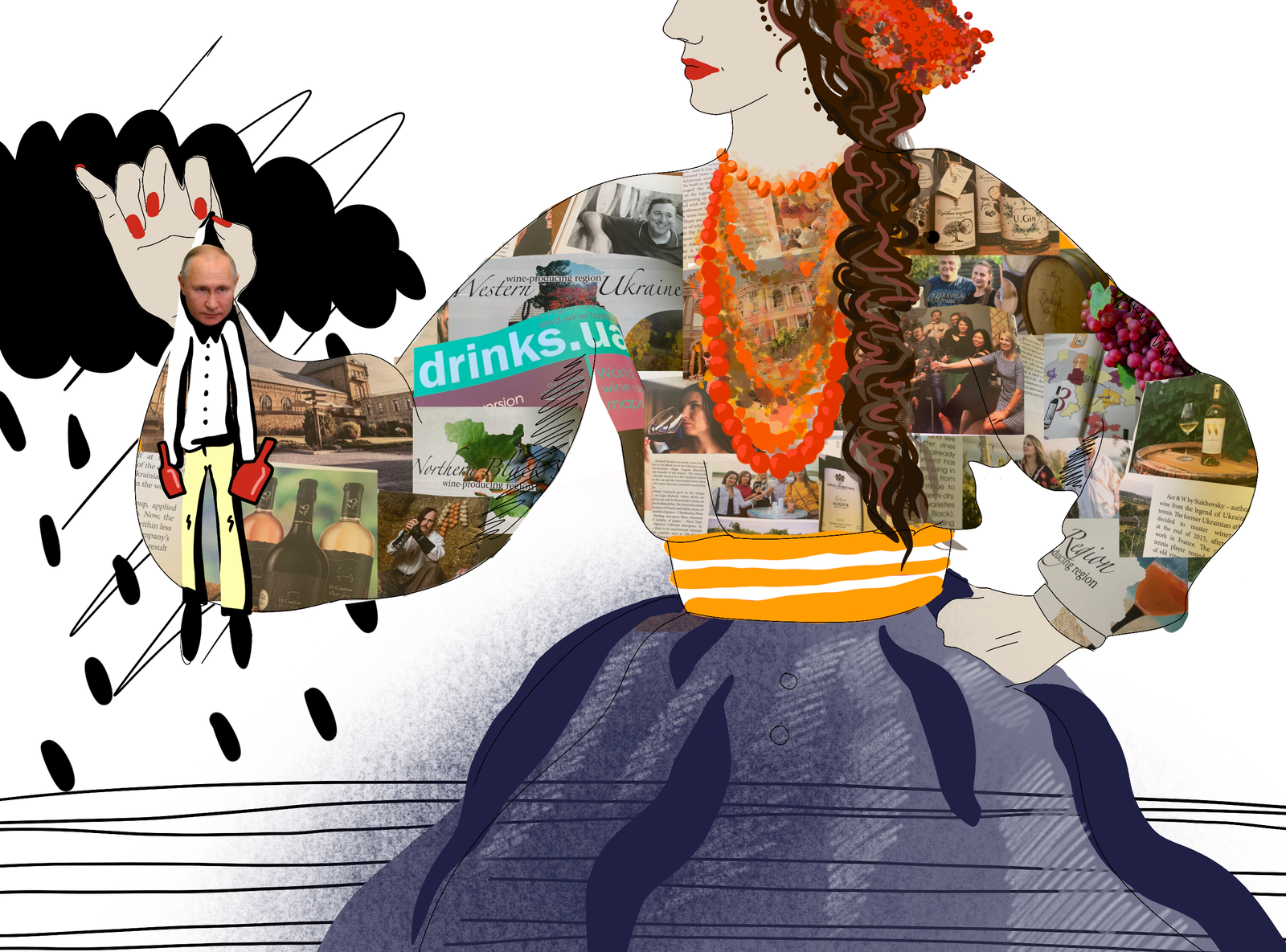
Today, the editorial team of the Drinks+ Media Group was due to publish an article about this year’s Concours Mondial de Bruxelles, held in Armenia earlier in May, a competition that Drinks+ has proudly supported as a media partner for many years. We wrote our story with a deep sense of gratitude to the organisers, whose invitations have enabled our journalists, for decades, to travel to some of the world’s most remote wine regions and taste some of its most remarkable wines. The piece also paid tribute to our host country, Armenia – its vibrant cuisine, remarkable wines and legendary hospitality. (We will return to Armenia’s wine industry in a dedicated feature.) And, of course, we were looking forward to sharing the good news that Ukrainian wines had once again been awarded medals at the 2026 Concours Mondial de Bruxelles…
Like every responsible media, we waited for the official results before publishing. When they finally appeared, however, our story took an unexpected turn. What follows is an examination of how sanctioned Russian wines and products from occupied Crimea made their way into one of the world’s most prestigious wine competitions.
The events surrounding this year’s Concours Mondial de Bruxelles 2026, held in Armenia, have sparked growing international attention. At the centre of the controversy is the competition’s decision to admit – and ultimately award – sanctioned wines from Russia and the temporarily occupied territory of Crimea under the artificially neutral designation “Crimea.” The move stands in stark contrast to the policies adopted by other leading international wine competitions. The UK’s Decanter World Wine Awards and Germany’s MUNDUS VINI continue to block Russian entries entirely while offering dedicated support and preferential conditions to Ukrainian producers. Against this backdrop, the precedent set by Concours Mondial de Bruxelles in Armenia appears all the more striking – and raises difficult questions about the motivations behind it.
Even more disturbing is the fact that Ukrainian wine professionals were invited to serve on the judging panels, while medals were ultimately awarded to wineries owned by Vladimir Putin, an internationally sanctioned leader widely accused of war crimes.
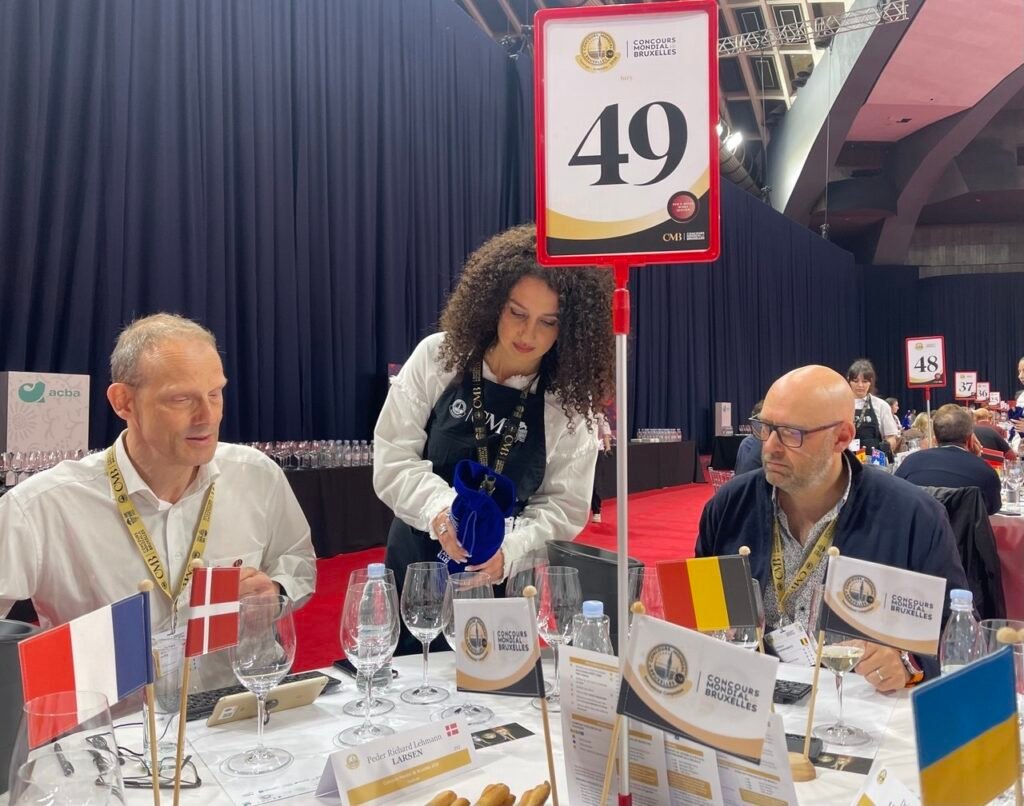
Following the publication of the results, many Ukrainians took to social media asking a legitimate question: “Who were the judges?” It deserves a clear answer.
A representative of the Drinks+ editorial team was among the Ukrainian judges at Concours Mondial de Bruxelles 2026, allowing us to provide a first-hand account of the events. The report we had intended to publish – a professional account of this year’s competition – has therefore become something quite different. Only after the official results were released, almost a month after the judging had concluded, did the full picture emerge.
Instead of celebrating another successful year for Ukrainian winemakers – and there were genuine achievements worth celebrating – we are compelled to examine an apparent attempt to legitimise wines from occupied Crimea and to ease Russia’s return to respected international institutions. In that context, the presence of the Ukrainian delegation on the Concours Mondial de Bruxelles 2026 judging panels inevitably served another purpose: to project an image that a wide russian presence in the Yerevan competition was perfectly normal.
In retrospect, the credibility of Ukrainian experts appears to have been used to lend legitimacy to sanctioned wines. The Ukrainian delegation included representatives of several of the country’s leading wine institutions, among them Wines of Ukraine.
Like most major international wine competitions, Concours Mondial de Bruxelles follows a rigorous blind tasting protocol. Samples are served without revealing the producer, country of origin or even the grape variety. Because the competition’s rules explicitly prohibit disclosing a wine’s origin or identity during judging, no member of the jury could possibly have known that some of the wines in their glasses came from occupied Crimea or Russia.
It is important to note that none of the Russian or Crimean wines were included among the samples evaluated by the Ukrainian judges (which can be easily verified through official tasting sheets and jury records). However, had this been the case, the judges would have had an opportunity to identify the presence of such entries and raise their objections with the organisers at the end of the tasting session, when the wines evaluated by the panel are disclosed – rather than only discovering the issue after the publication of the official list of award winners.
Therefore, our experts evaluated only legitimate international wine entries. The Ukrainian side learned about the presence of such entries in other competition panels only after the results were published on the competition’s website.
“Ukrainian experts were effectively used to legitimise the russian occupants’ sanctioned business on the international stage. We did not have, and could not have had, any information about which countries had been registered by the organising committee. This represents a direct violation of the principles of fair partnership and professional ethics. I expect that the Ukrainian judges, who were involuntarily drawn into this international controversy, will soon submit an official request to invalidate the scores and disqualify the competition results, at least with regard to the Crimean wines presented without the Ukrainian flag. For my part, I call on the organisers to issue an official statement clarifying that the Ukrainian judges did not participate in the evaluation or awarding of any wines from occupied territories or Russia. It would also be fair to disqualify all awarded sanctioned entries, including those from the temporarily occupied territory of Crimea. Until these steps are taken and a strict compliance system is introduced to prevent sanctioned operators from being promoted, I am suspending any future cooperation with Concours Mondial de Bruxelle,” – says Iryna Dyachenkova, a long-standing international competition judge, including at CMB, and co-founder of Drinks+, commenting on the situation.
Olha Pinevych, an expert at VH Selection, shares her perspective on the incident: “As representatives of Ukraine, we attended the event following an official invitation from CMB. However, the organisers did not inform us in advance that wines from Russia and the temporarily occupied territory of Crimea had been included in the programme. As a judge of international competitions, I consider this highly inappropriate. Since the competition rules are based on strict blind tasting, where judges see only the vintage, the actual origin of the wines became known only after the official announcement of the results. I am reassured by the fact that I know exactly the wines evaluated by my panel, and I can confirm that no such samples were included in my tasting session.”
Crimean wineries currently operating in the temporarily occupied territories and controlled by new owners holding russian passports are frequently involved in attempts to circumvent restrictions, export products illegally and legitimise their presence on international markets.
Due to strict US and EU sanctions, direct exports of Crimean wine to Western countries remain blocked. As a result, Russian companies rely on shadow schemes, rebranding strategies or Asian markets to promote their products while presenting them as “Russian” wines.
Russia seized and nationalised some of Crimea’s most prominent wineries, including Massandra, Inkerman and Novy Svet. Today, these producers are actively seeking access to markets in China, Belarus, Kazakhstan and other Asian countries. Some brands have also spent years using complex legal structures involving foreign intermediaries in an attempt to maintain at least a limited presence in international markets. At the same time, new brands linked to the occupation are emerging on the international wine map – wineries built or modernised with Russian investment after 2014 now appear on the award lists of CMB. These producers have become key instruments of what can be described as a form of cultural expansion.
They are increasingly submitting wines to international competitions in Asia that are more “accessible” to them (a recent example being the Korea Wine Challenge 2026) and participating in exhibitions in Latin America, seeking to create the impression that Crimea is either “part of russian winemaking” or, at the very least, no longer connected to Ukraine.
Let us examine what happened at Concours Mondial de Bruxelles as a potential legal precedent involving the breach of European law. For now, we will set aside questions of partnership, years of professional relationships and the disappointment that, given Russia’s war against Ukraine, the organisers should at least have informed Drinks+ and other invited Ukrainian judges about the participation of Russian and Crimean wines in the competition.
Instead, let us focus on the legal framework. Since the company behind Concours Mondial de Bruxelles, the Belgian company Vinopres, is registered in Belgium, it should be guided primarily by European Union legislation, meaning they should consider that, since 2014, the Council of the EU has imposed strict restrictions on the import and any commercial promotion of goods originating from Crimea unless they are accompanied by certificates issued by the authorised Ukrainian authorities (Council Regulation (EU) No 692/2014). Moreover, even the mere shipment of samples from Crimea for participation in the competition contradicts the sanctions regime. By accepting these bottles for evaluation, the European organisers effectively circumvented the restrictions.
There are also questions regarding compliance with the rules of the World Trade Organization (WTO) and the International Organisation of Vine and Wine (OIV) concerning geographical indications. It is important to remember that the international wine trade system is based on a clearly defined hierarchy: country of origin → wine region → appellation (PDO/PGI).
For competition and exhibition organisers, presenting the “Crimea” region as a separate category, without the Ukrainian flag, constitutes an apparent violation of European legislation by creating an informational framework that enables the promotion of sanctioned goods. Listing occupied Crimea as a separate territorial category – “Crimea” – rather than identifying it as “Ukraine, Crimea” represents, in our view, a violation of the principles of international trade law, which does not recognise “neutral territories” when issues of state sovereignty are concerned.
According to UN General Assembly Resolution 68/262 (“Territorial Integrity of Ukraine”), Crimea is recognised as part of the territory of Ukraine, and international organisations, companies and specialised agencies are called upon to refrain from any actions that could be interpreted as recognising a change in the status of the peninsula. The creation of a separate “Crimea” category directly plays into the interests of the occupying authorities. The use of a “neutral” geographical designation represents a legal manipulation and an attempt at commercial compromise that seriously undermines established regulatory principles.
Another aspect that may have legal implications for Crimean producers concerns potential violations of geographical indication (GI) rules. OIV standards form a foundation of international wine trade regulation, including frameworks applied by the World Trade Organization and the European Union. OIV standards and WTO intellectual property rules establish that a geographical indication cannot exist in a legal vacuum – it must be officially registered and controlled by a sovereign state.
At the same time, the internationally recognised right to use and certify geographical names associated with Crimea (for example, “Crimea” or “Southern Coast of Crimea”) belongs exclusively to the state of Ukraine. Russian companies exploiting these terroirs and vineyards are effectively engaging in the appropriation of intellectual property.
One could say that Concours Mondial de Bruxelles 2026 allowed Russian and Crimean wines to pass –knowingly or unknowingly – through a winding path of leniency. Yet, as is often the case for those attempting to bypass regulatory mechanisms, such routes eventually meet the hard reality of international law, which leaves little room for ambiguity. Therefore, for those promoting wines from occupied territories, it is important to understand that violations of geographical indication rules and the unauthorised appropriation of Crimean terroirs may have the following serious consequences for producers:
Any attempt to import Crimean wine into countries enforcing sanctions by presenting it as a “Russian region” may be classified as sanctions evasion, misrepresentation of product origin and infringement of intellectual property rights, since rights to Crimean geographical names belong to Ukraine. Such products may be subject to seizure, detention and destruction, while importers may face financial penalties or criminal proceedings.
Importantly, preventing sanctioned goods – including Russian and Crimean wines that received medals at the 2026 CMB session in Armenia – from entering the markets of the UK and the US does not depend on monitoring individual wine competition results. It is carried out through strict state mechanisms of financial compliance, customs controls and sanctions enforcement. In June 2026, the US Office of Foreign Assets Control (OFAC) and the UK Office of Financial Sanctions Implementation (OFSI) issued joint regulatory guidance on strengthened cross-border sanctions controls. Under these requirements, alcohol importers and distributors in the US and the UK are expected to apply risk-based compliance procedures, including checks of ultimate beneficial ownership (UBO).
This means that even if a wine awarded in Armenia is submitted for import through an Armenian or another supposedly neutral intermediary company, banks and customs authorities may require disclosure of the producer’s full ownership structure. If Russian ownership interests or sanctioned individuals are identified behind the chain of ownership, for example, in the case of wine brands linked to producers in occupied Crimea, the transaction may be blocked. Authorities also monitor potential trade triangulation, where goods are routed through third countries in an attempt to circumvent sanctions. Given Armenia’s role as a potential channel for Russian commercial and cultural promotion, the UK and US have introduced additional scrutiny measures related to Armenian trade routes in 2025–2026. The UK government portal GOV.UK has issued guidance for companies in Armenia and their British partners regarding the risks of unauthorised re-export and concealment of the true end user or origin of goods.
Meanwhile, the UK tax and customs authority HMRC, under new Sanctions End-Use Controls, examines not only product labelling but also the origin of raw materials and supply chains. If a wine carries, for instance, Armenian documentation, but an audit of the supply chain identifies Russian or Crimean origin, the product may be subject to seizure, while the importer may face criminal prosecution or significant financial penalties.
Therefore, under this regulatory logic, a legitimate importer in London or New York would be unlikely to accept into distribution any wine awarded at CMB 2026 if it carries a Russian connection, as this could expose the company to sanctions-related enforcement action by OFAC or OFSI.
Crimean producers cannot officially register their trademarks internationally (through the WIPO system or the Madrid Agreement) under the Russian flag. This means that any company anywhere in the world could potentially copy their labels or brand names, while producers operating under the occupation would have no effective way to defend their rights in international courts.
Even if countries supportive of Russia, such as China, purchase these wines, they cannot obtain internationally recognised certificates of authenticity for them. As a result, these products are sold without premium status – effectively as ordinary bulk or mass-market wines – depriving Crimean wineries of the ability to legally capitalise on their unique historical terroirs on the global stage until Crimea is returned to Ukraine.
The position taken by the organisers has placed the results of the competition as a whole under scrutiny. Any winemaker, and especially Ukrainian producers, who received awards in Yerevan this year, wants to celebrate their achievements, not have their medals become associated with a controversy linked to russian aggression.
For Ukrainian winemakers, who today create their wines under constant missile attacks and in conditions that are fundamentally incompatible with normal business operations, the Yerevan episode is particularly painful. How can the winners of Concours Mondial de Bruxelles 2026 fully enjoy their success when they now find themselves sharing the winners’ podium – entirely unexpectedly and through no fault of their own – with Vladimir Putin or other russian and Crimean winery owners whose businesses support the war against Ukraine?
At the same time, we want to express our respect and support for Ukrainian winemakers. Their achievements, earned under extraordinary conditions during a war against an aggressor, cannot be overshadowed by any actions of Russian forces, in any context. We also hope that the organisers of Concours Mondial de Bruxelles, recognising the consequences of this situation for all parties involved, will make the right decision, including the disqualification and removal of all wines originating from occupied and sanctioned territories from the awards list. The reputational damage caused by this incident far outweighs any financial benefits. Reputation has a value.
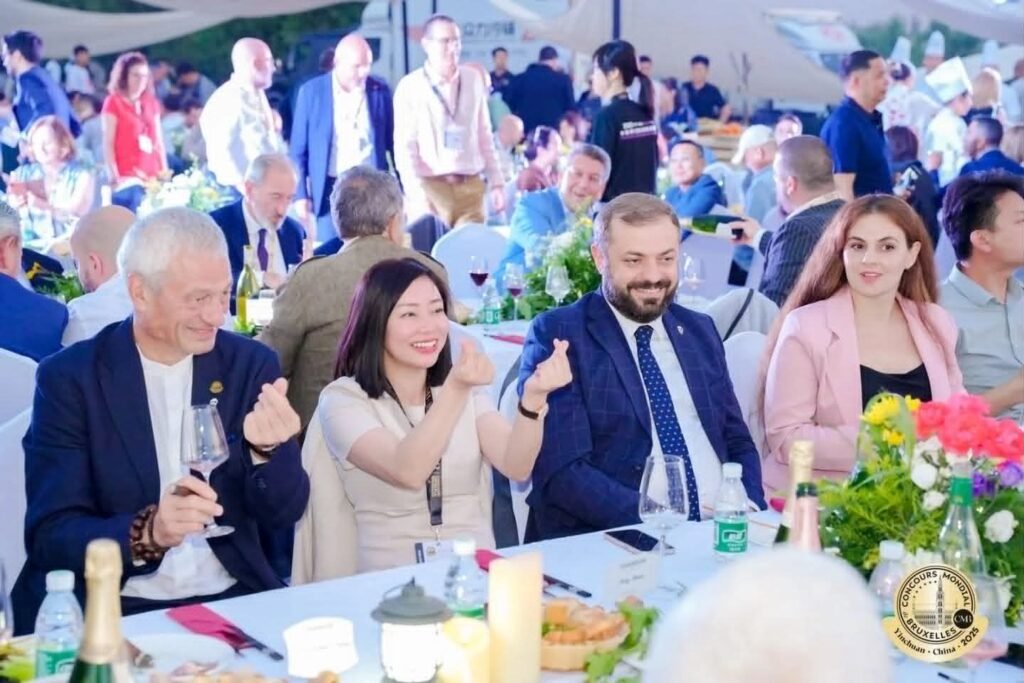
Until this unfortunate moment, the organisers of the competition, Baudouin and Quentin Havaux, had spent many years building a strong family partnership in international wine communication, which had contributed significantly to the reputation and authority of Concours Mondial de Bruxelles and Vinopres. Now this reputation is at risk.
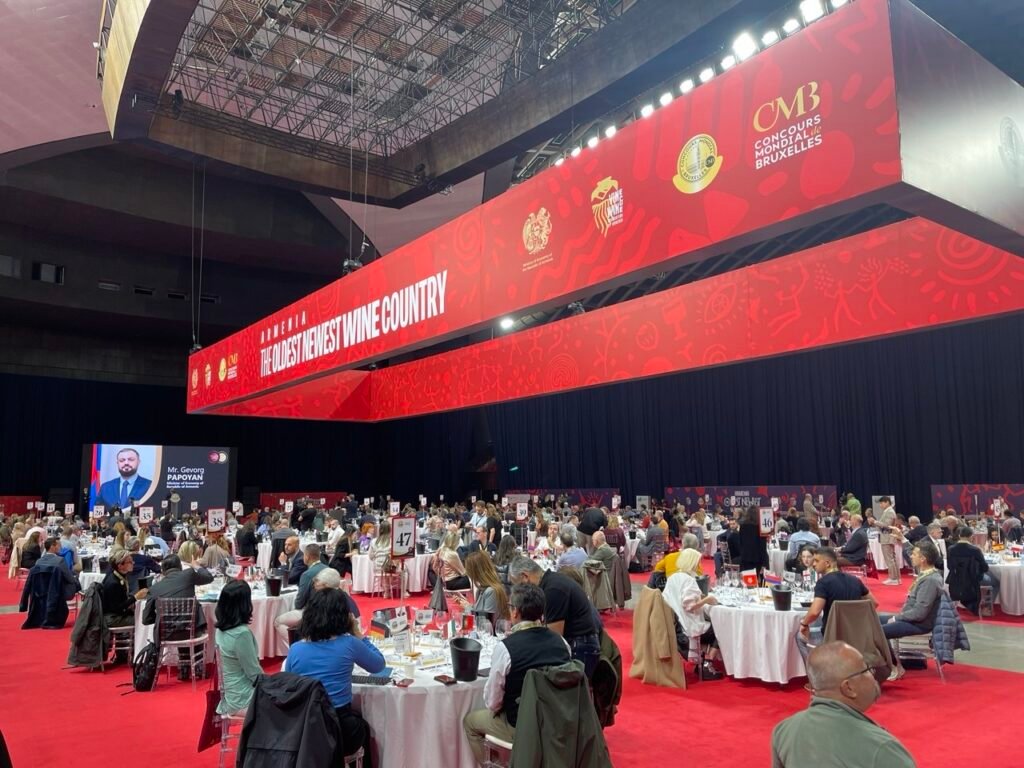
According to figures published by wine journalist Davide Bortone, Armenia invested €1.6 million in hosting the event in Yerevan. The country had every reason to expect a positive outcome for its international image and for its talented winemakers. Unfortunately, this situation is also unlikely to benefit Armenian wine. Drinks+ will nevertheless publish a dedicated feature soon about this remarkable wine region and its impressive wine tourism destinations.
At the same time, there has been little sign of reciprocity from Russia. Against the backdrop of growing political tensions between Moscow and Yerevan, Russia has this year expanded trade restrictions against Armenia, publicly presented as “sanitary measures,” and suspended sales of several leading Armenian wine and brandy brands on its market. We assume this may only be the beginning of further pressure.
According to our sources, several Ukrainian wine institutions are already preparing official statements regarding attempts to legitimise wines from occupied territories and the admission of samples from a sanctioned country to Concours Mondial de Bruxelles.
A relevant example is the widely criticised San Francisco International Wine Competition (2025). As soon as information about the participation of russian wines reached the media, American and European judges issued a clear demand to the organisers, The Tasting Alliance. They stated that their names could not be associated with a platform that legitimised sanctioned products.
The result was the complete disqualification of all 95 russian entries before the official results were announced.
Similar precedents can also be found in culture and sport, where attempts were made to reintroduce russian participants under a “neutral status.” In many cases, when international federations sought to bring russian representatives back under a neutral flag (a situation comparable to the “Crimea” category at CMB), Ukrainian representatives immediately withdrew from governing bodies or boycotted final stages of events, clearly stating that such decisions violated the principles of international law.
Another revealing example is the attempted return of Russian sommeliers to the Association de la Sommellerie Internationale (ASI). ASI is the leading global institution representing national sommelier associations. Following the beginning of Russia’s full-scale invasion, the status of the Russian Sommelier Association (RSA) was “frozen.” However, at the end of May 2026, during the ASI General Assembly in Taipei, Taiwan, a major diplomatic dispute emerged. The ASI board unexpectedly brought forward a proposal to partially restore the rights of russian sommeliers. The proposal would have allowed russian professionals to participate in international competitions and take prestigious ASI examinations, but only under a “neutral status” – without the russian flag or reference to the Russian Sommelier Association. The Ukrainian wine community and the Association of Sommeliers of Ukraine immediately condemned the initiative as unacceptable against the backdrop of daily destruction of Ukrainian vineyards and ongoing Russia’s missile attacks. Ukraine’s position was strongly supported by colleagues from the Baltic states, Poland, the United Kingdom, the United States and Scandinavian countries.
The vote ended with the proposal being rejected. The international community demonstrated solidarity, and in the final vote, 24 ASI member countries firmly opposed any relaxation of the restrictions. As a result, the sanctions and full limitations imposed on the Russian Sommelier Association and its members remained in place.
Taking previous cases into account, Drinks+ Media Group expresses its protest to the organisers of Concours Mondial de Bruxelles 2026 against placing the names of Ukrainian experts and Ukrainian wine brands on the same platform as russian wines, as well as against promoting wines from occupied territories without identifying them as “Wines of Ukraine.”
In our view, the situation represents a breach of the principles of good-faith partnership between the competition and its experts.
Today, Ukraine once again appeals to the international wine community for support. Until the war against Ukraine is brought to an end, Ukrainian representatives call on global wine institutions to completely block the participation of russian brands in international events, reject the illegitimate presentation of “winners,” refuse the certification of stolen Crimean vineyards, and prevent any marketing manipulation involving wines from Russia and occupied Crimea.
⇒ Join our social networks ⇒ Optimistic D+ editors will take this as a compliment.
⇒ Every like is taken as a toast!
Picture: Oleksandra Rodionova
18.09.2026