Увага!

Увага! На сайті використовуються cookie файли.

The site uses cookie files

Даний сайт має вікове обмеження.

This site has age restrictions!

Я підтверджую, що мені, на жаль, давно виповнилося 18 років
I confirm that I have 18 years!
Persha Gildiya
Persha Gildiya

Gastronomy and Wine Portal

Michelin Grapes: grape «bunches» for wineries join restaurant «stars»

The sensational invasion of the Michelin Guide into the world’s vineyards, announced the other day, has raised many questions, among which the following three are the loudest. Will grapebunches” be as popular as restaurant “stars” or hotel “keys”? Will winemaking become a lifeline for Michelin? Will Michelin Grapes crowd out Parker’s 100-point system?


Time will tell, but for now, a little more detail. Sensational rumors that have been circulating for weeks have now been officially confirmed: the Michelin Guide, the world’s most influential guide to restaurants (with its iconic “stars”) and hotels (with “keys”), is expanding again.

This time, attention – in the world of wine. In fact, according to Drinks+, the Michelin Guide for restaurants has long been unevenly breathing on the wine topic. This is evidenced by the introduction of the subscription system Wine Access x MICHELIN and active reviews of the wine lists of such famous restaurants as, for example, Eleven Madison Park, located in New York and which has 3 Michelin stars and is owned by chef Daniel Hamm.

And here is the final step towards the goal.

Starting in 2026, Michelin is introducing a new rating system dedicated to wineries: Michelin Grapes, which are awarded on a scale of 1 to 3. This is the first time in its 125-year history that Michelin will rate wineries as independent entities, placing winemakers, estates and their viticultural and winemaking heritage on the same level as haute cuisine and luxurious hospitality.

Time will tell whether ” bunches” will be as popular as restaurant “stars” or hotel “keys”, but the introduction of Michelin Grapes hints at a long-term ambition: to unite the assessment of wine, gastronomy and hospitality under a single global standard. On the other hand, there are skeptics among observers of the benchmarking market. They argue that such an expansion of the “Red Guide” is more a way to escape its own crisis, which restaurant critics have been discussing more frequently in recent times.

Challenges Facing the Wine Industry

Will wine become a lifeline for Michelin? There is reason to doubt, because the decision came at a time when the global wine industry is facing a decline in consumption and rising anti-alcohol sentiment. It is also struggling with overproduction and growing economic turbulence around the world. In addition, according to Drinks+ observers, the psychological portrait of the wine community is significantly different from the restaurant community.

She is generally more self-confident and not as psychologically vulnerable as restaurateurs who were willing to hang themselves for being stripped of their stars by the relentless Michelin inspectors. So, in this context, Michelin’s decision seems clearly bold. But, given the supposed long-standing problems in the field of restaurant evaluation, transferring the activity from restaurant halls to vineyards may make sense. Regardless of the motives, the introduction of Michelin Grapes could revolutionize the world of wine awards and, in general, the way wine producers are perceived and valued internationally.

According to the publishers, the existing world wine awards have not been enough for this. Michelin’s official press release describes the new system as “a benchmark for discovering and showcasing the talents of winemakers around the world.” The guide aims to highlight both the vineyards and the people behind them – the producers, families and teams whose skills embody tradition, innovation and craftsmanship. According to Gwendal Poullennec, international director of the Michelin Guide: “This benchmark is designed for both curious enthusiasts and discerning experts. It recognizes the men and women who build the most meticulous and high-quality vineyards in the world.”

Let’s explore how the Michelin Grapes system of coordinates will be evaluated.


The experienced guide proposes five main vectors:

Agronomic excellence

Evaluation of soil viability, vineyard balance, biodiversity and general vine care – factors directly linked to wine quality and sustainability.

Technicality

A precise assessment of the winemaking process.

Michelin strives for precision, rigor and purity in execution, wines that clearly embody the grape varieties and terroir.

Identity

The winery’s ability to reflect authenticity, a sense of place, cultural heritage and personality.

The producer must demonstrate a unique voice and style.

Balance

Harmony between the key structural components – acidity, tannins, alcohol, sweetness and oak.

Technically impeccable balance is essential for the highest distinctions in a wine.

Consistency

Wines must demonstrate quality over several vintages, even in difficult years.

The guide will reward producers who have achieved depth, complexity and consistency of age over time.


Michelin Grapes Award System:

⭐  3 Bunches (Michelin Grapes)

 These will be awarded to exceptional producers.

Wine lovers can rely on their bottles with absolute confidence, regardless of the vintage. These wineries are the pinnacle of world excellence.

⭐ 2 Bunches

Producers who stand out for their quality and consistency, positioned among the best in their region.

⭐ 1 Bunch

 Very good producers who create wines

with character and style, especially strong in top vintages.

⭐ Selected

Reliable producers who offer quality wines that provide a recognized level of quality, which is regularly checked by inspectors.

A New Benchmark for the Wine World

The first testing ground for Michelin Grapes, of course, was chosen as the leaders of the Fine Wine world – Burgundy and Bordeaux. Then, according to the publishers of the guide, the expansion should spread to Italy, Spain, the USA, Germany, Australia etc.

However, the authoritative media wine-intelligence.com asks another question on this subject: what about The Wine Advocate – does the new rating system not create a conflict of interest? At least it is strange that Michelin has not yet mentioned the consequences of this novelty for The Wine Advocate – a prestigious magazine founded by Robert Parker, which was once bought out and is now owned by the Michelin group. After all, this gives rise to internal competition and, in general, a question for industry operators: will the new Michelin wineries rating system ultimately complement or even replace the 100-point rating model created by Parker?


Meanwhile, as new stars light up in the global rating sky and passions flare up, the Drinks+ media group announces the anniversary, fifth year of the international wine and food tourism award Wine Travel Awards 2025-2026, which already unites operators and influential people from 45 countries. Join our friendly community, where competition does not prevail, but common constructive goals!


By the way, let’s spoil a little: in 2026 our activities will also unfold in Burgundy))). But we will report on this in more detail later.


⇒ Join our social networks

⇒ Optimistic D+ editors will take this as a compliment.

⇒ Every like is taken as a toast!

The sensational invasion of the Michelin Guide into the world’s vineyards, announced the other day, has raised many questions, among which the following three are the loudest. Will grape “bunches” be as popular as restaurant “stars” or hotel “keys”? Will winemaking become a lifeline for Michelin? Will Michelin Grapes crowd out Parker’s 100-point system? Time […]

RIBERA DEL DUERO: A REGION MOVING FASTER THAN ITS OWN REPUTATION

It’s difficult to describe the moment when a wine region begins to rethink itself, but in Ribera del Duero  the signs are impossible to miss. You feel it in the way growers speak about their vineyards – less about yields, more about strategy. You sense it in the quiet confidence of younger winemakers, many of whom have worked harvests in Burgundy, Barossa, Stellenbosch or Oregon and returned home with a different instinct for balance. And you see it clearly in the glass: wines that don’t rush to display their power, wines that breathe, wines that feel like they’ve stopped performing an idea of Ribera and started expressing one.


The region has been famous for its intensity for decades. Generous fruit. Altitude-driven concentration. A kind of monumental structure that defined its benchmark reds. But the most interesting part of Ribera today is not what it used to be – it’s how fast it is moving away from predictability. The vocabulary has widened. The texture has shifted. Power has not disappeared, but it has learned discipline.

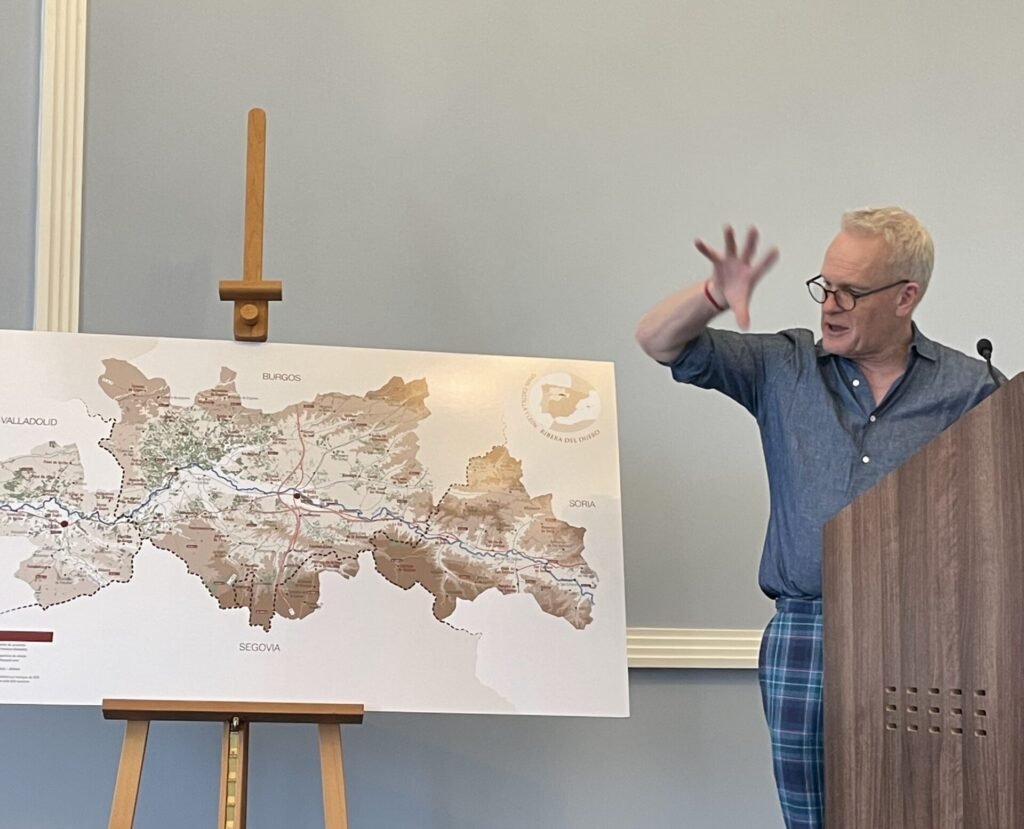
This evolution set the tone for my conversation with Tim Atkin MW in London. Atkin doesn’t speak about Ribera like an outsider assessing a distant landscape. He talks like someone who has walked the villages often enough to understand the region’s pulse. There was no drama in his voice – only clarity. “The region is moving faster than people realise,” he said, almost as if reporting a change in the weather. “Momentum is real here.”

I asked what exactly he meant. His answer came without hesitation.


Q: What stands out the most when you look at Ribera today?

Tim Atkin MW: “The acceleration. And the new generation. They’re doing things differently – but intelligently. Earlier picking. Bigger oak. Amphora. Not to copy anywhere else, but to articulate the plateau.”

This articulation – of altitude, of tension, of restraint – is the most exciting shift happening in Ribera. Wines are becoming more vertical. More deliberate. More concerned with proportion than size. It’s a stylistic evolution driven less by fashion than by necessity: climate change has shortened picking windows, exaggerated heat spikes, and made balance a strategic choice.

The New Generation

The younger winemakers shaping today’s Ribera don’t consider themselves rebels. They consider themselves caretakers of nuance. Their wines prove that generosity doesn’t have to be heavy, and that Tempranillo’s depth becomes more interesting when it’s allowed to stay fresh. They work with concrete and fountains, not because it’s trendy, but because it lets the altitude speak for itself. They talk about phenolics more than colour. About energy more than richness.


Q: How critical is this new generation for Ribera’s future?

Atkin: “Crucial. They’re the first to ask the right question: not ‘what was Ribera?’ but ‘what can Ribera be?”


The answer is already visible in the bottle.

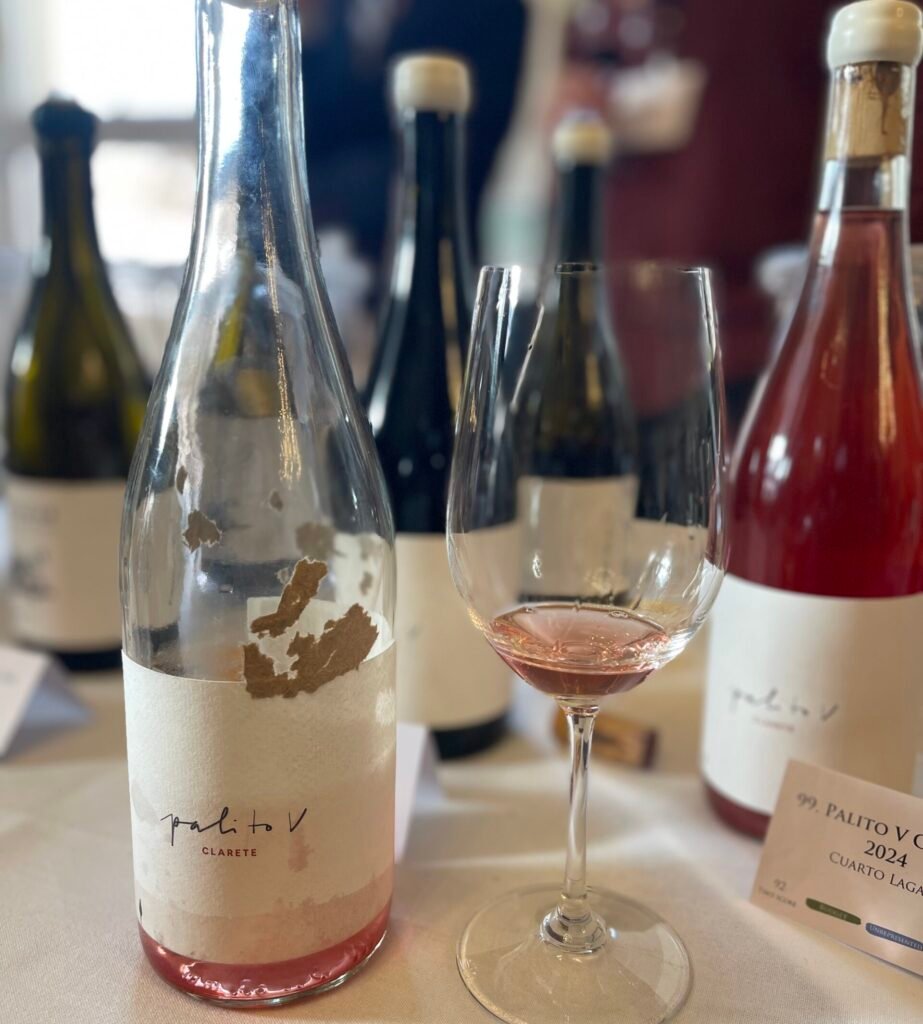
Ribera’s reinvention isn’t limited to reds. Clarete – the co-fermented, gastronomic, defiantly local category – has reappeared with surprising authority. It is not a revival for nostalgia’s sake. It is the first stylistic movement the region has produced that belongs entirely to its own history.

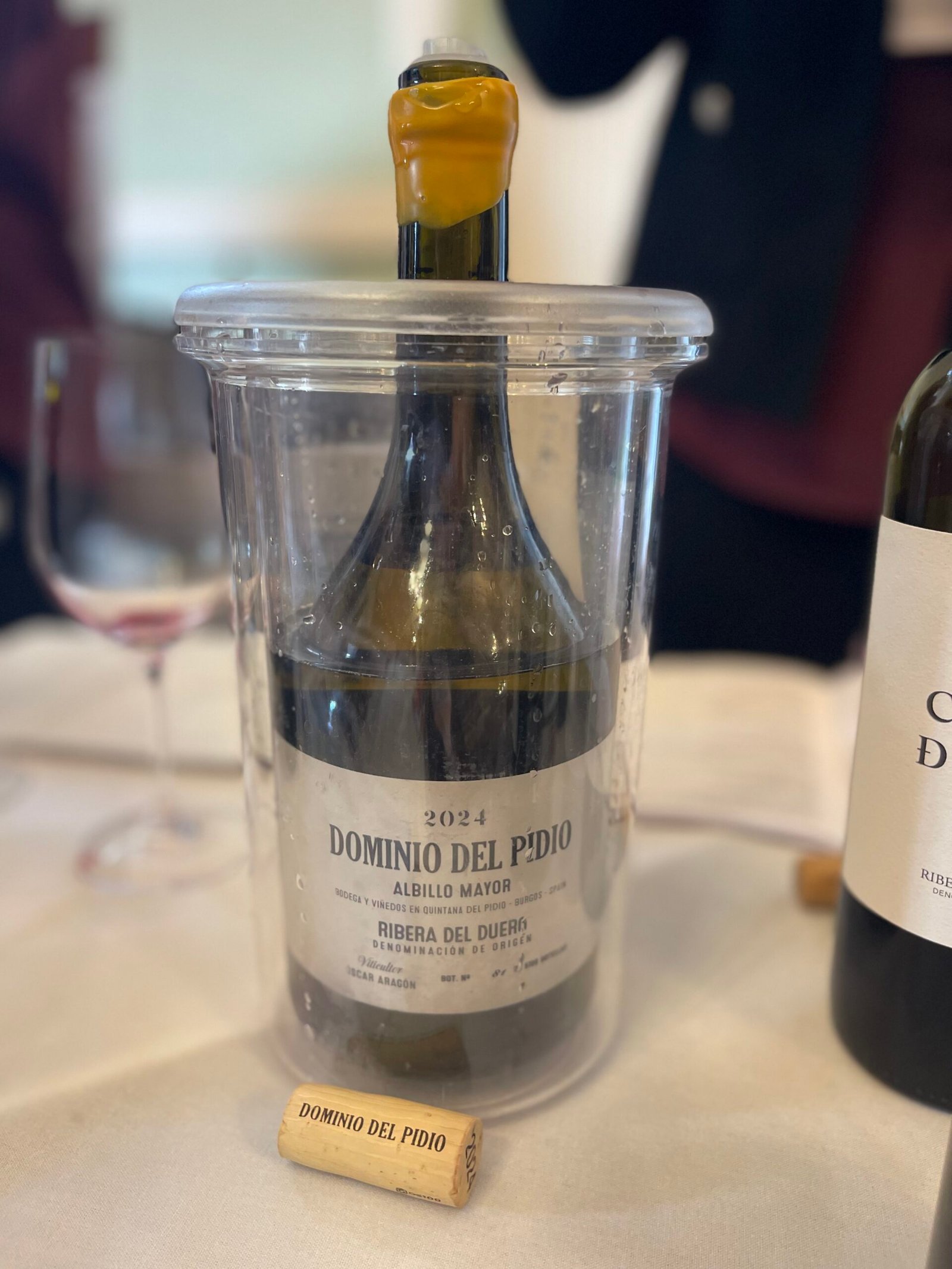
And then there are the whites. Albillo Mayor, once considered peripheral, is now producing some of Ribera’s most distinctive wines. They are textural, elegant, structured – serious wines, not curiosities.


Q: Do whites now play a fundamental role in Ribera’s identity?

Atkin: “Yes. The best ones aren’t experimental anymore. They’re part of the region’s future.”


One part of the conversation that stayed with me was Tim’s breakdown of recent vintages, not because of the usual debate about “good” and “bad” years, but because his summary captured the rhythm of a region living on a climatic knife-edge. Ribera has always swung between Atlantic freshness and Mediterranean heat, but the oscillations have become sharper, the patterns more compressed.


Q: If you had to describe the last decade in one line, what would it be?

Atkin: “Hot years getting hotter. Cold years are getting rarer. And frost hits when you don’t expect it.”

His vintage map made the trend unmistakable.

The hot/dry sequence – 2009, 2011, 2012, 2015, 2017, 2020, 2022 – now reads like the region’s new normal.

Cooler or unsettled years – 2007, 2008, 2013, 2014, 2016, 2018, 2021 – are increasingly exceptions.

And the frost years – 2001, 2007, 2008, 2010, 2017, 2023, 2024 – underline how fragile the plateau has become.

Since 2003, only one vintage has begun harvest in October.

The rest started earlier, some dramatically so.


“2015 was the tipping point,” Tim noted. “From then on, everything moved forward.”

2023, 2024 and the upcoming 2025 are, as he said, “a bit of everything” vintages – the kind that force winemakers to react quickly rather than rely on patterns that no longer exist.

What this means for Ribera isn’t panic; it’s precision.

Picking windows shrink. Decisions tighten. Altitude stops being a theory and becomes a survival strategy.


A Voice From Inside: Pablo Baquera

From the inside, the evolution appears both inevitable and intentional. Pablo Baquera, the commercial director of the Consejo Regulador, sees stylistic change not as disruption but as alignment.

Q: Does the DO Ribera del Duero see this stylistic shift?

Pablo Baquera: “We see more freshness, more balance, more terroir expression. Innovation is happening – but authenticity stays. They aren’t opposites.”

He’s candid about the challenges, too.

Q: Is Ribera ready for the next decade?

Pablo Baquera: “We’re already adapting. Every year, something happens – frost, heat, hail. But this region has experience with extremes. Growers know how to work through them.”


His realism grounds the conversation. Atkin’s analytical clarity and Baquera’s on-the-ground perspective meet in the same place: Ribera is evolving because it must – and because it can.

“What next?” for Ribera del Duero isn’t a bureaucratic question.

It is a reality check.

The region can’t continue expanding indefinitely –  not after the 2025 harvest, which became Ribera’s second-largest crop ever. Grape prices softened immediately. Demand didn’t match supply. More vineyards do not equal more value. The following strategic step isn’t growth. It’s discipline.

A soil map is long overdue. Altitude alone cannot explain Ribera’s diversity. Until the region classifies its vineyards by what they are, not by how long the wine spends in oak, its strongest producers are constrained by a system that measures ageing instead of origin. Great regions don’t hide their soils behind bureaucracy; they define them.

Irrigation is becoming the dividing line. In 2024, the stakes became clear: water will determine yields, but also identity. Used carefully, irrigation can preserve balance in extreme years. Used indiscriminately, it flattens differences and accelerates sameness – the very opposite of what the region needs.

Organic farming, once a footnote, has gained critical mass – 65 certified bodegas and counting. This is not ideology. It is self-preservation. In a climate this volatile, soil health is not a trend; it’s a survival strategy.

Machine harvesting versus hand picking… this is not a question of romance. It is a question of segmentation. The region will eventually have to decide which wines can be machine-harvested and which must be handpicked if it wants to maintain its integrity at the top.

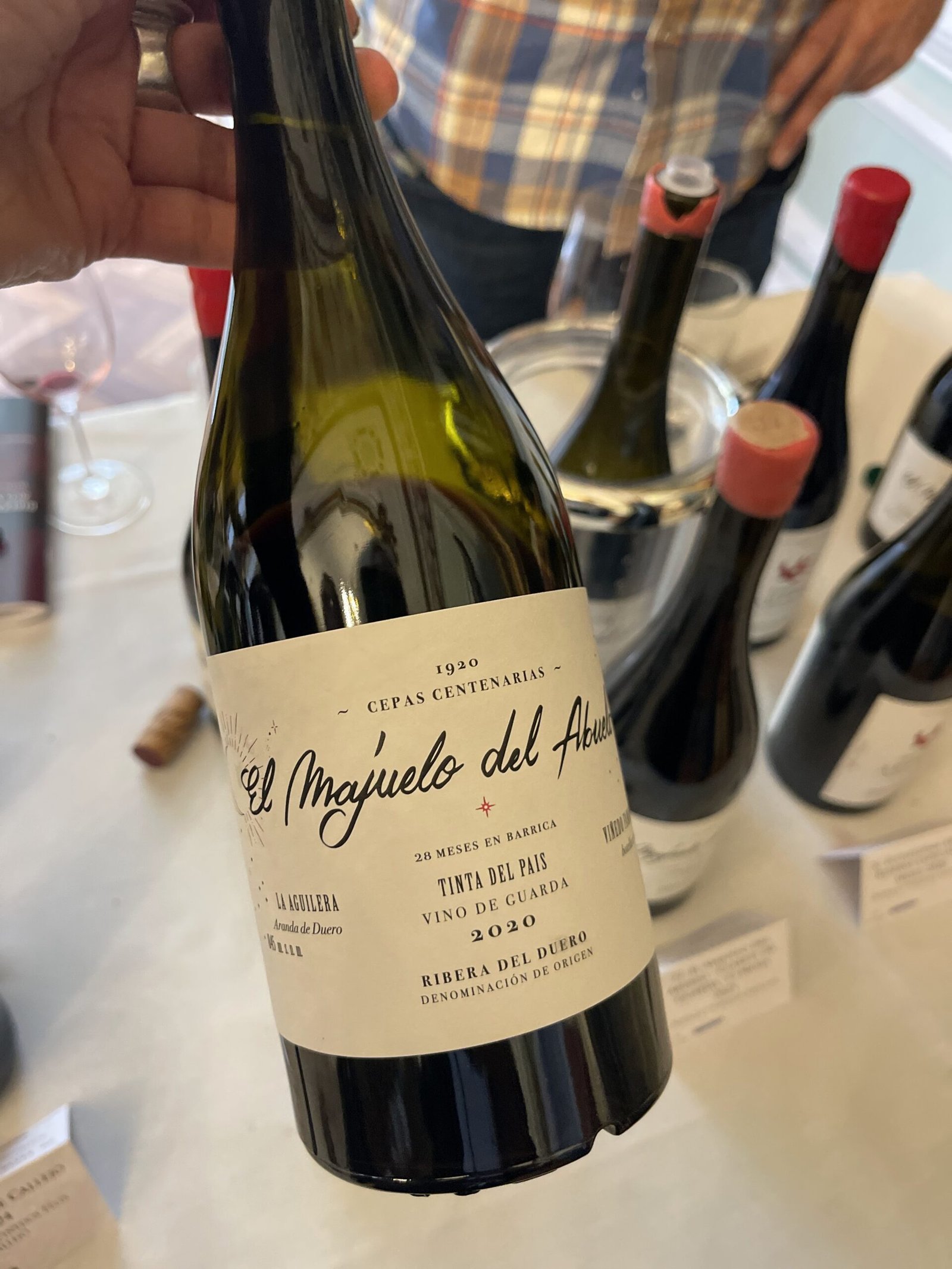
Even technical discussions – massal selections, clones like CL-179, CL-98, CL-261, mixed vineyards — speak to a deeper truth: climate change does not reward uniformity. Ribera’s genetic and viticultural diversity is not an aesthetic detail. It is a competitive advantage. It must be protected, not flattened.

And then there is the new generation –  educated abroad, stylistically fluent, unafraid. Their wines already point toward a future where purity matters more than extraction, shape more than volume, and clarity more than intensity.

The next chapter will not be written by hectares or yields.

So where does that leave Ribera del Duero?

Not in crisis. Not in transition.

In definition.

The region is moving quickly –  faster than its own reputation, faster than many outsiders realise. It is learning to treat power as material, not message. It is rediscovering its own diversity. It is reconsidering growth. It is rethinking identity through whites, claretes, old vineyards, and new philosophies. And it is embracing a generation that sees no conflict between respecting tradition and redefining it.

I asked Atkin one final question – the only one that matters when a region stands on the edge of its next decade.


Q: Where do you see Ribera in ten years?

Atkin: “If the region makes the right choices – at the top. Truly at the top. The potential is extraordinary.”


Potential is not a guarantee.

But Ribera del Duero feels like a region finally ready to earn it.

It is no longer shaped by what it once was.

It is shaped by what it refuses to remain.

And perhaps that is the most exciting thing:

Ribera is not standing still.

Not for a moment.


⇒ Join our social networks ⇒ Optimistic D+ editors will take this as a compliment.

⇒ Every like is taken as a toast!

It’s difficult to describe the moment when a wine region begins to rethink itself, but in Ribera del Duero  the signs are impossible to miss. You feel it in the way growers speak about their vineyards – less about yields, more about strategy. You sense it in the quiet confidence of younger winemakers, many of […]

List of JC Viens

Amarone Opera Prima 2025, coinciding with the 100th anniversary of the Valpolicella Consortium, took place in Verona from January 31 to February 2. The prestigious event was held at one of the city’s most iconic venues, Palazzo della Gran Guardia, where organizers gathered wines from nearly 80 wineries and welcomed over 100 journalists from leading wine publications across 26 countries – including Argentina and Japan, Australia and Canada, China and South Korea, Denmark, the UAE, Finland, Germany, Austria, Norway, Hong Kong, Israel, France, Kazakhstan, Latvia, Poland, Singapore, Sweden, the UK, the USA, and more.


We extend our gratitude to the Valpolicella Wine Consortium for inviting representatives of Drinks+ and Wine Travel Awards to join the global media selected to cover this landmark event in the wine world. We plan to share a more detailed account of these vibrant, impeccably organized, and authentically Italian events. But let’s start from the beginning – with the first day and the first tasting, which immediately set a high standard for this grand and multifaceted wine event.
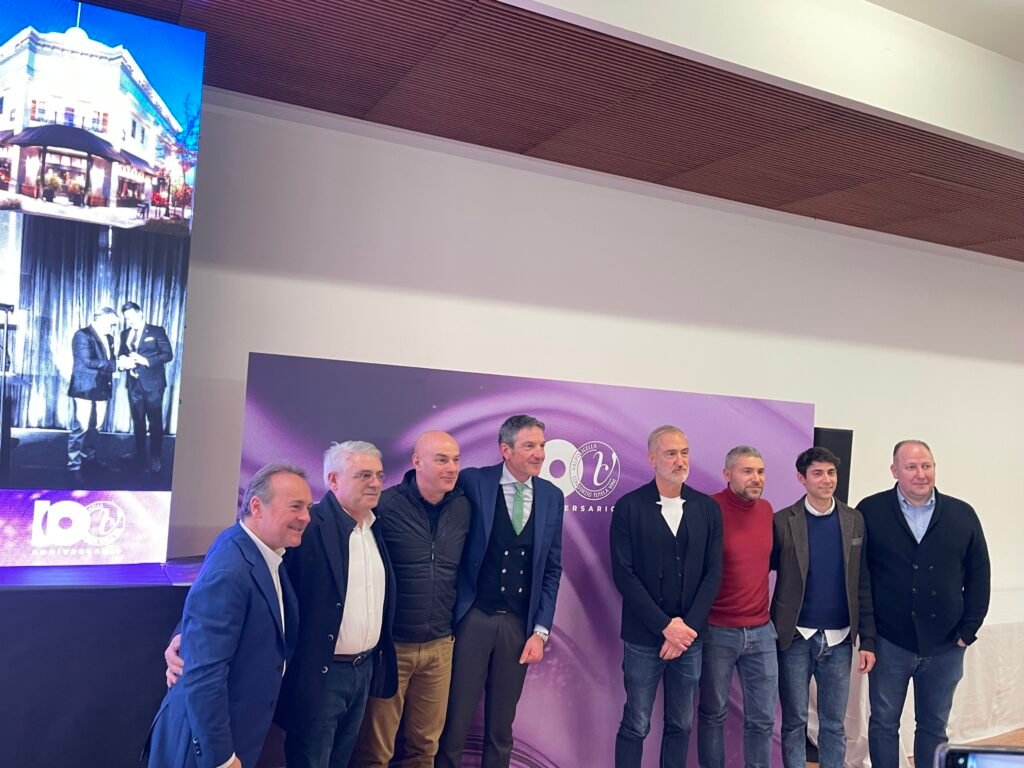
Amarone Opera Prima 2025

Following a dynamic welcome speech to the guests of Amarone Opera Prima 2025 by the president of the consortium, Christian Marzeschini, a remarkable tasting unfolded – hosted by renowned wine expert JC Viens. This tasting, titled “Amarone: An Icon of Fine Dining in the World’s 50 Best Restaurants,” was designed to challenge even the most experienced wine professionals. Under Viens’ guidance, participants explored the pairing of Amarone wines featured on the wine lists of seven of the world’s top restaurants, as ranked by the British Magazine Restaurant.

JC Viens provided an insightful overview of the historical and contemporary context in which Valpolicella’s legendary wine, Amarone, has evolved and continues to thrive. His presentation, much like the welcome speech by the president of the consortium, was unusually heartfelt for an event of this kind – filled with witty remarks that had the audience laughing. At the same time, it was a highly professional commentary, guiding the tasting of seven iconic wines with an in-depth analysis of the pairings curated by the chefs of the world’s finest restaurants.

Let us introduce our guide: JC Viens holds a WSET Diploma Level 4 and spent 12 years as a certified WSET wine educator before becoming a program provider in Hong Kong. In 2021, he moved to Verona, where he continues to teach WSET courses from Levels 1 to 3.

Throughout his career, he has lectured on the winemaking traditions of Bordeaux, Burgundy, and various Italian regions. He was an accredited instructor at L’École du Vin de Bordeaux and also served as a Vinitaly ambassador. An experienced wine judge, JC Viens has been part of prestigious panels such as the Decanter Asia Wine Awards and 5-Star Wines (Vinitaly). Additionally, he completed the rigorous Advanced Wine Assessment Course (AWAC), preparing him to judge Australian wine competitions at the highest level.

First and foremost, Mr. Viens explained his concept: to showcase Amarone’s potential as a highly cosmopolitan fine dining wine, capable of pairing beautifully with a wide range of global cuisines and ingredients. He shared his personal perspective on Amarone:”After living in Verona for six years, I realized that many classic perceptions need updating and rethinking. For example, I find the term ‘meditative wine’ outdated when describing Amarone – it originated at a time when Amarone was a rare wine. Since then, both its style and winemaking approaches have evolved. It’s time for us to change our views as well. This year, I selected wines from the lists of several establishments featured in The World’s 50 Best Restaurants. I personally reached out to each venue and created my own ultimate pairing selection.”

Needless to say, we highly recommend our readers take advantage of this unique list curated by JC Viens – note it down in your travel journal and, when the opportunity arises, visit these establishments to experience the harmony of these pairings first-hand. As for us, we will share our own impressions- at the very least, of the Amarone and JC’s insightful commentary.

1. Meroni Il Velluto 2011 & Mountain

The first wine tasted was Meroni Il Velluto 2011 (35% Corvina, 30% Corvinone, 25% Rondinella, and 10% Molinara), featured on the wine list of one of Soho London’s popular restaurants – Mountain (16-18 Beak Street, W1F 9RD). This Amarone holds an honorary place among the 100 best wines in the world (with the restaurant’s wine list spanning over 30 pages), carefully selected for this Michelin Guide-recommended establishment specializing in Spanish cuisine.

Amarone Opera Prima 2025

JC Viens provided insight into its pairing with one of the restaurant’s signature dishes – Whole Lobster Caldereta (lobster in a brandy and garlic sauce). While Lobster Caldereta is typically a challenging match for red wines, the Azienda Agricola Meroni Amarone proved to be a worthy companion to this bold and aromatic dish.
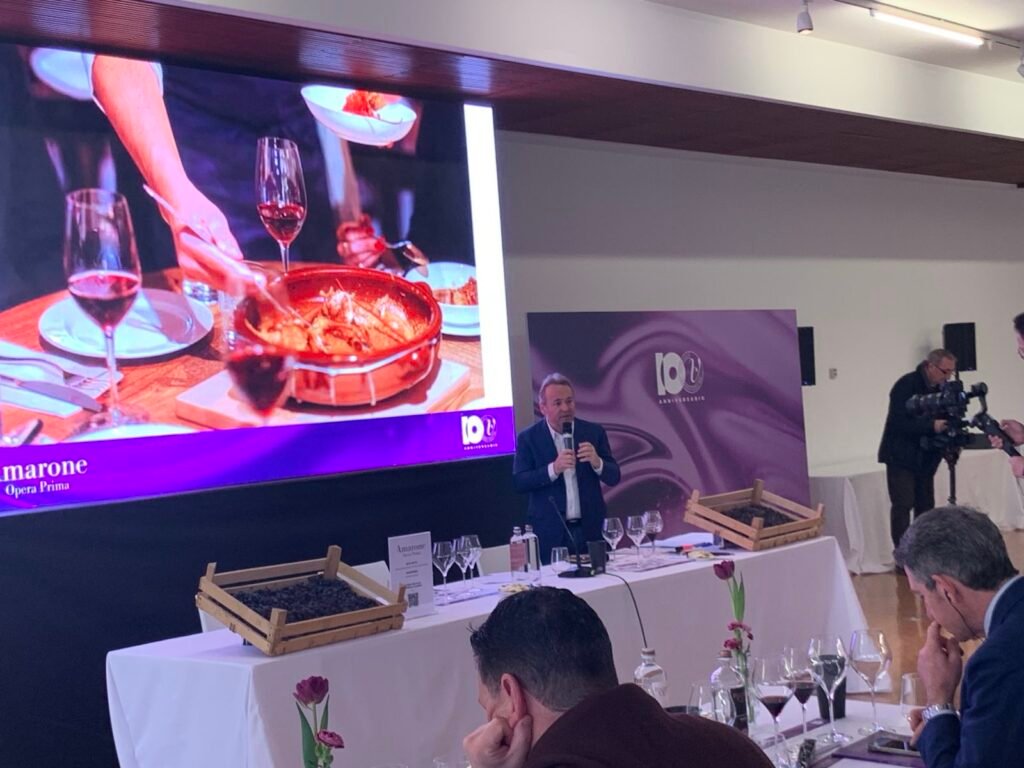
Amarone Opera Prima 2025

Attendees at the tasting in Verona witnessed how the wine’s fresh character, notes of ripe, juicy plums, impeccable acidity, and an aroma filled with sweet fruits, nutty hints, and a complex array of spices could harmonize with even the most assertive culinary creations.

2. Cà La Bionda Vigneti di Ravazzol 2012 & Sezanne

Next, under JC Viens’ guidance, we traveled – at least in spirit – to one of Tokyo’s most prestigious restaurants, the three-Michelin-starred Sezanne (100-6277 Marunouchi 1 Chrome-11-1 Marunouchi, Chiyoda City, Pacific Century Place). There, we explored a wild yet enticing duck dish served with a duck liver sauce and Dijon mustard, which our speaker vividly paired with Amarone Cà La Bionda Vigneti di Ravazzol 2012 (70% Corvina, 20% Corvinone, 10% Rondinella and Molinara).
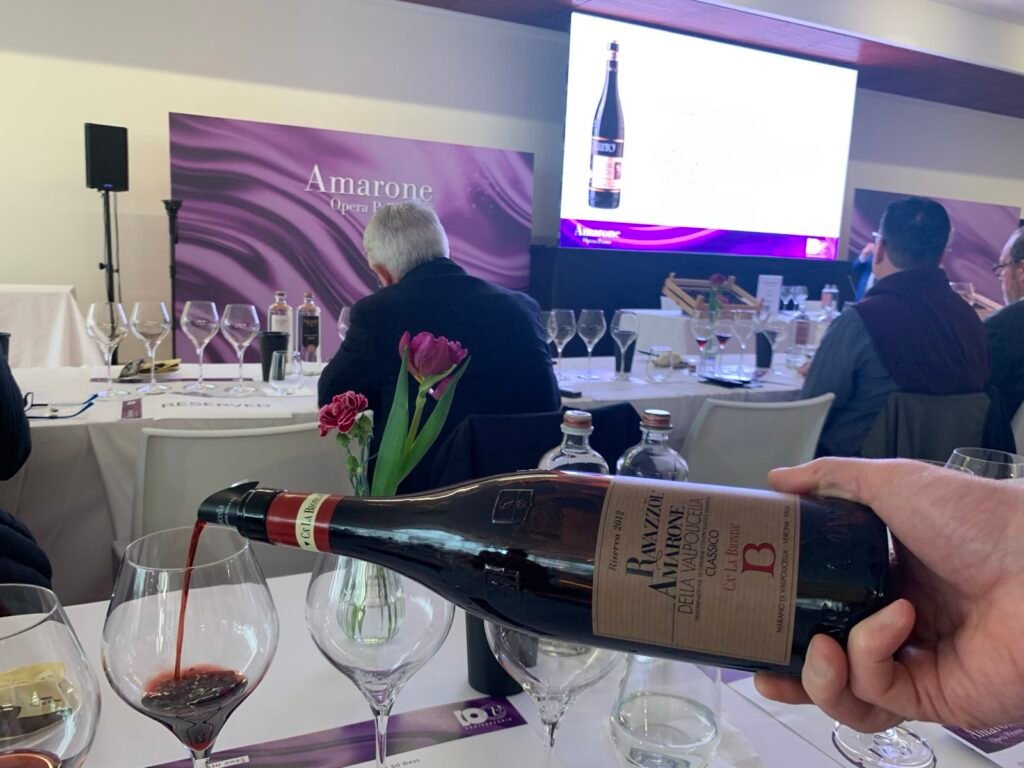
 Amarone-Opera-Prima

JC Viens shared that the duck hails from the historic city of Toyohashi in Aichi Prefecture, a region renowned since ancient times as a prime location for bird hunting. The dish features a duck that has been air-dried for several days before roasting, with its skin carefully brushed with honey. The rich duck liver sauce delivers an intense depth of flavour, while the Dijon mustard is emulsified to a silky smooth texture.
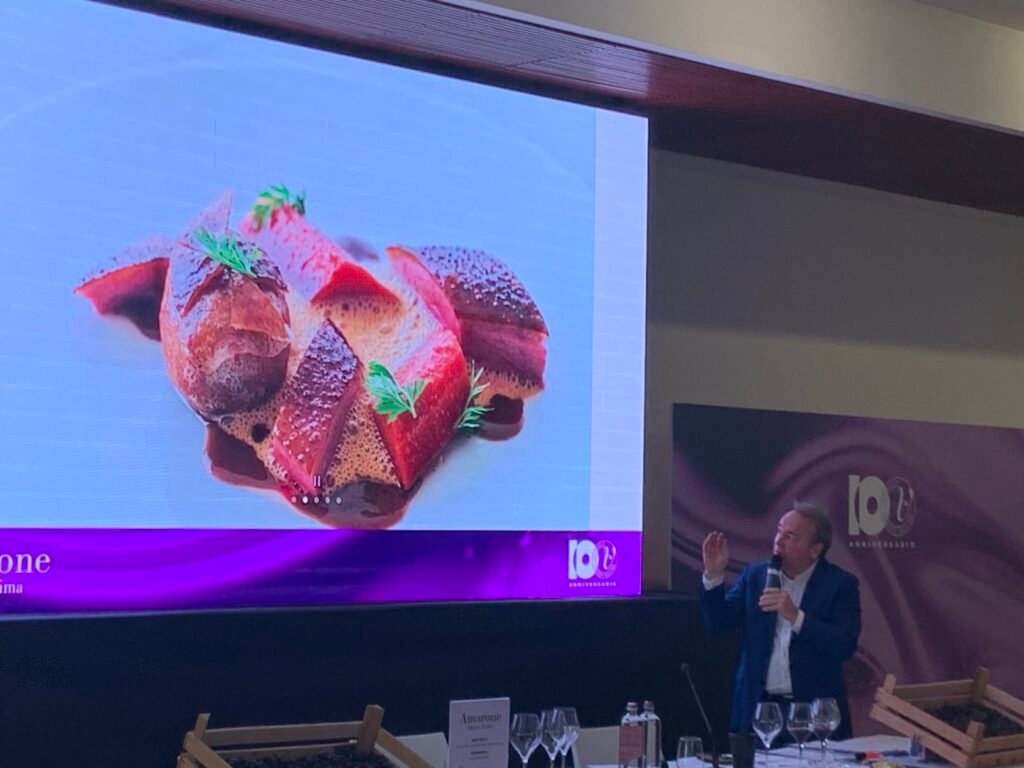
 Amarone-Opera-Prima

If you’re lucky enough to visit Tokyo and dine at Sezanne, you’ll witness first-hand how the techniques of Peking duck have been masterfully woven into this classic French-inspired dish. And, of course, you wouldn’t forget to order a glass of Vigneti di Ravazzol 2012 to complete the experience, would you?

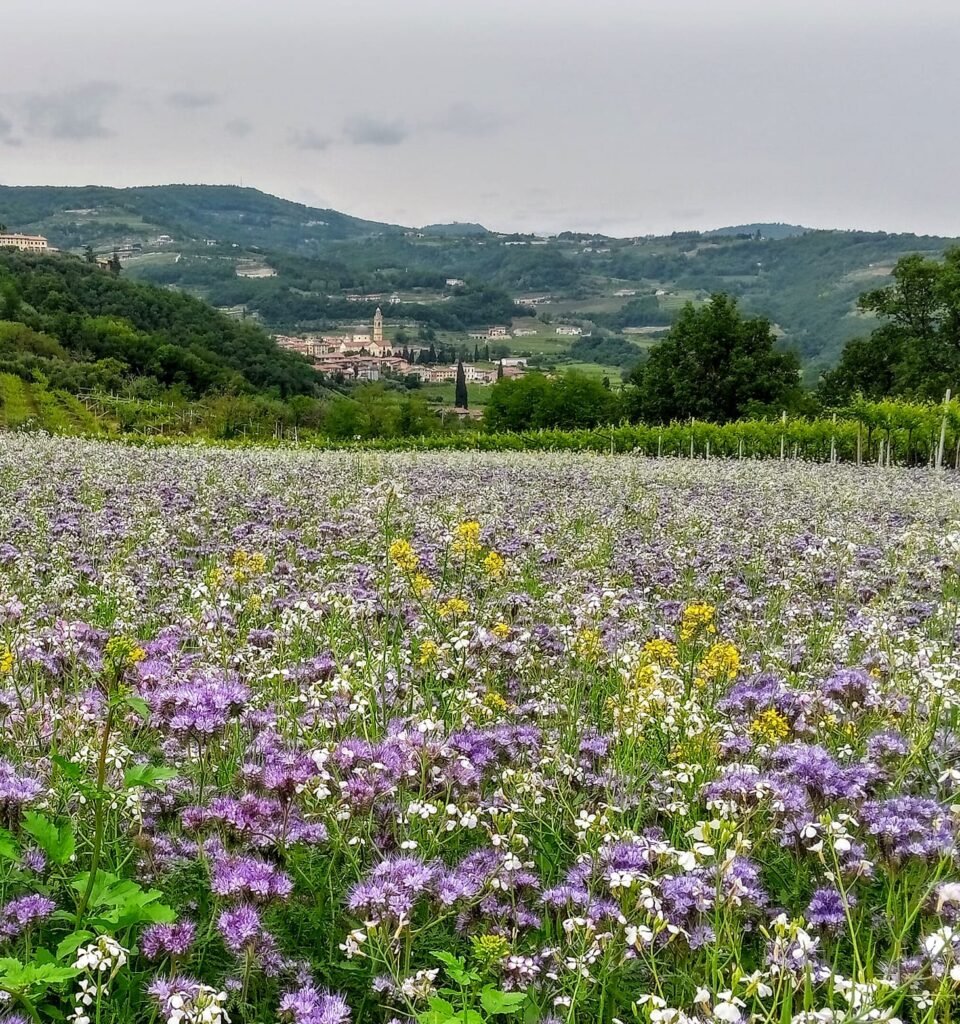
The grapes for this Amarone come from vineyards located on the renowned Ravazzol hill. The unique soil characteristics of this site impart remarkable freshness and elegance to the wine, essential for its long aging potential.
Amarone-Opera-Prima

The producers fully embrace this potential, aging the Amarone for 42 months in 3,000-liter oak casks. The aroma is complex, while the flavour profile reveals notes of pepper and dried tobacco, complemented by subtle hints of leather, marinated cherries, and distinct balsamic undertones.
If you find yourself in Tokyo, make sure to visit Sezanne, located on the 7th floor of the Four Seasons Hotel Tokyo, and experience first-hand the exceptional pairing of Cà La Bionda’s Amarone with the dish expertly matched by JC Viens. By the way, Sezanne boasts numerous prestigious awards, including: Three Michelin stars in the Tokyo 2025 Guide, Two Michelin stars in Tokyo 2023 & 2024, One Michelin star in Tokyo 2022, #1 on Asia’s 50 Best Restaurants 2024, #15 on the World’s 50 Best Restaurants 2024.

At the helm of Sezanne is chef Daniel Calvert, whose stellar career has taken him from a quiet town in eastern England to Michelin-starred restaurants in London, Paris, New York, and Hong Kong. He crossed the Atlantic to hone his skills as sous-chef at Per Se in New York, later working at Epicure at Le Bristol in Paris – both establishments lavishly decorated with Michelin stars. Having lived and worked in multiple global culinary capitals, Daniel Calvert has developed an acute sensitivity to diverse cultural influences. His duck fillet and liver dish, paired with Amarone, was nothing short of cosmopolitan and harmonious – a perfect match!

3. Monte dall’Ora Stropa 2013 & Le Calandre

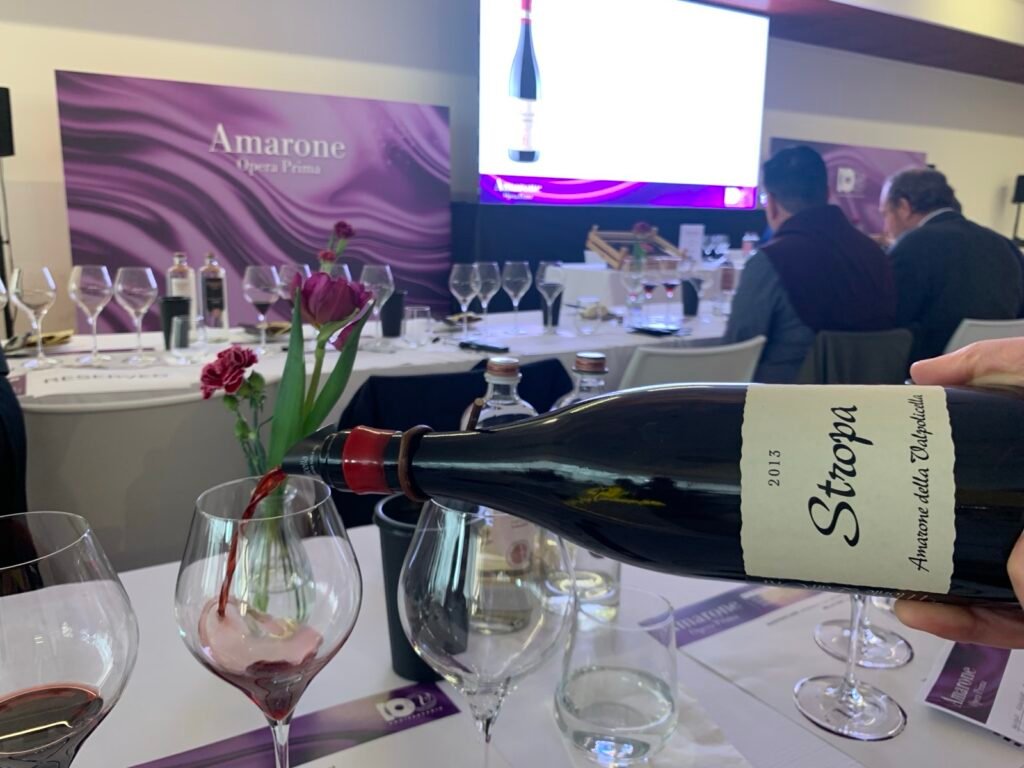
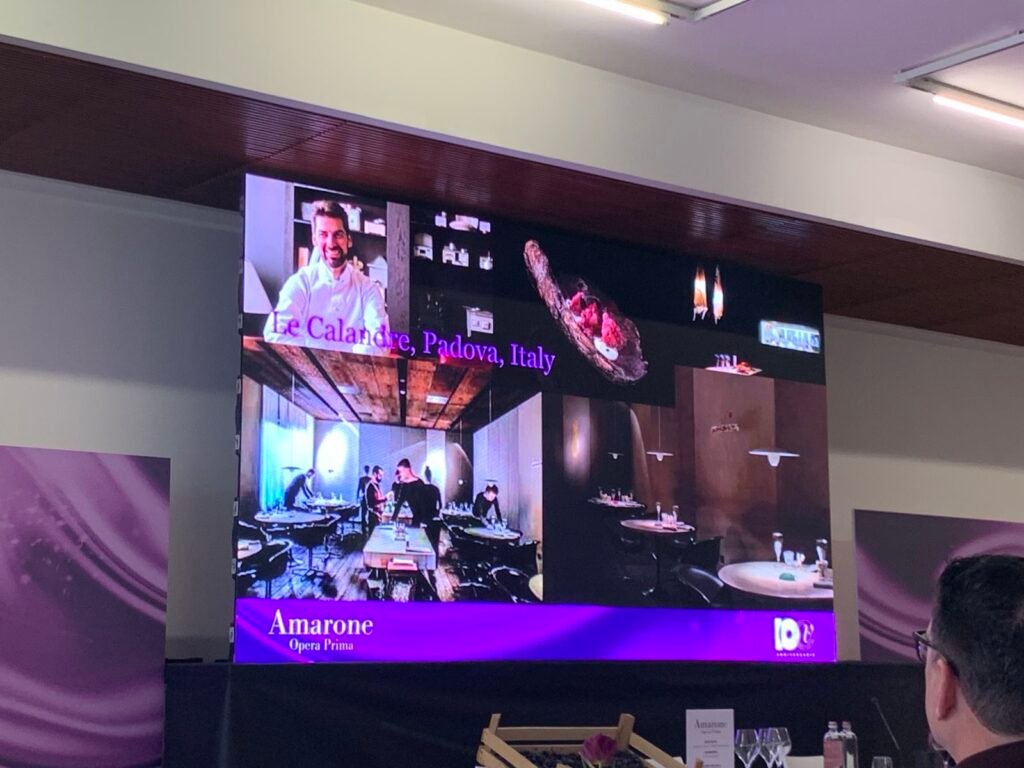
The guests of Amarone Opera Prima, under the guidance of JC Viens, then returned to Italy, this time to the enchanting city of Padua, home to the three-Michelin-starred restaurant Le Calandre (Padova, Via Liguria 1, 35030 Rubano). Here, they explored the Monte dall’Ora Stropa 2013 (50% Corvina, 20% Corvinone, 20% Rondinella, 10% Molinara, Croatina, and Dindarella), paired with a raw minced beef tartare-style dish, named in honour of the founder of the restaurant and head of the legendary Italian restaurateur family.
Amarone

It’s worth noting that Le Calandre has held its three Michelin stars for over 20 consecutive years, securing its place in the Michelin Red Guide. For this wine pairing, JC Viens selected a dish from the kitchen of the renowned Massimiliano Alajmo. His restaurants have been frequently reviewed by D+ critics, and we must admit – we seize every opportunity to visit his culinary masterpieces. The Le Calandre menu is divided into three tasting experiences: “Classico” – featuring iconic dishes crafted by Massimiliano over the years. “Max” & “Raf” – seasonally inspired menus that evolve with fresh ingredients and creative innovations.
Alajmo

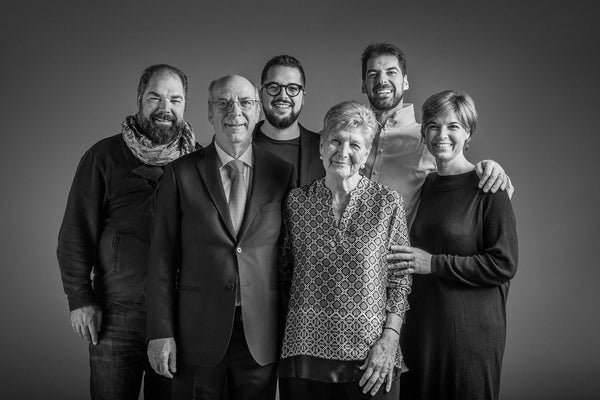
Keep in mind that the legendary tartare at Calandrino is prepared only on the last Wednesday of each month. However, it is truly a theatrical experience, as it is personally crafted tableside by the patriarch Erminio Alajmo. This dish features over fifteen meticulously balanced ingredients, expertly combined thanks to his years of culinary mastery. The presented Amarone also comes from a remarkable family, whose passion extends beyond just winemaking to a deep reverence for the land they are privileged to cultivate. Every Monte Dall’Ora wine is a Single Vineyard selection, crafted from carefully chosen grapes sourced from a single vineyard, with meticulous attention to the ripeness levels of different grape varieties.
Amarone

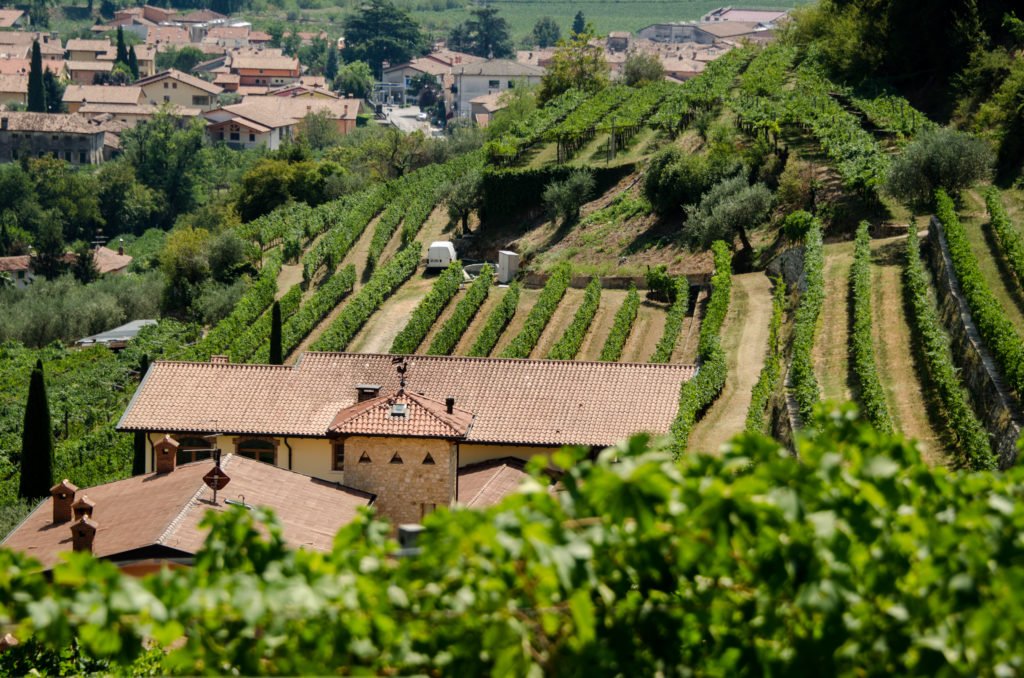
The winemakers view their land as a gift and adhere to organic and biodynamic farming techniques. The vineyard is located on the hills of Castelrotto, in the Valpolicella Classico region, at an altitude of 150–200 meters above sea level, where vines range in age from 25 to 70 years. The wine is aged for four years in 25-liter oak barrels and an additional 36 months in the bottle.

The result? Exceptional wines like Stropa 2013, which boasts an aging potential of up to 20 years. Our charismatic speaker highlighted the musky notes and truffle aroma that emerge in the pairing of Stropa 2013 with the tartare. The aroma of this Amarone initially presents raisins, which are then overtaken by delicate spicy notes with balsamic undertones. The taste is smooth and velvety, with an exceptionally long finish. So, we’re marking this in our travel guide, and next time we visit the Alajmo family in Padua, we’ll make sure to try Erminio Alajmo’s signature tartare – paired with Amarone Stropa, of course!

4. Zymé 2013 & Cenci

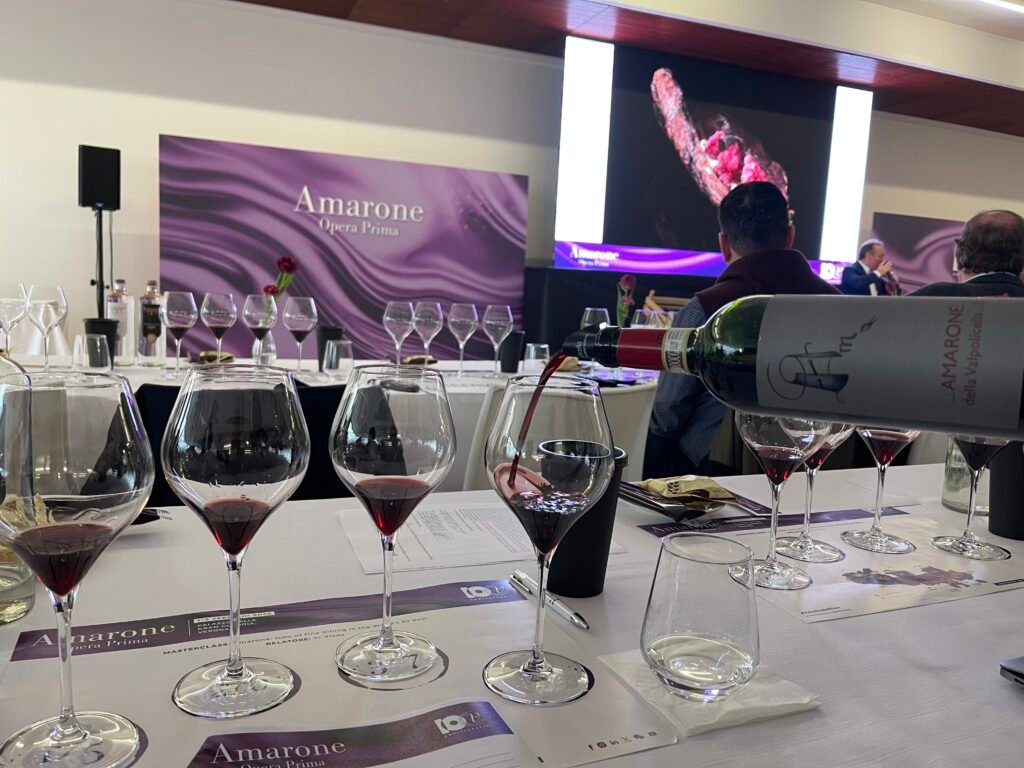
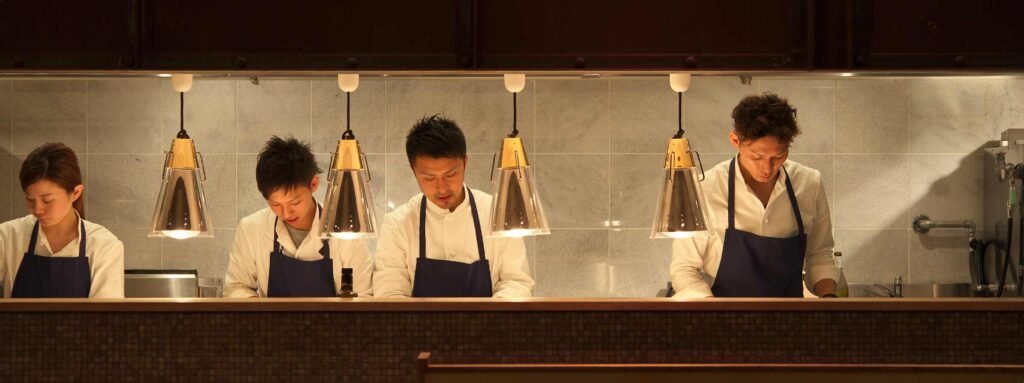
The fourth wine on JC Viens’ list was Amarone Zymé 2013 (35% Corvina, 30% Corvinone, 15% Rondinella, 5% Molinara, 5% Croatina, and 10% Oseleta), featured in the three-Michelin-starred restaurant Cenci (Kyoto) – a venue with its own organic garden and vegetable farm.
Amarone

If you find yourself in Kyoto, make sure to visit! This exceptional spot is helmed by the renowned Chef Ken Sakamoto, who takes pleasure in blending Italian cuisine with Japanese ingredients, placing a strong emphasis on fermented elements. He masterfully utilizes seemingly simple ingredients like kombu (kelp) and bonito broth, yet achieves culinary excellence in the process. At Cenci, Amarone Zymé was paired with grilled pigeon served with rice prepared in Japanese style – meaning not al dente, as Italian tradition would dictate. The dish was further enhanced with black fermented garlic. Yet, this outstanding Amarone stood its ground in this bold pairing – its lively tannins and distinct chocolate notes skilfully complemented the intricate flavours of the Japanese dish.
It’s worth taking a closer look at Azienda Agricola Zýmē (San Pietro in Cariano), a winery that is triumphantly conquering markets – and, more importantly, the hearts of wine lovers worldwide. The name Zýmē comes from Greek and means “yeast.” While yeast is, of course, an essential element in oenology, it also carries a symbolic meaning, representing nature itself – the core value in the work of renowned winemaker Celestino Gaspari.
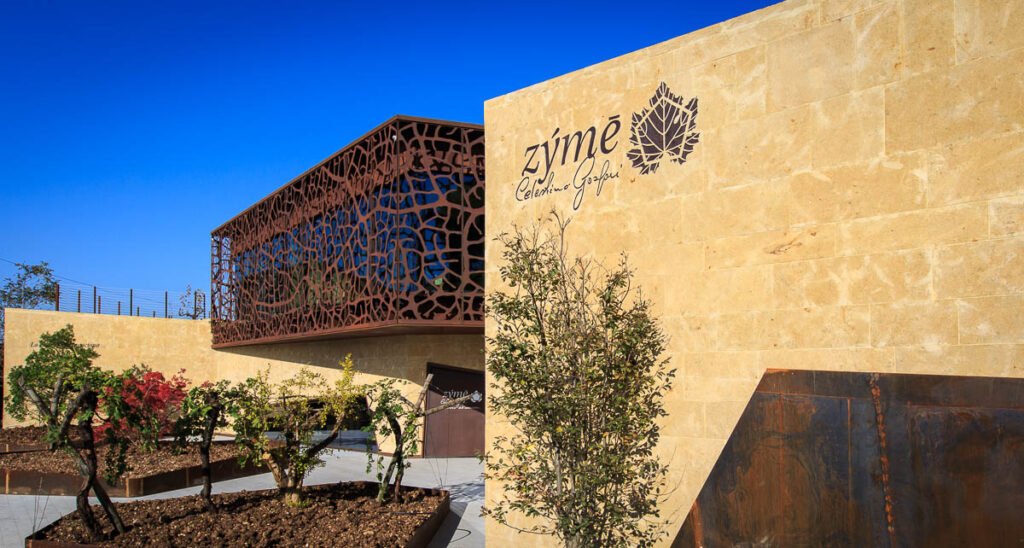
Aligned with this philosophy, the winery’s logo features a grapevine leaf with a pentagon at its centre, symbolizing the five fundamental elements that come together in winemaking: human – vine – earth – sun – water.

Gaspari himself describes his creations as follows: “What I demand from wine is transparency. In other words, I want those who enjoy it to ‘read’ in every sip the story of the bond between my identity and the land that I love, protect, nurture, and restore.”

5. Buglioni Il Lussurioso 2016 & Single Thread

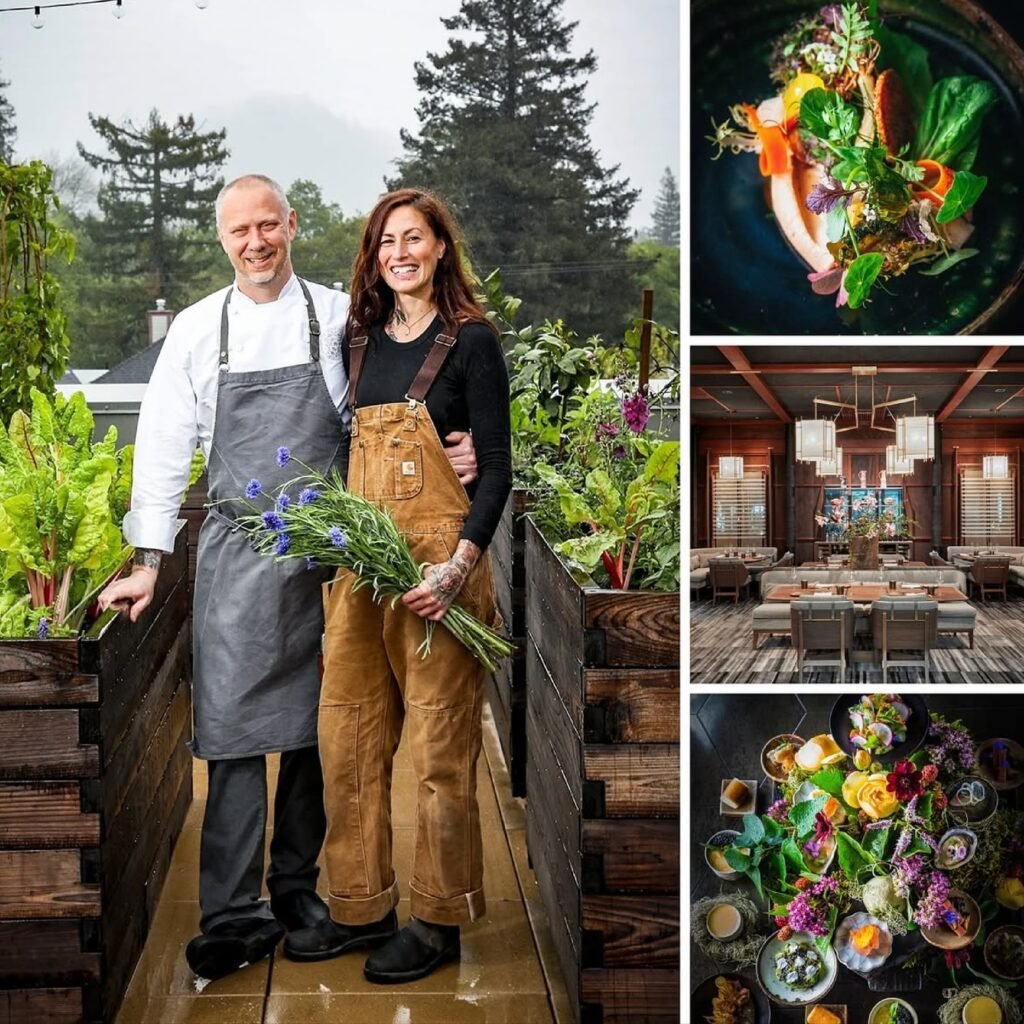
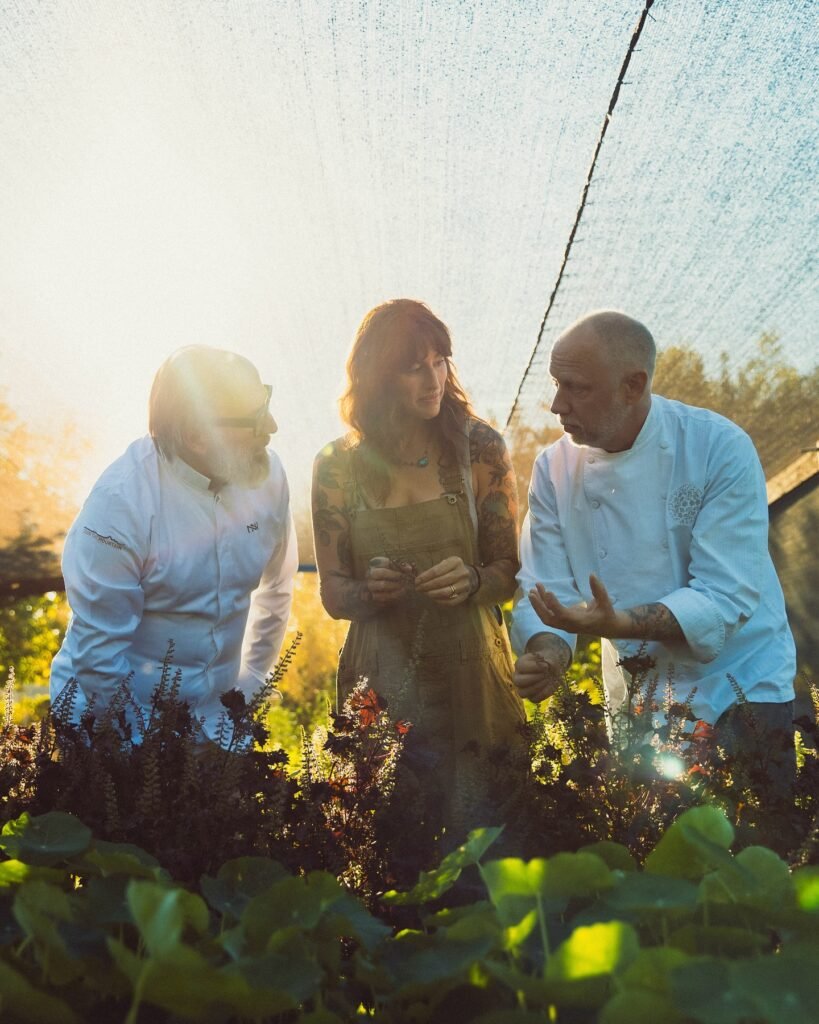
The fifth stop on our wine journey was Single Thread in Sonoma Valley (131 North St, Healdsburg, California 95448, USA) – an incredibly fascinating restaurant founded by husband-and-wife team Kyle & Katina Connaughton. The establishment features Japanese-style cuisine and embodies the philosophy of omotenashi (deep hospitality).
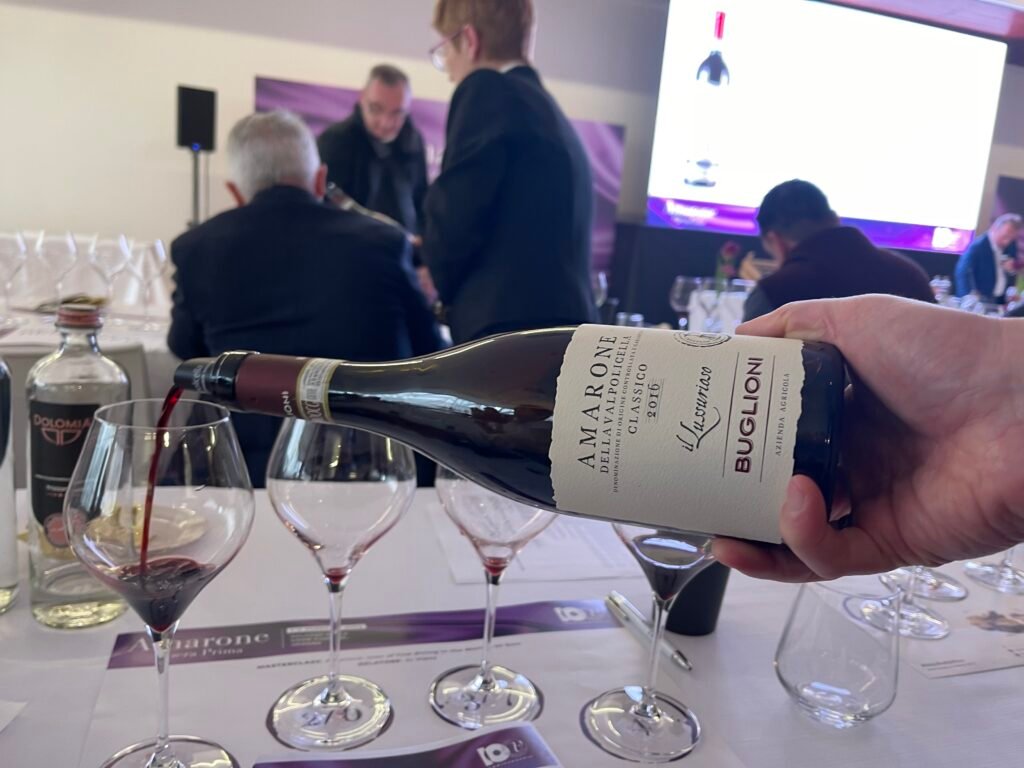
Here, the recommended pairing for Amarone Buglioni Il Lussurioso 2016 (Corvina, Corvinone, Rondinella, Croatina, and Oseleta) is beef in red sauce with red rice. Keep in mind that dishes at Single Thread are served in the kaiseki style – a culinary art form that emphasizes harmony in taste, texture, presentation, and even colour. Naturally, ingredient freshness is paramount, which is why the Connaughtons operate their own farm, cultivating vegetables, herbs, and flowers. In this setting, Amarone Buglioni feels right at home, as it, too, has a unique origin story. JC shared an amazing anecdote: this wine was crafted by a family of grape growers who owned a magnificent vineyard in the heart of Valpolicella – but for years, they focused solely on growing and selling their grapes, rather than making their own wine.
It was only in 2000 that Alfredo and his son Mariano Buglioni began their first attempts at winemaking, and their first Amarone was produced from the 2004 vintage.
However, their wines were not well received by the local market -merchants, accustomed to working with estates boasting centuries-old histories, refused to stock Buglioni wines, doubting that the venture would be sustainable in the long run.

Faced with this challenge, the family made a bold move: they opened Osteria del Bugiardo in the heart of Verona, which quickly became a success and, in turn, elevated the family’s reputation as winemakers. Today, Buglioni cultivates 50 hectares of vineyards in the Valpolicella Classico zone, 5 hectares in Lugana, and another 5 in the Bardolino region. Since 2019, all their vineyards have been certified organic.

6. Tezza Brolo delle Giare 2016 & The Fat Duck

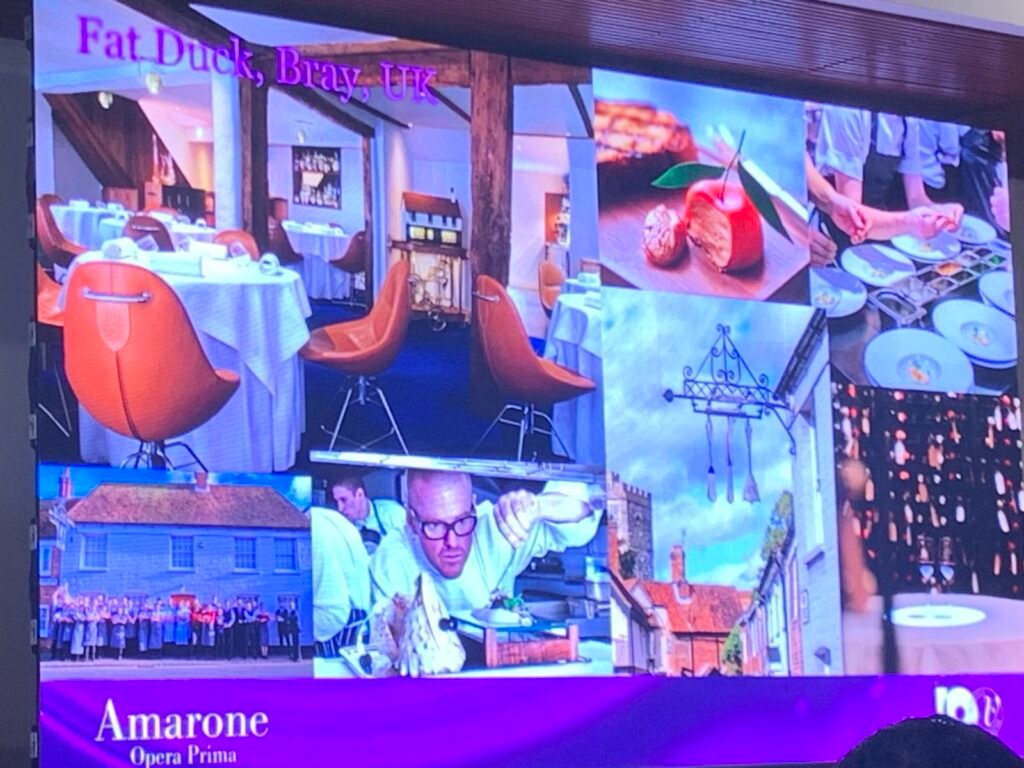
The next wine on JC Viens’ list is the highly acclaimed and award-winning Tezza Brolo delle Giare 2016 (Corvina, Rondinella, Oseleta). This exceptional Amarone is featured on the wine list of the renowned and highly experimental three-Michelin-starred restaurant The Fat Duck in London (High Street, Bray, Berkshire, SL6 2AQ).
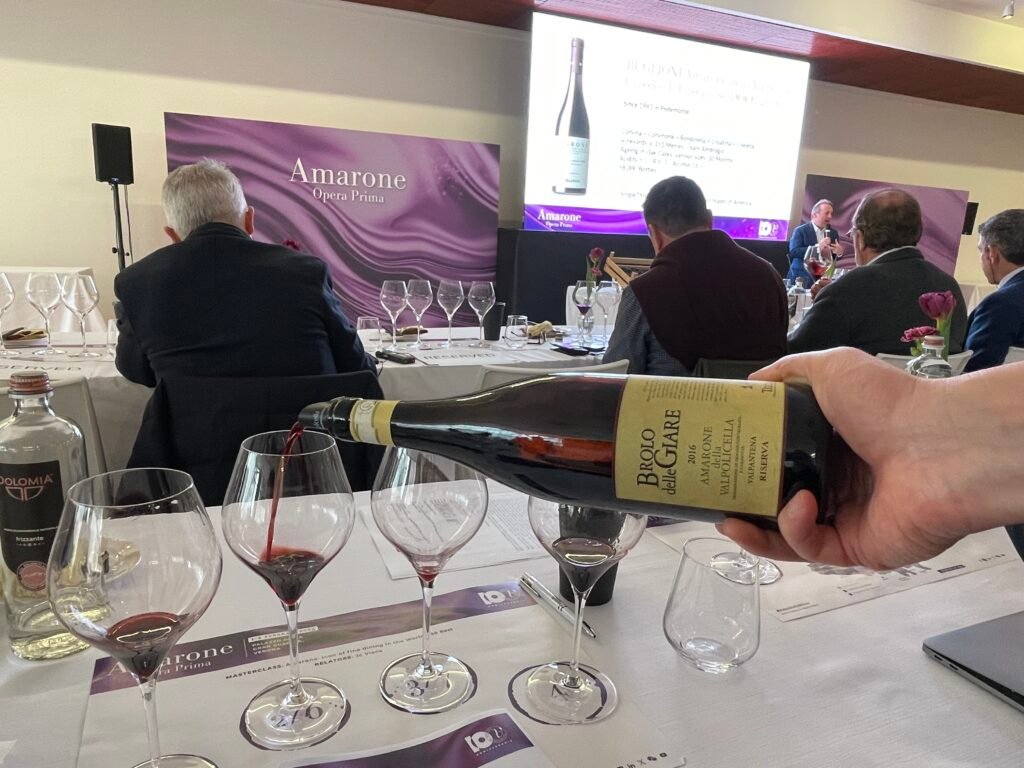
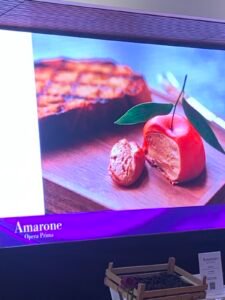
JC paired this Amarone with a chicken liver parfait, marinated in a cocktail of Madeira, brandy, and port wine. The dish has an exotic appearance, resembling a bright, fresh mandarin. However, the citrus-like shell is actually mandarin jelly, while the filling consists of the richly alcohol-infused liver.
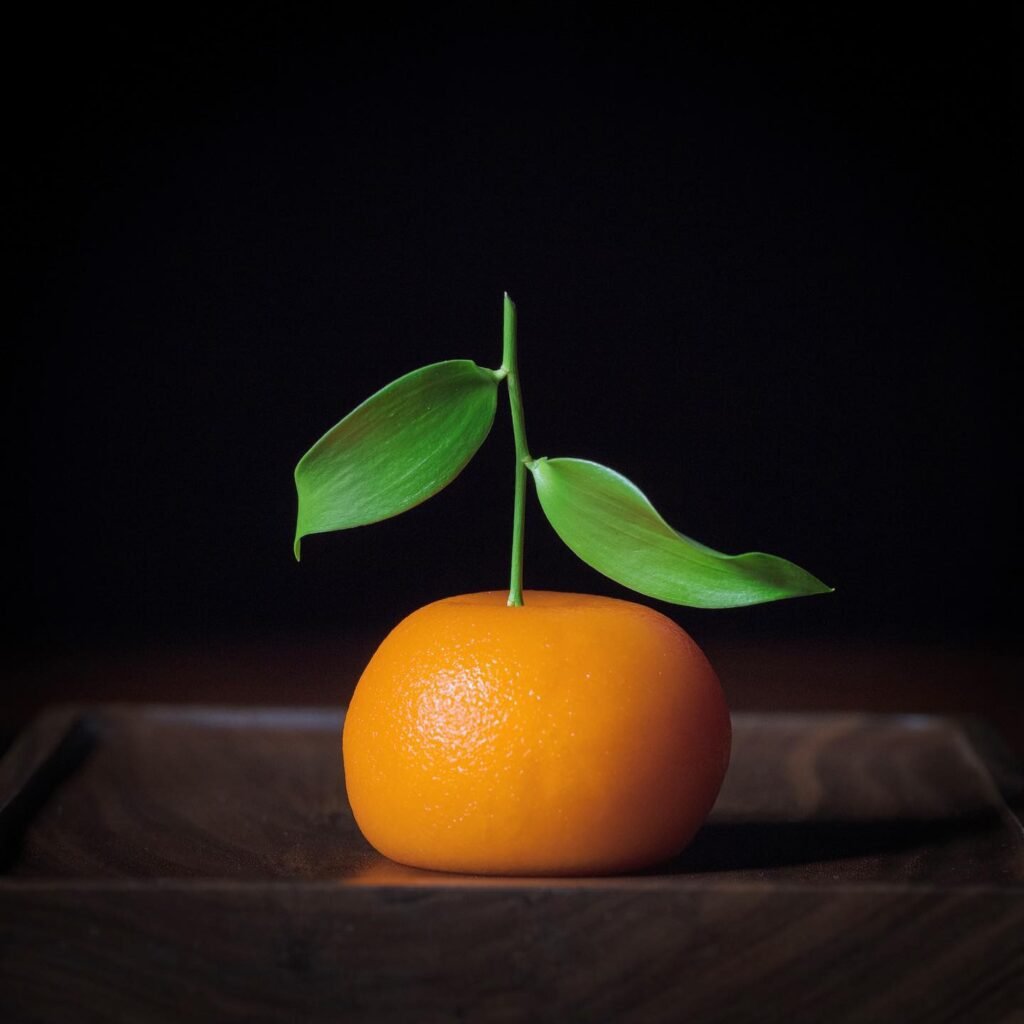
The citrusy notes in the wine – more specifically, the dried clementine peel – enhance the harmonious balance of flavours in this intriguing pairing. Meanwhile, Amarone’s signature black cherry aroma, reminiscent of fruit marinated in alcohol, naturally complements the three spirits used to marinate the liver. The wine showcases exceptional freshness, velvety tannins, and all the hallmarks of a noble Amarone.

By the way, the London duck is not only fat but also old and fond of celebrating its own anniversaries with guests! To mark its 30th anniversary, The Fat Duck will reintroduce an à la carte menu in February 2025 – for the first time in two decades. So, take advantage of the freedom of choice!
Amarone

In addition, guests can step into the world of gastronomic theatre at The Top Seat at The Fat Duck, an exclusive solo dining experience. Seated right in the heart of the action, you’ll witness Heston Blumenthal’s team in motion. The legendary chef, who was awarded an OBE by Her Majesty the Queen in 2006 for his contributions to British gastronomy, invites you to enjoy the Journey menu while marveling at the artistry and precision that go into his three-Michelin-starred creations – an accolade he has proudly held for 21 consecutive years.

Need we even mention Amarone’s gastronomic versatility in such a setting?

7. Quintarelli & Eleven Madison Avenue

To conclude JC Viens’ list, we take special pleasure in highlighting the presentation of a wine from a legendary estate, founded by the universally recognized “father of Amarone” – Quintarelli 2017. This exceptional wine graces the 224-page wine list (featuring a collection of 20,000 bottles – just let that sink in!) of the three-Michelin-starred restaurant Eleven Madison Park (11 Madison Ave, New York, NY 10010).

List of JC Viens

Eleven Madison Park is a sophisticated fine dining restaurant in the heart of New York City, offering stunning views of Madison Square Park. The establishment, awarded three Michelin stars, is led by chef-owner Daniel Humm.

So, what does EMP bring to the table? A prime location, a risk-taking yet seasoned chef who has weathered both highs and lows, an exceptional wine director in the form of Gabriel Di Bella, and a fully plant-based menu – a bold move introduced in 2021. Here, the tasting menu consists of five exquisite plant-based courses, proving that fine dining can be just as indulgent without a single animal product.
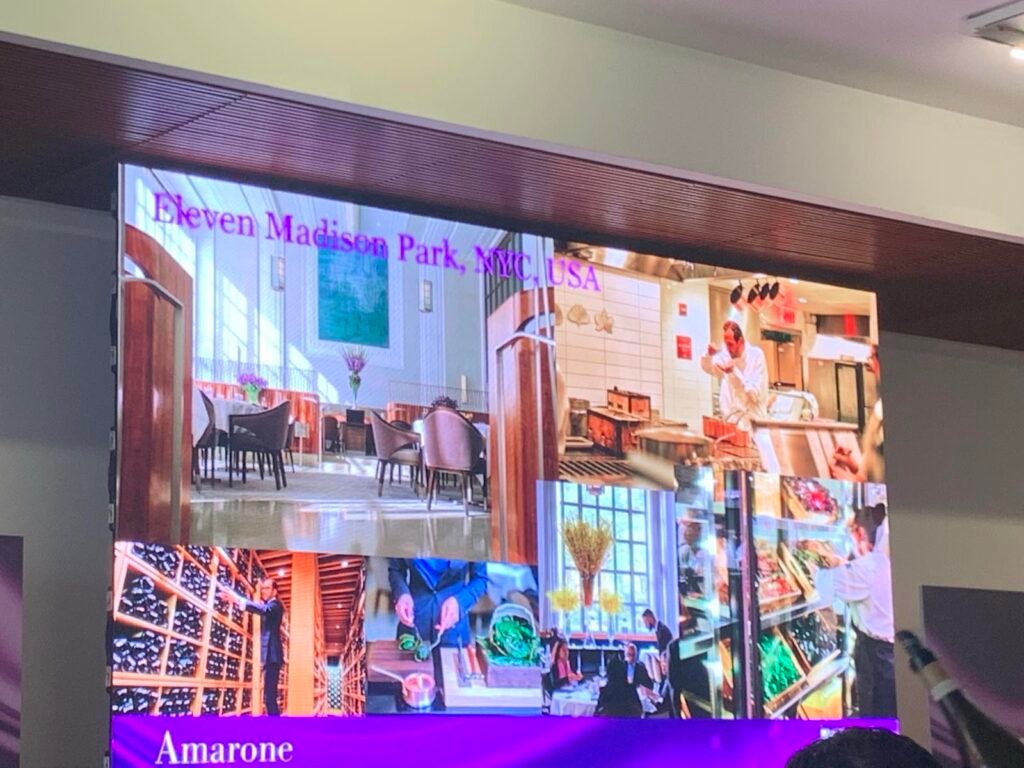
JC Viens created a stunning pairing, combining Quintarelli Amarone with a beet dish made from fermented green beet leaves, gently simmered in Worcestershire sauce with a noticeable hint of anchovy. A complex combination, yet this remarkable wine rises to the challenge effortlessly. Crafted from grapes grown on the legendary vineyards of Giuseppe Quintarelli, the 2017 Amarone unveils intense aromas of tobacco and black cherry, along with bold flavours of dried fig and delicate vanilla undertones. The wine also carries green, currant leaf notes in its bouquet, which harmoniously align with the dish’s dominant fermented greens and umami-rich fish elements. Its taste is rounded and perfectly balanced, offering a luxurious drinking experience. And luxurious is no exaggeration—in every sense of the word. The average market price for a bottle of Giuseppe Quintarelli Amarone della Valpolicella Classico DOCG 2017 stands at approximately $450 USD. The limited release comprised just 12,900 bottles.

…The first day of Amarone Opera Prima 2025 seamlessly continued with the metamorphosis of Amarone over time – a historic tasting of exceptional vintages titled “Memory of Time: A Journey Through Historic Amarone Wines,” led by Andrea Lonardi MW, Vice President of the Valpolicella Wine Consortium.

The day concluded at Teatro Filarmonico with an exquisite dinner crafted by renowned three-Michelin-starred Italian chef Giancarlo Perbellini.

But that will be a story of its own.


⇒ Join our social networks ⇒ Optimistic D+ editors will take this as a compliment.

⇒ Every like is taken as a toast!


Amarone Opera Prima 2025, coinciding with the 100th anniversary of the Valpolicella Consortium, took place in Verona from January 31 to February 2. The prestigious event was held at one of the city’s most iconic venues, Palazzo della Gran Guardia, where organizers gathered wines from nearly 80 wineries and welcomed over 100 journalists from leading […]


MUNDUS VINI Summer Tasting 2024

MUNDUS VINI organizes the 35th Grand International Wine Award. Summer Tasting will take place from August 29 to September 1, 2024. According to a long-standing tradition, among the jury members will be judges from the Drinks+ media group.


For 20 years, the Grand International Wine Award MUNDUS VINI has been one of the most important wine competitions in the world. Twice a year manufacturers, traders and importers can present their products at the well-known event. Experts from around 40 countries taste wines and give  professional feedback. The best wines receive one of the coveted awards: Mundus Vini Medal Grand Gold, Gold or Silver.

More than 12,000 wines participate in this competition every year.

The goal of MUNDUS VINI Summer Tasting 2024 is to recognize and popularize the quality of the presented wines. Received awards ensure popularity in the field of marketing. Everywhere in the world on the shelves of supermarkets.you can find wines that have been awarded the prestigious MUNDUS VINI.

The benefits of participating in MUNDUS VINI are:

  • The evaluation of wines by an expert jury of the highest class, which consists of more than 300 internationally recognized wine experts from trade, gastronomy, viticulture, wine industry and wine media;
  • The detailed feedback and technical characteristics of the presented wine;
  • The presentation of the winning wines, supported by editorial material in the publications, online channels and social media channels of the Meininger publishing house, the European market leader in the wine sector, including the exclusive magazine “MUNDUS VINI” with a circulation of 100,000 copies.

The key dates for MUNDUS VINI Summer Tasting 2024 are:

  • The deadline for the wine registration is July 12, 2024.
  •  The deadline for submitting wines is July 26, 2024.

 All the details of the competition can be found on the official website.

For additional information pleace contact the organizers:

Phone: +49 6321-8908-951; Email: contact@tastingservice.com

MUNDUS VINI organizes the 35th Grand International Wine Award. Summer Tasting will take place from August 29 to September 1, 2024. According to a long-standing tradition, among the jury members will be judges from the Drinks+ media group. For 20 years, the Grand International Wine Award MUNDUS VINI has been one of the most important […]

The international revelations of the CMB Red & White Wines Session

The 31st edition of the Concours Mondial de Bruxelles (CMB) concluded a few days ago in Guanajuato. The results have just been announced, with the host country, Mexico, breaking into the top 5 in terms of the number of medals won. Among the the award-winning wines recognized by the Wine Travel Awards, this year’s winner in the Progressive Approach category is the Italian winery Tenuta Manoylo. The editor-in-chief of Drinks+, Olga Pinevich-Todoriuk, took part in the competition as a judge. A detailed article about the visit to CMB Mexico will soon be published on the website.


From June 7 to 9, the world’s largest traveling wine competition brought together experts from across the international wine sector in Guanajuato, Mexico, to taste nearly 7,500 red and white wines from 42 countries. All wines were blind-tasted by a panel of wine experts (buyers, journalists, wine merchants, oenologists, etc.) carefully selected by the Concours Mondial de Bruxelles, representing 45 nationalities. Of all the wines presented, only 30% will take home a medal. The winners include wines from all five continents, encompassing both historical wine-producing countries and some more surprising origins like Bolivia, Kazakhstan, Lebanon, and Peru.

“It is a real satisfaction to have gathered so many wines for this new edition despite a challenging global context. It proves that producers still want to place their trust in us, and we are honored by it!” said Thomas Costenoble, director of the CMB.

We are pleased to share that this year’s Concours Mondial de Bruxelles was a true revelation for both judges and participants. The standout white wine of the CMB Red & White Wines Session was Issa Chardonnay Barrique 2022, a Romanian gem from Transylvania’s Crama La Salina. The top-rated red wine hailed from Uruguay, with Balasto 2017 by Everest Wines and Spirits taking the honors.

We will go through what was especially impressive during the session.

The No Low Revelations

One of the new features of this 2024 edition was the creation of the Revelations for the best no-low wines (completely or partially de-alcoholized wines, de-alcoholized wine-based beverages, and others). The winners are Divin – Sauvignon Blanc 0.0% 2023 from Divin No-Low in Loire (France) and the Portuguese “Lower alcohol” wine Lagosta from Enopnort Wines.

Organic and Oaked Revelations

The Sylvain Trophy, awarded each year to the highest-scoring wooded wine, goes in 2024 to an Italian wine, Starderi 2020 from Collina Serragrilli. The highest-rated organic wine is from Spain for the second consecutive year: this time, it is a wine from Navarra, Arínzano Merlot Agricultura Biológica 2019 produced by Arinzano.

Bordeaux in the lead

Among the major French wine-producing regions, Bordeaux is the most represented and rewarded region in the competition with 189 medal-winning wines. Gironde also takes home the French Red Wine Revelation with Château Terres Blanches Cuvée Carpe Diem 2022. Another Grand Gold Medal goes to a Bordeaux wine, Château Le Bonalguet Cosecha 2023 from Bonalgue Saint-Germain.

Moldova – 20 gold medals

Moldova stands as the undisputed leader in modern winemaking in Eastern Europe. This small country showcases tremendous production potential and is a front-runner in global wine tourism, developing this promising industry with competence and purpose. Notably, the Wine Travel Awards 2023-2024 recognized The National Wine Day of Moldova as the Event of the Year, underscoring the country’s prominence in the wine world. Moldovan wineries have become a powerful presence in the Wine Travel Awards community over the past three years.

And, of course, among the medalists of the summer Concours Mondial de Bruxelles, where Moldova has 20 gold medals, there is a large part of our nominees. Let’s name their wines: Radacini Reserve Chardonnay – Pinot Grigio 2020 (Radacini Wines S.R.L.), Castel Mimi Negru de Bulboaca 2018, Castel Mimi Chef Cuvée Blanc 2022, Castel Mimi Chef Cuvée Rouge 2020, Castel Mimi Viorica de Bulboaca 2023, Castel Mimi Merlot 2020 – from WTA vote winner Castel Mimi, Taraboste Rosu Reserva 2018, Taraboste Chardonnay Barrique 2022 (Château Vartely), Negru de Purcari 2021 (IM Vinaria Purcari SRL), etc.

Marche Comes Forward!

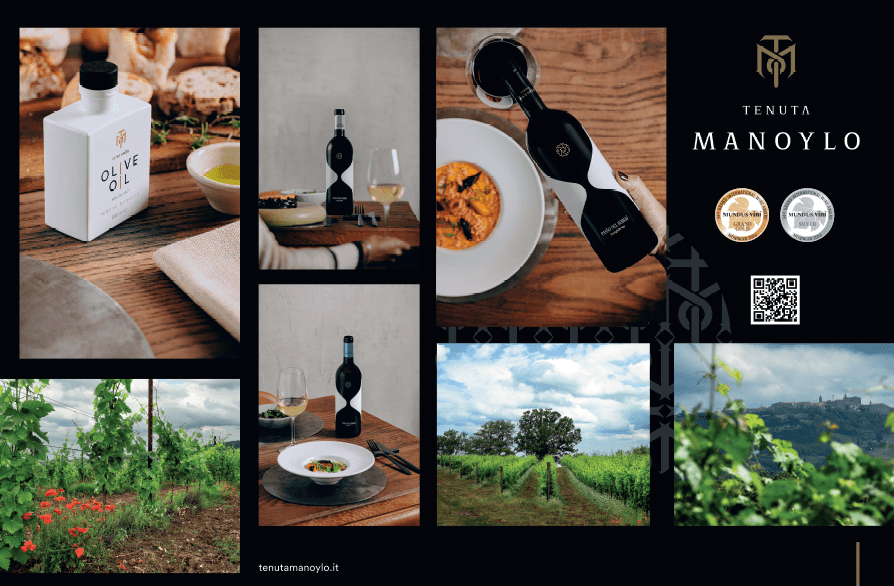
The Italian province of Marche, once a renowned wine-growing region that lost its luster to northern areas, is making a strong comeback. This year, the young winery Tenuta Manoylo entered the international scene and, following triumphs at spring competitions, won another gold in Mexico for its wine, The Red 2021 Tenuta Manoylo, Passo del Borgo, Marche IGT Sangiovese. The Drinks+ team proudly supports this winery, a member of the friendly international Wine Travel Awards community.

Romania Continues Its Ascent

In our view, Romania has every chance to become a leader among Europe’s wine-producing countries in the coming years. The summer competition in Mexico confirmed this potential. Not only did the best white wine come from Romania, but several other winners as well. Notably, the stunning Jidvei Srl winery, located in the medieval Castle Bethlen-Haller, won the public vote for the Wine Travel Awards 2023-2024 in the Must Visit category and also secured a leading position in the Progressive Approach category. In Mexico, this outstanding Romanian producer won gold for its Iluziv Sauvignon Blanc – Riesling – Muscat Ottonel 2023, and silver for the Owner’s Choice Ana Sauvignon Blanc 2023.

China, Mexico, South Africa

These three countries continue to showcase impressive growth and dynamism. Mexican producers presented 663 wines, with 152 winning medals, including a record 9 Grand Gold Medals. South African wines also showed marked improvement, earning 6 Grand Gold Medals and 35 Gold Medals. China had an outstanding performance as well, with 40% of their entries receiving medals, including 6 Grand Gold Medals and 83 Gold Medals.

This sets the stage for the next Red & White Wines Session of the Concours Mondial de Bruxelles, which will take place in June 2025 in Ningxia, China. It will be the second time the Concours is held in China, following the 2018 edition.

You can find all the results here

The 31st edition of the Concours Mondial de Bruxelles concluded a few days ago in Guanajuato. The results have just been announced, with the host country, Mexico, breaking into the top 5 in terms of the number of medals won. China is also making a strong showing with significant progress, and South Africa continues its upward trend.

Balkans International Wine Competition 2024 Closes Out by Unveiling the Top 12 ‘Best of Show’ Wines

The Balkans International Wine Competition (BIWC) is pleased to announce the successful completion of its 13th edition, which for the first time in its history, took place across two countries. This milestone event was made possible by the excellent hosting provided by Arcadia Vineyards, led by Zeynep Arca Salliel, and Katarzyna Estate, led by Tsvetelina Nikolova.


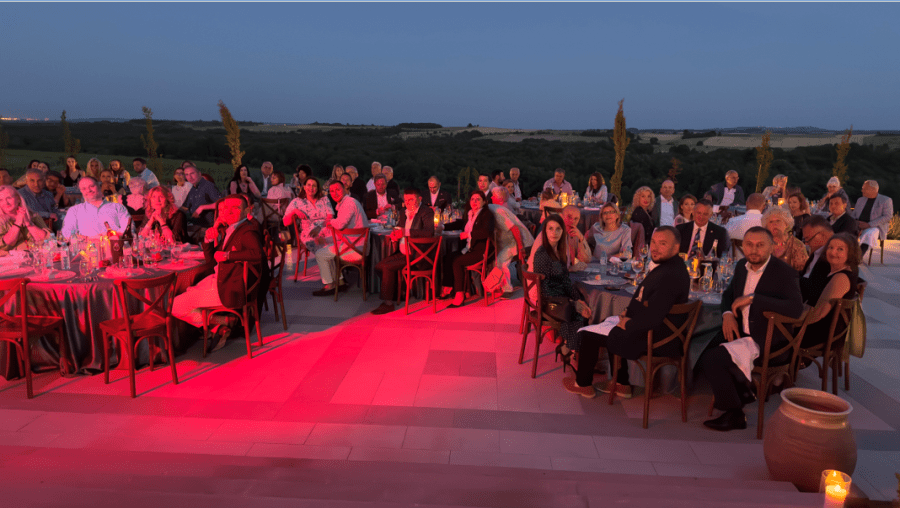
The competition culminated in a ceremony where the Best of Show winners were announced at the gala dinner marking the closing of the 13th edition of the BIWC. The awards went as follows:

  • ALBANIA: E Kuqja Shqiptare 2020, Kantina Faba
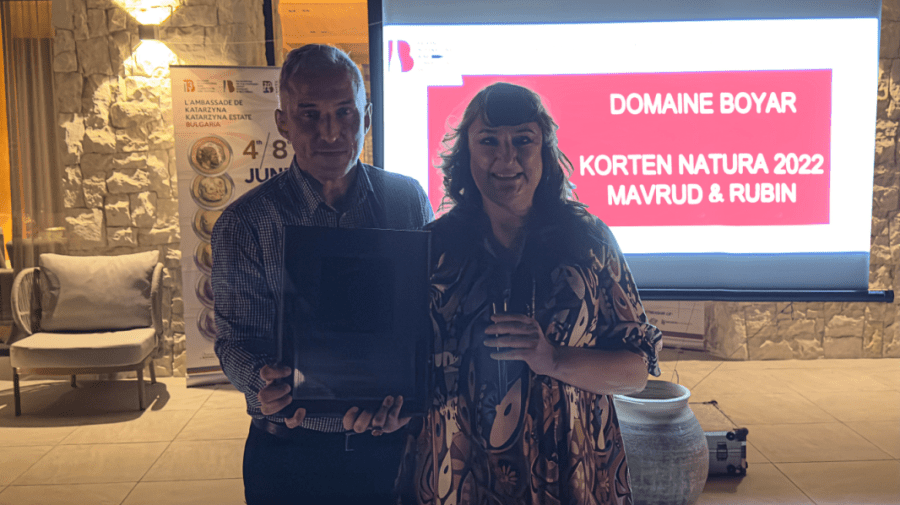
  • BULGARIA: Korten Natura 2022 Mavrud & Rubin, Domaine Boyar
  • CROATIA: Pošip 2023, Vinarija Luviji, Hvar
  • GREECE: Assyrtiko Agia Kiriaki 2022, Alpha Estate
  • MONTENEGRO: Epoha 2019 Cabernet Sauvignon & Merlot, 13. jul Plantaže
  • MOLDOVA: Fautor Chardonnay Aurore 2022, Fautor Winery
  • NORTH MACEDONIA: Lastar Collection Red Antler 2022, Vinarija Iliev – Stojan Iliev
  • ROMANIA: Vin Spumante 2019, Avincis Winery
  • SERBIA: Merlot 2021, Vinarija Tarpoš
  • TURKIYE: Riesling 2023, Camlica Winery; Reserve Karasakiz 2021, Suvla Winery
  • UKRAINE: Cabernet Sauvignon Reserve 2021, Odesos Winery
  • GEORGIA: Saperavi 2020, Kakheli’s Winery

Balkans International Wine Competition

The remaining results will be disclosed on June 17th, and the remaining awards will be presented and distributed on the first day of the Balkans International Wine Festival on June 27th in the wine village in front of the NDK in Sofia.

As with each year, the competition culminated in a ceremony where we announced the “Best Wine Personality in the Balkans.” After careful consideration, this year’s accolade was awarded to Tomislav Ivanovic from Serbia. Tomislav’s significant contributions as a senior judge and his profound expertise and passion for Balkan wines have notably influenced the region’s wine culture. His relentless dedication to promoting quality and knowledge has earned him this well-deserved honor.

The BIWC has once again exceeded its previous achievements, confirming its position as a leading wine competition in the Balkans. It continues to attract a diverse group of judges and wine producers from across the world, enhancing our understanding and appreciation of wine. Each year, the competition not only sets new benchmarks but also fosters a collaborative environment that drives the industry forward.

Balkans International Wine Competition77

Furthermore, the region for the 14th edition of the competition has been announced: Naoussa in Greece. The Mayor of Naoussa attended the gala dinner and expressed that hosting the next edition is a significant honor. Preparations will begin soon.

In just two weeks starts the upcoming Balkans International Wine Festival from June 27th to 29th in Sofia. The festival will offer a unique opportunity to taste a variety of award-winning wines and engage with different cultures through music, art, and culinary experiences. This celebration aims to bring together wine lovers from all over to share in the joy and rich traditions of Balkan wine culture.

The festival is a notable occasion where the art of winemaking and the community that surrounds it are celebrated. It caters to everyone who appreciates the nuances of fine wine, from casual drinkers to the most discerning connoisseurs.

The Balkans International Wine Competition (BIWC) is pleased to announce the successful completion of its 13th edition, which for the first time in its history, took place across two countries. This milestone event was made possible by the excellent hosting provided by Arcadia Vineyards, led by Zeynep Arca Salliel, and Katarzyna Estate, led by Tsvetelina […]

VinItaly 2024. All the stars are here

Less than two weeks are left before the start of one of the largest professional exhibitions in the world of wine. For fifteen years, the Drinks+ International Communication Media Group has been an information partner of this annual grand event, which each time gathers at its place more than 3 000 wines from several dozen countries. This year, the Drinks+ International Communication Media Group & Wine Travel Awards team is going to present Tenuta Manoylo, a true gem of the Italian Marche region, at its own booth in Hall D, Stand A3.


The first VinItaly took place in 1967. Since that time, for wine professionals, the words “April” and “Verona” have become almost synonymous, because it is here – in the “City of Love” – that every April leading producers, traders, buyers, importers, exporters and distributors from different countries gather. This year, VinItaly will take place from April 14 to 17.

vinitaly

The 56th Vinitaly will be attended by at least 4 000 exhibiting companies presenting their products on an area of more than 100 000 square meters. Also, thanks to the efforts of the Veronafiere press center, involved have been influential international wine traders from 65 countries.

The Drinks+ Communication Media Group + & Wine Travel Awards team is also preparing for the exhibition. At our own stand – Hall D, Stand A3, we will present a young winery from the ancient Marche region – Tenuta Manoylo, which this year has won the public vote of the international Wine Travel Awards project in the Progressive Approach category. The official list of the winners of the public vote will be announced by April 5.

Tenuta Manoylo

Drinks+ & WTA invite distributors and everyone who is interested in learning more about the still little-known Marche region and its real gem – the winemaker Tenuta Manoylo, to visit our stand and get to know the winery, whose vineyards are spread out in the heart of the Marche region – on the picturesque hills surrounding the medieval village of Moresco and the river Aso. Despite its relatively young age, Tenuta Manoylo has already earned honorable mentions at the MUNDUS VINI 2024 competition.

We would like to remind you that at ProWein 2024, the Drinks+ & WTA team, as part of Tasting Around the Sustainable World, among six other participants, presented Tenuta Manoylo with the white monovarietal wine Passo del Borgo Falerio DOC Pecorino 2021. Passerina has a beautiful golden glistening straw-yellow color.  This wine was exhibited for the first time on the international stage during the spring session of the MUNDUS VINI 2024 competition and won a silver medal. Tenuta Manoylo also won Grand Gold for Marche IGT Sangiovese 2021.

Tenuta Manoylo

Passo del Borgo Falerio DOC Pecorino 2021 received positive reviews from all experts who were present at the Tasting Around the Sustainable World. Thus, Constantin Drăgan, the head sommelier of the Jidvei winery (which, by the way, also won the WTA public vote in the Must Visit category), noted that this wine was “a real highlight of this tasting.”

All Tenuta Manoylo wines are made by one of Italy’s most authoritative oenologists – Luigi Costantini. Recently, Mr. Costantini  has found an opportunity in his busy schedule to answer questions  from the Director of the Drinks+ International Communication Media Group.

We invite you to visit our stand Hall D, Stand A3 in Verona and get to know this outstanding winery and discover the unique Marche region.

Less than two weeks are left before the start of one of the largest professional exhibitions in the world of wine. For fifteen years, the Drinks+ International Communication Media Group has been an information partner of this annual grand event, which each time gathers at its place more than 3 000 wines from several dozen […]

Thracian Valley Wines from Bulgaria: Rising Popularity Through European Union PDO and PGI quality schemes

As an advertisement.

Long-lasting traditions in the way of living, eating and wine producing preserved the uniqueness of the Thracian Lowlands region – recognized as a Protected Geographical Indication (PGI) region. Winemakers across Europe, particularly in regions bearing PDO (Protected Designation of Origin) and PGI (Protected Geographical Indication) designations, uphold stringent regulations to safeguard the authenticity and heritage of their wines. The European Union’s food products regulations PGI/PDO are designed to provide a clear structure for the production of organic products throughout the EU. The aim is to satisfy consumer demand for trustworthy products, while providing a fair market for producers, distributors and traders.


Wines from the Thracian Valley in Bulgaria align with the general trend towards premiumization and the exploration of new wine regions. These wines are characterized by high quality and unique character, making them highly valued both domestically and internationally. Additionally, producers in the region are focusing on sustainable and organic practices in winemaking, responding to the growing trend towards healthy lifestyles and sustainable consumption. In recent years, there has been a notable increase in the recognition and admiration for sustainable and organic wines. Today’s wine enthusiasts are actively seeking out wines crafted using environmentally friendly practices, which encompass organic and biodynamic viticulture, as well as sustainable winemaking techniques.

Renowned for its rich terroir and storied winemaking traditions, the Thracian region is swiftly emerging as a hub for wine exploration and discovery. Thracian wine embodies the spirit of adventure and innovation that defines the modern wine industry. With an emphasis on indigenous grape varieties and sustainable viticultural practices, Thracian winemakers are pushing boundaries and redefining the possibilities of winemaking in the region.

From crisp, aromatic whites to bold, complex reds, the diversity of Thracian wines offers something for every discerning taste. Indeed, the rise of Thracian wine symbolizes not only a renaissance in Bulgarian winemaking but also a broader movement towards discovering and celebrating the undiscovered gems of the wine world.

Don’t miss the opportunity to taste the wines from the Thracian Valley and seek out the labels PGI or PDO to taste the highest quality wine from a specific EU region, and Enjoy – it’s from Europe!

Вина з Фракійської долини


As an advertisement. Long-lasting traditions in the way of living, eating and wine producing preserved the uniqueness of the Thracian Lowlands region – recognized as a Protected Geographical Indication (PGI) region. Winemakers across Europe, particularly in regions bearing PDO (Protected Designation of Origin) and PGI (Protected Geographical Indication) designations, uphold stringent regulations to safeguard the […]

Vinitaly 2024: at first there will be business

This year, the leading traders of the international market from 140 countries are expected in Verona. And Drinks+ will present a new star of the Marche region at its own stand – Tenuta Manoylo, a nominee of the Wine Travel Awards. (We invite you to vote for the newly-titled laureate until March 31 Tenuta Manoylo – Wine Travel Awards).


It has been almost 15 years since Drinks+ Communication Media Group has been the information partner of one of the largest professional exhibitions in the world of wine – Vinitaly, which traditionally is held in Verona. This year, the forum will take place from April 14 to 17 in 17 exhibition halls. What novelties await guests and exhibitors?

Vinitaly

At the 56th Vinitaly exhibition, at least 4,000 exhibiting companies will present their products on an area of more than 100,000 square meters. As it has been earlier, in previous years, the 28th international olive oil exhibition SOL, Xcellent Beers and the 25th Enolitech will be held at the same time. These three events bring the number of participants at the Verona Forum to almost 4,300 from 30 countries.

Having crossed the 55-year border, the Italian forum realized the importance of radical changes in presentation approaches. And if the 55th anniversary exposition was noted for its effectiveness and the number of stunning events, this time the organizers paid attention to increasing business efficiency. With this aim, a kind of global diplomatic mission was created the day before to identify and invite the most potential partners and buyers, importers from different countries and distributors. As a result, as reported by the press center of Veronafiere, it was possible to build a global system of relations with influential international wine traders who have already been invited to visit Vinitaly-24.

vinitaly

So, this year Verona is waiting for the leading players of global retail, HoReCa and other sales channels from 65 countries. According to estimates, they will be joined by 30,000 international operators from more than 140 countries. The greatest activity is expected from the United States (more than 15% of the total number of visitors), followed by Canada, China and Great Britain (together 23% of participants). The top buyers are North America and Europe (26% each), Asia and Oceania (23%), Eastern Europe (13%), Central and South America (7%), Africa (4%). The 65 countries listed in the list of leading buyers account for 95% of the total export of Italian wine.

Drinks+ Communication Media Group is also getting ready for the exhibition. Tenuta Manoylo, a young winery from the ancient Marche region, will be presented at its stand in the Vinitaly International Pavilion. Despite the relatively young age of the winery and vineyards, this company managed to surprise even our experienced editors with its success.

Tenuta Manoylo

The editor-in-chief of Drinks+, a permanent judge of the Mundus Vini competition, says the following words about the winery that the publishing House is going to present at Vinitaly: “Tenuta Manoylo from the Marche region, which has just taken its first steps on the world stage, was a real “Discovery of the Year” for us. And here is a resounding victory at the spring session of Mundus Vini – the two highest awards: Grand Gold – 2021 Marche IGT Sangiovese; Silver – 2021 Falerio DOC Pecorino. Besides, Tenuta Manyolo received the Best of Show Marche for the excellent wine Marche IGT Sangiovese 2021.

Tenuta Manoylo

I would like to note that all these wines have been made by one of the most authoritative oenologists in Italy – Luigi Costantini. Only recently, as part of ProWein 2024, we presented the wine Passo del Borgo Falerio DOC Pecorino 2021 at the Tasting Around the Sustainable World and it received glowing reviews from industry professionals. I will quote, for example,  Sanket Chavan, (Germany, Global Food Procurement Category-Wine at Metro AG): “The wine has a floral and delicate aroma, balanced acidity and a surprisingly strong and powerful body. I can smell notes of lime. This beautiful wine leaves a long aftertaste.”

We invite you to visit our stand in Verona and get to know this outstanding winery and discover the unique Marche region.

This year, the leading traders of the international market from 140 countries are expected in Verona. And Drinks+ will present a new star of the Marche region at its own stand – Tenuta Manoylo, a nominee of the Wine Travel Awards. (We invite you to vote for the newly-titled laureate until March 31 Tenuta Manoylo […]

Madrid Fusión: three days, dozens of forums, a million of enogastronomic experiences

On January 22-25, the 21st Congress of Madrid Fusión took place in Madrid under the motto Sin limites (“Without limits”).


The Madrid Congress is the most important international forum in the field of hospitality. Every year, it gathers the most outstanding professionals in the modern gastronomic field in Madrid and is considered a  window of opportunity. After all, it is at this representative site that you can find out all the news and get information about cutting-edge technologies related to gastronomy.

Madrid Fusión

Madrid Fusión is three full days, during which visitors can not only observe presentations of the best chefs in the world, but also attend competitions, master classes, tastings, as well as take part in parallel panels, such as:

  • Madrid Fusion The Wine Edition, focused on wine brands and their promotion;
  • Madrid Fusion Pastry – all about confectionery and bakeries;
  • The Drinks Show, an international gathering for hospitality professionals that brings together innovation and trends in order to offer a unique experience in the world of cocktails and spirits.

Thanks to the fact that I managed to attend several discussion panels and master classes, I can single out a few of the most vivid topics. The most interesting, in my opinion, was the discussion called “Unknown Spain”, which was moderated by the first MW of Spain, Pedro Ballesteros. It was attended by such influential persons in the world of wine, as MW Andreas Kubach, co-founder and CEO of Península Vinicultores (Madrid, Spain), Pepe Mendoza, owner of Casa Agrícola (Liber, Alicante, Spain), Pedro Ruiz Aragoneses, CEO of Alma Carraovejas (Valladolid, Spain), one of whose projects – Pago de Carraovejas – is a Wine Travel Awards nominee, Loreto Pancorbo, Tandem Wines SC wine consultant, Luis Sande, co-owner of Pagos de Brigante (Betanzos, A Coruña, Spain) and others.

Madrid Fusión

Representatives of different wine-producing regions of Spain shared their views on such important topics as the stability of the development of the industry, the improvement of quality and the search for new sales markets. Loreto Pancorbo, oenologist from Rioja, shared her impressions of the experience of working with the local Tenerife variety Listán Negro, and Pedro Ruiz Aragoneses – about plans to increase the planting of biodynamic vineyards.

The stand with the island wines of Tenerife and the Canary Islands, whose volcanic soils have a tremendous influence on these wines, impressed me with the variety and such “other” aromas and tastes.

Madrid Fusión

The wines of Viña Zanata 2021 deserve extra attention for the explosion of tropical aromas and flavors, made from grapes with the no less exotic name Marmajuelo.

Madrid Fusión

And also, I found Qoli 2020 from a blend of Gual, Verdelho, Vijariego Blanco and Albillo Criollo varieties very interesting: aromas of jasmine, white ripe fruits, a creamy taste with a salty aftertaste and a touch of balsamic.

Madrid Fusión

Needless to say how sophisticated the master class was with the tasting of Dom Perignon champagne of the 2004, 2008 and 2013 vintages paired with various types of black caviar presented at a high level by Eric Vildgaard, chef, owner of Jordnaer (Copenhagen, Denmark).

Madrid Fusión

The Congress, along with all the activities, left a positive and pleasant aftertaste, as well as the desire to further explore Spain.

Photo: Nataliia Burlachenko

On January 22-25, the 21st Congress of Madrid Fusión took place in Madrid under the motto Sin limites (“Without limits”). The Madrid Congress is the most important international forum in the field of hospitality. Every year, it gathers the most outstanding professionals in the modern gastronomic field in Madrid and is considered a  window of […]

Украина