
Увага!

Увага! На сайті використовуються cookie файли.

The site uses cookie files

Даний сайт має вікове обмеження.

This site has age restrictions!

Я підтверджую, що мені, на жаль, давно виповнилося 18 років
I confirm that I have 18 years!
prowein
prowein

Gastronomy and Wine Portal

The no-cook guide to beer and food pairing

Our UK columnist Lotte Peplow shared her article on Beer food paring for the ‘lazy’: No-Cook Guide to Beer. By-lined to Adam Dulye, Executive Chef for the Brewers Association, the not-for-profit trade association dedicated to small and independent American craft brewers. Dulye is one of the world’s leading experts on beer and food pairing and in this article he explains how to create mouth-watering pairings without any cooking!


Adam Dulye

With eating-out options limited in the current climate we’re looking to expand our culinary experiences in other ways.  If cooking at home every night is losing appeal this handy guide to pairing American craft beer with no-cook food will have your tastebuds tingling and your senses salivating.  Cheese, charcuterie and chocolate make perfect partners for the multitude of flavours found in American craft beer.  Here’s why…

  • Acidity, carbonation and bitterness in beer cut through fat
  • Malt found in beer complements creamy, nutty, earthy or caramel flavours and contrasts with salt
  • Ingredients used in craft beer (especially carbonation and alcohol) can alter the texture of both the rind and the paste of cheese and provide complementary and/or contrasting flavours for each.

beer and cheese

Here are a few guidelines for getting started:

  • Cheese, like beer, should be served at the correct temperature. Take cheese out of the fridge and let it warm to room temperature before pairing.  Keep beer at the correct temperature for the style.
  • Match intensities. Delicate, lighter American craft beers often pair well with young or mild cheeses, while stronger flavoured beer tend to work better with full-flavoured, mature cheeses.  The same applies to cold meats.
  • Look for common ground. For example, a malty craft beer pairs well with a nutty cheese, or a hoppy, bitter beer cuts through a cheese with a high fat content
  • Think about other sensations and interactions such as acidic or salty cheese with a hop-forward beer
  • Charcuterie refers to smoked, cured or cooked meats and generally involves salting (preserving) and air-drying, and this effects how they interact with beer
  • Palate balancers – nuts, dried fruits, fresh fruit, honey and pickled items all make great additions to craft beer and cheese
  • Aim for 25g of cheese per 100ml pairing of beer.

cookies

Suggested American craft beer and Cheese Pairings:

CHEESE STYLE BEER STYLE DESCRIPTION


Soft Cheese Wheat beer, Lambic-style beer Mascarpone, ricotta, mozzarella, goats cheese will match the delicate notes of the beer without overwhelming the palate
Semi-soft Cheese Kolsch, Pilsner, Pale Ale Cambozola, Reblochon, Fontina, Provolone can be enhanced by a high level of carbonation.  Salty cheese like Feta needs a thirst-quenching, refreshing style to combat its dryness
Hard Cheese Brown Ale, Imperial Stout, Bock Cheddar, Gruyere, Emmental, Parmesan, Manchego echo the nutty, earthy notes of a brown ale or stout.  These beers  add creaminess on the palate to a hard cheese
Blue Cheese IPA or Imperial IPA, Barley wine Strongly flavoured cheeses such as Roquefort,  Stilton, St Agur, Danish Blue can be successfully balanced with bolder beer styles
Natural Rind Cheeses Golden/Blonde ale,
Pale ale
Brie, camembert, gorgonzola have a rich creamy base that can be refreshed with a golden, blonde or pale ale.
Washed Rind Cheeses Belgian-style ales Vacherin, Taleggio, Port Salut Beers bring out the cheeses’ delicate sweet note and can cut through the funk of the washed rind

And if you’re a fan of cold-cuts, smoked meats and charcuterie this guide is for you:

TYPE OF CUT DESCRIPTION BEER PAIRING
Prosciutto di Parma

(pork)

A classification of ham from the Emilia-Romagna region of Italy.  Known for its umami flavour Pilsner, Doppelbock or Saison
Bresaola (beef) Dark red cut of beef, thinly sliced.  One of the leanest cured meats Brown Ale
Speck (pork) Smoked, cured meat, milder and firmer in texture than prosciutto Smoked Beer, American Pale Ale
Saucisson Sec (pork) A French-style salami.  Typically dry-cured and rich in flavour Robust Porter
Chorizo (pork) A distinctive bright red colour due to addition of smoked paprika. Smoked Beer, Pilsner
Mortadella (pork) Cooked sausage made from ground pork meat, garnished with pistachios and small cubes of fat for extra flavour Belgian-style Trappist ale
Salami Piccante (pork) Can be spicy to mild. Spiced with paprika and hot to mild red peppers known as peperoni Imperial IPA
Pâté Usually made from ground pork, duck or chicken liver and spices Stout
Salo Pork fat speciality Pilsner,  Golden Ale, Kölsch

Finally, if all you want to do is kick-back with a bar of chocolate and a beer remember to match intensity of flavour.  Here’s a basic guide:

White Chocolate – creamy texture, no cocoa solids, usually contains 20% cocoa butter, sugar and 14% milk solids.  Pair with Witbier, Brown Ale, Sweet Stout, fruited Wheatbeer

Milk Chocolate – usually around 35-45 cacao solids. Pair with: American pale ale, Brown ale, Amber ale

Dark chocolate – at least 35% cacao solids but commonly above 70%.  Pair with:  Robust Porter, Imperial Stout, Dubbel, Lambic style beers.

glass of beer

Look out for beers with speciality ingredients such as coffee, chocolate, peanut butter and many more that offer endless possibilities for pairing with chocolate.

Many American craft beers such as Firestone Walker Brewing Co, Lakefront Brewery Inc,  Jolly Pumpkin Artisan Ales, Rogue Ales, Sierra Nevada Brewing Co, Spencer Brewery and Stone Brewing Co.  are available in Silpo or Good Wine stores.


D+ File

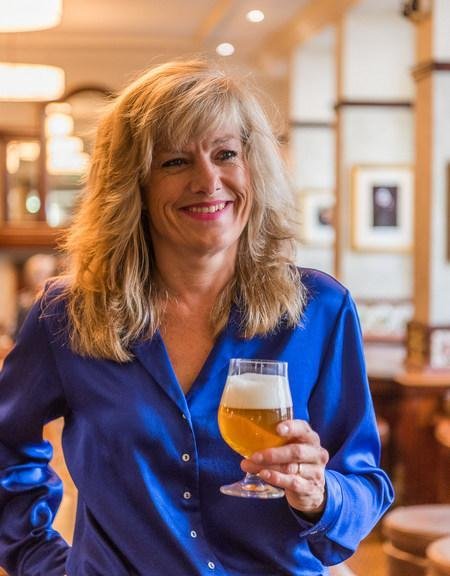
Lotte Peplow is an ambassador of the Brewers Association (BA) in Europe. Lotte is also a certified beer sommelier and beer-writer, beer judge at many professional contests, as well as she brews beer. In addition, Lotte conducts meetings and beer tastings, organizes large-scale beer events and is an active supporter of beer food pairing.

The Brewers Association (BA) is the not-for-profit trade association dedicated to small and independent American brewers, their beers and the community of brewing enthusiasts. The BA represents 5,500-plus U.S. breweries. The BA organizes events including the World Beer Cup®, Great American Beer Festival®, Craft Brewers Conference® & BrewExpo America®, SAVOR: An American Craft Beer & Food Experience, Homebrew ConTM, National Homebrew Competition and American Craft Beer Week®. The BA publishes The New Brewer® magazine, and Brewers Publications®.

Photo provided by Lotte Peplow

Our UK columnist Lotte Peplow shared her article on Beer food paring for the ‘lazy’: No-Cook Guide to Beer.

The Vaud Land

Olga Verchenko is a wine professional living in Barcelona and working in wine business since 2012 when she graduated from the MSc Wine Programme at Burgundy School of Business. She also shares her wine passion and knowledge in her own Instagram-blog @vinicomm and conducts wine tastings in Catalonia.


Olga visited one of the most fascinating wine regions Vaud in Switzerland. She gladly shares her experience and wine picks with us.

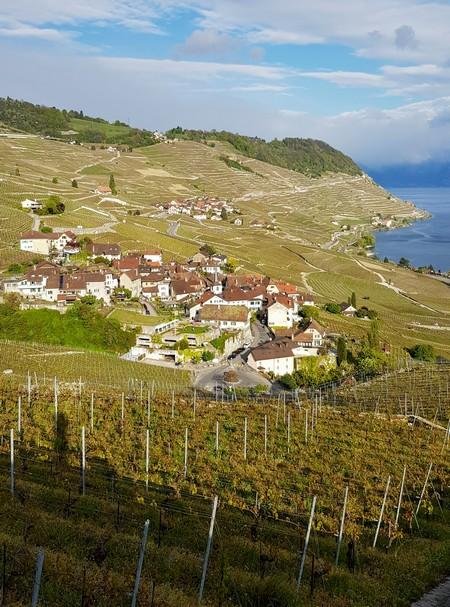
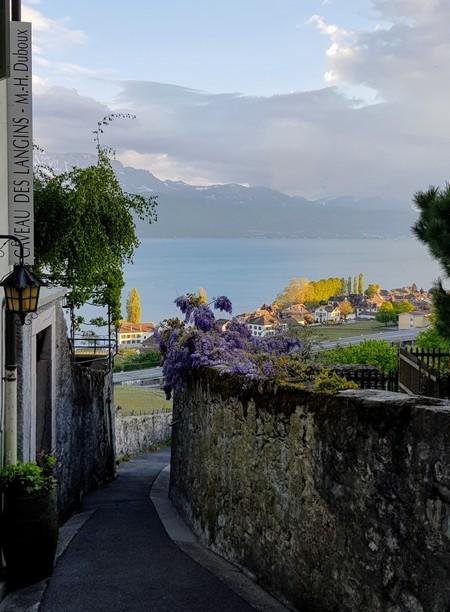
When stepping in the vineyard overlooking Leman lake and Swiss Alps, I could fully understand why this land is entitled to be the World UNESCO Heritage Site. Steep man-made terraced vineyards stretched between Lausanne and Montreux is one of the most beautiful landscapes in Europe.

swiss view

Vaud is Switzerland’s second wine-producing canton with around 4,000 ha of vineyards, 8 appellations and 6 wine-producing areas.

The total annual production accounts 40 mln bottles per year from various AOC appellations including the Grands Crus Dézaley and Calamin in Lavaux.

swiss

The grape king of the region is famous Chasselas, producing about 70% of all Vaud wines. The typical profile is aromatic and dry with soft silky structure due to the usage of malolactic fermentation soothing the high acidity and occasionally adding the sugar to increase the alcohol content.

One of the reds worth attention is Salvagnin made of local Pinot Noir and Gamay.

Interesting fact, unlike watches or chocolate, the Swiss keep all those wines for themselves – only around 2% of the wines produced in total leave the country.

varchenko vino

Wine Experience

Wine tourism has been actively developed in the French part of Switzerland since recently. Not long ago after a significant change in the winemaking law had happened, when in 2006 the Swiss law forbade blending imported wine with a locally produced one. Lately, the legal requirements and consequently the quality of wines notably improved with Swiss wines gaining international medals and creating a buzz. So, both experienced wine connoisseurs and tourists come to see where the rare wine gems come from.

switzerland

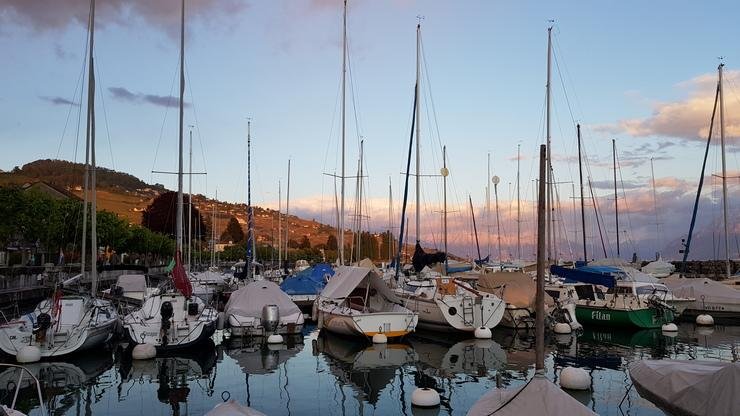
For us, the best way to explore the region was going by car to every small village nestled in between the slopes and visiting small family wineries. Not all of them are available for visits throughout the year, so here is my recommendation list to choose from:

  1. Domaine Henri Cruchon near Morges  – a reputed biodynamic winery recognized worldwide that cannot be missed. Without any booking, you can pass by Mon-Fri from 10h – 12h/14h – 18h and have a tasting of 6 wines for CHF 15.
  2. Domain La Colombe led by renowned Raymond Paccot would open for you their vintage Chasselas, Pinot Noir and much more Mon to Fri from 13h30 to 17h00 and Saturday morning.
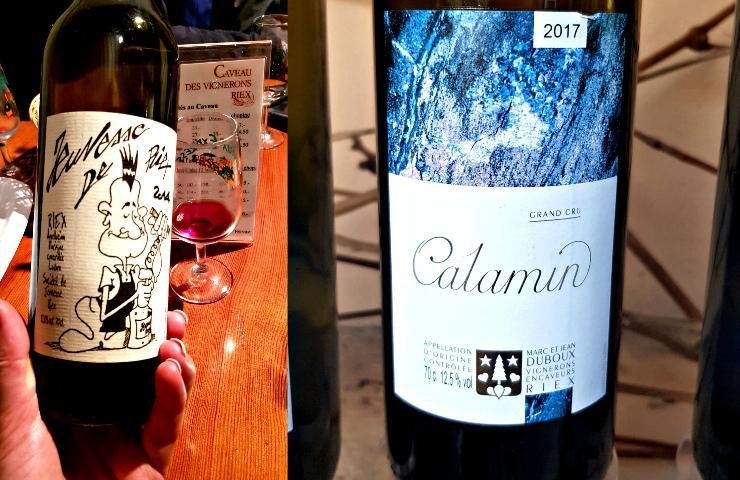
  3. Marc & Jean Duboux winery located in Riex would propose you tasting their top Grands Crus Chasselas and Syrah from AOC Calamin Grand Cru and AOC Dézaley Grand Cru respectively. The cellar is open all days including Sundays, however, the phone reservation in case of a group is required.

If you have only a couple of hours in the area, ride a Lavaux Express departing from Lutry, a panoramic touristic train that will bring you directly to a wine cellar where you will be offered several wines from different producers in one go. Breathtaking views on the way are guaranteed!

Provided that you want to dive deeper into the world of Swiss wines, choose of the annual public events:

  • Fête des Vignerons from July 18 to August 11, 2019, in Vevey – one of the biggest wine events with a range of tickets from CHF 79 to CHF 299.
  • Salon VINEA: 6 and 7 September 2019 in the village La Ville de Sierre with 130 wine growers presenting their wines.
  • Vinumrarum: 6 and 7 December in Bern. About 70 Swiss independent winegrowers and winemakers participate with their best wines.

Olga visited one of the most fascinating wine regions Vaud in Switzerland. She gladly shares her experience and wine picks with us.

Vardkes Arzumanyan about his collection of menus

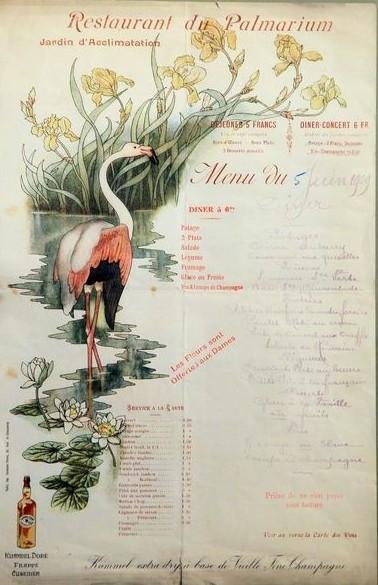
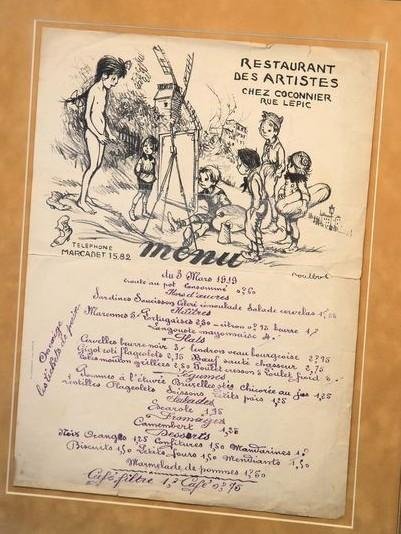
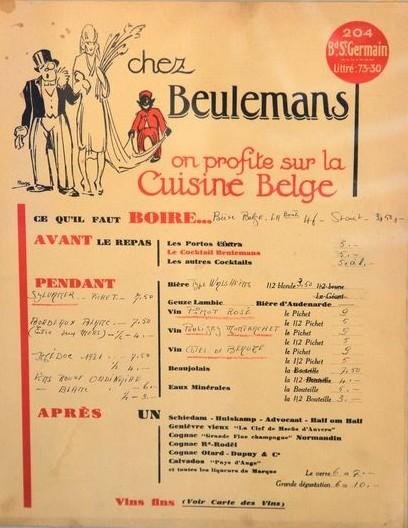
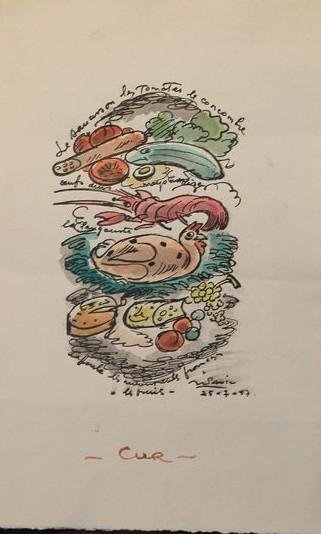
Visit Centaur Cafe in Lviv and you will see that it is deservedly proud not only of its food and history, but also of unique menu collection of Prince Curnonsky, author of the Michelin guide. This collection is now owned by Vardkes Arzumanyan, one of Ukraine’s most prominent restaurateurs. This year his company Restaron released a book titled “Private collection of Prince Curnonsky’s restaurant menus dating back to the first half of the 20th century and owned by Vardkes Arzumanyan”

I have been collecting menus for a very long time. My collection currently contains approximately 1,500 copies that date back from the early 19th century to modern times. The largest part of the collection is represented by antique menus. For me as for a restaurateur, a menu is something that is much more than just a list of dishes: it is an art, a culture, a story that the restaurateur is telling to the guest.

The tradition to create menus and make them an important part of the restaurant has emerged a long time ago. Every epoch has its own fashion for specific food, dishes, accents and art preferences. Many artists have created paintings not only on canvas, but on sheets of menu books, too. No wonder that food has always be perceived as an art, and the pleasure it gives can be compared to erotic feelings.

Menu

Erotic context is seen in French menus that date back to the late 19th and early 20th centuries. It felt like there was erotic in the air. Everywhere: in cabarets and theatres and on canvases. The aristocracy was obsessed with delicious food and seductive ladies on menu covers of famous restaurants. Fashion was changing, and with time pictures with a sophisticated message were replaced with more understandable, but equally interesting paintings. Black-andwhite or colored paintings, watercolors or graphic works all appeared on restaurant menus, because a nice meal should be, first of all, aesthetic. Artists and art trends might change, but gastronomic traditions remain the same.

People have always tried to stay as a community, and food has always and everywhere been the best reason for a get-together. Food brings people closer together and creates traditions, and these traditions give rise to culture. This is why calling menus an art separates business from the real restaurant culture which I develop in my restaurants. Food is also a kind of creative work, it should be properly enjoyed. When it comes to choosing a place to eat, I always recommend opting for places that have rich culture and traditions rather than places that just offer fast satisfaction of your natural needs.

menu2

In the beginning of the 20th century Curnonsky coined the name Bibendum for the character who was the symbol of the car company Michelin, and write a regular column “Mondays with Michelin” in Le Journal already by 1914. Curnonsky is regarded as the inventor of gastronomic motor-tourism, though he himself could not drive. He wanted to discover the cuisine of each French province and often called himself a “gastronomade”, a practitioner of gastronomic tourism.

In 1921, Cur (as nicknamed by his friends) together with Marcel Rouff started the publication of La France Gastronomique, a collection of 28 reference books. In the same year he co-founded the Academy of Gastronomes and the Academy of Regional Gastronomes. Gastronomy was represented at the Autumn Salon in Paris as the 9th art. In France of that epoch it was popular to elect “great princes” of practically anything, from humor, horror and news to chansonniers and poets. This land of gourmets and delicious food needed its own “prince of gastronomy”. Curnonsky was elected the prince of gastronomy in a poll held by Paris-Soir Newspaper in 1926. He was named a knight of the Legion d’Honneur in 1928, and was later promoted to officer.

menu3

On May 8, 1930, Curnonsky initiated the foundation of the Academie des Gastronomes, taking the French Academy as a prototype. He became the President of the Academy in 1947. Curnonsky spent the years of the World War II in Bretagne. He returned to Paris in 1947 together with Madeleine Decure, and founded a magazine named Revue Cuisine et Vins de France, and in 1950 co-founded the Chaine des Rotisseurs. The renowned restaurant critic celebrated his 80th birthday in 1952. There was legend that eighty best restaurants in Paris reserved a table for him every night in anticipation of his visit.

menu4

Life of the prince of gastronomy ended when he was 84. A memorial plaque is installed on the wall of the house in Paris where Curnonsky lived from 1904 to 1956 (14 Square Henri Bergson). The Association of Curnonsky’s Friends was founded in 1964. A gastronomic expo was opened in Angers to celebrate the 100th birthday of Maurice Sailland-Curnonsky in 1972, and next year the local Saint Jean Museum opened a permanent exposition devoted to him.

Curnonsky’s name was given to a street in Paris’ 17th district. There is Curnonsky Cafe in Cairo, and in Antwerp you can find an “organic food restaurant” named in his honor. In October 2000 Michel de Brie gave “Curnonsky’s archives” to Madame Jeanne Barondeau, who took the archives as a basis for a publication of three books, which were, in turn, used to reproduce a catalog of a part of menus from Curnonsky’s collection owned by Vardkes Arzamanyan.


Maurice Edmond Sailland, Prince Curnonsky (October 12, 1872, Angers – July 22, 1956, Paris)
A famous French restaurant critic of the 20th century, who wrote or ghost-wrote over 65 books and enormous number of journal and newspaper articles. He was born in a well-to-do family in the city of Angers in the Loire Valley, and discovered the joy of tasting various dishes when he was a kid – due to the family’s cook Marie who had “a God-given talent”. In the early 1890s, Maurice Sailland came to Paris and studied literature at the Sorbonne. Russian literature and ballet were in fashion in France those days, and the name “Curnonsky” comes from the Latin cur + non (“why not?”) plus the Russian suffix – sky.

Visit Centaur Cafe in Lviv and you will see that it is deservedly proud not only of its food and history, but also of unique menu collection of Prince Curnonsky, author of the Michelin guide.

Украина