Увага!

Увага! На сайті використовуються cookie файли.

The site uses cookie files

Даний сайт має вікове обмеження.

This site has age restrictions!

Я підтверджую, що мені, на жаль, давно виповнилося 18 років
I confirm that I have 18 years!
prowein
prowein

Gastronomy and Wine Portal

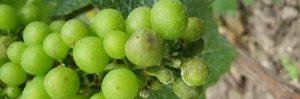
Champagne: unprecedented attacks of mildew on the vineyard

The “exceptional” rainfall at the start of summer led to “unprecedented attacks of mildew”, the CIVC reports, which already estimates “between 20 and 25%” the losses on the scale of the 34,000 hectares of the Champagne vineyard.


This summer brought heavy rainfalls to some regions of France. Recently, we have covered the problem in Alsace where the 15,600 hectares of vines are subjected to mildew, powdery mildew, brown and grey rot – which combine fungal diseases in a downward spiral.

The weather conditions are unfavorable this year. Moving to Champagne: “If the entire vineyard is concerned, there is a great heterogeneity of situations with losses ranging from a few percentages to more than 50%”, specifies the Interprofessional Committee of Champagne Wine (CIVC), which adds to these losses “30% due to spring frost.”

Champagne mildew

“The thousands of hectares of the Marne Valley, as well as some sectors of the Aube are particularly affected by this fungus which likes humidity and heat”, confirms Maxime Toubart, president of the General Syndicate of Winegrowers (SGV) and co-president of the CIVC.

“In two months, around 300 mm of rain fell. It’s huge especially when the vines need sun to ripen!” he explains. “In the Marne, the sectors of Sézannais, the Côte des Blancs and part of the Montagne de Reims are currently spared.”

Maxime Toubart

“But the disease is gaining ground,” notes Maxime Toubart who traced the last major mildew attack on the Champagne vineyard back to 2012. Some winegrowers will not be able to achieve the yield of 10,000 kg per hectare decided on July 21 by the inter-profession grouping together with winegrowers and champagne houses.”

“But there is still the interprofessional reserve, or 7,600 kilos per hectare for those who have the most. It plays the role of shock absorber,” emphasizes Maxime Toubart. “And we have stocks that also allow us to respond to the market.”

“Downy mildew affects the potential of the harvest but not the quality. A good vintage is still possible”, insists the president of SGV.

Photo: lachampagnedesophieclaeys.fr, vitisphere.com

The “exceptional” rainfall at the start of summer led to “unprecedented attacks of mildew”, the CIVC reports, which already estimates “between 20 and 25%” the losses on the scale of the 34,000 hectares of the Champagne vineyard.

Coca-Cola: the after-Covid growth period

Coca-Cola’s revenues were up 42% in the second quarter of 2021 thanks to a recovery in before-Covid marketing investments.


The world’s largest producer of soft drinks announced a 42% increase in net revenues in the second quarter of this year to $ 10.1 billion. This growth in the company itself is explained by a steady recovery in some markets after the pandemic began to decline, as well as an increase in marketing costs. Coca-Cola CFO John Murphy said they doubled their marketing costs in the quarter compared to the same period last year, returning to the 2019 level.

According to Murphy, there are three priorities in Coca-Cola‘s operations: increasing consumer-oriented marketing investments, improving the quality of expenses, and their more targeted allocation. The company’s management is confident that it is marketing innovation, efficiency and effectiveness that contribute to the growth of revenue and profits.

The course for efficiency was set back last summer, when the company announced it would focus on its core, larger and stronger brands, ditching “zombie brands” that are limited to one market and growing at a slower pace than the group’s average.

Among the segments that showed growth in 2021, Coca-Cola names the consumption channel outside the home. Compared to the decline in revenue in 2020, when sales in temporarily closed stadiums and cinemas fell because of coronavirus, this year there is an increase in sales as consumers return to before-Covid entertainment.

In addition, the company remains the leader in online retailers in the ready-to-drink non-alcoholic beverage category, with a 54% improvement YTD. Coca-Cola management said e-commerce will remain a priority in the company’s development even after the end of the pandemic.

Photo: facebook.com/TheCocaColaCoUA

Coca-Cola’s revenues were up 42% in the second quarter of 2021 thanks to a recovery in before-Covid marketing investments.

The Alsatian vineyard under the onslaught of mildew

The 15,600 hectares of Alsace vines are subjected to an unprecedented trial which combines fungal diseases in a downward spiral.


During the first six months of 2021, the Alsatian vineyard was watered by 600 to 720 mm of rain depending on the zone, as much as during a whole year. Precipitation accumulations were particularly high from July 11 to 13.

“Roots grow on the trunk of waterlogged soils, the anthills become aerial,” notes Frédéric Schwaerzler, wine advisor to the Chamber of Agriculture for Haut-Rhin. Mildew and powdery mildew have a blast. Along the wine route, the pressure is less strong in the north. It gets stronger as you move south, where the precipitation has been more abundant.

“There are healthy plots, others 100% affected. On average, 40% of the bunches are attacked by mildew,” notes Marie-Noëlle Lauer, wine advisor at the Chamber of Agriculture for Bas-Rhin, according to observations made in 100 control plots. “Powdery mildew, already present in Bas-Rhin, is spreading to Haut-Rhin, alone or associated with downy mildew. It is already showing itself sometimes in bunches. It should not be underestimated because we will be dragging it to the harvest,” she adds. “The brown rot is coming out everywhere,” adds Frédéric Schwaerzler.

By mid-July, conventional domains had been already sprayed six to seven times, their organic colleagues, ten to eleven times under less-than-optimal conditions. The rains particularly annoyed them during June, a month when the vegetation grew very quickly. Winemakers who fall behind in green work have been affected more. Tractors got stuck, even overturned, fortunately without consequences for their driver. “The damage to grapes is sometimes partial. Compensation by the remaining clusters is always possible,” notes Marie-Noëlle Lauer. A return of high humidity could, however, increase the risk of rotting and recrudescence of the Drosophila population.

Prepared by O. Hryhorieva based on vitisphere.com

The 15,600 hectares of Alsace vines are subjected to an unprecedented trial which combines fungal diseases in a downward spiral.

Paving the way to the Carpathian Wine Route

The two initiatives by the American-Romanian company OenoCo International, the ‘Carpathian Wine Consortium’ (CWC) and the ‘Carpathian Wine Route’, generated excessive interests from both specialists in the field and the general public in Central and Eastern European countries.


The company has recently established itself as a major player on the international wine stage by opening new markets for wines from the Central and Eastern European region. It has implemented new technologies in the potential of wine producers by offering quality wine certifications for many wineries and notably by organizing the International Economic Forum (IEF2021): ‘The Wine Industry in Eastern Europe: Challenges, Realities and Future Prospects.’

Expanding on the experience of renowned sommeliers, as well as experts from related fields, OenoCo International managed to engage in numerous studies on the wine sector of a number of countries in the aforementioned region, allowing the American-Romanian company to launch the two projects.

During the process of opening new Western markets, OenoCo International concluded that the main limitation of the Central – Eastern European wine sector is the lack of associative formulas (associations/ consortiums, etc.), which are the norm in Western countries.

Therefore, in order to meet the major objective of wineries in this region of Europe, which is export expansion to Western markets, the American-Romanian company is launching CWC during IEF2021, held online on July 30-31, 2021. Beyond optimizing export volumes, CWC will ensure international wine quality standards and will represent a reference point in the relationship with the EU institutions as well as with the national ones in each member country. The CWC aims to protect the interests of its members and also to promote the Central and Eastern European region internationally.

Moreover, OenoCo International’s professionals have recently started focusing on the sector of wine tourism. Taking into consideration the findings from two countries’ case studies – Romania and the Republic of Moldova – one can see the huge potential offered by capitalizing at maximum levels the cultural and geographical realities. All countries encompassed by CWC have fascinating histories, traditions and beautiful geographical formations. That is why, together with the Carpathian Wines Consortium (CWC), OenoCo International is also launching the ‘Carpathian Wine Route’ initiative. It is of paramount importance to emphasize the impact of the wine sector on local communities in this Central and Eastern European region. In this respect, one of OenoCo International’s main objective is the sustainable development of rural economies.

Along the same lines of the European project ‘Via Carpatia’ that will connect infrastructures in Central and Eastern European countries, OenoCo International’s project ‘Carpathian Wine Route’ complements the transnational highway, proposing an international promotion of economic and social realities especially cultural diversity. Wineries which are members of CWC will automatically be included in the ‘Carpathian Wine Route’ initiative.

OenoCo International professionals enjoy a strong relationship with renowned names in the wine industry worldwide, many of whom are participants in the international economic forum. They do believe in the OenoCo International’s vision and mission, and they will continue to endorse their projects both regionally and internationally.

OenoCo International’s exhibition of both initiatives will take place during IEF2021. All interested parties can register on the following website


The two initiatives by the American-Romanian company OenoCo International, the ‘Carpathian Wine Consortium’ (CWC) and the Carpathian Wine Route, generated excessive interests from both specialists in the field and the general public in Central and Eastern European countries.

Correns: returnable bottles are up to date

Since June, the Correns winegrowers’ cooperative has been reviving an old habit that has been lost for 30 years: the deposit of bottles. This initiative aims to preserve the planet’s resources.


In exchange for a returned empty bottle, customers earn two points on their loyalty card. It takes 100 to get a 75 cl bottle of wine offered by the store. Consumers have the choice between white, rosé and red.

Displayed on a shelf in the middle of the store, they all have the same name “Croix de Basson 2020” inscribed in red and black letters in the center of a large white label.

Above the name, a cross is depicted on mountains, in reference to the monument at the entrance to the village of Correns. At the bottom of the label, a small logo identifies the returnable bottles.

Croix de Basson 2020

Fight against the overproduction of bottles

“Returnable bottles limit waste, testifies a client of the cooperative of wine growers of Correns, with a smile. We are talking about recycling glass, but it costs excessively expensive, so me, I would be to return to the instructions of my grandmother’s time”.

The Association Ecoscience Provence has revived this ancient habit in the south-east of France since 2012. Co-founder of the Réseau Consigne is developing this principle in close consultation with professionals in the vineyard sector in Provence.

Ecoscience Provence suggested that the Cave Coopérative des Vignerons de Provence use returnable bottles. The project is supported by the International Union for the Valorization of New Generation Waste (SIVEDNG), which brings together 34 municipalities in the Var and has been working for 20 years to reduce waste in the region.

Deposit rather than recycling

The goal is to reduce bottle recycling, as the returnable bottle consumes 33% less water compared to a recycled bottle. The idea is also to put an end to an overproduction of bottles of wine since 40 million are produced and consumed in Paca each year.

We say to ourselves that this is a good idea, we will do everything to make it work, says Julien Demonchaux, the technical director of the Vignerons de Correns. In the end, if it works, we will feel much better. This is a small step on the scale of all bottles on the market. If everyone is playing the game, it can really be meaningful.”

The bottles used by this wine company are made in France and in the Piedmont region of northern Italy.

Credits: francetvinfo.fr

Since June, the Correns winegrowers’ cooperative has been reviving an old habit that has been lost for 30 years: the deposit of bottles. This initiative aims to preserve the planet’s resources.

No machinery, no equipment: only grapes remained in Ahr

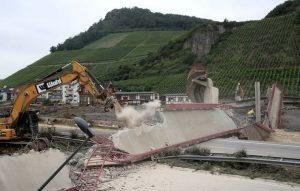
Ahr wineries have suffered the most from the devastating flooding in Germany.


Heavy rains in Northern Europe last week caused devastating flooding in Belgium, the Netherlands and Germany, which was hit hardest by the water disaster. According to official figures, 183 people died, dozens are considered missing, and thousands of houses, roads and bridges have been destroyed. The wine-growing regions of Germany suffered significant damage. Among the regions, Ahr suffered the most.

Located in the valley of the river of the same name, a tributary of the Rhine, Ahr is famous for its picturesque steep hills on which vines grow: Spätburgunder, Früburgunder, Portugueser and Dornfelder have become the visiting cards of the region. However, now the grapes on the vines are the only thing that some winemakers have left because the water destroyed the premises, the machinery and equipment of the wineries, literally carrying away tractors, cisterns and presses in its streams.

Flooding in Ahr

Ahr winemakers will not only have to decide how and where they will be able to press and ferment grapes, but also where to get additional labor to take care of the vineyards until harvest, since they have lost all the equipment.

While the authorities are calculating possible losses and developing plans to provide assistance to the victims, their colleagues from neighbouring regions came to the aid of Ahr winemakers. Winemakers, whose vineyards have not been touched by the element, organize themselves into teams and help with cleaning in the vineyards, as well as share the essentials, including mobile generators, because the region was left without water, mobile communications and electricity.

The German association of elite farms Verband Deutscher Prädikatsund Qualitätsweingüter organizes charitable events: for example, next weekend a wine festival will take place in Gunderloch, 100% of the proceeds of which will go to help Ahr winemakers.

Photos: dw.com, reuters.com

Ahr wineries have suffered the most from the devastating flooding in Germany.

Friendly hosts from Moldova are ready to welcome guests again! Be our guest again!

Entrepreneurs in the Moldovan tourism industry launched a new campaign to promote tourism after the pandemic period that paused visits but not the work of Moldovan hospitality hosts.


The crisis caused by the Covid-19 virus has severely impacted the tourism sector. Travel restrictions have resulted in an unprecedented decline in the number of foreign tourists worldwide and a $ 1.3 trillion loss in revenue. In Moldova, the total loss of income in the tourism industry is estimated at about 350 million dollars.

Nevertheless, the owners of guest houses and wineries, organizers of tourist events, guides, owners of restaurants and hotels, tour operators did not waste time, but used it to renovate and create new premises for receiving tourists. They opened new terraces, created new routes, purchased bicycles and new floating facilities (kayaks, canoes), built swimming pools, and each of them prepared special treats for long-awaited guests in their basements and storerooms. And, as the local proverb says: “Guests come when someone is waiting for them.” Thus, the new campaign is a tribute to the people who work in the tourism industry and their optimism. “They are the ones who will restore tourism in Moldova,” says Diana Lazar, deputy director of the Moldova Competitiveness Project, funded by USAID, the Swedish government and Ukaid.
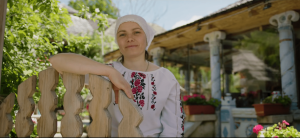
Be our guest again in Moldova

The campaign was launched in mid-June with a video that conveys the optimism and joy of meeting long-awaited tourists, as well as Moldovans from all over the world and closest neighbors. The protagonists of the campaign are the owners of rural guesthouses and wineries which over the years have welcomed tens of thousands of tourists and are ready to reopen their doors to visitors, offering an unforgettable travel experience. Locations featured in the video include: “Hanul lui Hanganu” in the village of Lalova, “Eco-resort Butuceni” in the cultural and natural reserve “Old Orhei”, underground galleries “Milestii Mici”, agro-boarding house “Gaguz Sofrasi” in the village of Kongaz, winery “Poiana” in the village of Ulmu, Valente Village Museum, kayaking excursions from Vadul lui Voda, Lake Beleu in the Prutul de Jos nature reserve and others.
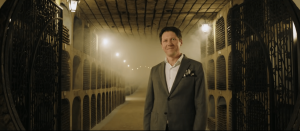
Be our guest again Moldova

The Asociatia Nationala pentru Turism Receptor (ANTRIM) announces the resumption of tourism in Moldova and invites visitors to discover our original travel offers in maximum safety. Most of the tourist destinations are already implementing the international standard “Safe Travel”, introduced in Moldova by ANTRIM with the accreditation of the World Travel & Tourism Council (WTTC). Through this campaign, we aim to revive domestic tourism, invite tourists from neighboring countries such as Ukraine, Romania, Poland, as well as attract tourists who have already visited Moldova before and who could again become our guests or promote this direction in social networks”, – said Victoria Bucătaru, executive director of ANTRIM.

The “Be our guest again” campaign is run by a young creative team whose goal is the interconnection between the various industries in Moldova. The campaign is aimed at retaining talent in the country and contributing to the sustainable development of the Republic. The soundtrack is provided by the Trigon group, which is celebrating the 20th anniversary of its activity, and the traditional shirt presented in the video is dedicated to the international holiday of the Romanian national shirt “ia”, which is celebrated on June 24th. The video will be translated into Russian, as well as into foreign languages: English, Ukrainian, Polish, Italian and others, and will be promoted mainly in the online space. In the early days after launch, the video gained widespread organic popularity, reaching over 330,000 unique users, over 475,000 views on Facebook, and over 3,000 shares of support.

The new campaign continues to promote the tourism potential of the Republic of Moldova, implemented in the period from 2015 to 2121. within the framework of the Moldova Competitiveness Project and funded by USAID, the Government of Sweden and Ukaid in cooperation with the National Association for Inbound Tourism (ANTRIM). These efforts resulted in an average annual increase in the number of foreign tourists of 20% between 2015 and 2019. At the same time, the campaign conveys a real message of hospitality that reinforces the amazing successes of the initial Be Our Guest campaign and the mysterious and famous guest video created by Atelier under the leadership of the late Viorel Mardaria. The campaign has received valuable awards from foreign experts, as well as an audience of about 20 million people. The campaign also aims to strengthen the new national slogan “Moldova: A place to find yourself” and the national campaign #neampornit.

Official campaign hashtags:

#FiiOaspeteleNostruDinNou #BeOurGuestAgain #MoldovaAplaceToFindYourself #neampornit


ANTRIM is a non-profit organization representing the voice of the private sector in Moldova’s inbound tourism industry.

Entrepreneurs in the Moldovan tourism industry launched a new campaign to promote tourism after the pandemic period that paused visits but not the work of Moldovan hospitality hosts.


New world record set by Penfolds Grange 1951

A bottle of the famous Australian winery sold at Langton’s auction became the most expensive wine ever sold in Australia.


A single bottle of Penfolds Grange signed by its founding winemaker Max Schubert has set a new world record price for any Australian wines sold at auction. The lot went under the hammer for AU$ 142,131.

The inaugural vintage of the most expensive wine of Australia was purchased this month at Langton’s auction. It broke the previous record of AU$103,000 which was also sold at Langton’s.

Penfolds Grange from Shiraz varieties with a small amount of Cabernet Sauvignon is considered the cult wine of Australia. The first vintage came from the experiments of Max Schubert. Having visited several countries of the Old World to study European techniques of winemaking, he was so impressed, in particular, by the wines of Bordeaux, that he decided to reproduce something similar at home. As a result of numerous experiments, this very wine was born that later became the most famous of Australia’s great wines.

Max Schubert

The Penfolds management team, however, initially did not appreciate the work of their chief winemaker, and the first vintage was never released for sale. It was handed out to Schubert’s friends and family: to date, fewer than 20 bottles of Penfolds Grange 1951 are believed to exist.

The record-breaking bottle was resealed in 1988 because the original cork was lost and was reported to have minor damage to the wax seal label over the original white foil capsule.

This is extraordinary,’ commented Langton’s head of auctions Tamara Grischy. ‘Never in my wildest dreams would I have thought a bottle of Australian wine would sell for this much.”

A bottle of the famous Australian winery sold at Langton’s auction became the most expensive wine ever sold in Australia.

Fine wines smuggling at HK-Shenzhen border

Over 4,000 bottles of fine wines were seized by authorities in Shenzhen. Lafite, Mouton and Penfolds 707 and other high-value products estimated at more than US$ 2.31 million were found among the bottles. Smugglers rushed to ferry goods from duty-free Hong Kong to the mainland.


As the General Administration of Customs in China claimed, the seizure took place at Heung Yuen Wai Control Point, connecting Hong Kong and Shenzhen. The latest land port – Liantang Port – was opened last August.

The smuggling was declared as 18.57 tons of imported rubber and plastic buttons, but an inspection revealed that the goods in the shipment were in fact luxury wines, various seafood and hair products, worth more than US$ 2.31 million, according to the estimate made by customs.

The contrabands found by the authorities consisted of 4174 bottles of Bordeaux first growths Chateau Lafite Rothschild, Chateau Mouton Rothschild, Penfolds 707, Champagne and whiskies.

On the mainland, one would pay USD 771 a bottle for Penfolds 707. And considering the picture released by the customs, at least 20 cases of the premium Australian wine can be found among the smuggled fine wines.

Demand for Penfolds, perhaps one of the best-known imported wine brands in China, surged after the country imposed about 218% anti-dumping duties on Australian wines, making wine less affordable and available.

Interestingly, while the overall supply of Australian wines to mainland China has plummeted, imports to Hong Kong have skyrocketed. From January to May this year, imports of Australian wines to Hong Kong increased by more than 340% year on year to USD 133.8 million over the same period last year.

Prepared by Oleksandra Hryhorieva based on vino-joy.com

Over 4,000 bottles of fine wines were seized by authorities in Shenzhen. Lafite, Mouton and Penfolds 707 and other high-value products estimated at more than US$ 2.31 million were found among the bottles. Smugglers rushed to ferry goods from duty-free Hong Kong to the mainland.

China imports more spirits than wine in 2021

Hard alcohol has become the largest category of imported alcoholic beverages in China.


From January to May 2021, the volume of imported spirits grew significantly, overtaking wine, according to a report released by the China Chamber of Commerce for Import and Export of Foodstuffs, Native Produce & Animal By-Products (CFNA). Hard alcohol accounted for 117% compared to the same period last year and became the largest category of imported alcoholic beverages.

Brandy has the largest share of imported spirits in China. According to published data, brandy imports totaled US $ 500 million and exceeded 17 million liters, an increase of 149% and 74% year on year, respectively. The cognac category alone accounted for more than 60% of all imports of alcoholic beverages.

The second largest imported beverage is whiskey. From January to May of this year, China purchased 10 million liters, at a cost of US $ 150 million.

Thanks to brandy, France is the main source of imported spirits, accounting for 64% of the top ten sources of imports. Together with the UK, both countries supply 80% of China’s imported spirits.

The volume of wine imports from January to May this year amounted to 170 million liters, which is 1% less than last year. However, the value of imports amounted to almost US $ 700 million, an increase of 0.2% over the same period last year.

Prepared by N. Zakharchuk based on thedrinksbusiness.com

Hard alcohol has become the largest category of imported alcoholic beverages in China.

Украина