
Увага!

Увага! На сайті використовуються cookie файли.

The site uses cookie files

Даний сайт має вікове обмеження.

This site has age restrictions!

Я підтверджую, що мені, на жаль, давно виповнилося 18 років
I confirm that I have 18 years!
prowein
prowein

Gastronomy and Wine Portal

Maison Albert Bichot: the Contemporary Face of Classical Burgundy

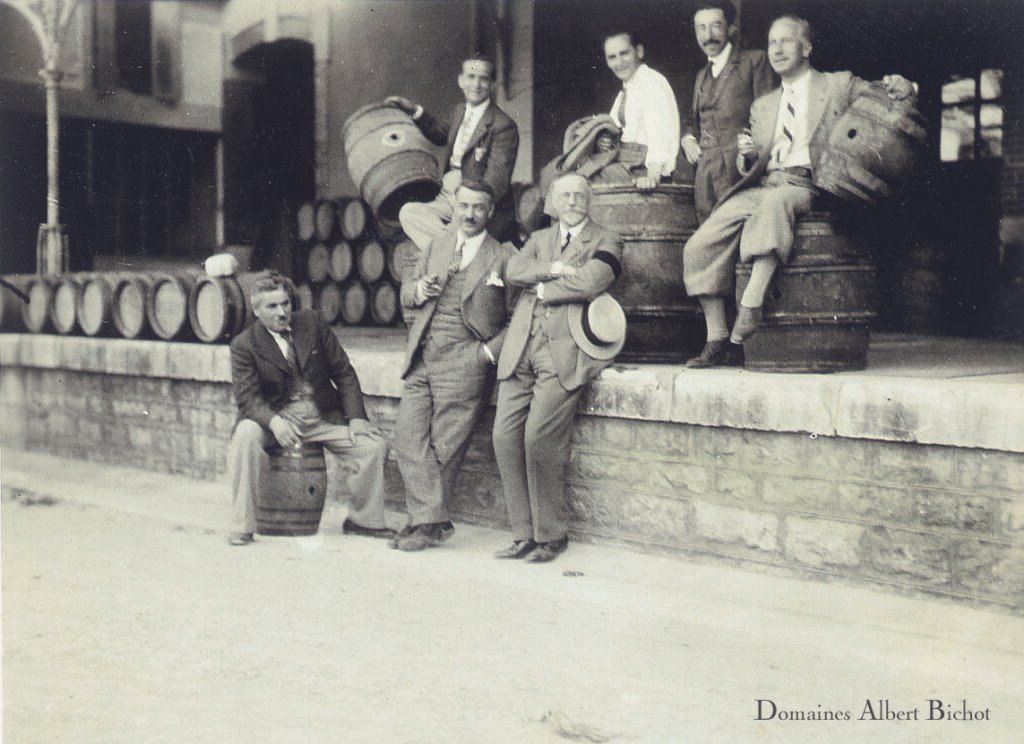
It is difficult to find a Burgundian producer that embodies the spirit of the region more precisely than Maison Albert Bichot. Founded in 1831, this family enterprise is now led by the sixth generation, and owns 106 hectares of vineyards surrounding six historic estates in Burgundy’s most prestigious appellations.


Today, the Albert Bichot family crafts wines that have made the name one of the most recognisable in Burgundy.
Albert

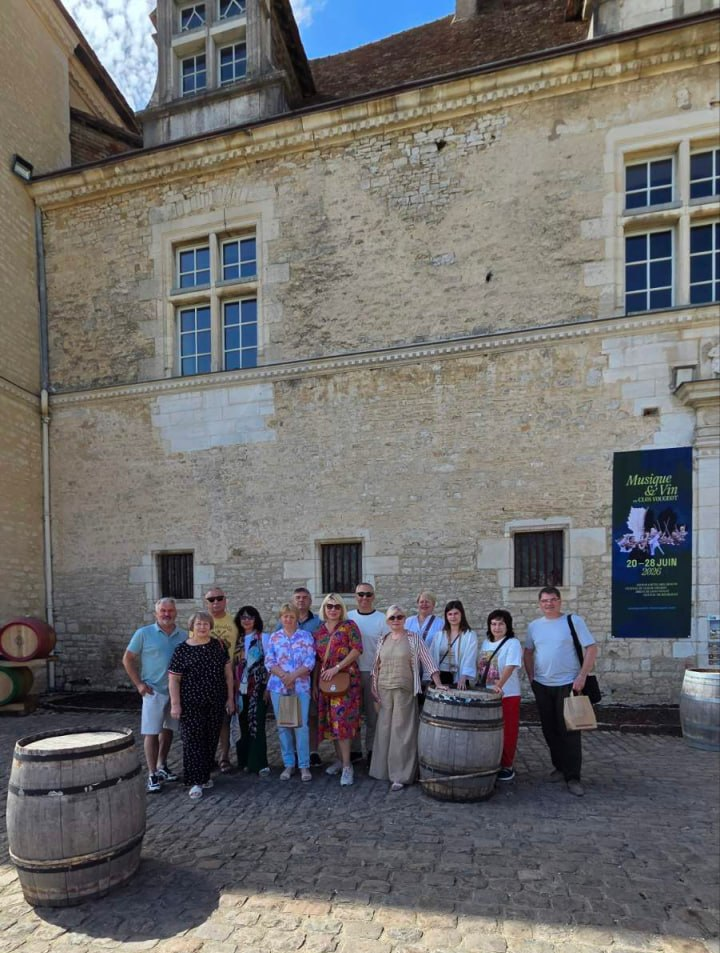
When shaping our travel route through the region – a group that included not only journalists but also winemakers, restaurateurs and advanced winelovers from Ukraine – visiting the Albert Bichot domaines was simply inevitable. In fact, we visited two.
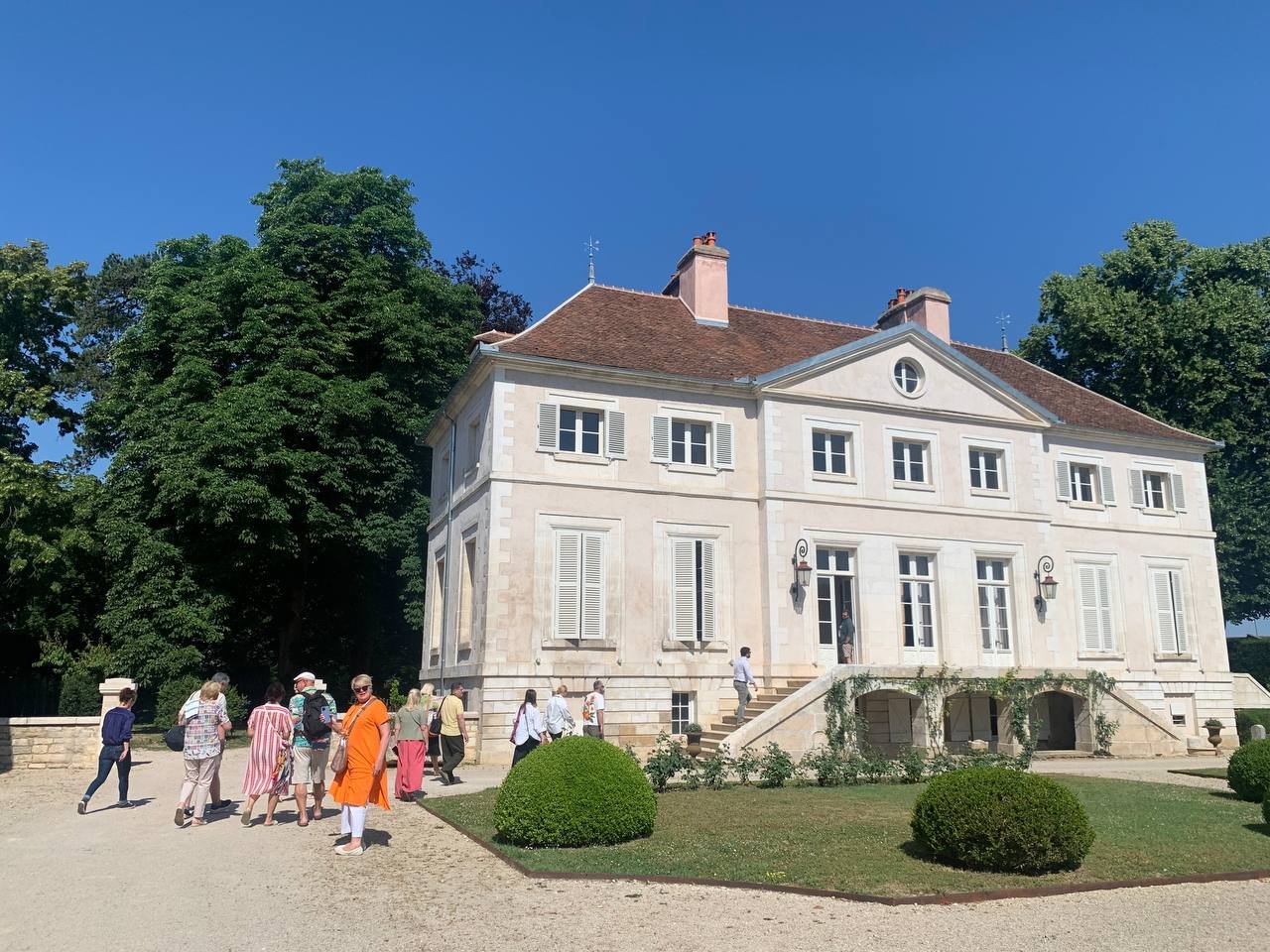
We are deeply grateful to the esteemed Richard Bampfield MW, judge of the Wine Travel Awards and a sincere friend of Ukraine, for facilitating our visits to these distinguished estates.

From négociant to one of Burgundy’s most influential producers

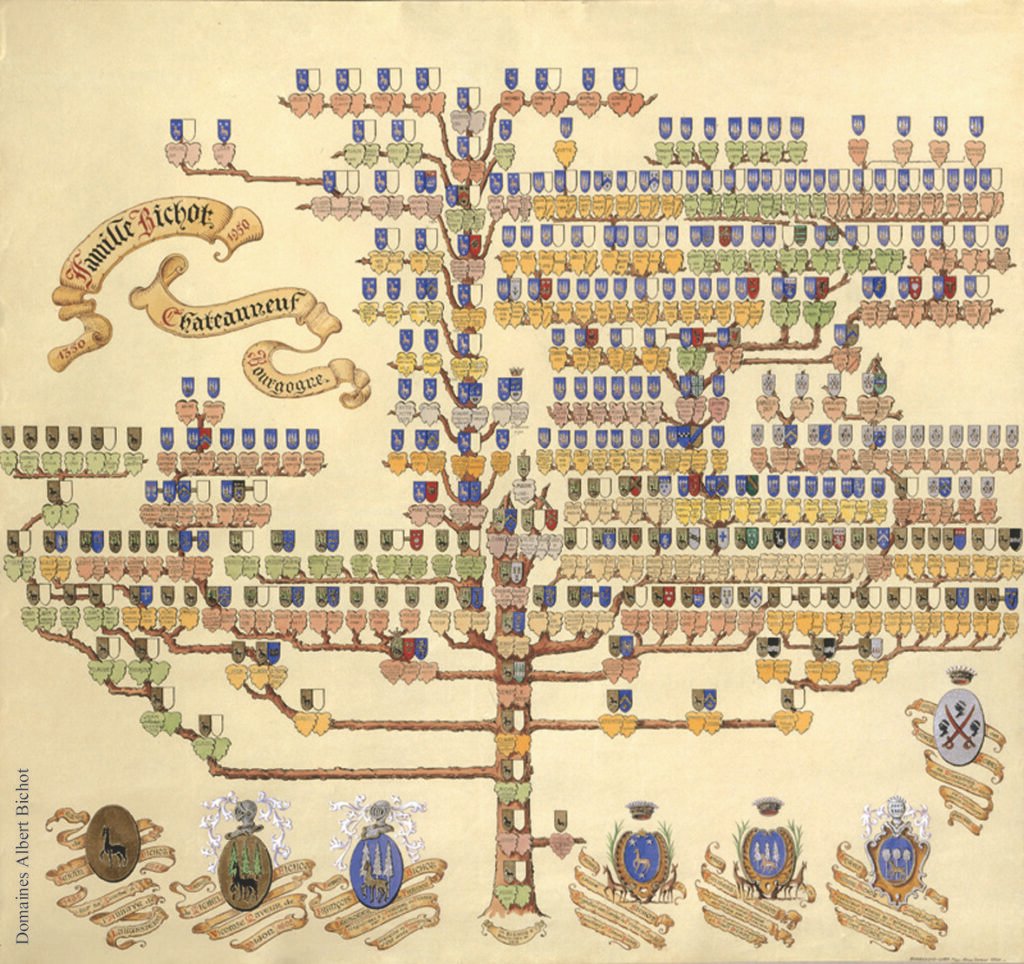
Maison Albert Bichot began as a négociant and still defines itself as a négociant‑vinificateur‑éleveur. The family has lived in Burgundy since 1350 and maintains a profound connection with the region – including its most emblematic wine event, the Hospices de Beaune auction. As noted earlier, Domaines Albert Bichot unites six historic estates stretching from Chablis to Beaujolais: Domaine Long‑Depaquit (Chablis), Domaine du Clos Frantin (Nuits‑Saint‑Georges), Château‑Gris (Nuits‑Saint‑Georges), Domaine du Pavillon (Pommard), Domaine Adélie (Mercurey), and Domaine de Rochegrès (Moulin‑à‑Vent, Beaujolais).
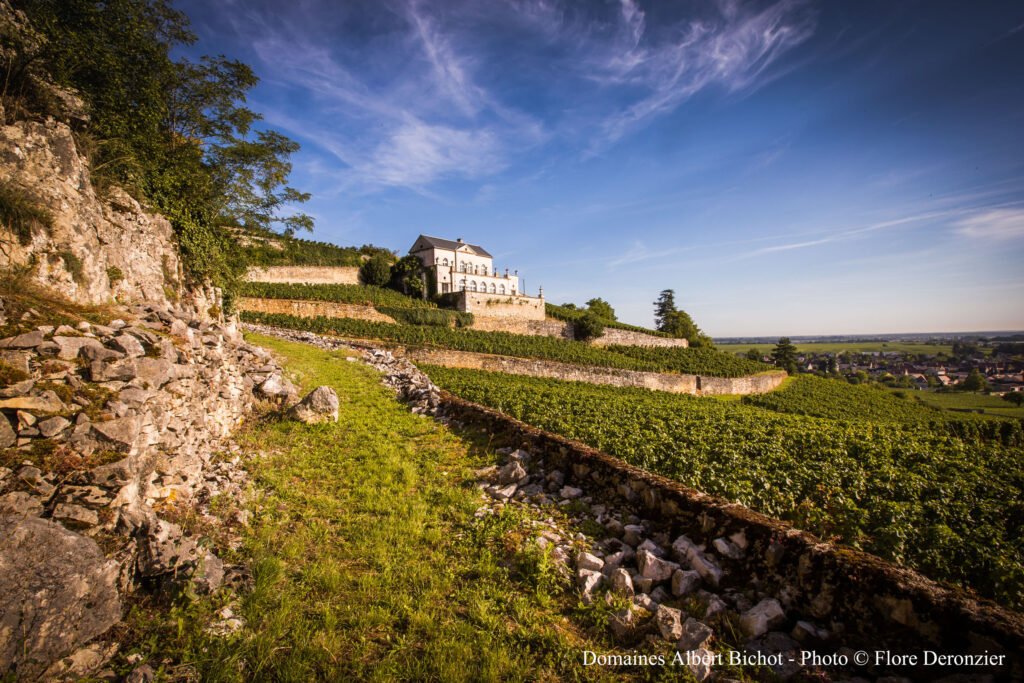
Albert Bichot

Organic viticulture and deep respect for terroir

Maison Albert Bichot is currently led by Albéric Bichot, who joined the family business in the early 1990s and became president in 1996. Since then, the company has significantly expanded its vineyard holdings, invested in modern facilities and embarked on a large‑scale transition to organic viticulture.
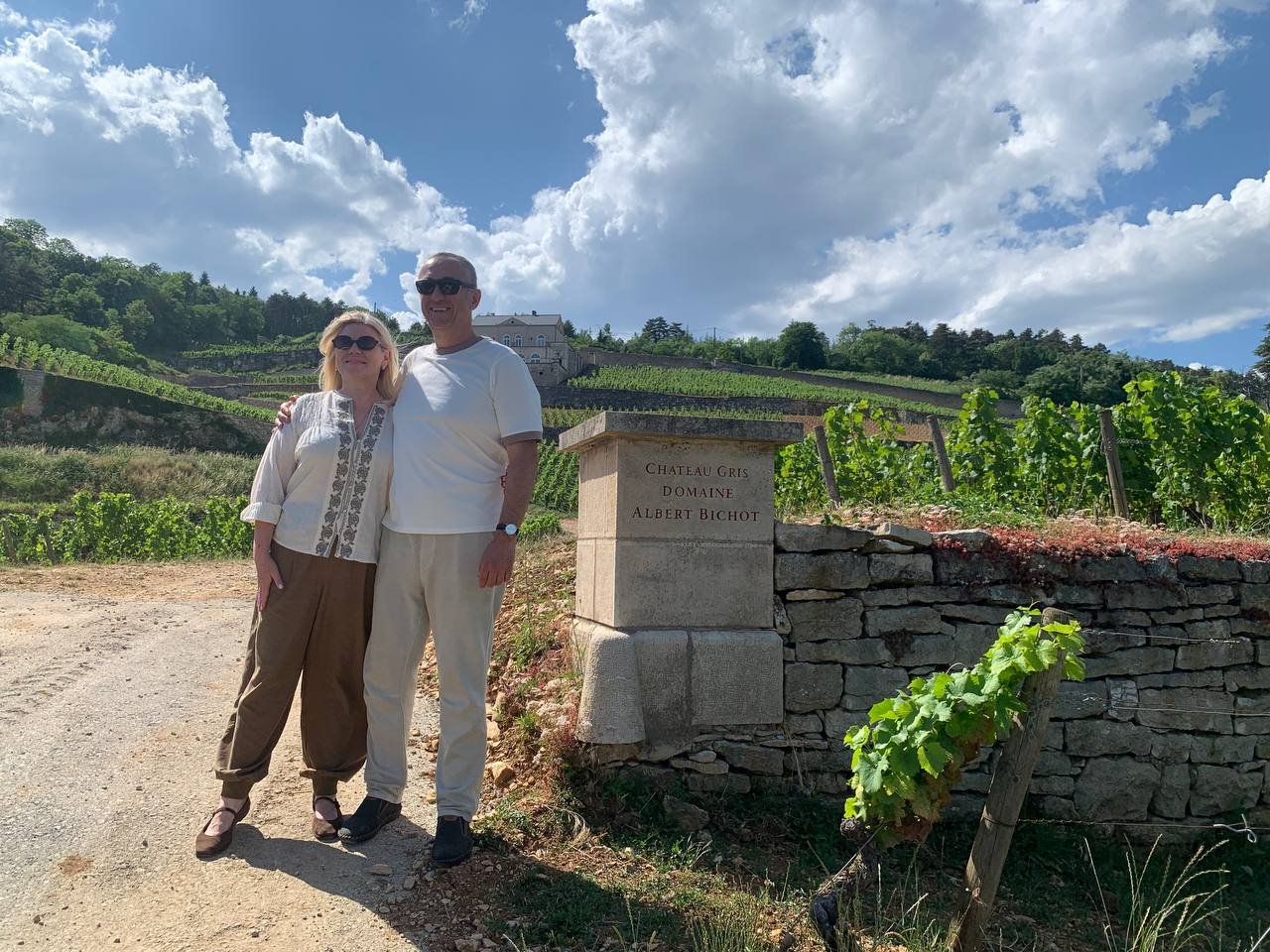
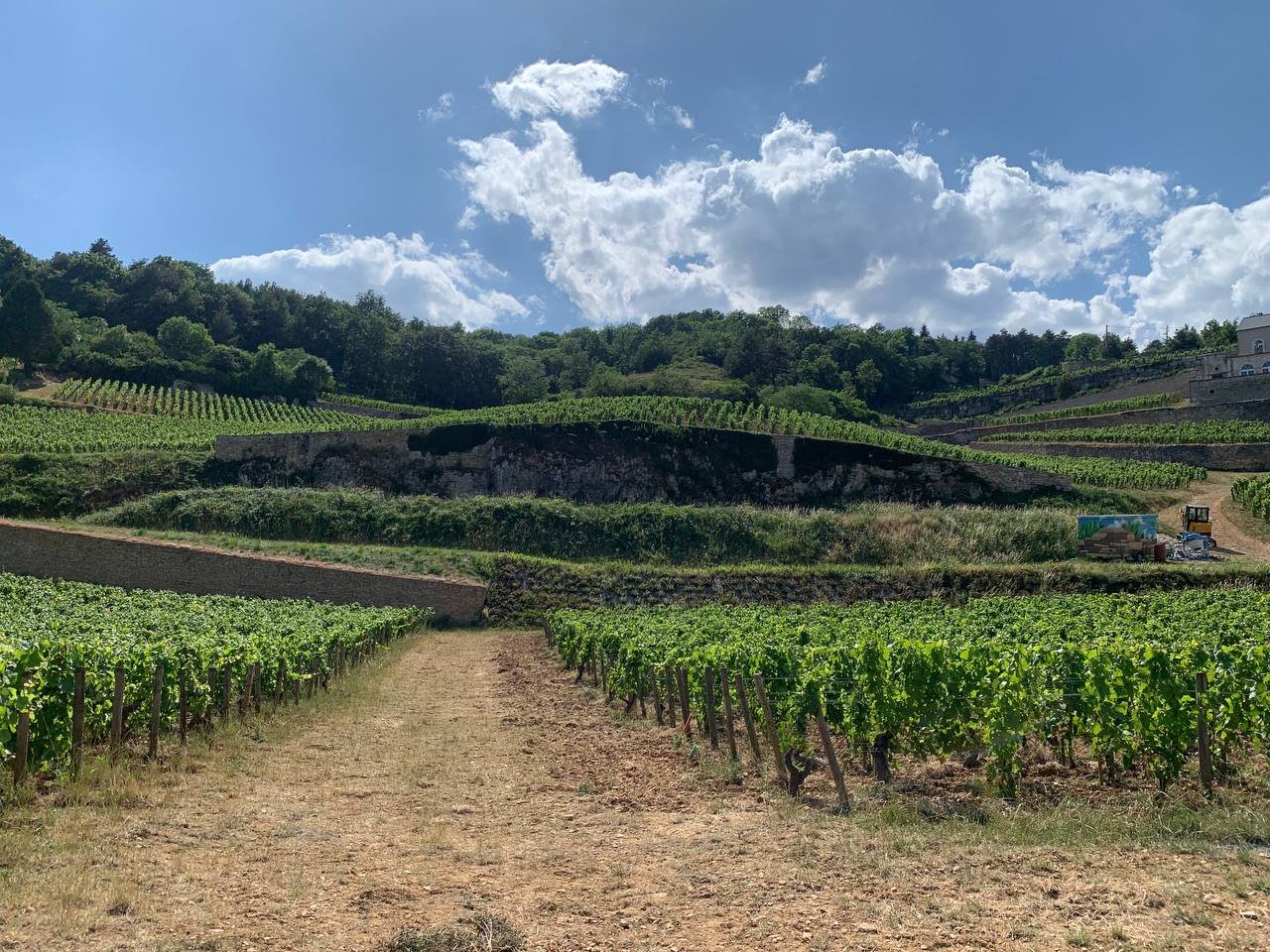
The philosophy is clear: wine quality begins in the vineyard. Sustainable and organic practices are applied, with natural fertilisers and strict control not only over estate vineyards but also over partner growers’ plots (although wines from purchased grapes are not certified organic).
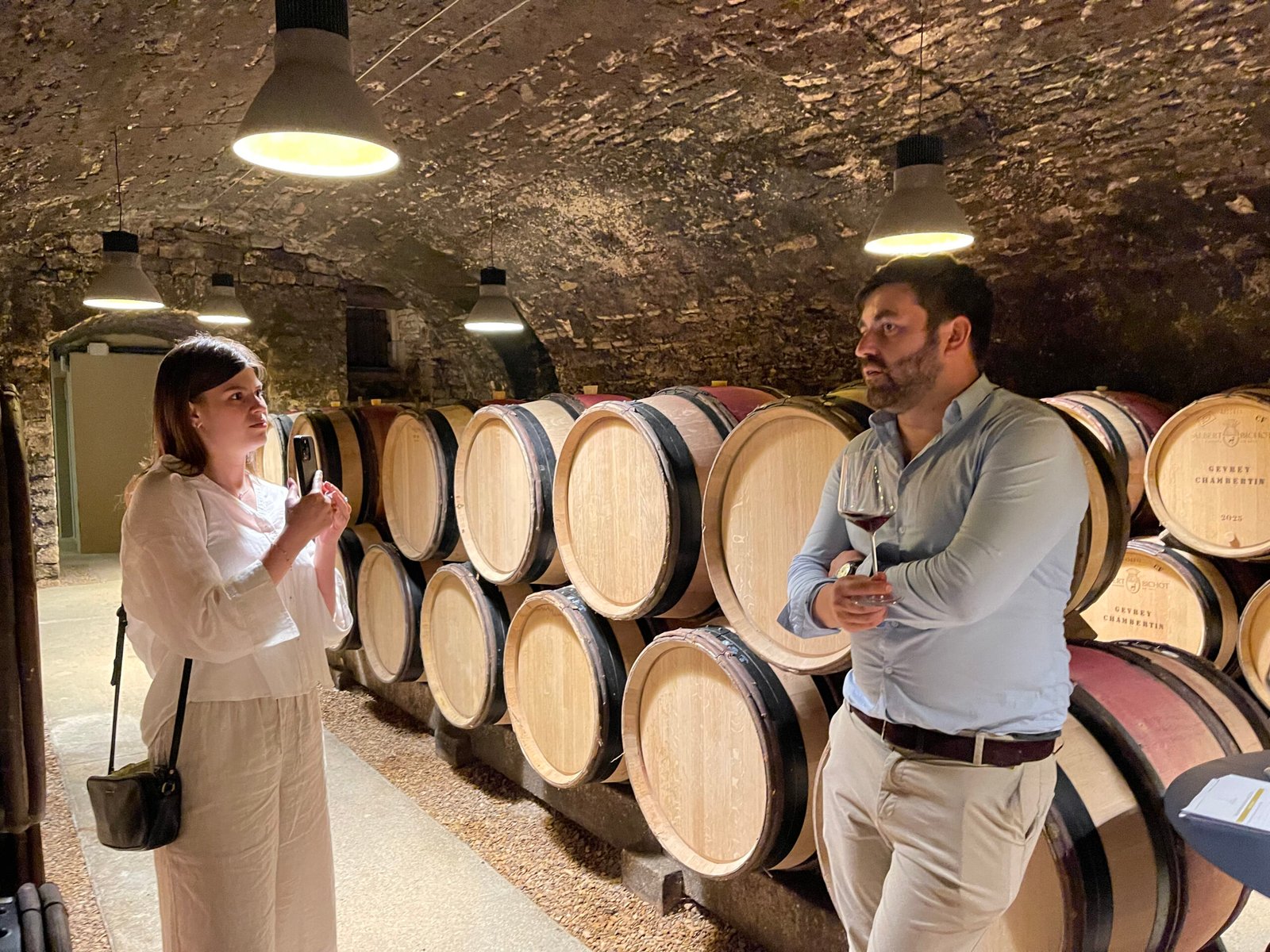
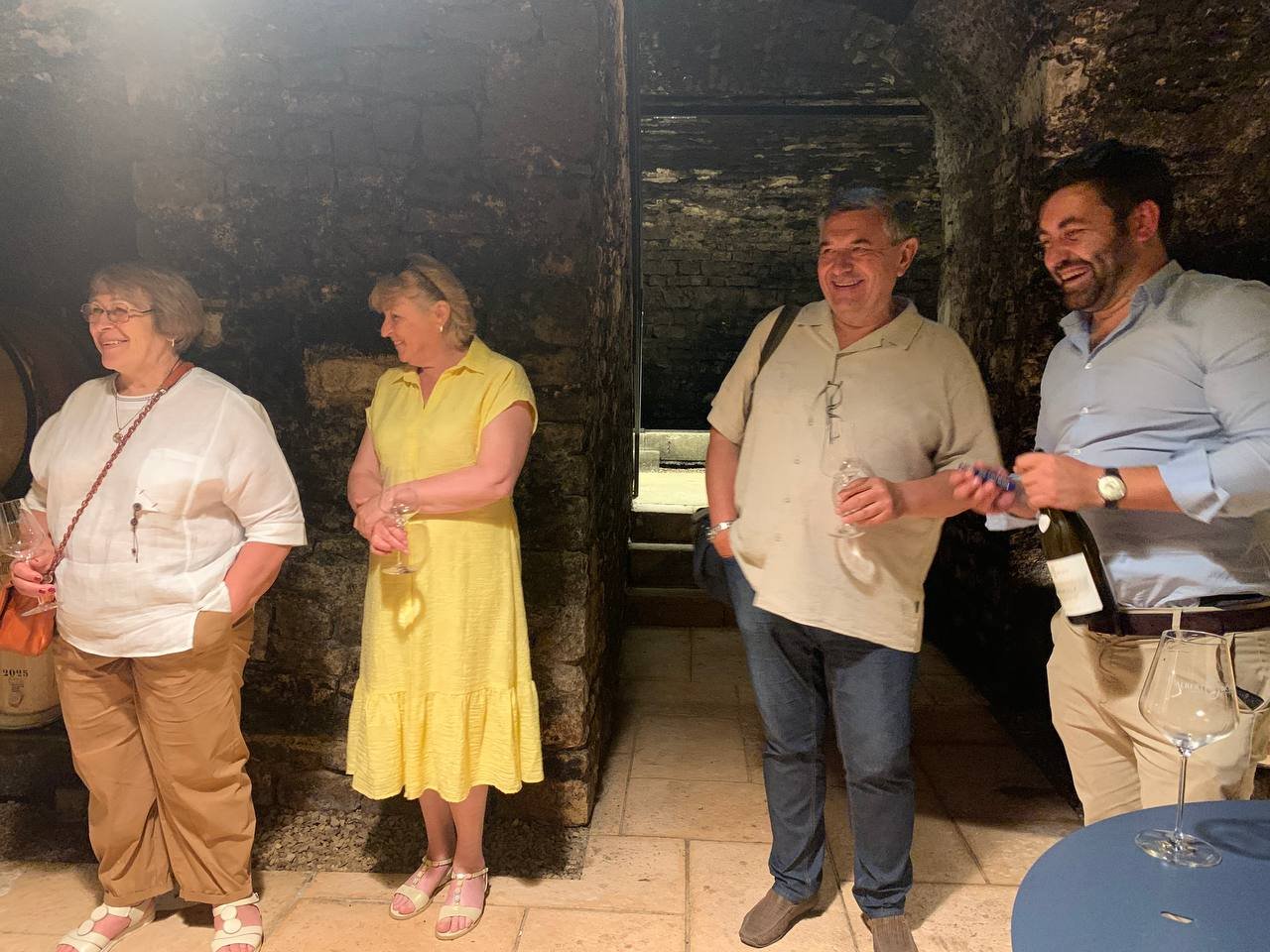
Manual work is widely used, soils are treated with care, and on certain parcels sheep graze in winter to support natural soil health and biodiversity. Combined with ecological packaging, these efforts reduce the environmental impact of the company’s activities.
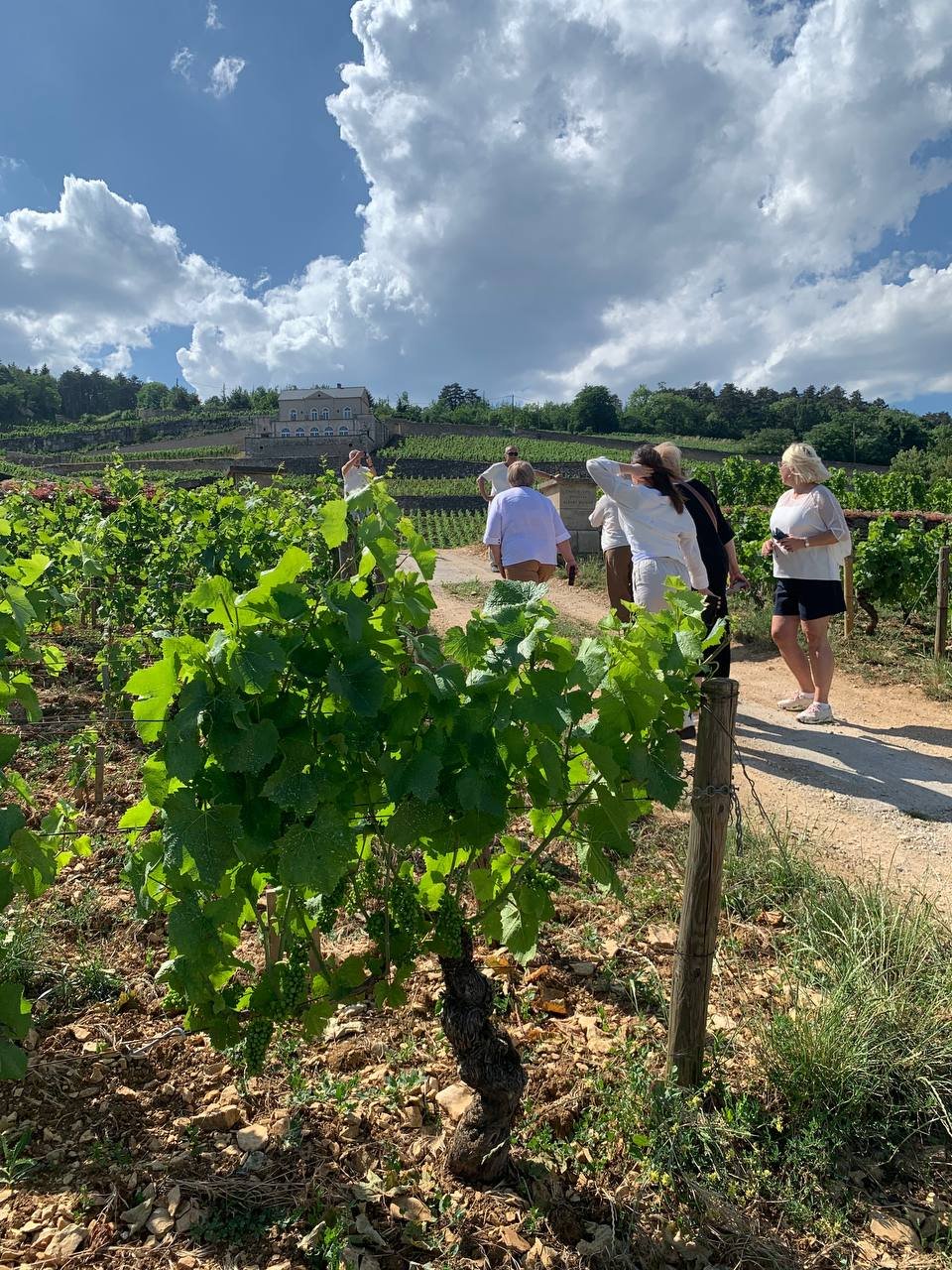
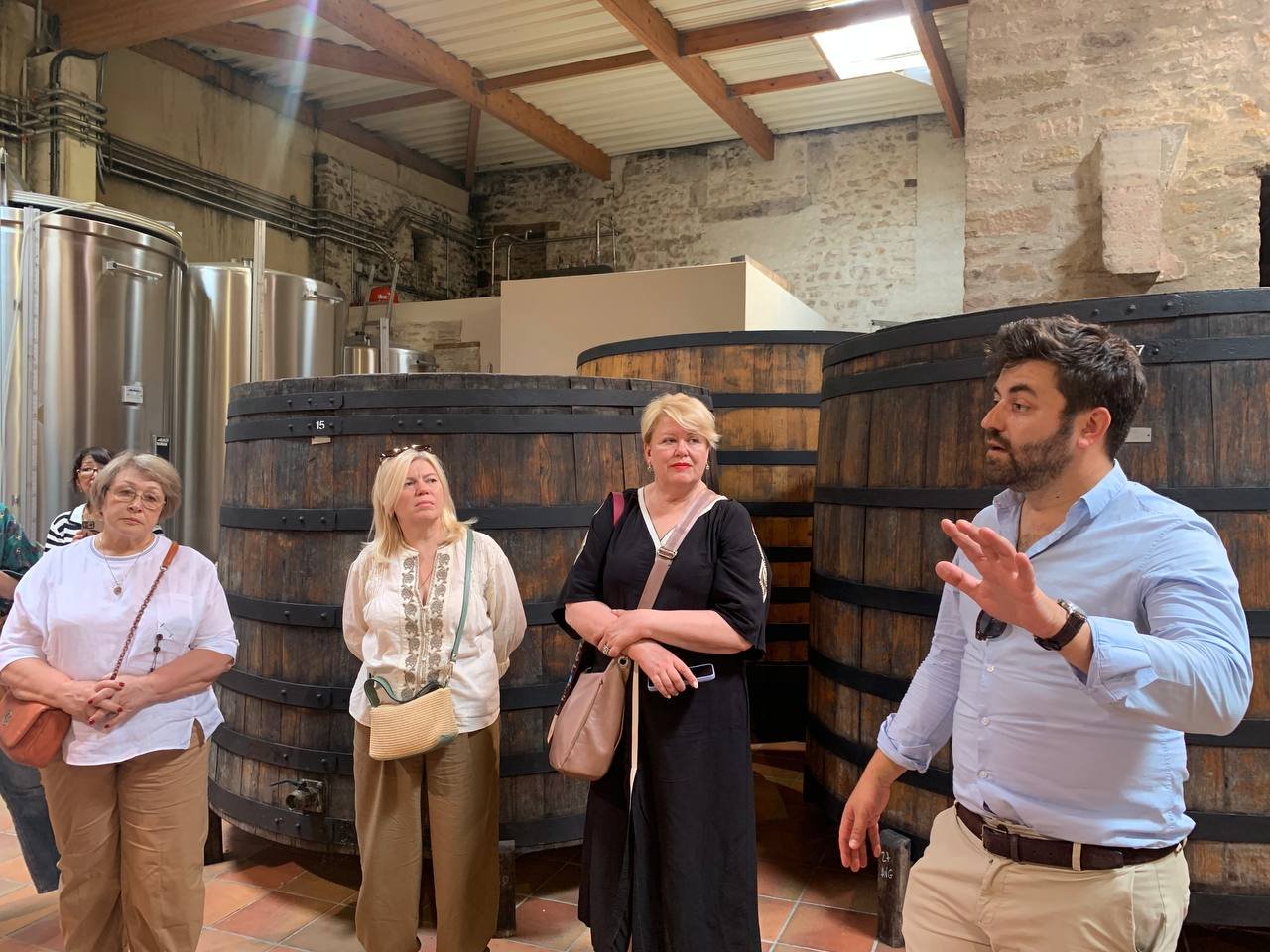
This gentle, low‑intervention approach continues in the cellar. Each domaine has its own winemaking team and modern equipment, working with maximum respect for terroir. No cultured yeasts are added – only indigenous yeasts from the vineyard. Gravity flow replaces mechanical pumping to preserve purity and aromatics. 
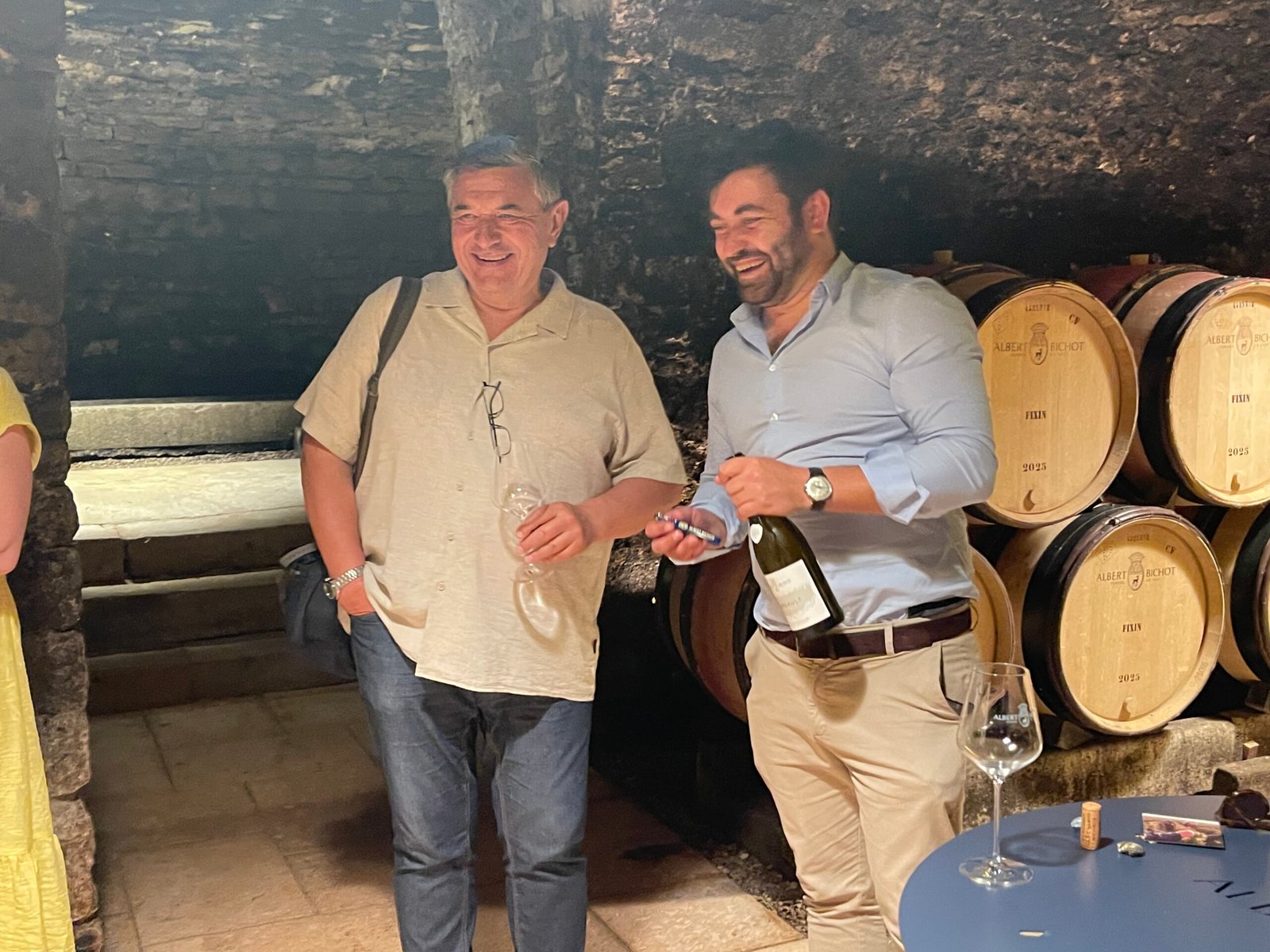
Ageing lasts 12–18 months in oak barrels from various coopers and with different toast levels, ensuring the subtle, harmonious oak integration that characterises Albert Bichot wines.

A leading buyer at the Hospices de Beaune auction

It is no exaggeration to say that Albert Bichot has become an integral part of the legendary Hospices de Beaune auction – not only through historical ties and charitable tradition, but also thanks to its exceptional wines. The company has participated since 1876, supporting the Hospices when it functioned as a hospital and later contributing to other charitable projects. Albert Bichot has repeatedly made landmark purchases, including the celebrated Pièce des Présidents, acquired on behalf of the House’s clients. All proceeds from this unique barrel go to medical, social and charitable causes. The Pièce des Présidents – the auction’s most expensive lot, often reaching tens or hundreds of thousands of euros – is promoted with the help of celebrities from film, art and sport.
In 2020, for example, a barrel of Clos de la Roche Grand Cru was purchased for €660,000. Over the past 30 years, Albert Bichot has been the auction’s leading buyer, acquiring around 25% of all lots for clients worldwide. Some particularly coveted barrels are purchased for the House itself – for ageing and later release. Participation in the Hospices de Beaune has become a distinct business direction. In 2009, Albert Bichot revolutionised access to the auction by launching www.hospices-beaune.com, enabling wine lovers around the world to bid online, from a single bottle to an entire barrel.

Maison Albert Bichot is Burgundy’s most influential company and the largest buyer at the auction – a testament to its weight in the region’s wine history.

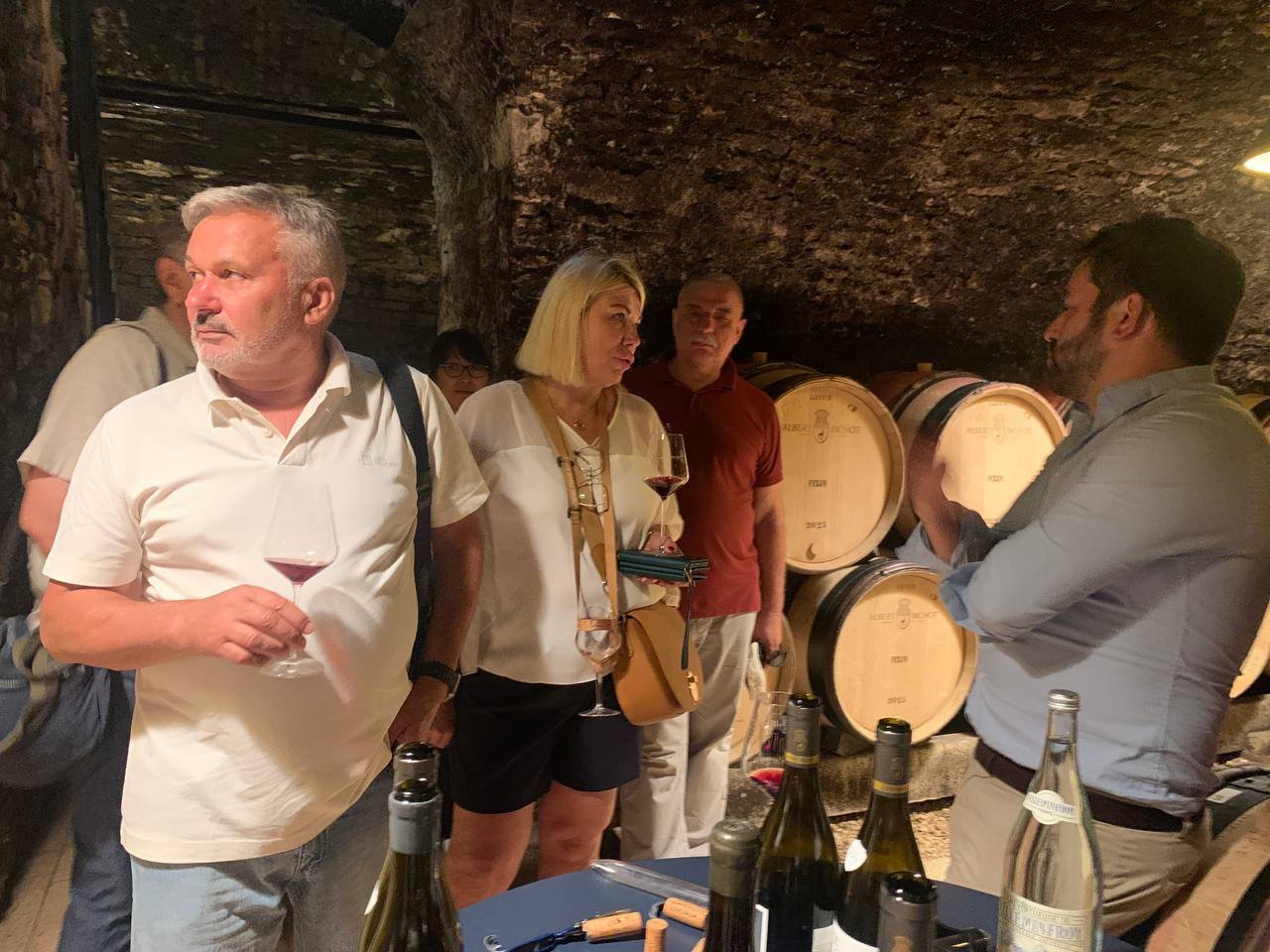
The Drinks+ and Wine Travel Awards journalists had the privilege of visiting two Albert Bichot estates, where our delegation was warmly welcomed and hosted by Denis Anjuere, the company’s Export Manager. During the visit, our group of experts had the opportunity to taste wines from nearly all of Albert Bichot’s domains.

Domaine du Clos Frantin – tasting Côte de Nuits and Côte de Beaune

Our first visit was to Domaine du Clos Frantin, a picturesque 18th‑century estate in Nuits‑Saint‑Georges, at the heart of the Côte de Nuits.
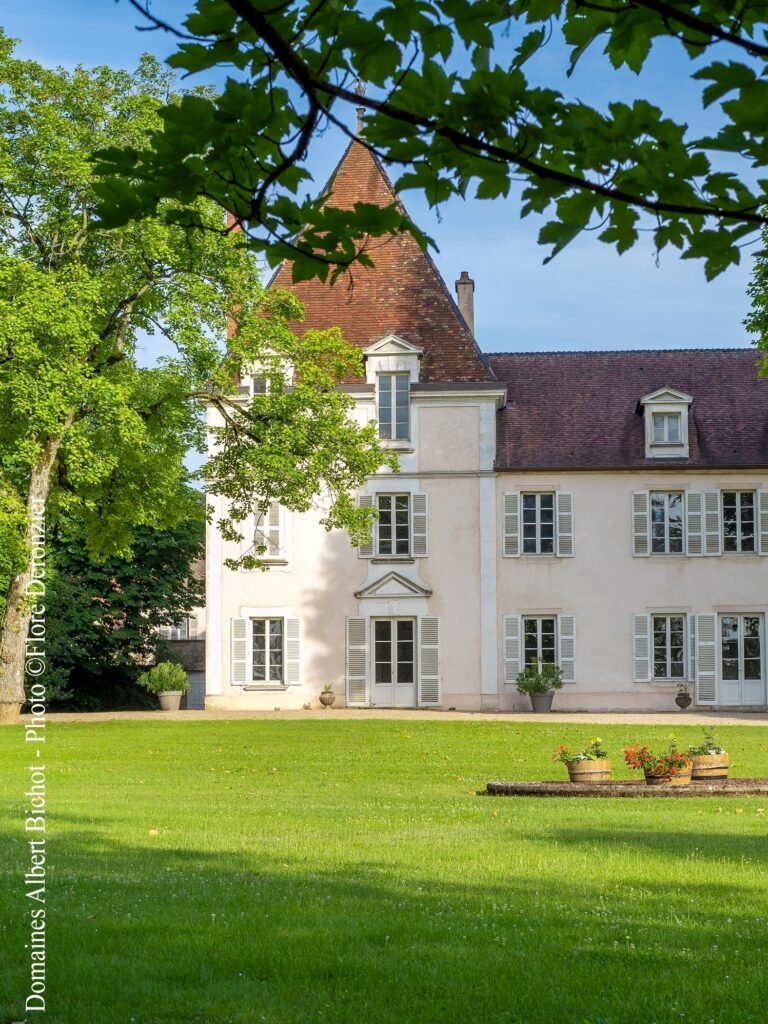
Albert Bichot

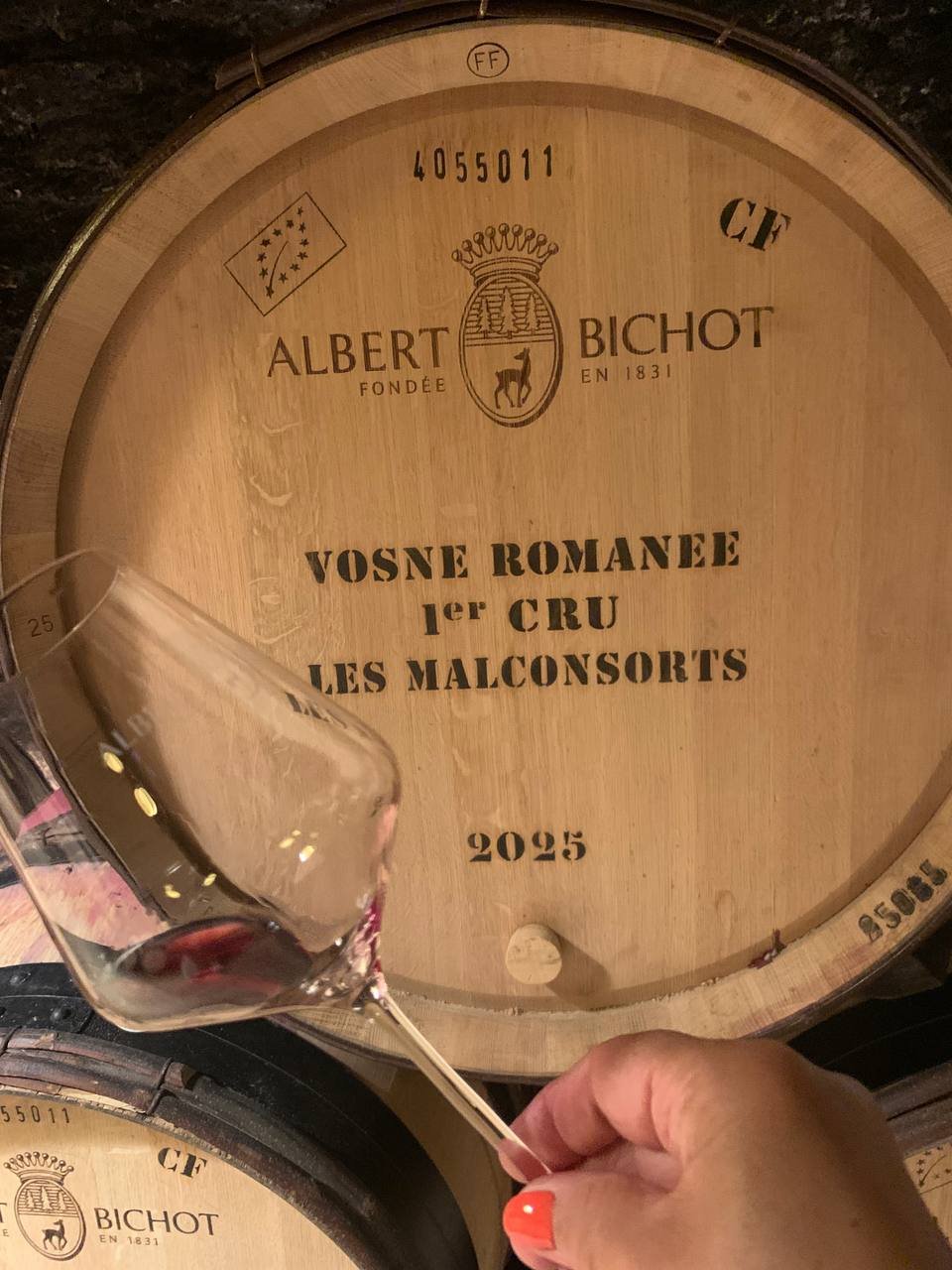
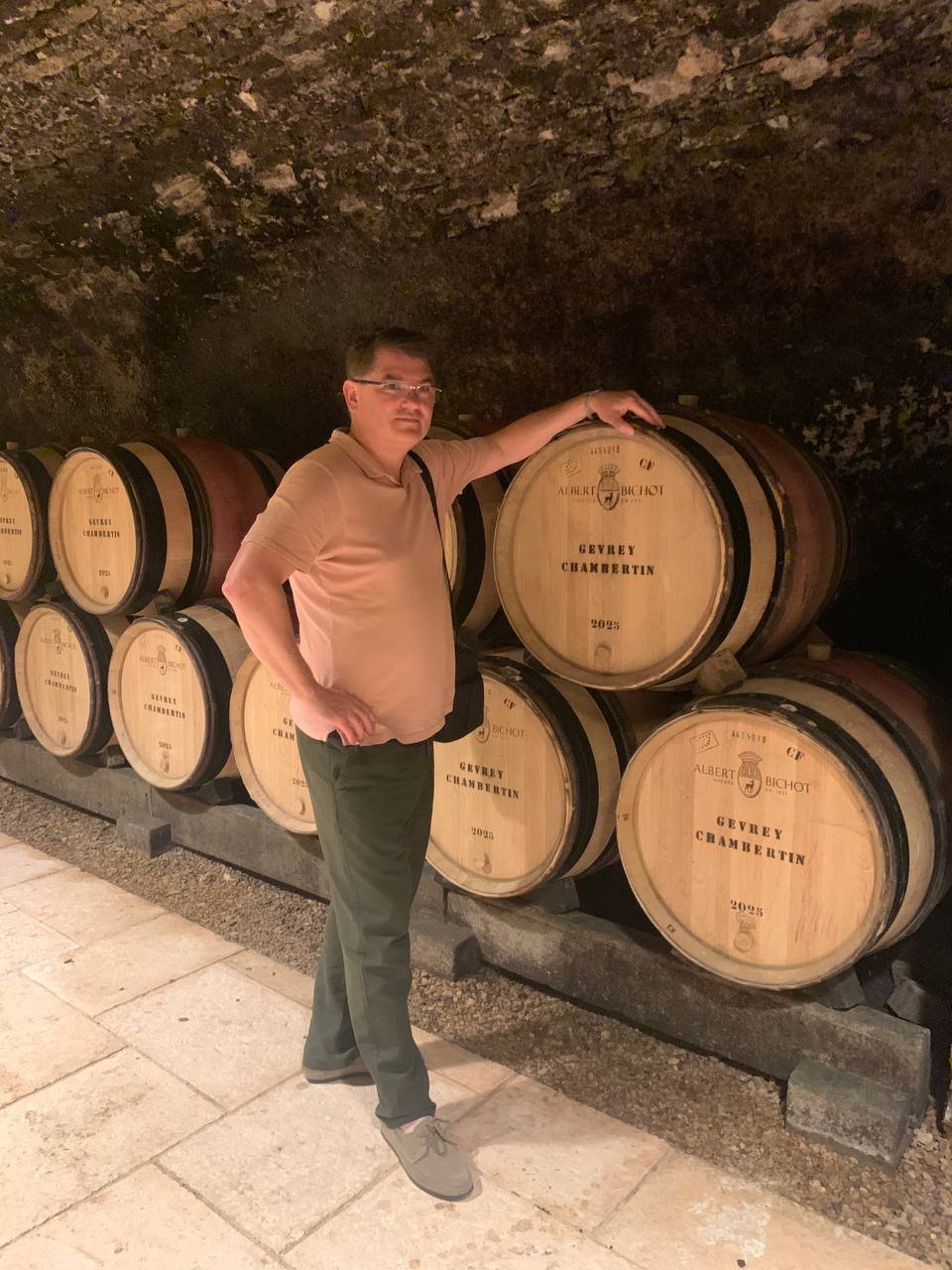
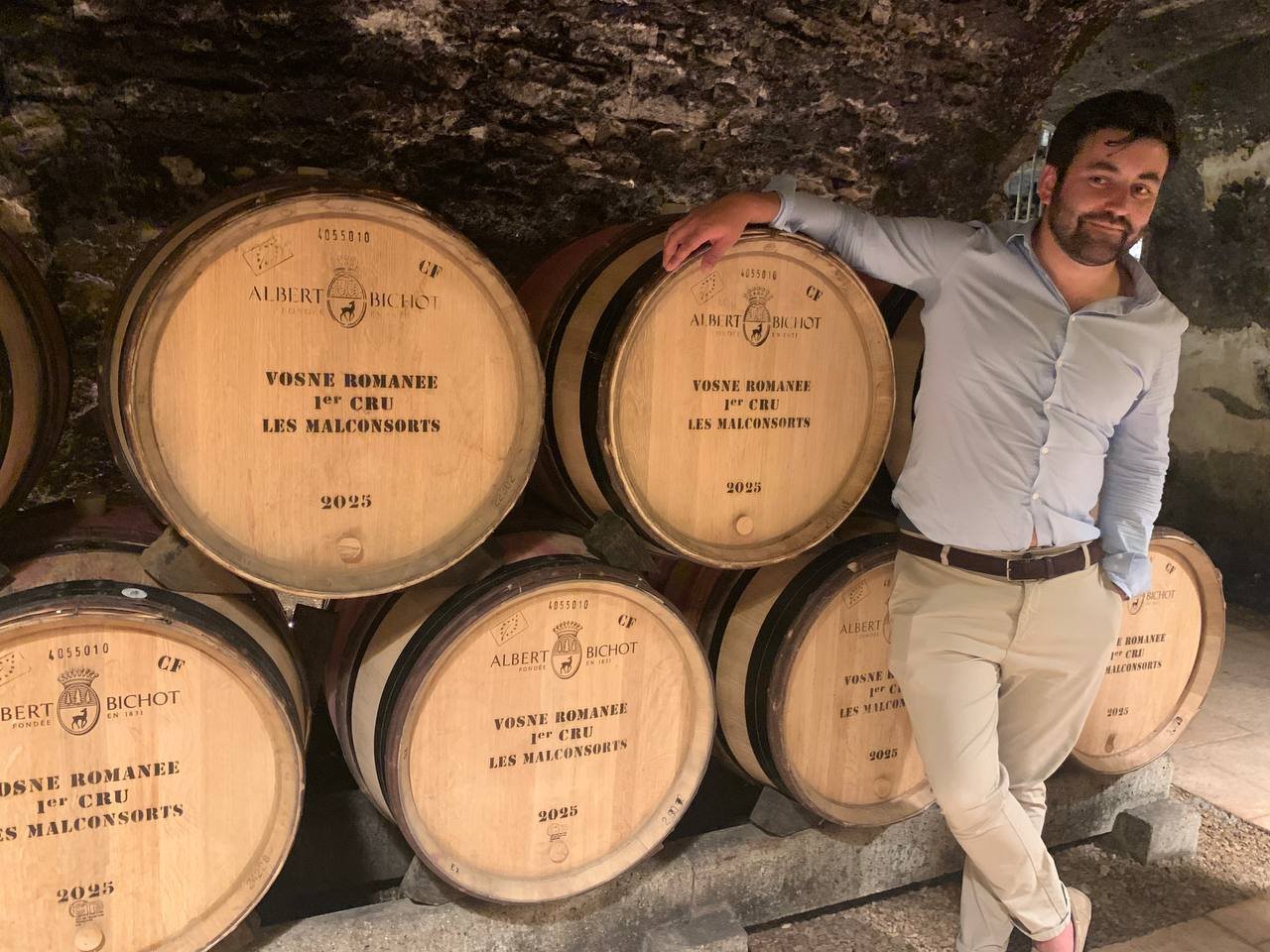
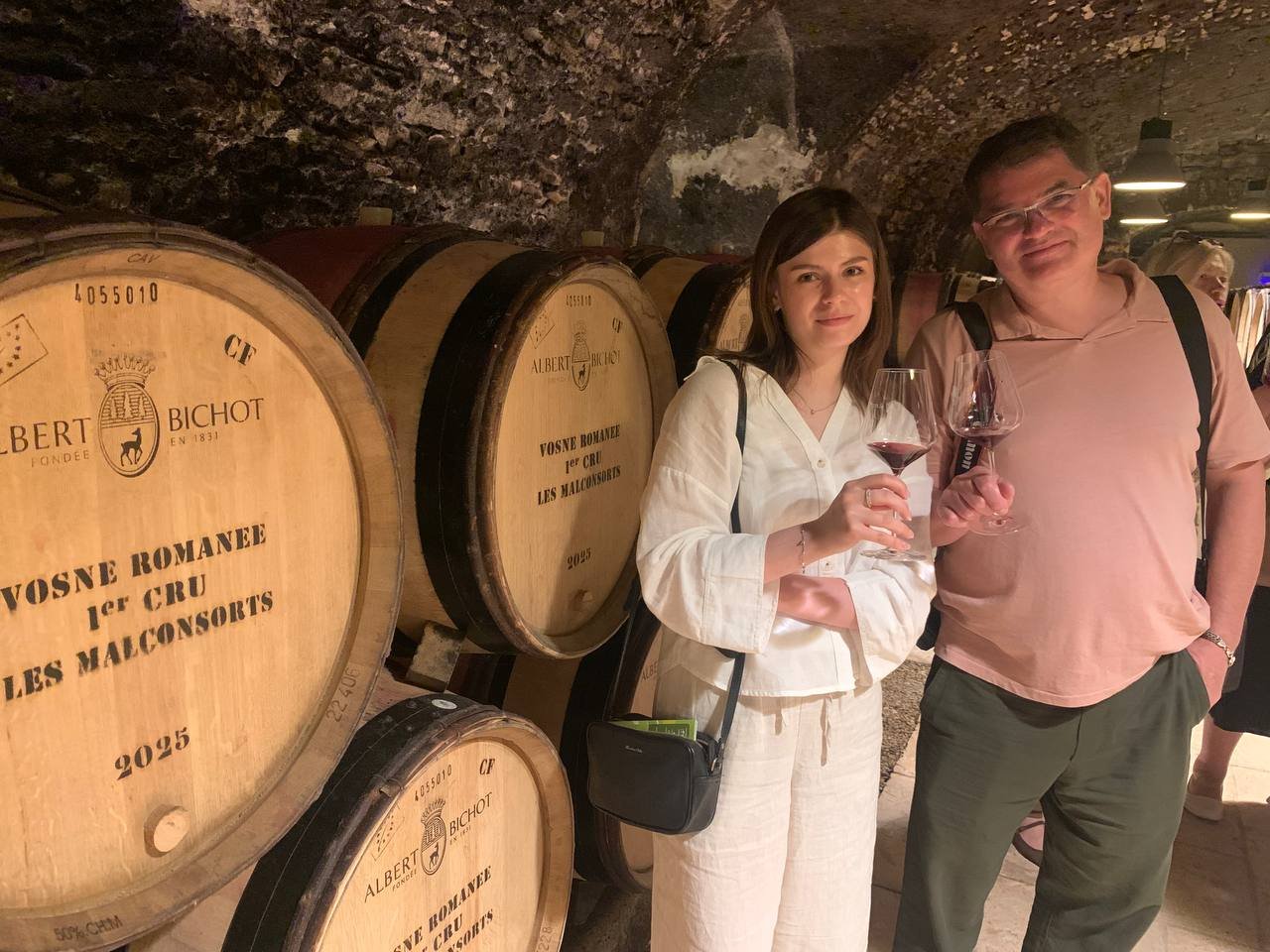
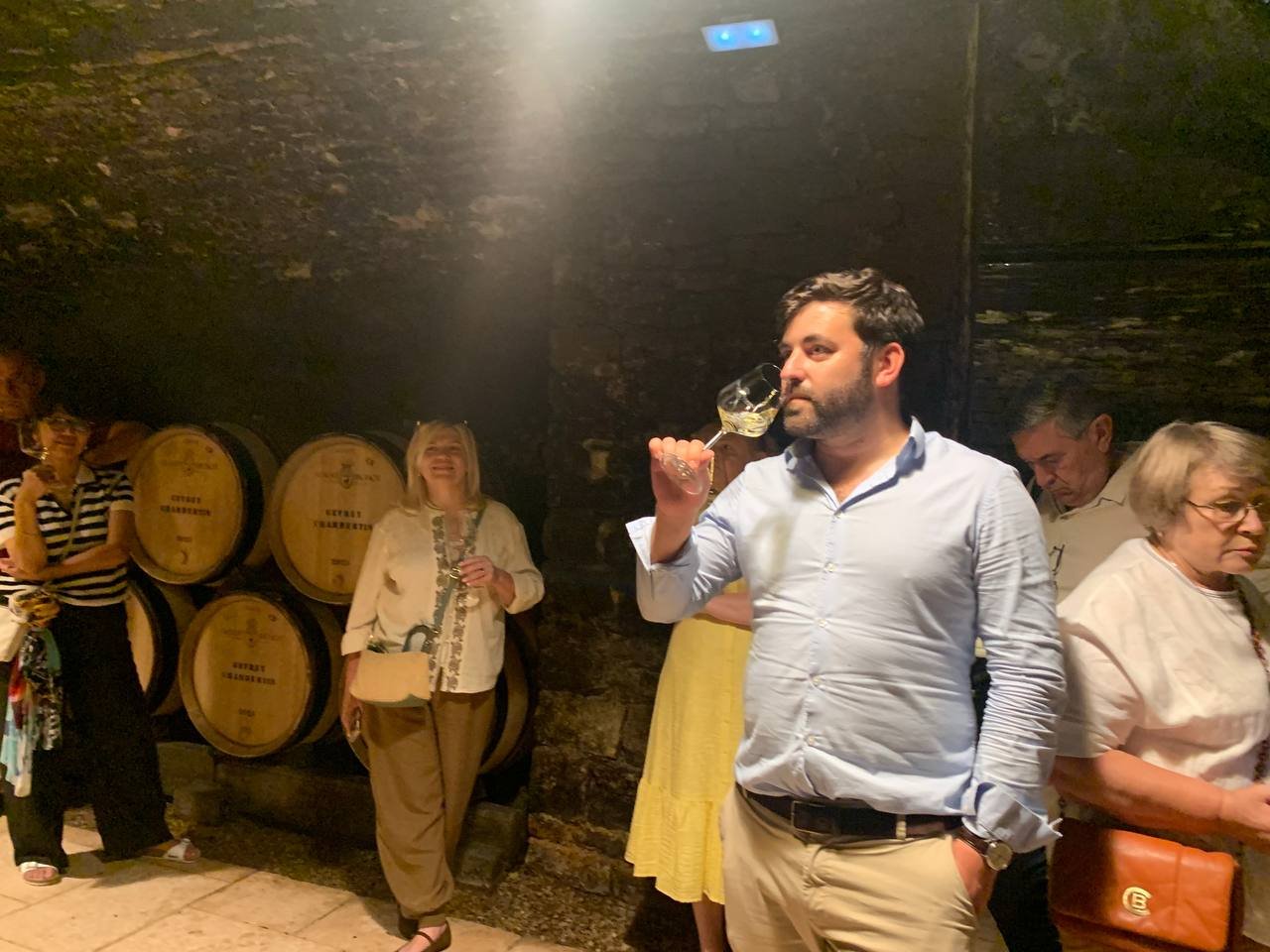
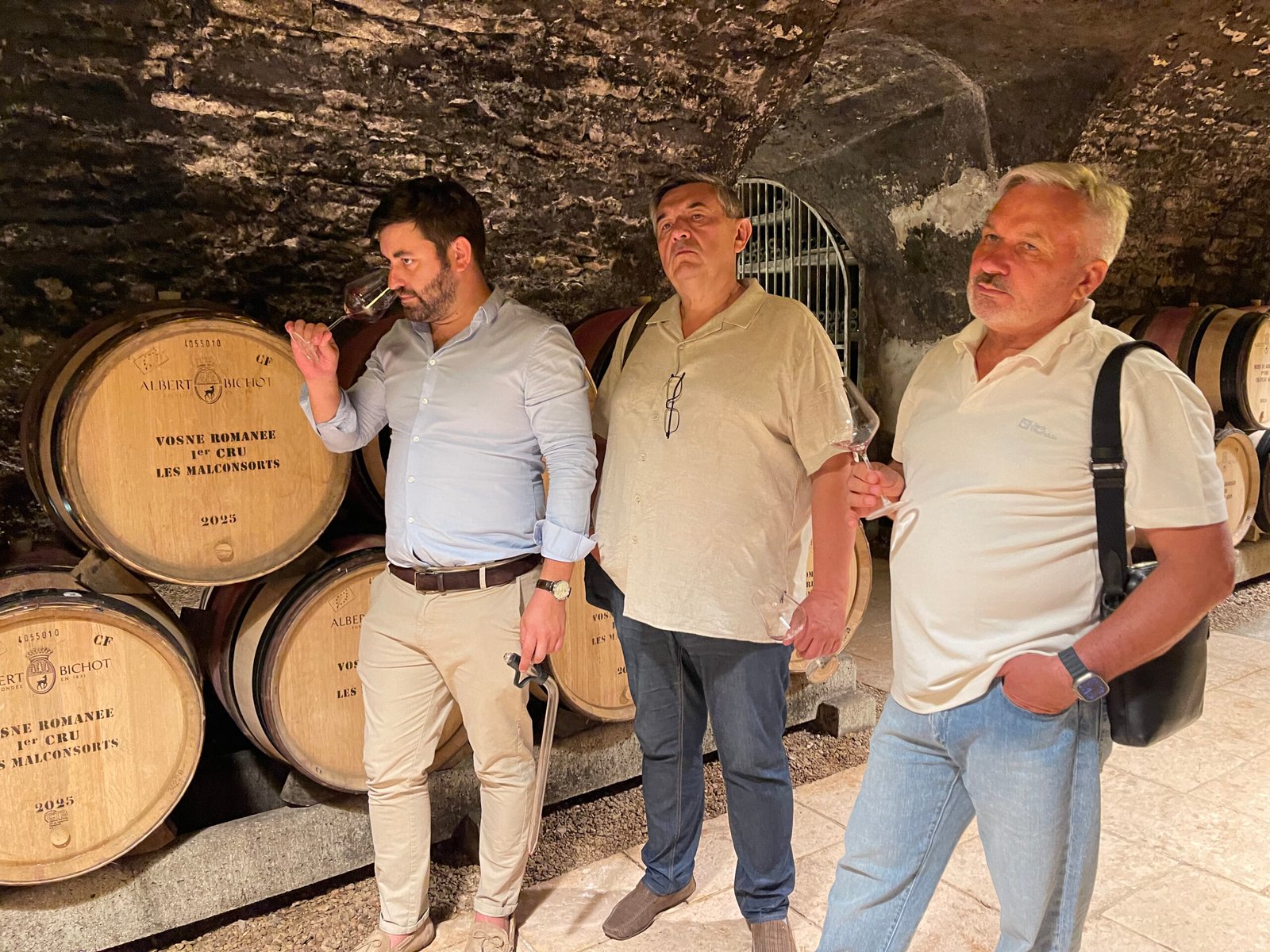
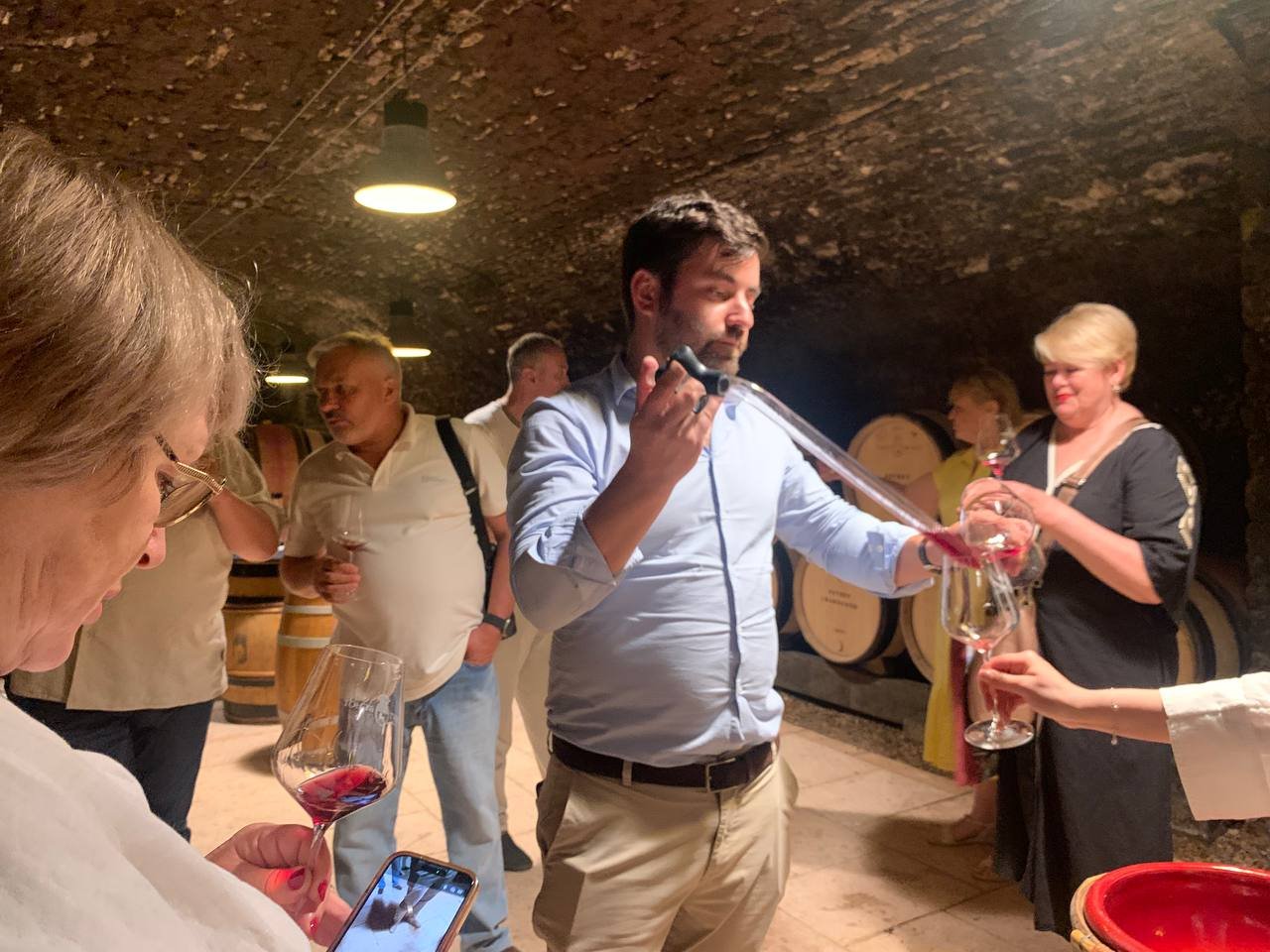
The domaine’s vineyards cover 13.2 hectares, where Pinot Noir performs superbly; 3.9 hectares are classified Premier and Grand Cru. Organic certification was achieved in 2012, chemical fertilizers and herbicides have been replaced with compost and traditional plowing, and since the 2018 vintage all wines from the estate are certified organic. The cellars date back to the 16th century – the atmospheric setting where Denis Anjuere guided us through a tasting of Albert Bichot wines from both Côte de Nuits and Côte de Beaune.
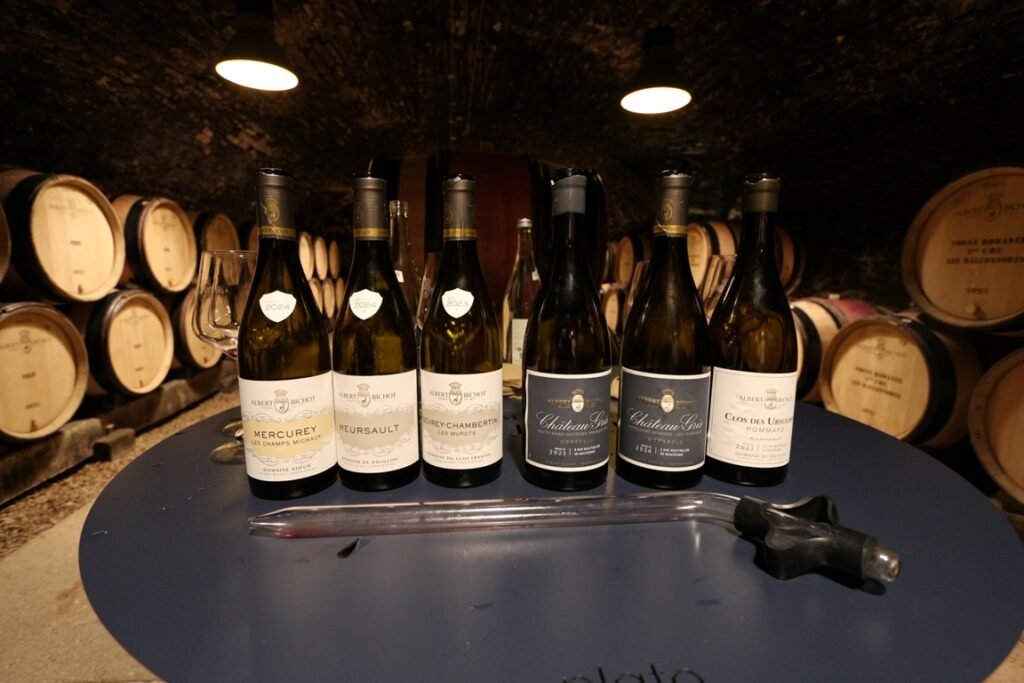
Albert Bichot


Tasting Notes

Mercurey Les Champs Michaux 2024 Domaine Adélie 

A rare white wine from Mercurey, Côte Chalonnaise, grown on a parcel Les Champs Michaux with unusually high clay content and broad limestone bands. Chardonnay was planted here experimentally on 0,25 ha 65 years ago among Pinot Noir vines – with excellent results. Wine made from 20‑year‑old vines now covering 1.2 ha; hand‑harvested; fermented in oak (15–20% new); aged on fine lees in oak barrel. Mineral, rounded, with a long finish and excellent gastronomic potential.

Meursault 2024 Domaine du Pavillon

A Pinot Noir from Meursault – a village famed for its whites – sourced from a 0.33‑ha parcel less than 400 metres from Les Santenots in Volnay. So here, all the conditions are in place to produce excellent wines from 35–40-year-old Pinot Noir vines. Hand‑harvested, fermented in conical oak vats. Aromas of red berries with violet and rose; a rich, structured palate with a velvety finish.

Gevrey‑Chambertin Les Murots 2023 Domaine du Clos Frantin

Gevrey-Chambertin, a wonderful appellation in the Côte de Nuits. The Les Murots climat covers 1.5 hectares at the foot of a hillside, where calcareous clay and gravelly soils provide excellent drainage and promote the optimal ripening of Pinot Noir. The grapes are hand-harvested, fermented in conical oak vats, and aged in oak barrels for 14–16 months, with 25–35% new oak. The wine is rich in ripe fruit aromas, complemented by notes of spice, oak, and subtle animal nuances. Harmonious and well-balanced, it has a delicate velvety texture and a long, fruit-driven finish.

Nuits‑Saint‑Georges 1er Cru Château‑Gris Monopole 2023 Chateau-Gris

Pinot Noir is grown on the lower terraces around Château-Gris, covering an area of 2.55 hectares with calcareous-clay soils. The grapes are hand-picked, fermented in conical oak vats, and aged in oak for 16–17 months, with 35–40% new oak. Aromas of red and black berries are complemented by floral notes of rose, violet, and peony, along with subtle notes of oak. Rich and fruity on the palate, with good structure and refined tannins. A long, elegant finish.

Nuits‑Saint‑Georges Les Terrasses Monopole 2024 Château‑Gris

Another rare white wine in our line-up, as less than 4% of Nuits-Saint-Georges wines are white. Chardonnay vines are planted on the upper terraces around Château-Gris, covering just 0.85 hectares. The grapes are hand-picked, fermented in oak barrels (25–35% new oak), and aged on fine lees in oak for 14–16 months. Both the nose and palate are marked by pronounced minerality and elegant, restrained oak notes. Long and refined finish.

Pommard Clos des Ursulines Monopole 2023 Domaine du Pavillon
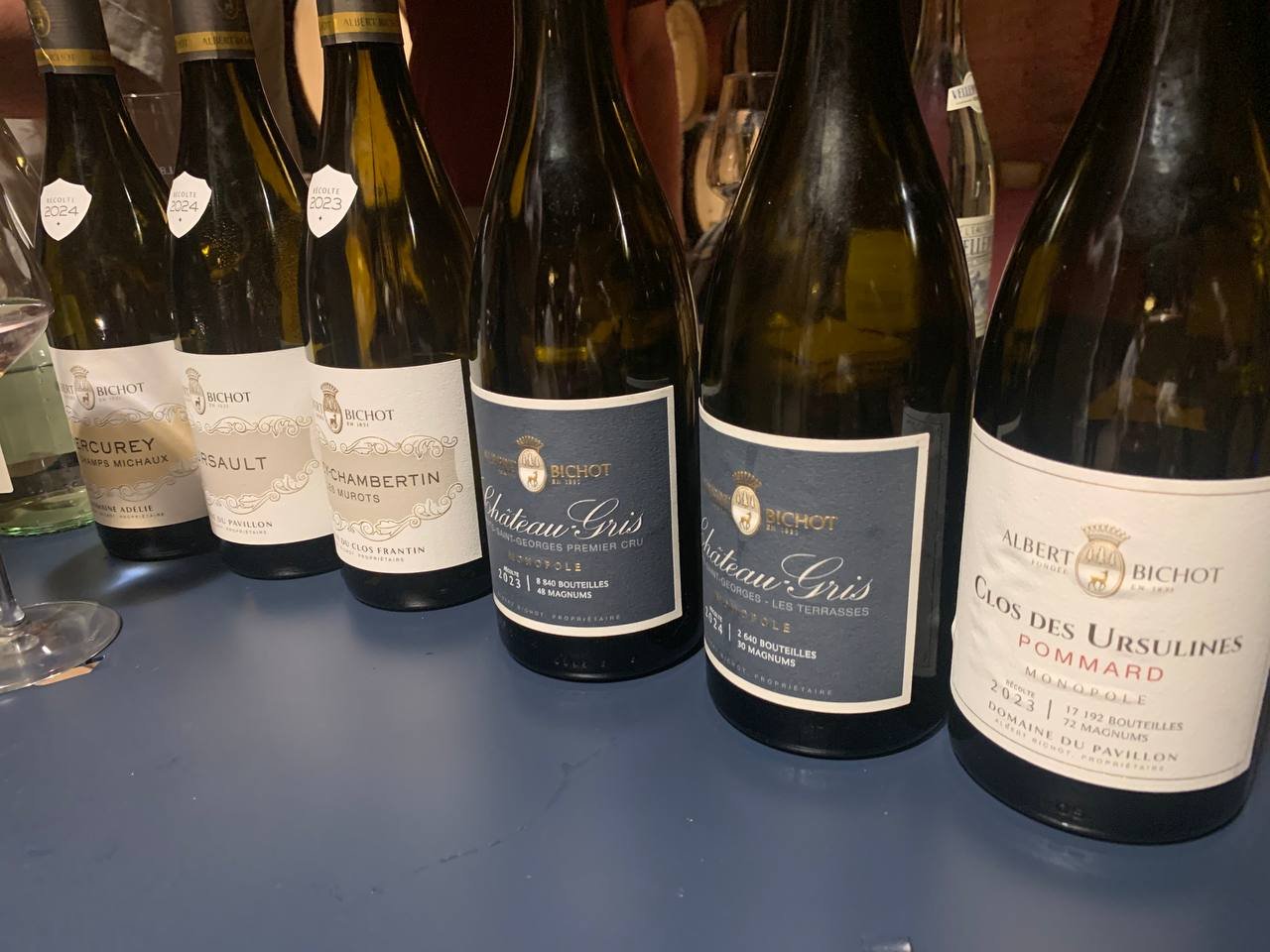
The first owners of this almost 4-hectare vineyard in Pommard were the nuns of the Ursuline monastery, after whom the plot is named. Its unique terroir, on the southern edge of Pommard towards Volnay, challenges the widespread perception that Pommard wines have an exclusively “masculine” character. The soil is calcareous clay with white marl. The Pinot Noir vines are 35–40 years old. The grapes are hand-picked, fermented in conical oak vats, and aged in oak for 14–16 months, with 20–30% new oak. The nose reveals aromas of red and black berries, complemented by notes of fig and flowers (rose, violet, and peony), as well as spice and delicate oak. Rich and rounded on the palate, with ripe tannins, the wine is powerful and structured, yet delicate, elegant, and silky. Its proximity to Volnay gives it an almost “feminine” character. The finish is long and velvety.

Many thanks to Denis Anjuere for the unique opportunity to taste two additional samples of the 2025 Pinot Noir and experience the nuances of aging in different barrels: a fourth-fill 2022 barrel, and a 2025 barrel.

Domaine Long‑Depaquit – exceptional Chablis

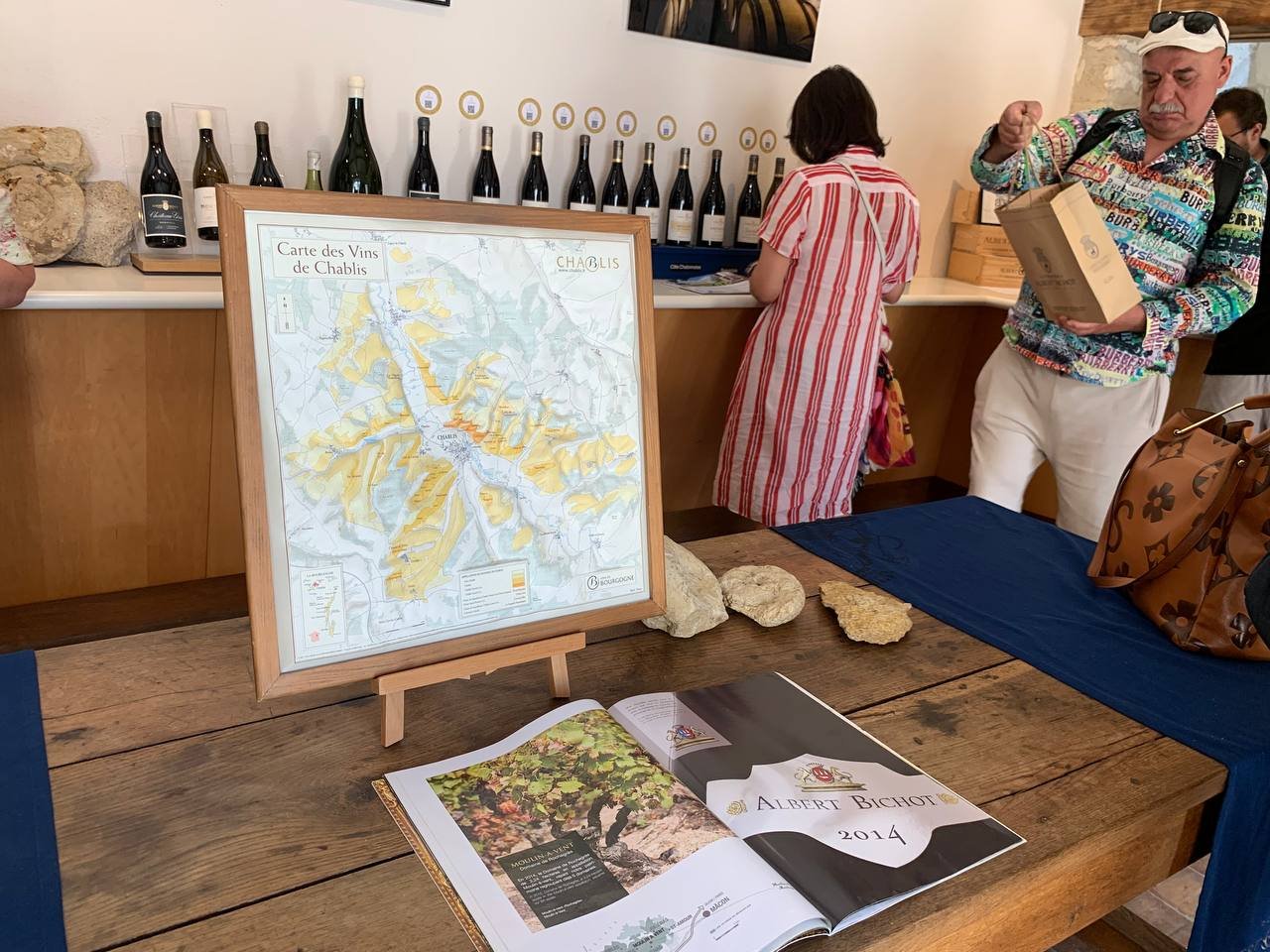
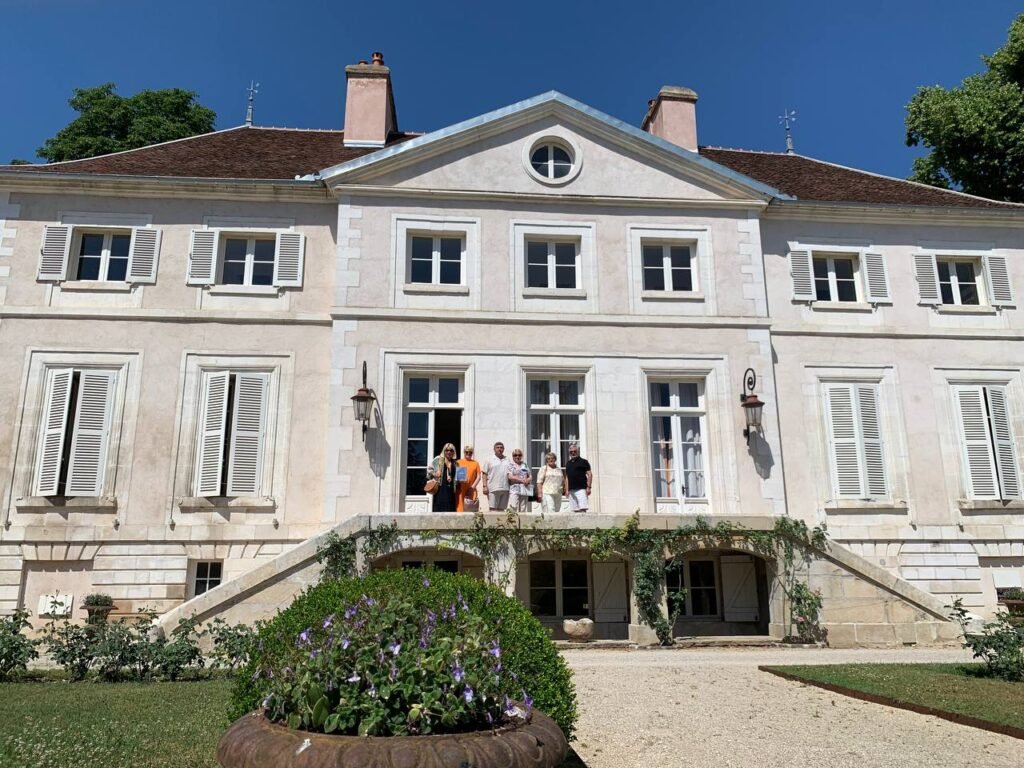
Our second visit was to the remarkable Domaine Long‑Depaquit in Chablis – a jewel of wine tourism. The estate’s history dates back to the French Revolution, when the Long‑Depaquit family acquired land confiscated from the Cistercian abbey of Pontigny. It became part of Maison Albert Bichot in 1968.
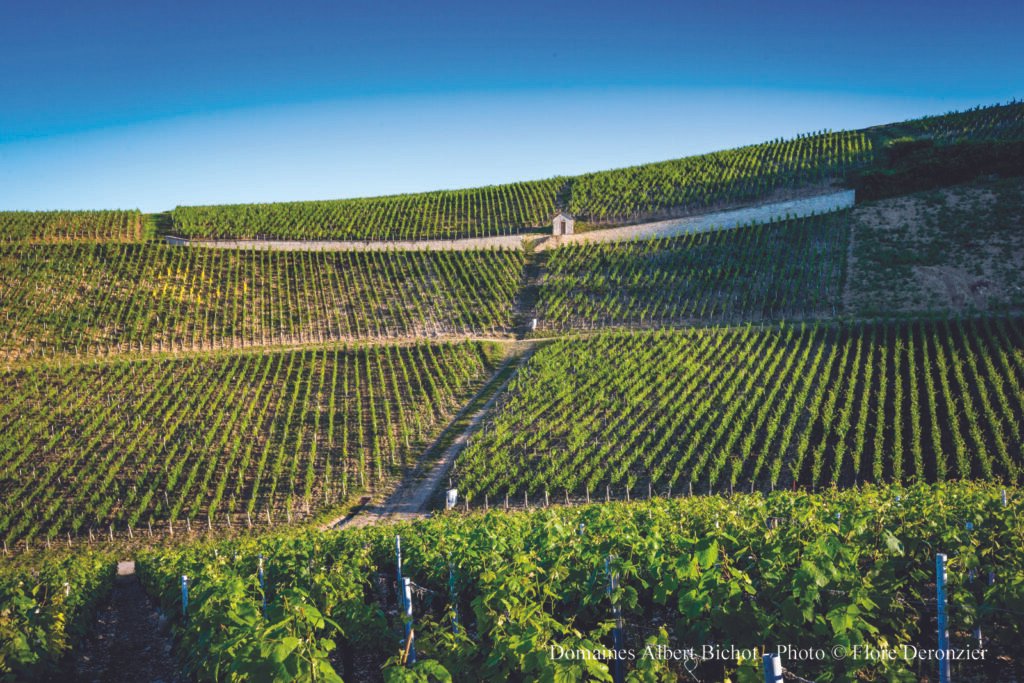
Albert Bichot

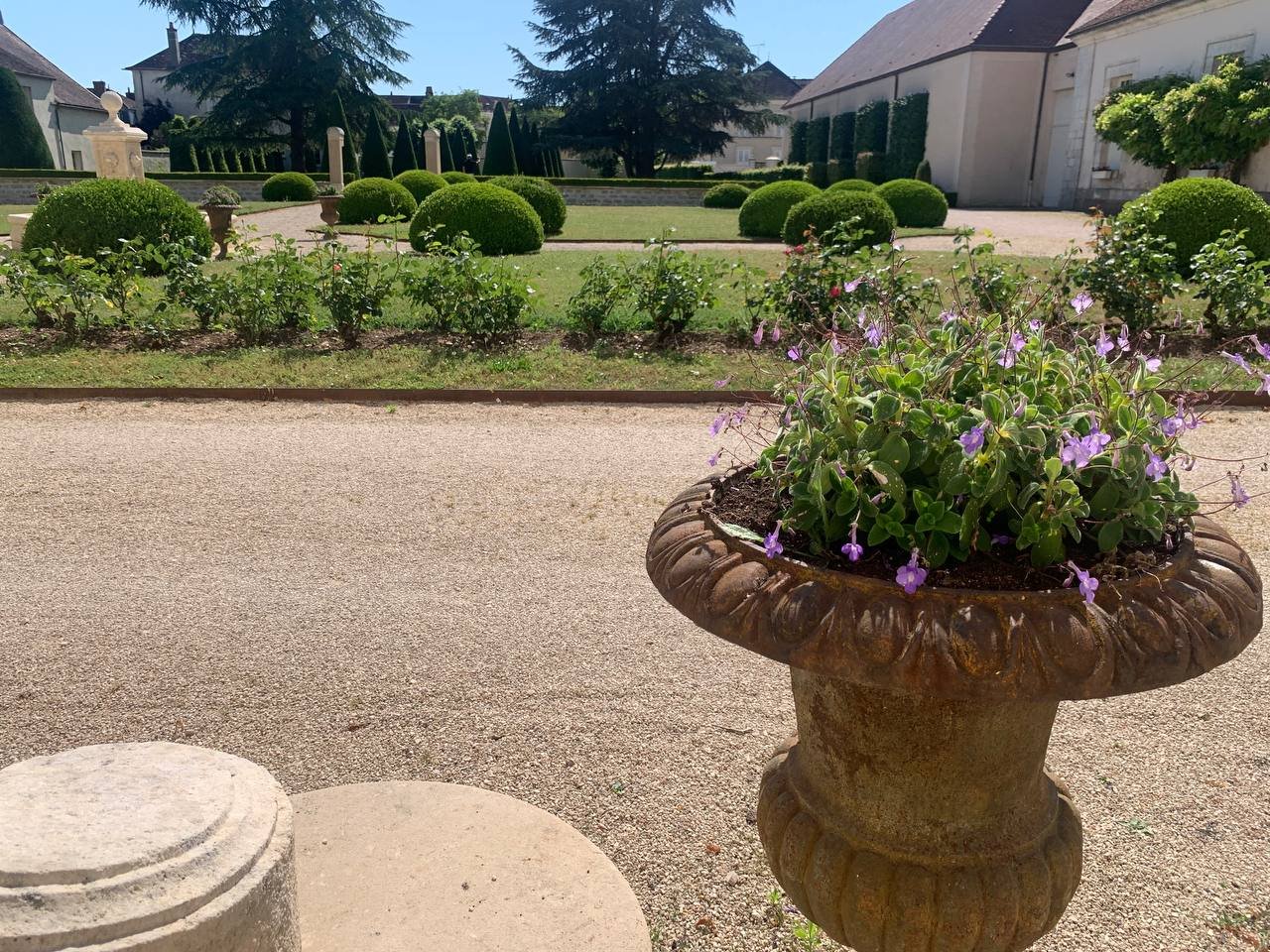
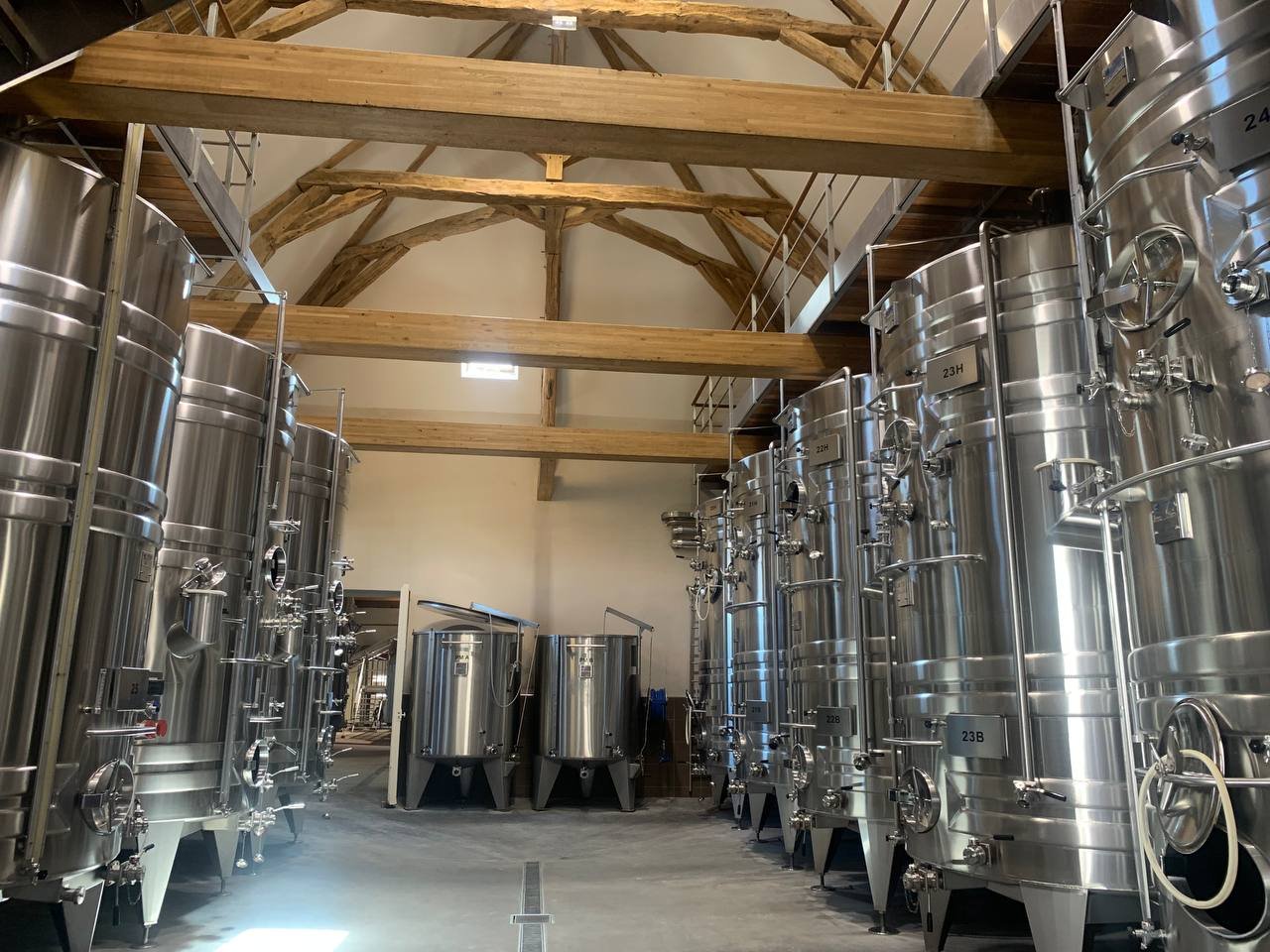
The grounds, with centuries‑old trees and rose gardens, offer a serene setting; the orangery is open year‑round. In 2014, a new eco‑friendly winery was built, which we visited with Denis and the domaine’s winemaker. Modern equipment allows even greater precision and purity.
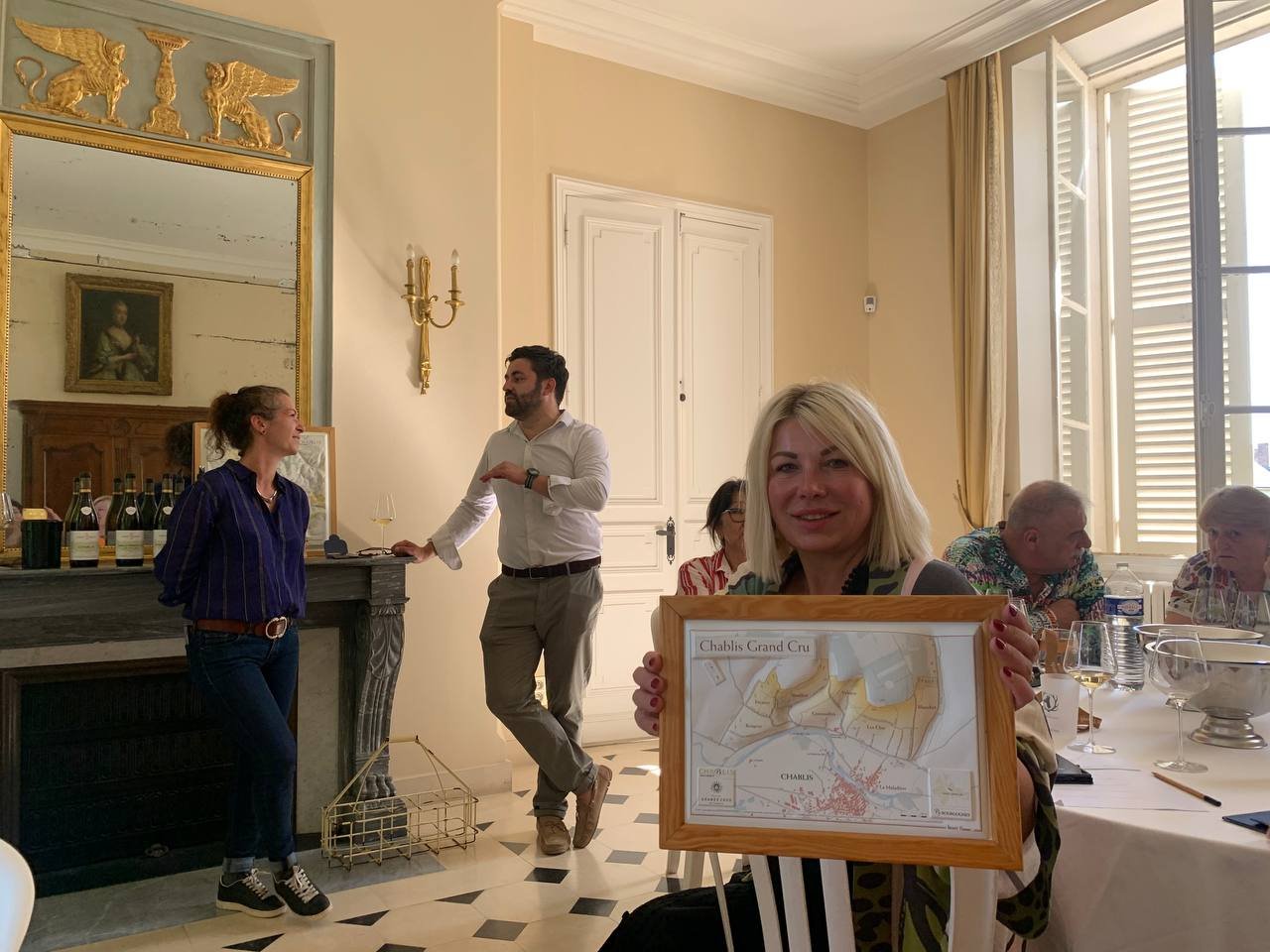
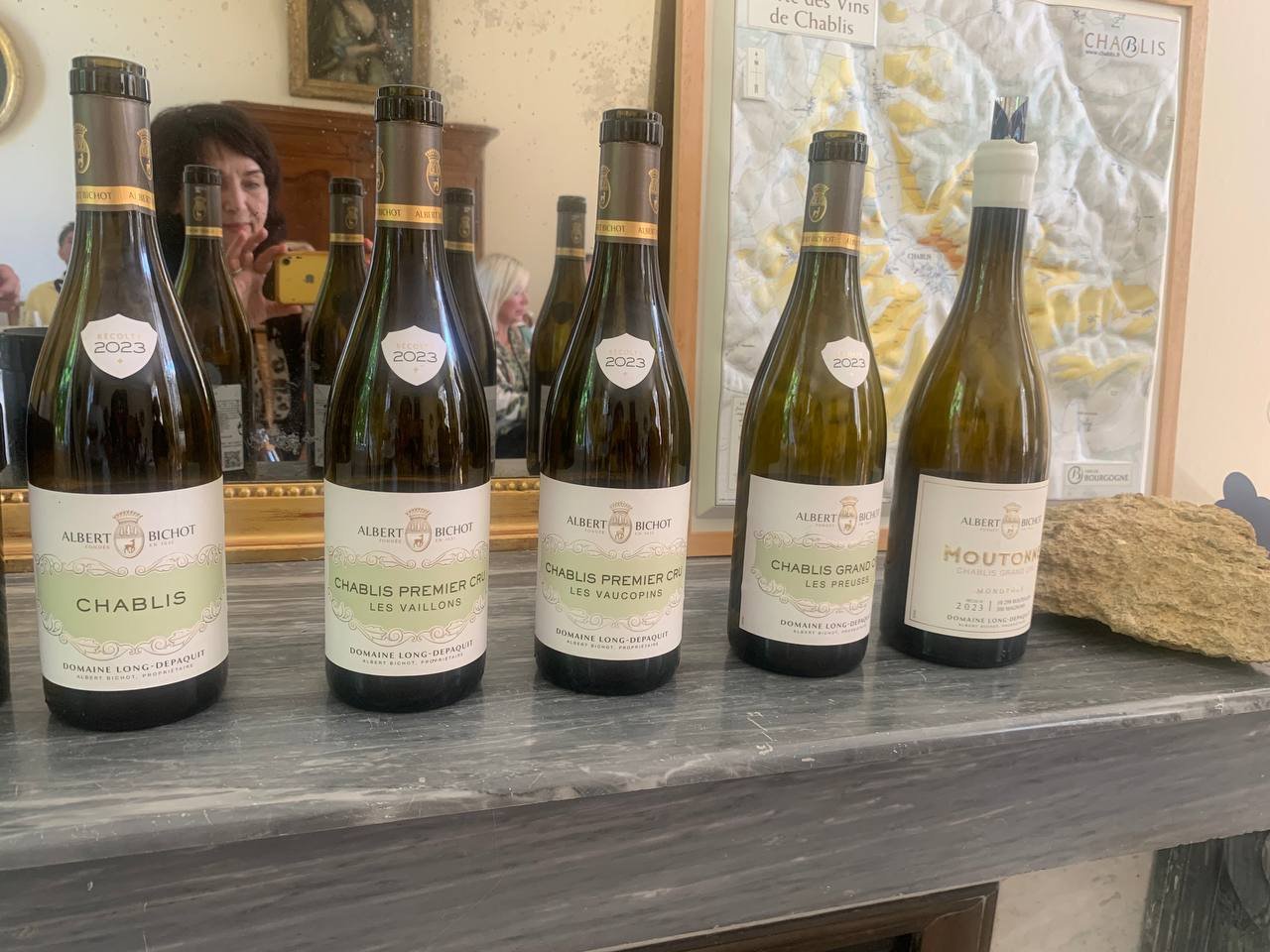
The company’s vineyards in Chablis cover 52.1 hectares and are managed using a sustainable approach to viticulture, with yields carefully limited and intervention during the winemaking process kept to a minimum. This allows the production of authentic, mineral-driven, and elegant wines. Oak aging is used sparingly to preserve the expressiveness of each terroir.
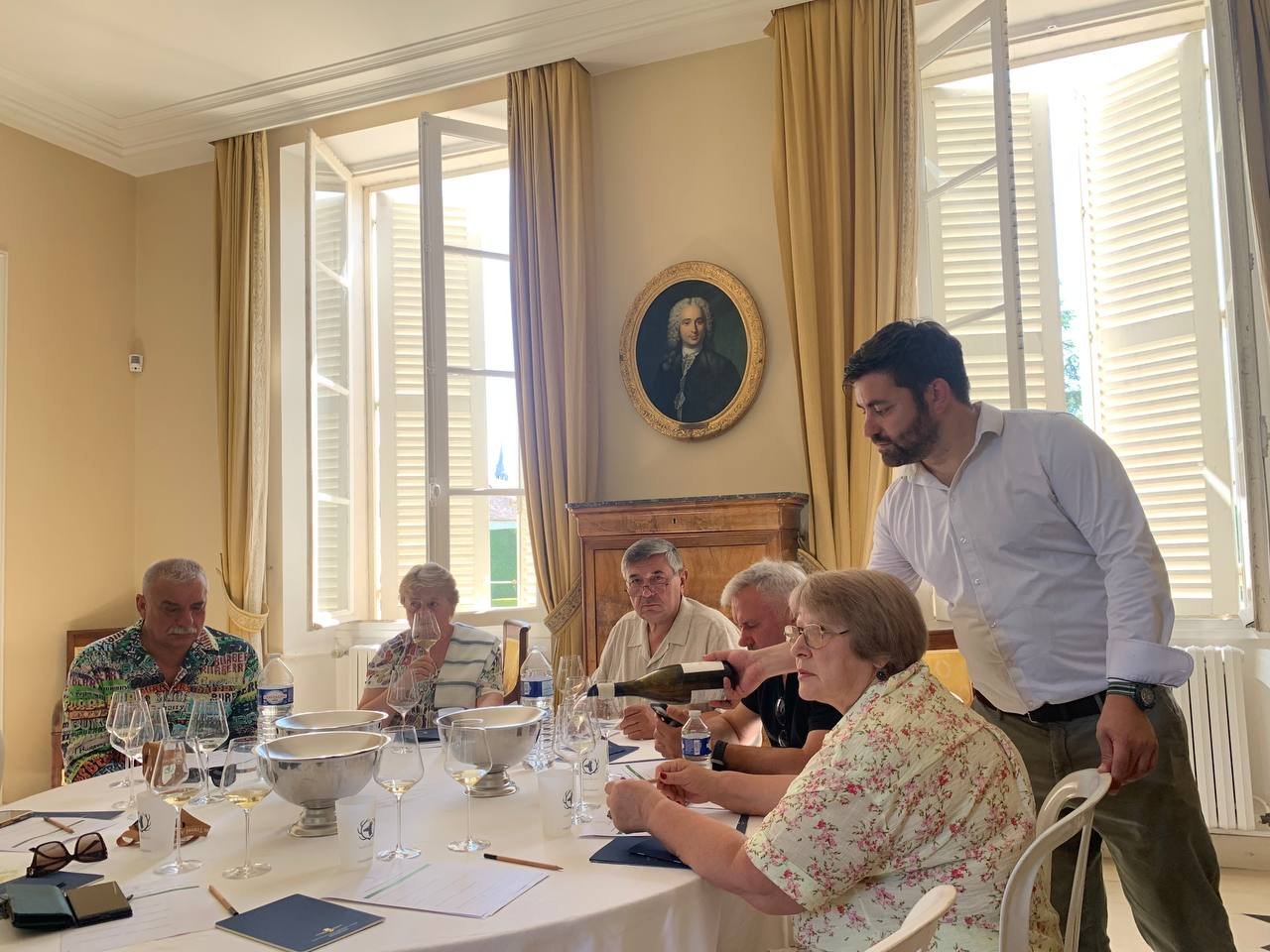
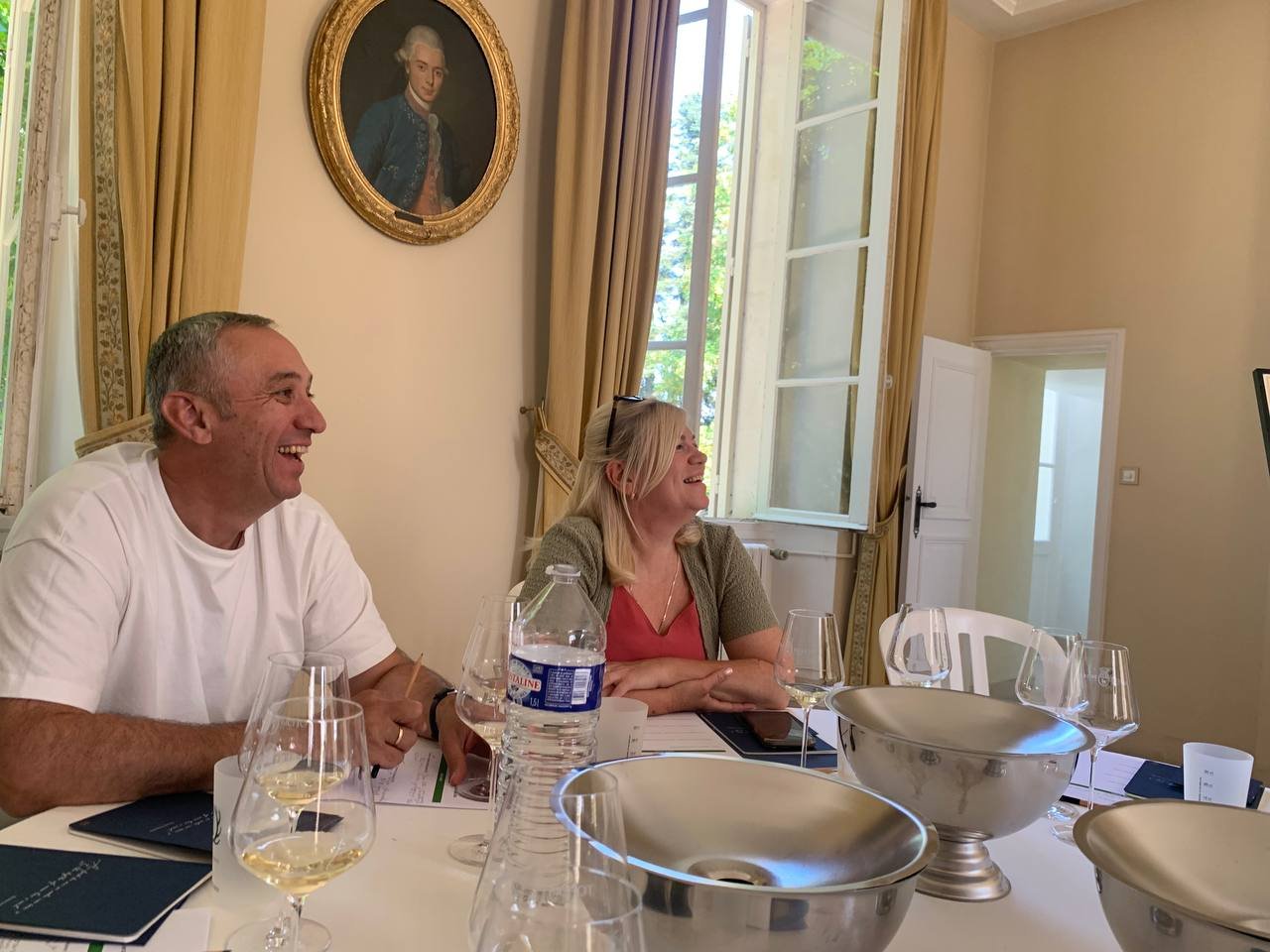
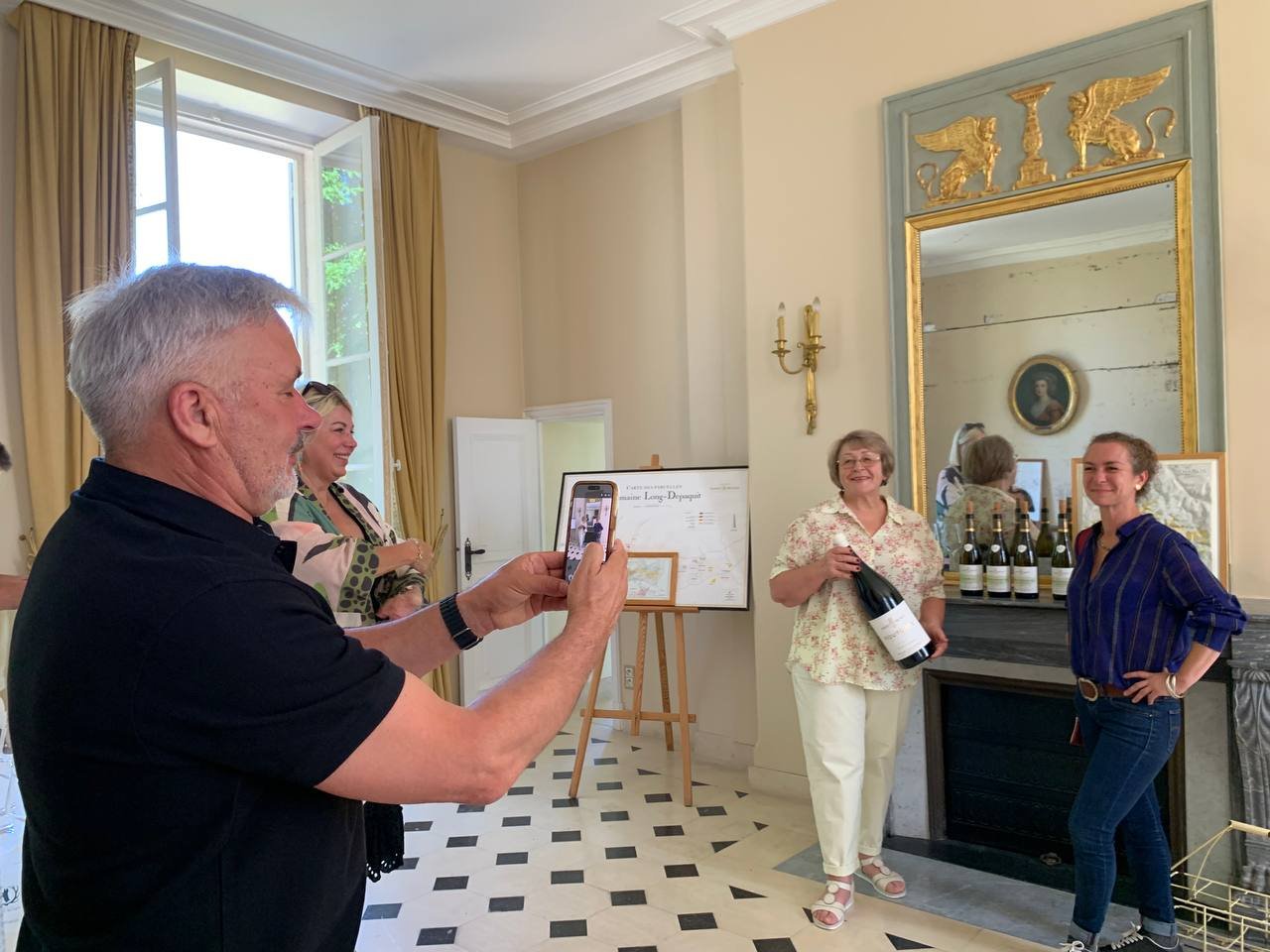
I would like to express our gratitude for the almost royal welcome our group received here, accompanied by top-level professional guidance. Denis organized a visit to the new winery and cellars, where, in the cool surroundings – particularly welcome given the heat – Ukrainian winemakers had the opportunity to ask a wide range of technical questions. The answers provided us with many fascinating and not always obvious insights, even for experienced professionals.

For example, we learned that the grapes are not only harvested by hand but also undergo further manual selection. The Dpomaine Long-Depaquit does not use the common optical sorting systems that automatically reject lower-quality berries; this process is also carried out by hand, as nothing can replace the discerning human eye. We also learned that malolactic fermentation takes place in barrels, while stainless-steel tanks are used primarily for fermentation. Since 2023, 130-litre glass wineglobes have also been used for the maceration of Grand Cru wines.

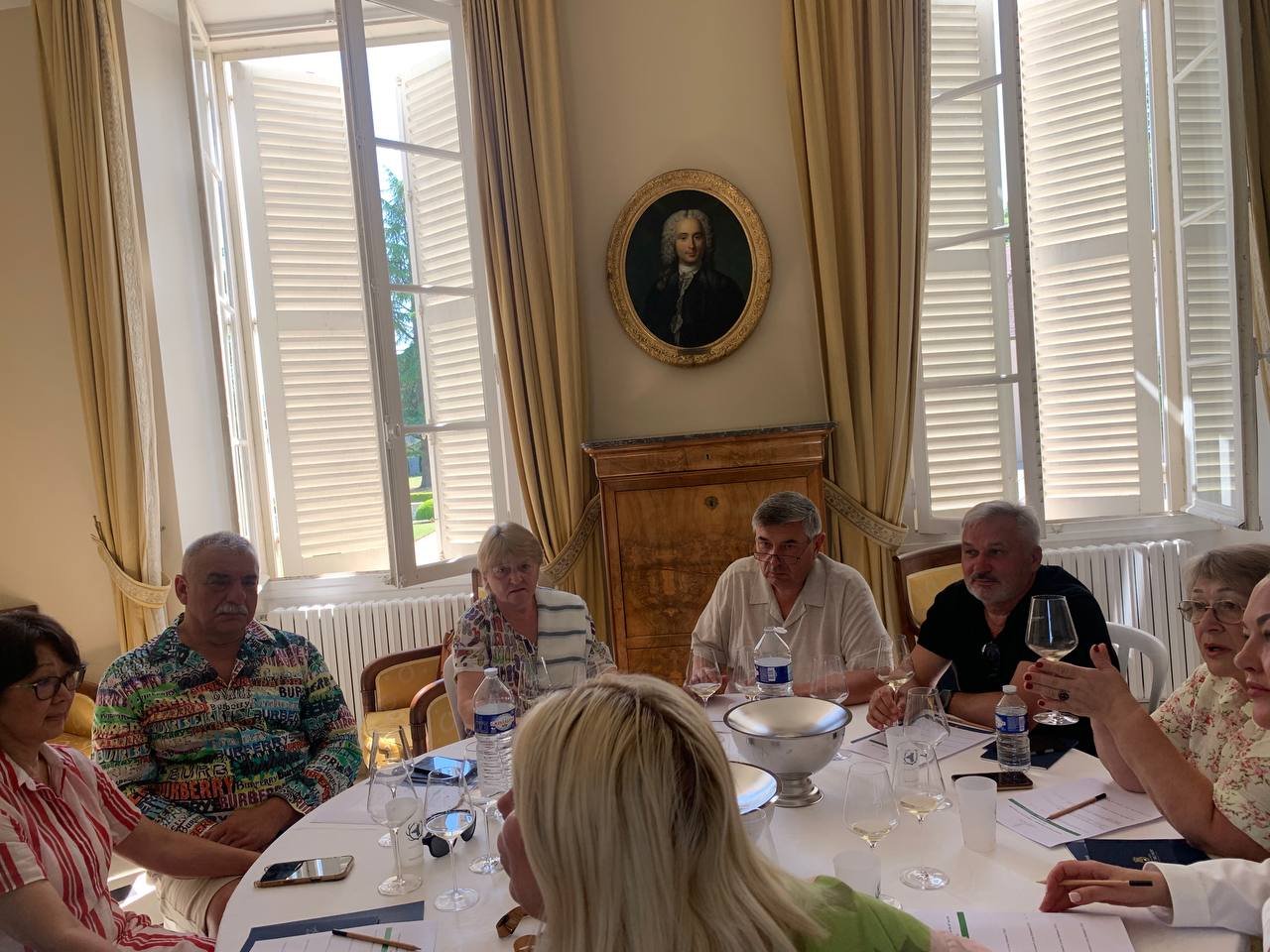
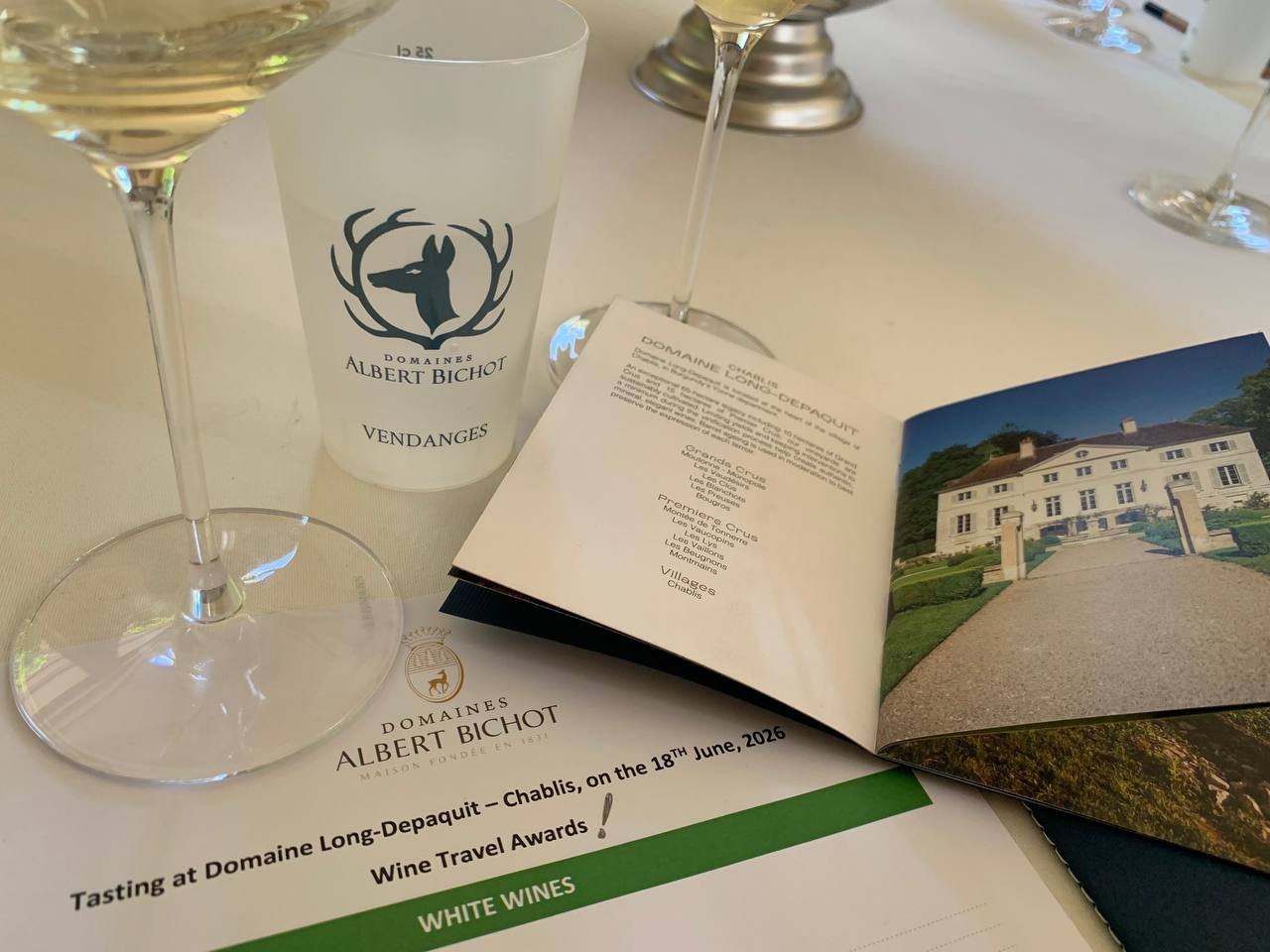
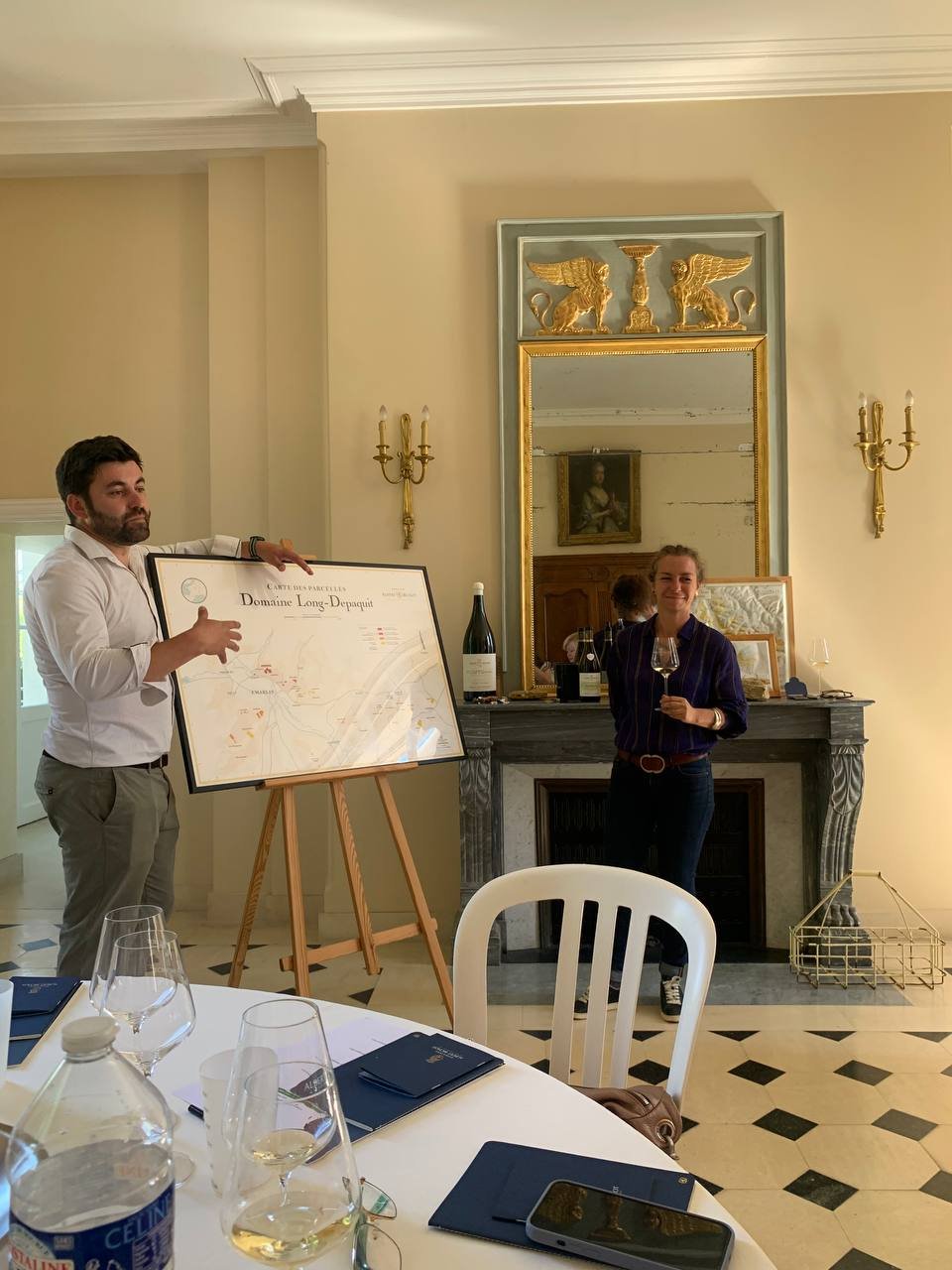
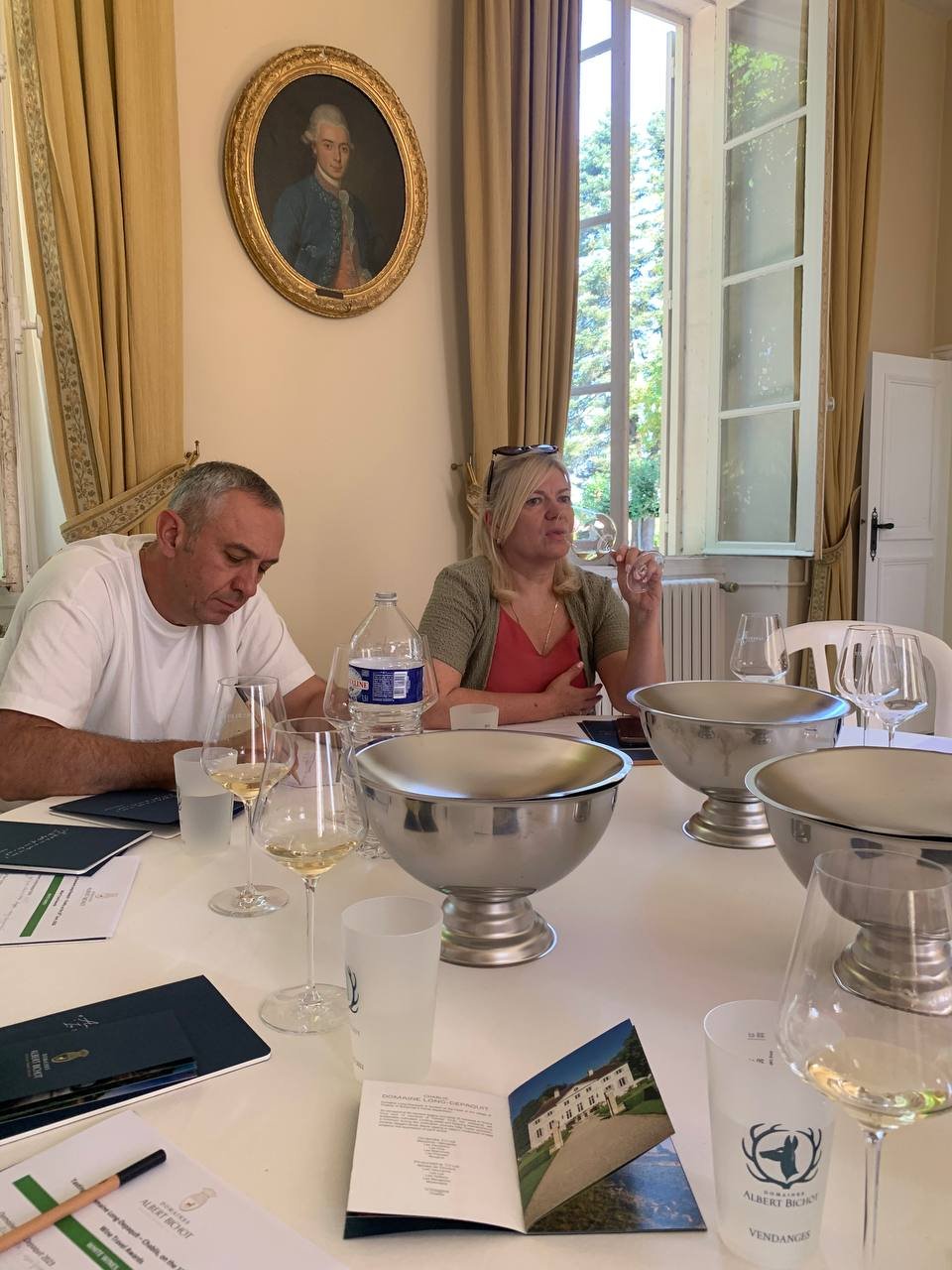
Our team was treated to an exceptional tasting in the VIP room, featuring a selection of wines chosen especially for our visit. The attention to detail was remarkable: even the tasting sheets were personalized with our name – Wine Travel Awards. And, of course, the experience was enhanced by the unmistakably aristocratic atmosphere of this historic house, bathed in the warm summer sunshine and surrounded by the fragrant gardens of Chablis.

Tasting Notes

Chablis 2023 Domaine Long‑Depaquit

The vineyards cover 28 hectares and are divided into 34 plots planted on gentle slopes (5–20%) with varying exposures. As a result, the grapes come from a mosaic of distinct terroirs, the identity of each of which is preserved through separate vinification. The average age of the vines is 38 years. The wine is fermented in stainless-steel tanks and aged on fine lees in stainless steel for 10–11 months. This is a classic Chablis vintage with 12.5% alcohol.

The nose reveals aromas of citrus and candied lemon, complemented by delicate notes of white flowers. Elegant and vibrant on the palate, the wine finishes with pronounced minerality and subtle saline nuances.

Chablis 1er Cru Les Vaillons 2023 Domaine Long-Depaquit

This Premier Cru comes from the left bank of Chablis, where greater sun exposure produces a complex wine with 13% alcohol. It is made from grapes sourced from several climats on the Vaillons hillside, primarily the Épinottes climat, whose soils are predominantly clay.

The wine is fermented 90% in stainless-steel tanks and 10% in oak barrels (first- to fourth-fill). It is then aged on fine lees for 10 months, with 90% in stainless steel and 10% in the same oak barrels, followed by a further two months of maturation in stainless-steel tanks. The nose is complex and intense, revealing aromas of white flowers, citrus, and green apple. Beautifully balanced, with a long, elegant finish.

Chablis 1er Cru Les Vaucopins 2023 Domaine Long-Depaquit

Les Vaucopins is a 5.2-hectare Premier Cru vineyard located on the right bank of the Serein River. It stands apart within the Domaine Long-Depaquit portfolio thanks to a terroir that closely resembles that of the Chablis Grands Crus: a southern exposure, a steep slope, and abundant Kimmeridgian marl, which gives Chablis wines their distinctive minerality. Elegant and refined, Chablis Premier Cru Les Vaucopins offers ageing potential comparable to that of many Grand Cru Chablis wines.

The grapes are hand-harvested. Fermentation takes place primarily in stainless-steel tanks (85%), with the remaining 15% in first- to fourth-fill oak barrels. The wine is then aged on fine lees for 10 months in the same proportions, followed by a further two months of maturation in stainless-steel tanks.

With 13% alcohol, the wine is the embodiment of balance and minerality. It has a rich structure and concentrated flavours, combining ripe fruit with subtle smoky and flinty notes. The finish is exceptionally long.

Chablis Grand Cru Les Preuses 2023 Domaine Long-Depaquit

А tiny 0.25‑ha parcel of the Les Preuses climat, where the vines are planted at a high density of 8,500 vines per hectare. This encourages competition between the vines, resulting in smaller berries with greater concentration. The Kimmeridgian soil is rich in clay and strewn with numerous surface stones. The average age of the vines is 17 years.

Fermentation and then 10 months of ageing on fine lees takes place in 500-litre oak barrels (first- to fifth-fill). The wine then undergoes a further six months of maturation in stainless-steel tanks.

Chablis Grand Cru Moutonne Monopole 2023 Domaine Long-Depaquit

The La Moutonne Monopole is a 2.35-hectare site located in a natural amphitheatre in the heart of the Grand Cru vineyards, with 95% of the parcel in the Vaudésirs climat and 5% in Les Preuses. Its configuration and ideal location ensure maximum sun exposure, giving this Chablis remarkable aromatic and flavour persistence, as well as excellent ageing potential and elegance. The soil is calcareous clay over a subsoil of Kimmeridgian limestone marl. The average age of the vines is 40 years.

Fermentation takes place 75% in stainless-steel tanks and 25% in oak barrels (first- to fifth-fill). The wine is then aged on fine lees for 10 months, in the same proportions, followed by a further six months of maturation in stainless-steel tanks.

The nose is rich and complex, combining aromas of white and yellow fruits, including peach, nectarine, apple, and citrus, with delicate floral notes. Full and generous on the palate, it displays expressive minerality, freshness, and harmony, with a subtle touch of well-integrated oak. Balanced and elegant, the wine has an exceptionally long finish.
 

A note for travellers: all wines from Maison Albert Bichot, along with accessories, can be purchased at the estate shop.

A modern Burgundy icon

Maison Albert Bichot is one of Burgundy’s most successful producers, tactfully combining nearly two centuries of history, a wide geographical spread of vineyards, modern management, a strong commitment to sustainability and cutting‑edge technical expertise. This makes the House compelling for both professionals and wine lovers.
Albert Bichot

It is clear why Albert Bichot wines – vivid expressions of both modern and classical Burgundy – are so admired across continents.
Albert Bichot


⇒ Join our social networks ⇒ Optimistic D+ editors will take this as a compliment.

⇒ Every like is taken as a toast!


It is difficult to find a Burgundian producer that embodies the spirit of the region more precisely than Maison Albert Bichot. Founded in 1831, this family enterprise is now led by the sixth generation, and owns 106 hectares of vineyards surrounding six historic estates in Burgundy’s most prestigious appellations. Today, the Albert Bichot family crafts […]
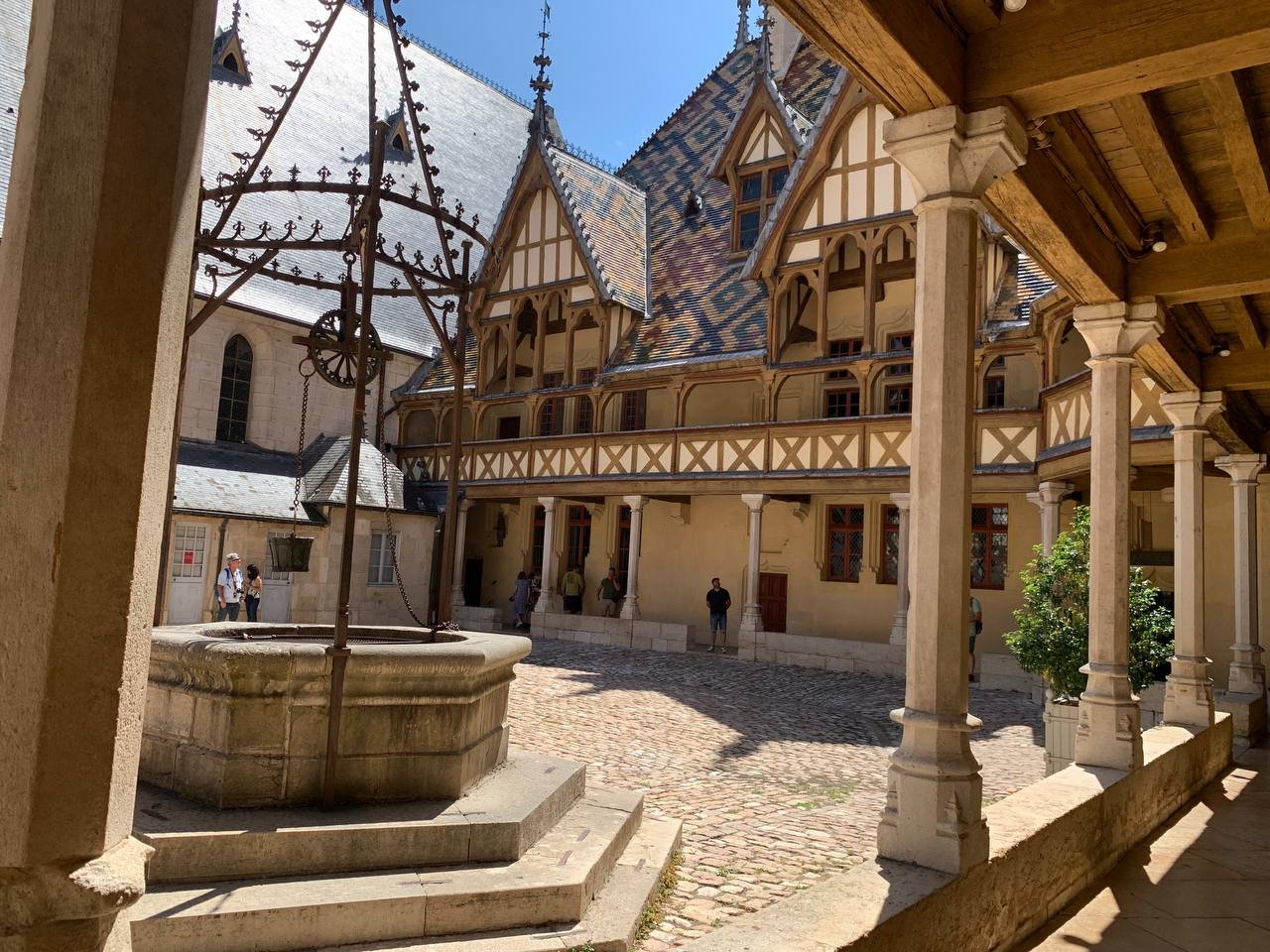
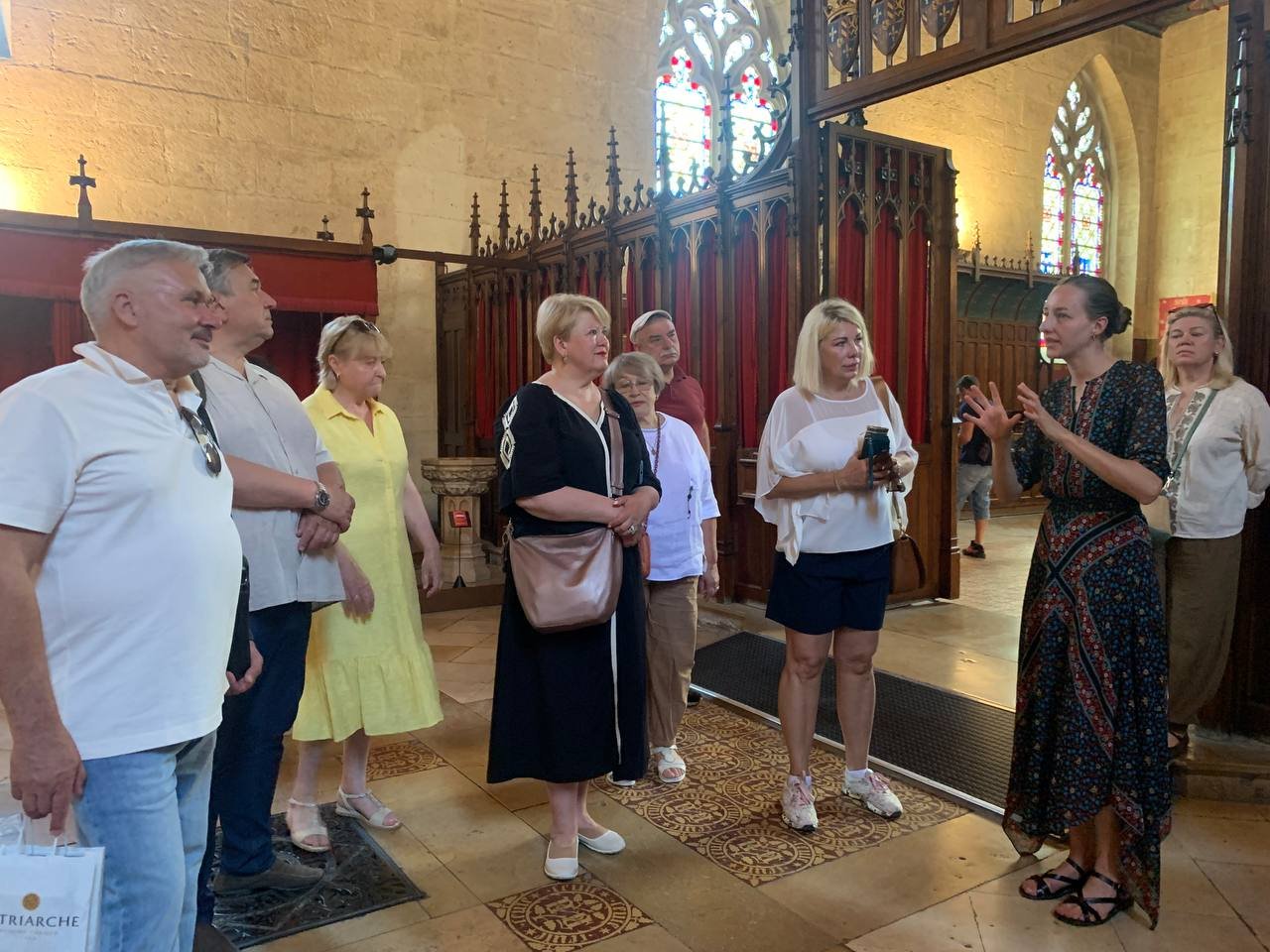
Hospices de Beaune. From a Healing Cup to a Barrel for Charity

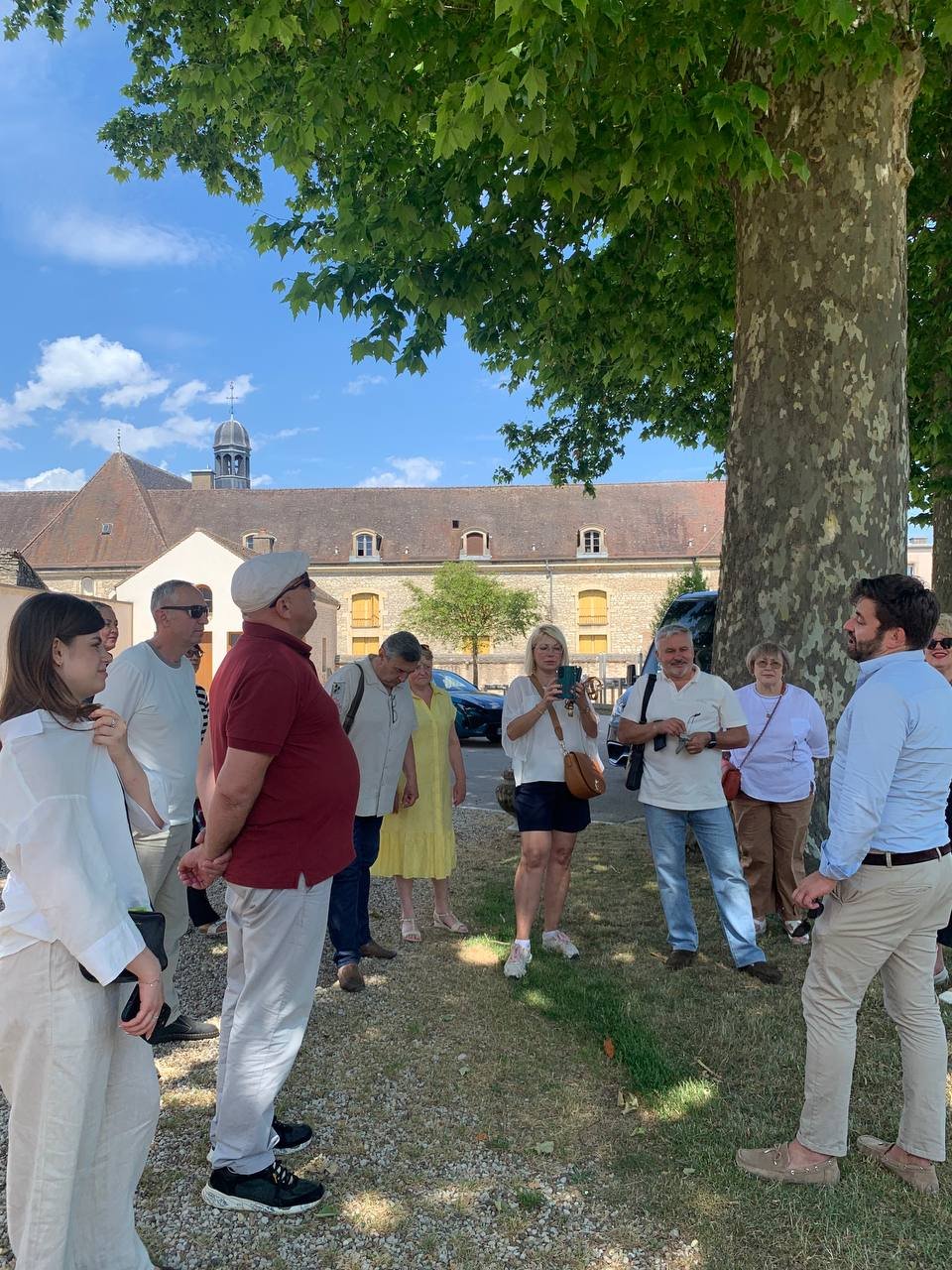
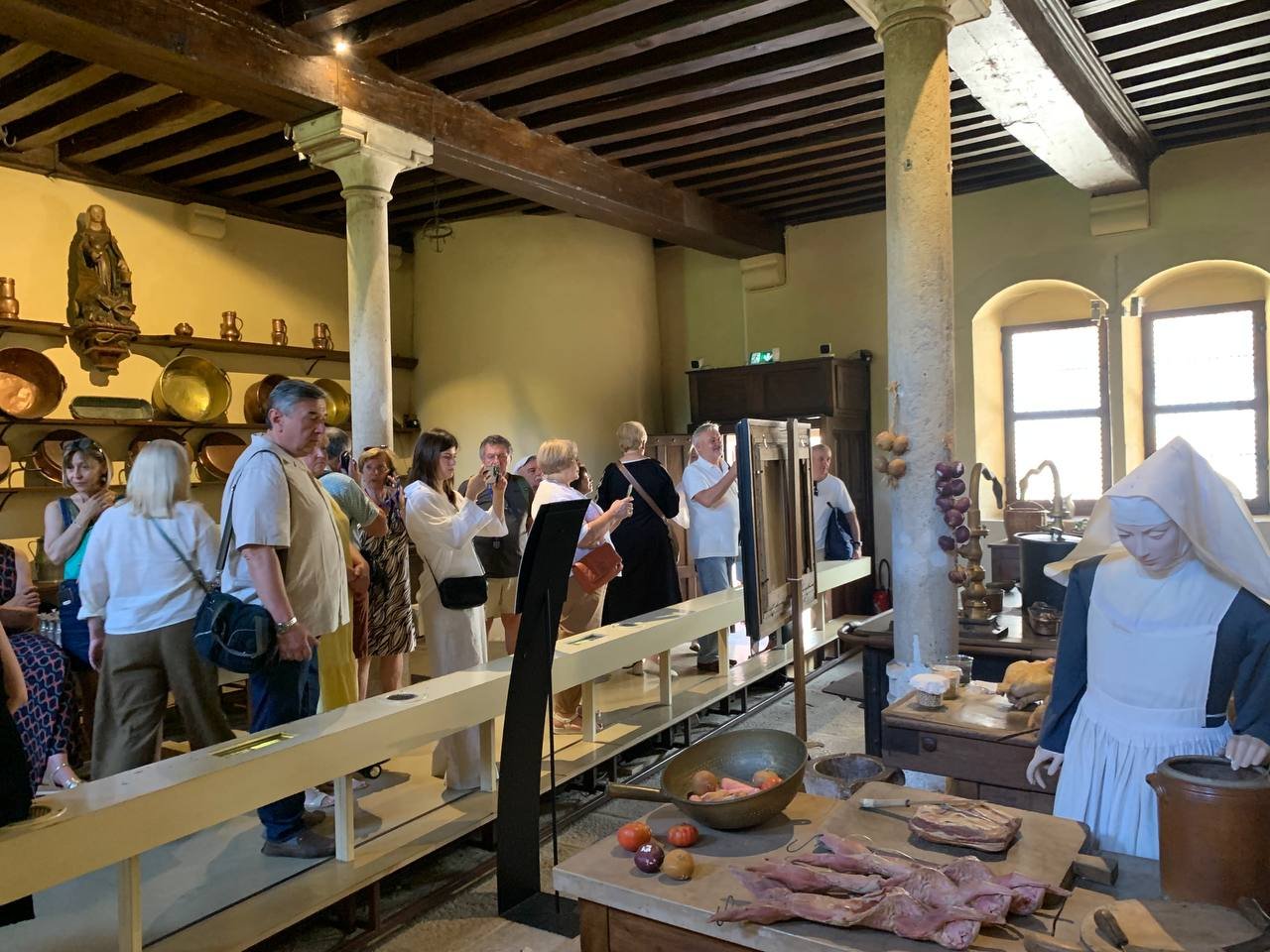
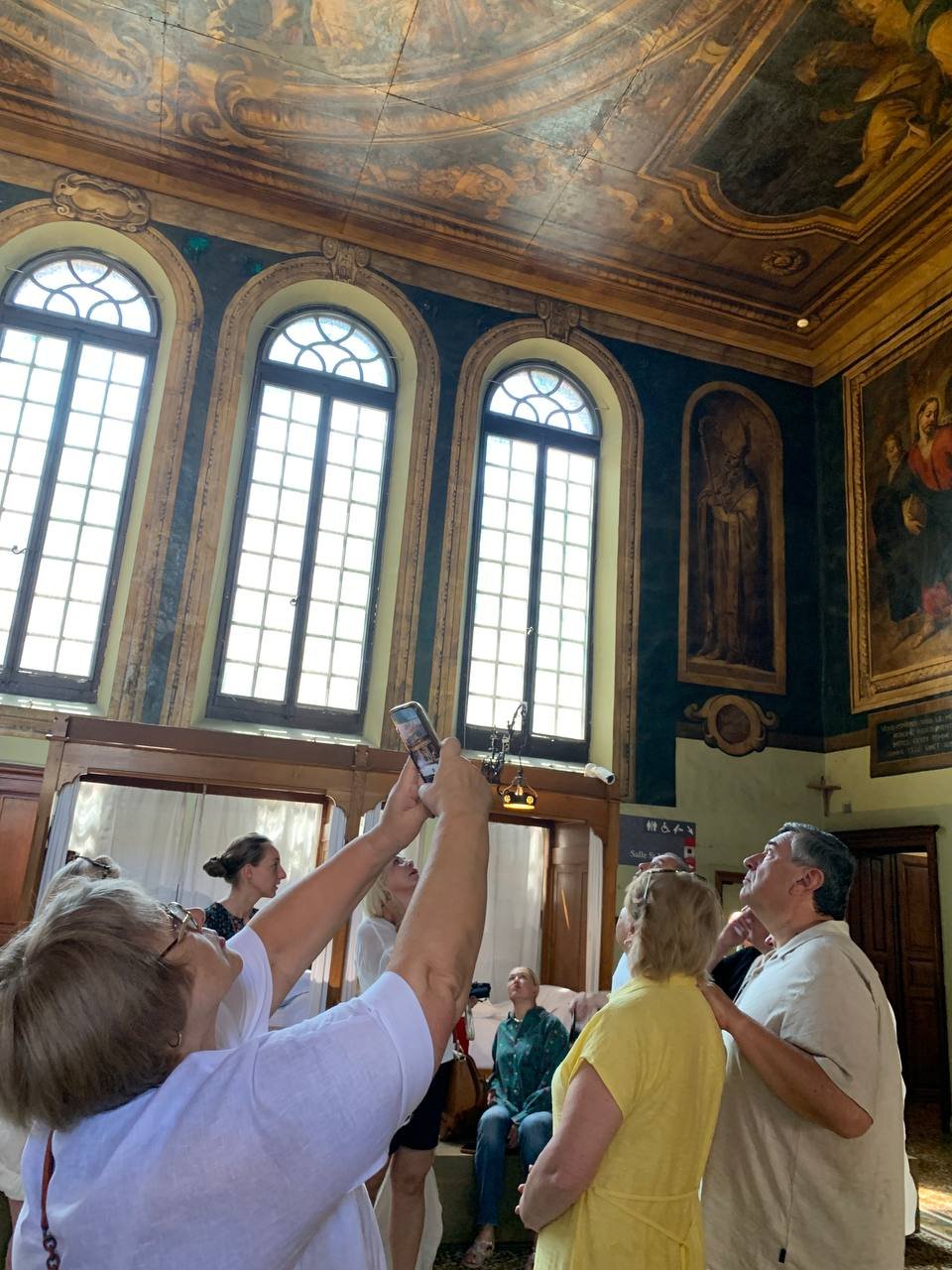
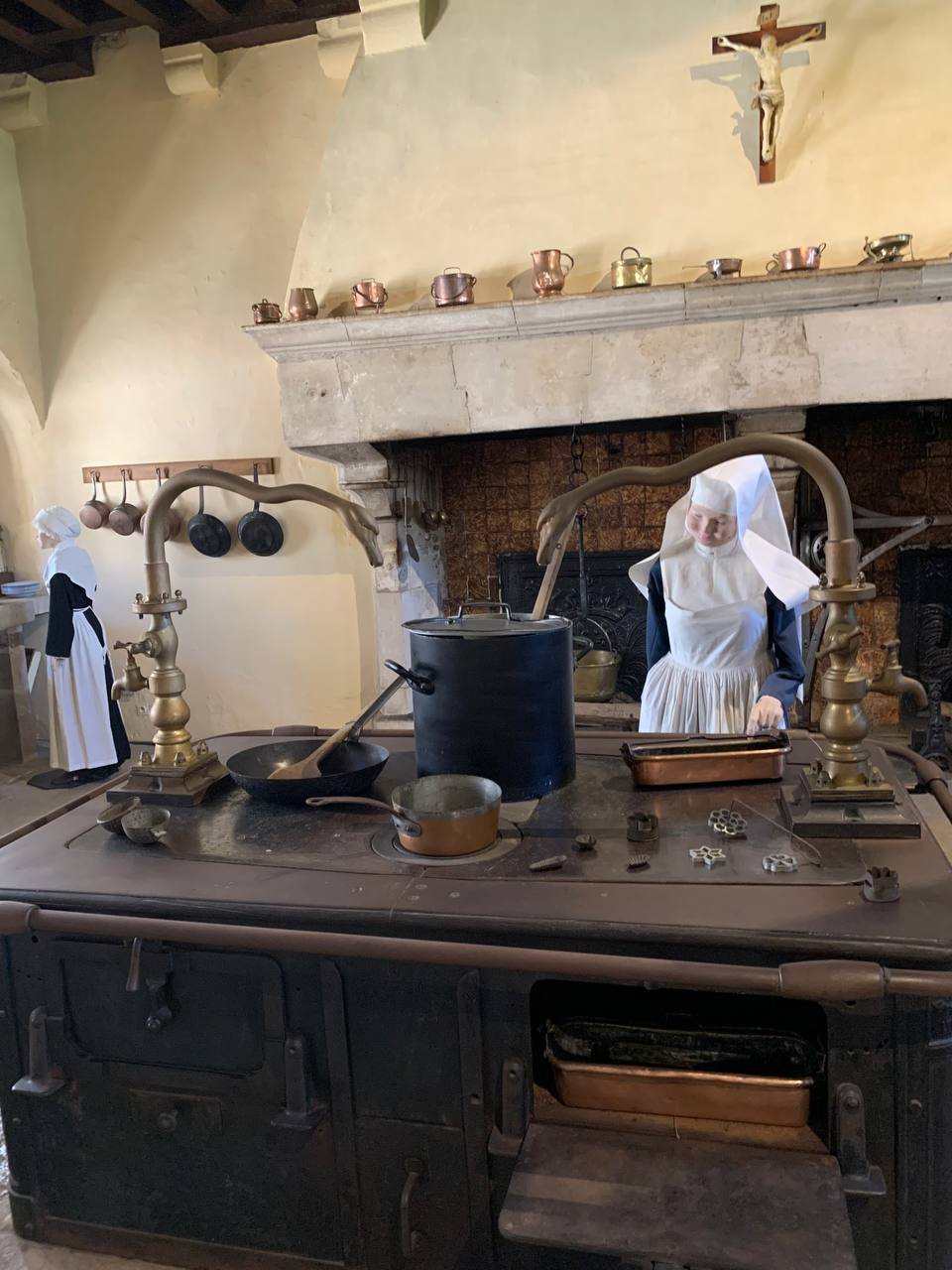
This summer, the Drinks+ and Wine Travel Awards team, together with everyone who joined our journey through Burgundy, visited one of Beaune’s most celebrated historic landmarks – the Hospices de Beaune. In fact, this was the very place where the first day of our educational wine tour began, and the choice was anything but accidental. This extraordinary site is renowned far beyond Burgundy not only for the architectural legacy of the famous Hôtel-Dieu but also for its unique model of financing healthcare through wine producers. And, of course, for one of the world’s most prestigious wine auctions, held here every autumn.


Why is the Ministry of Health mistaken?

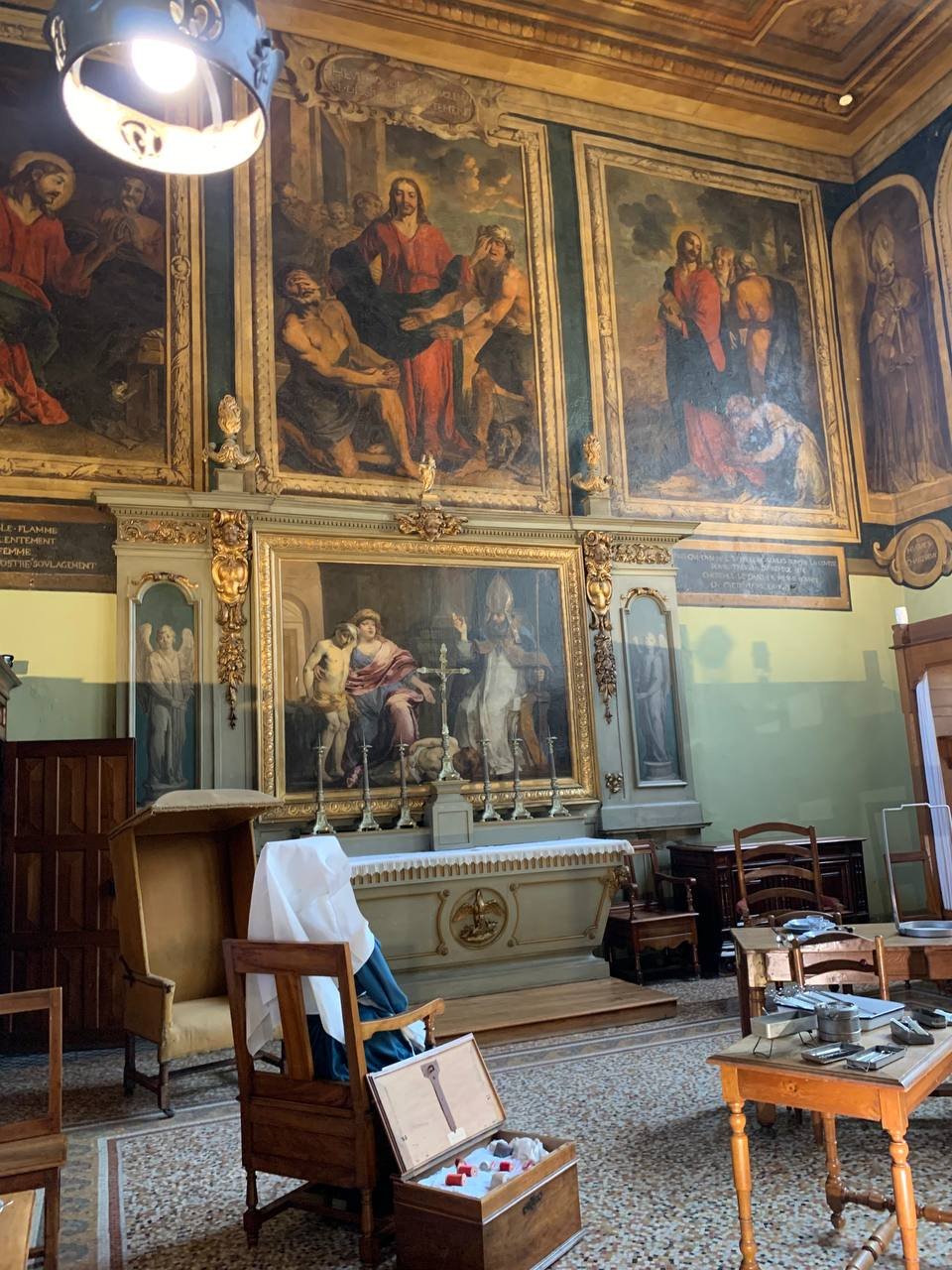
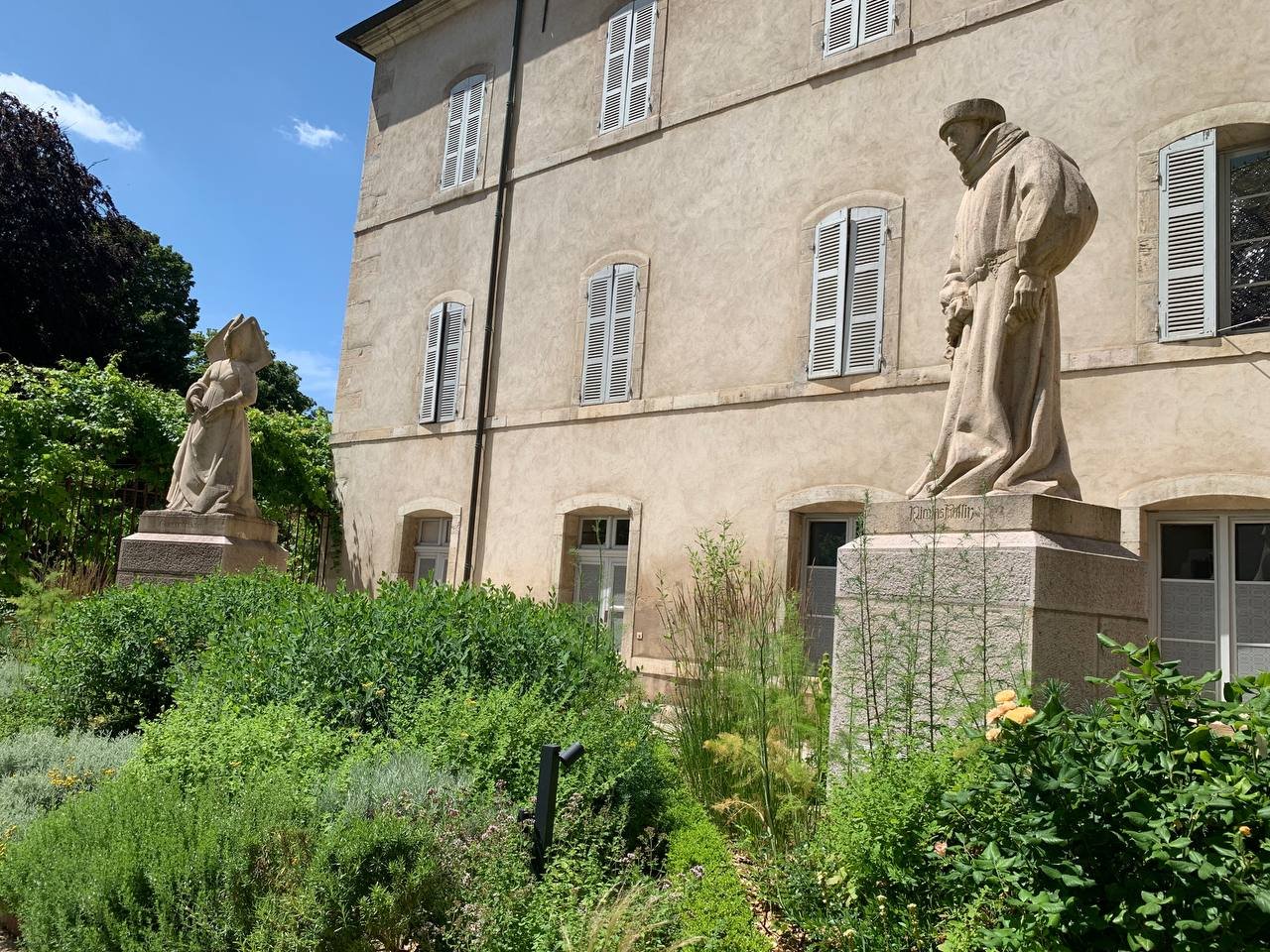
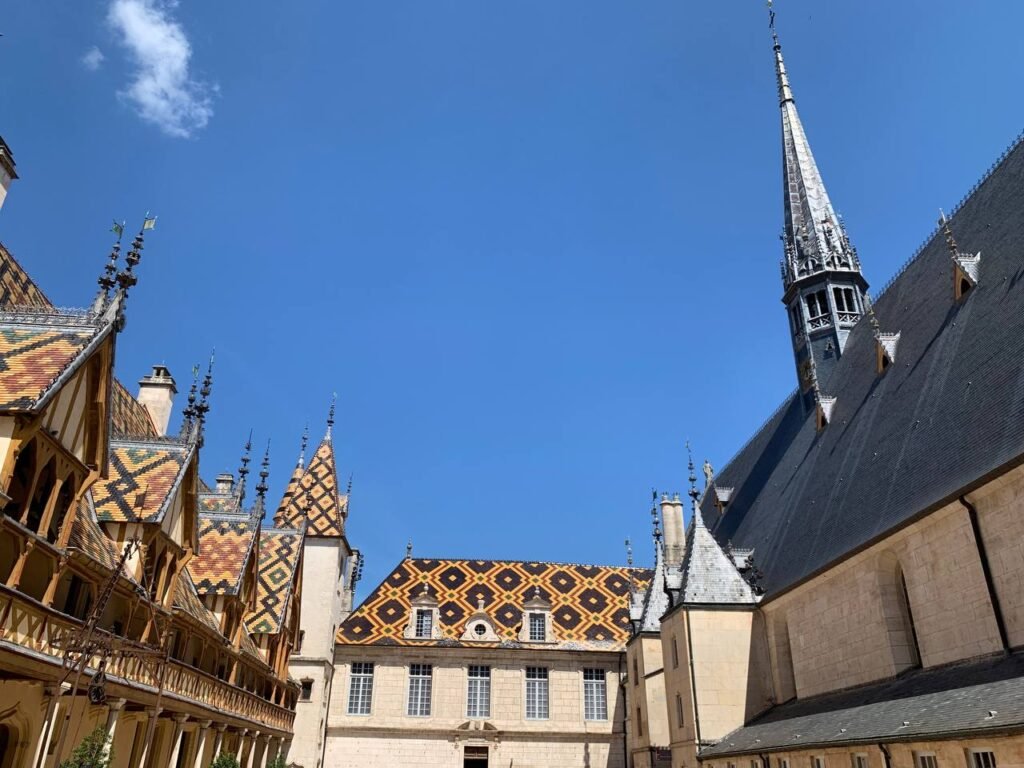
Today, this site welcomes hundreds of visitors daily from around the world, offering a magical opportunity to stroll through the medieval halls of the Hospices and immerse oneself in a remarkable history that, in our view, deserves far deeper study. Founded in 1443 by Nicolas Rolin, Chancellor to the Duke of Burgundy, and his wife Guigone de Salins, the Hospices de Beaune began as a charitable hospital for the poor. The Hôtel-Dieu quickly became a symbol of medieval Burgundy, admired for its colourful roof of glazed tiles in mustard, deep blue and terracotta tones, its Gothic architecture and its philanthropic mission. Although the historic site no longer functions as a hospital, it remains one of Beaune’s most important cultural and tourist landmarks. So what exactly took place beneath the roof of this building that resembles a castle from a children’s fairy tale?

Let us begin with the founding principles developed by Nicolas Rolin and the institution’s celebrated financial patron, Duke Philip the Good. Their central idea was to create a “palace for the poor” – a place where medical treatment was inseparable from spiritual care. Philip the Good supported the creation of the hospital as part of a broader policy of recovery after the Hundred Years’ War and widespread epidemics. His belief was that the state must care for its poorest citizens, for doing so strengthens society as a whole. Together with Rolin, his chancellor, the Duke invested his own funds to demonstrate Burgundy’s strength and moral authority. The hospital became a symbol of stability and generosity on the part of the rulers of that era. And, indeed, such a philosophy would be welcome in our own time.

The economic model developed during Philip the Good’s reign had intriguing nuances. The hospital was financed not by the state but through private donations – often land, farms or vineyards. The first vineyards were gifted to the hospital as early as 1457. Viticulture became the foundation of the Hospices’ independence and long-term sustainability. In addition, Chancellor Rolin founded the order of the sœurs hospitalières, who were tasked with healing both body and soul – through care, prayer, discipline and moral support. Treatment included medical procedures, nourishing food (naturally, accompanied by wine), prayer and spiritual conversation. The sisters lived alongside the patients, ensuring constant care.

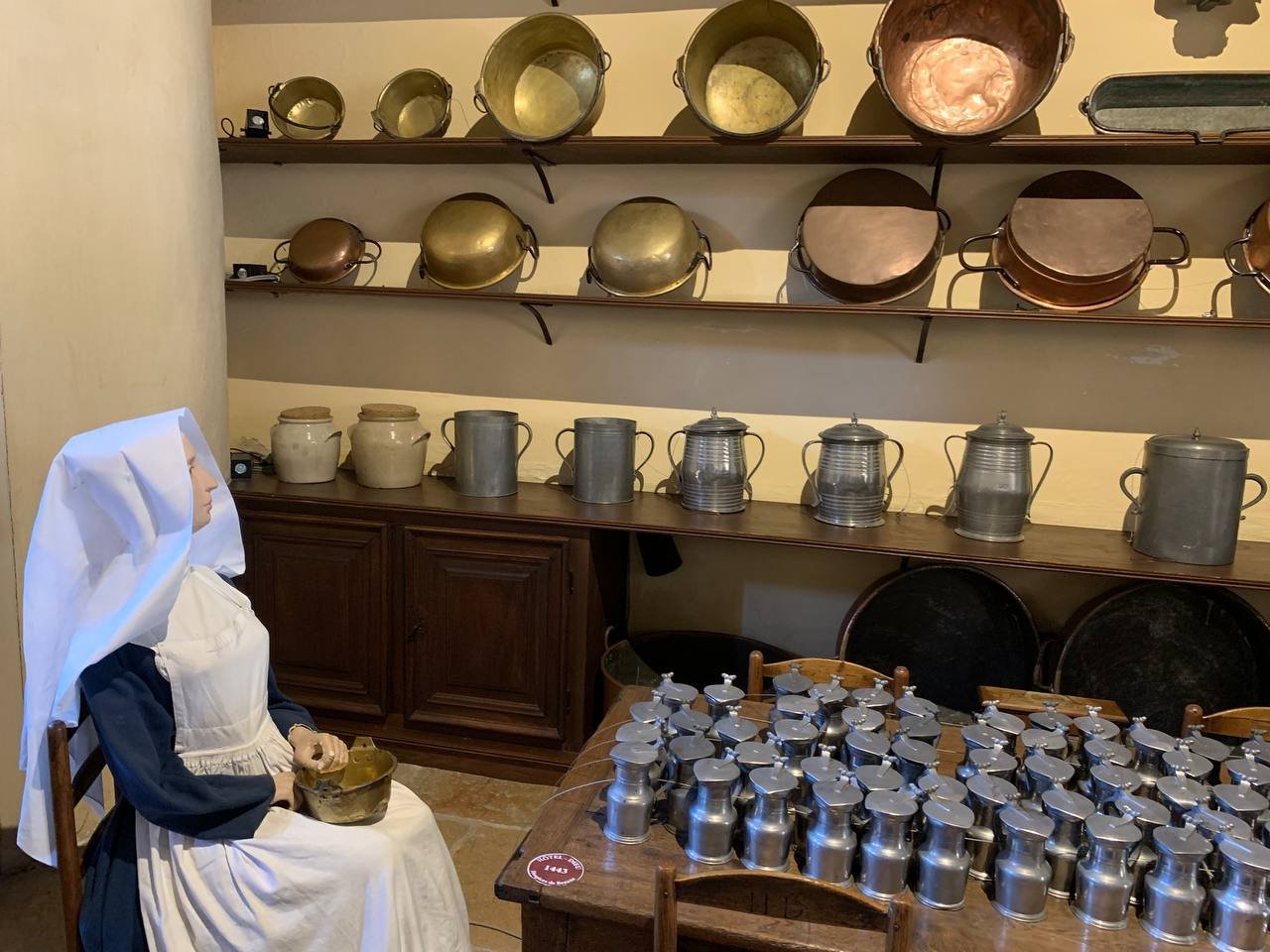
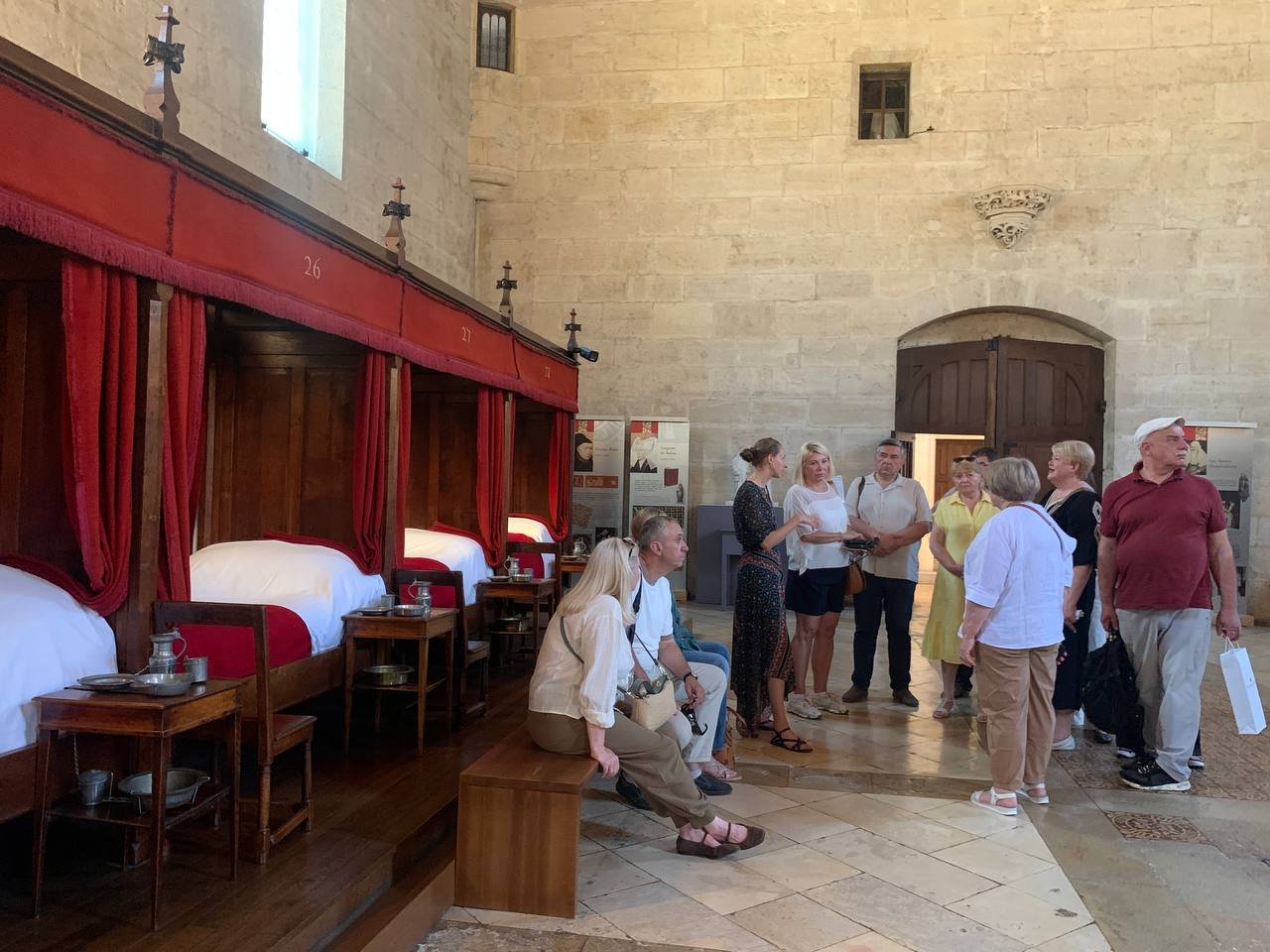
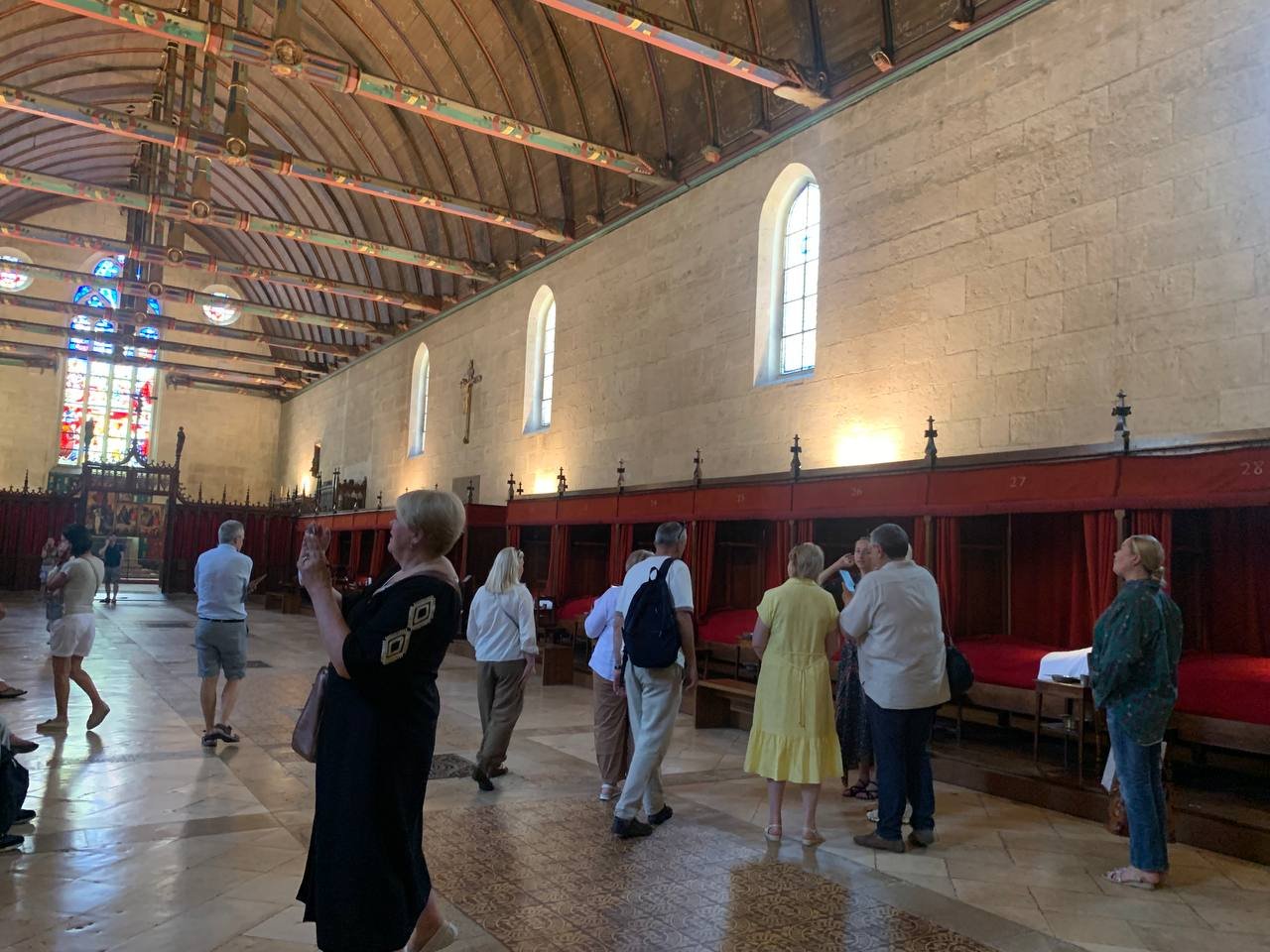
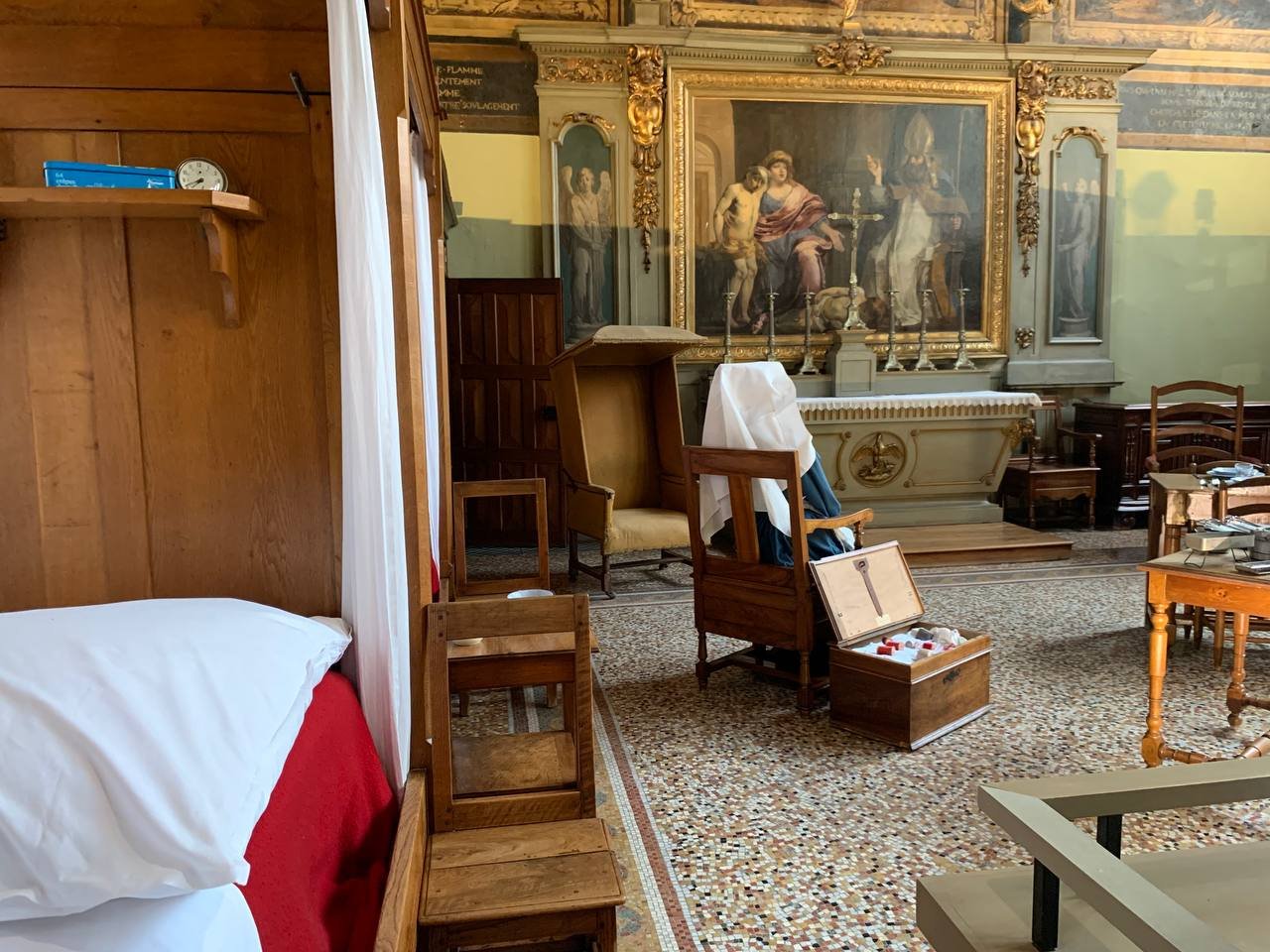
Today, the Hospices de Beaune function essentially as a museum – one of the best-preserved examples of medieval medicine. Tourists can see original instruments, the apothecary, the kitchen, the beds and the Salle des Pôvres – the hall for the sick. This hall is astonishing: a grand space more reminiscent of a sanctuary than a ward, yet designed for patients, with beds separated by velvet curtains, a high ceiling with wooden beams and stained-glass windows.

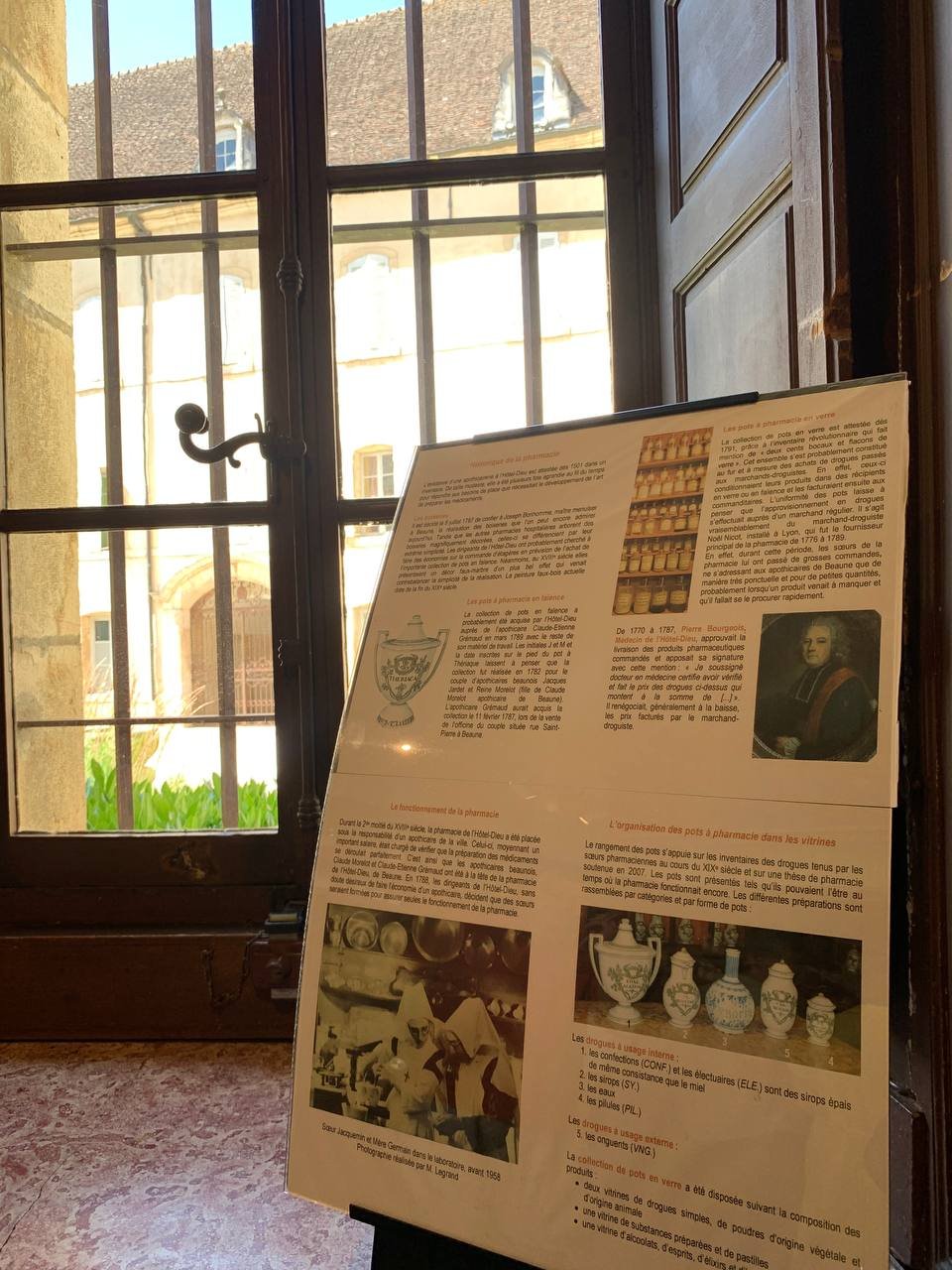
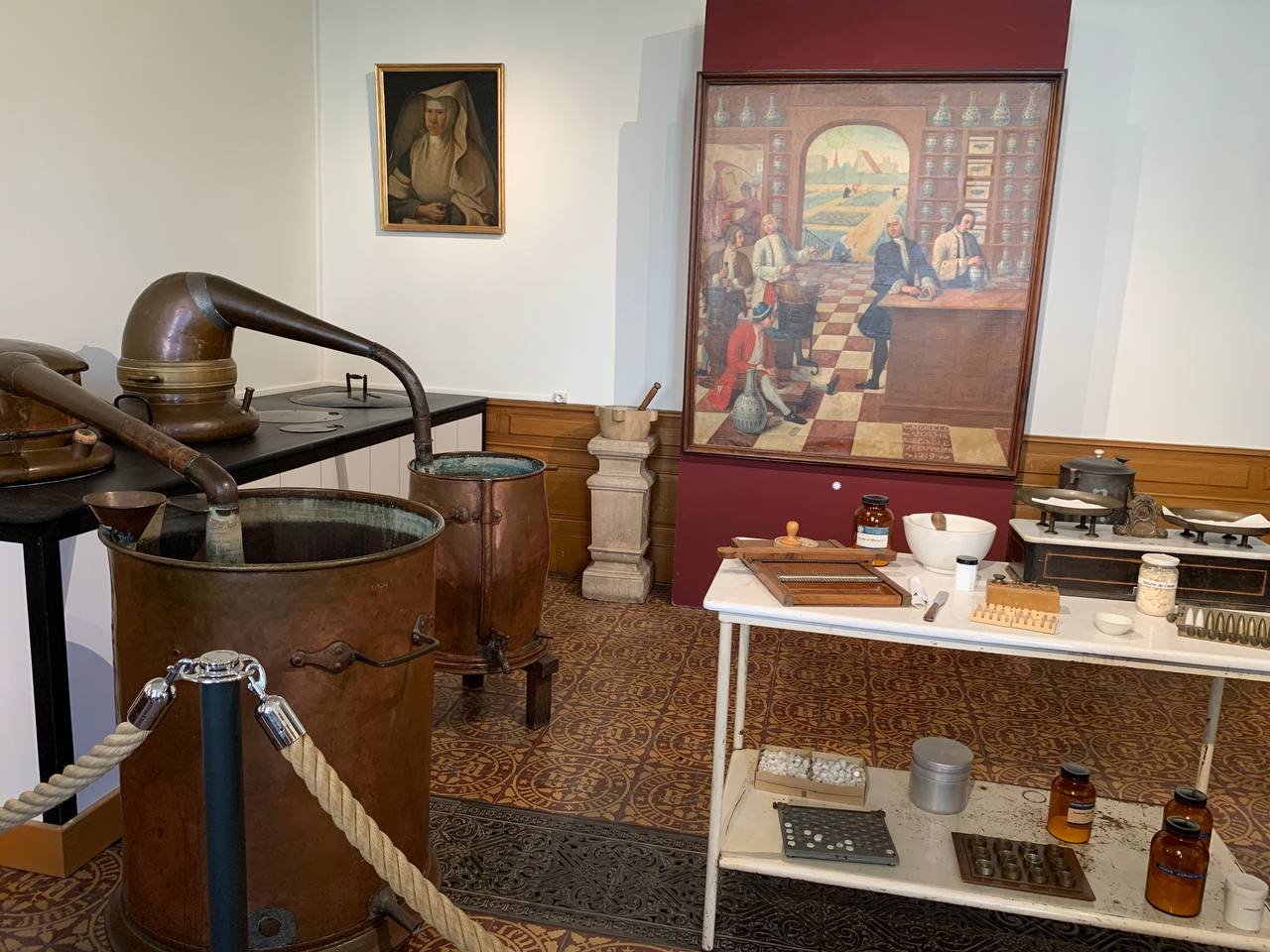
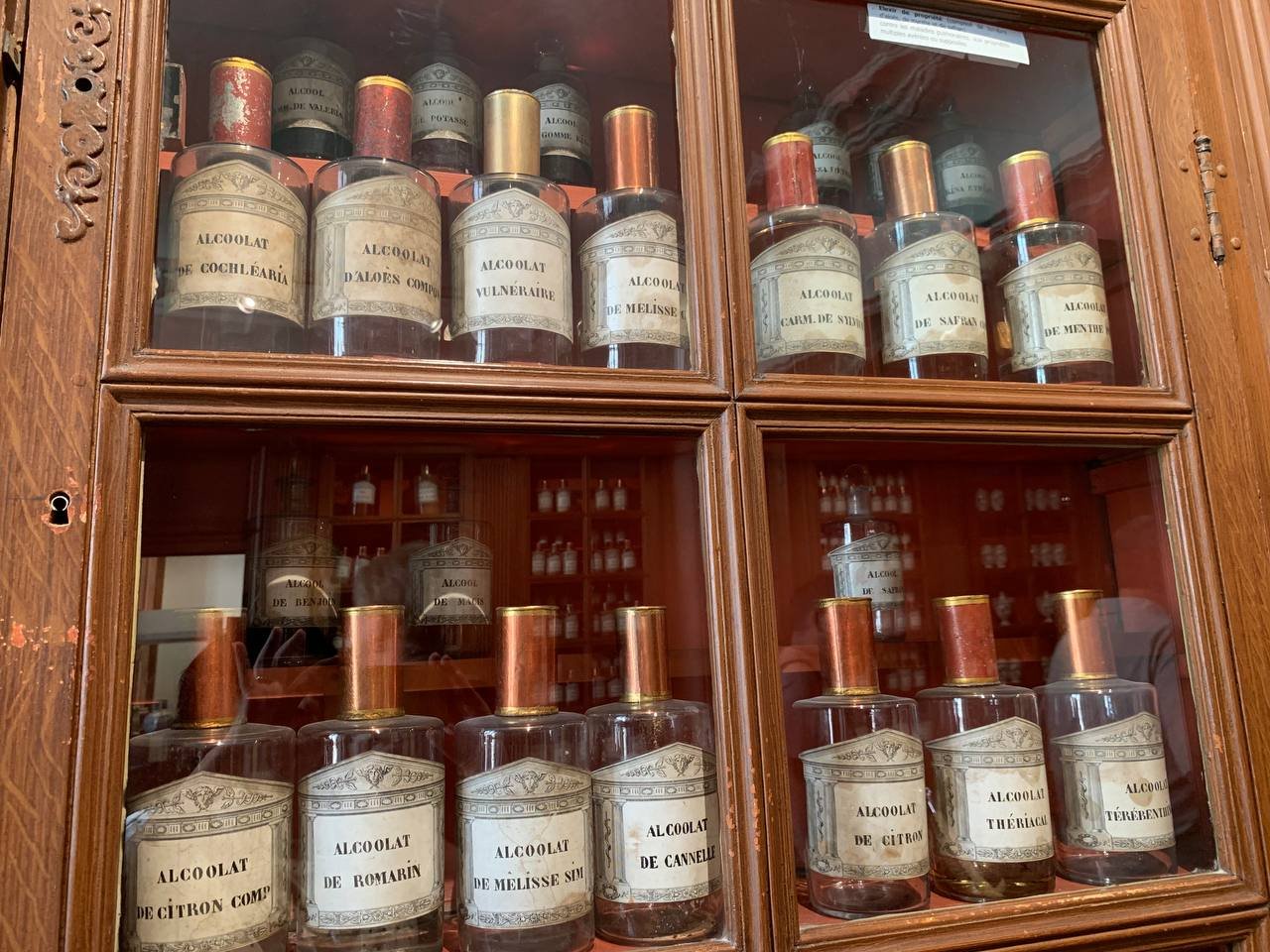
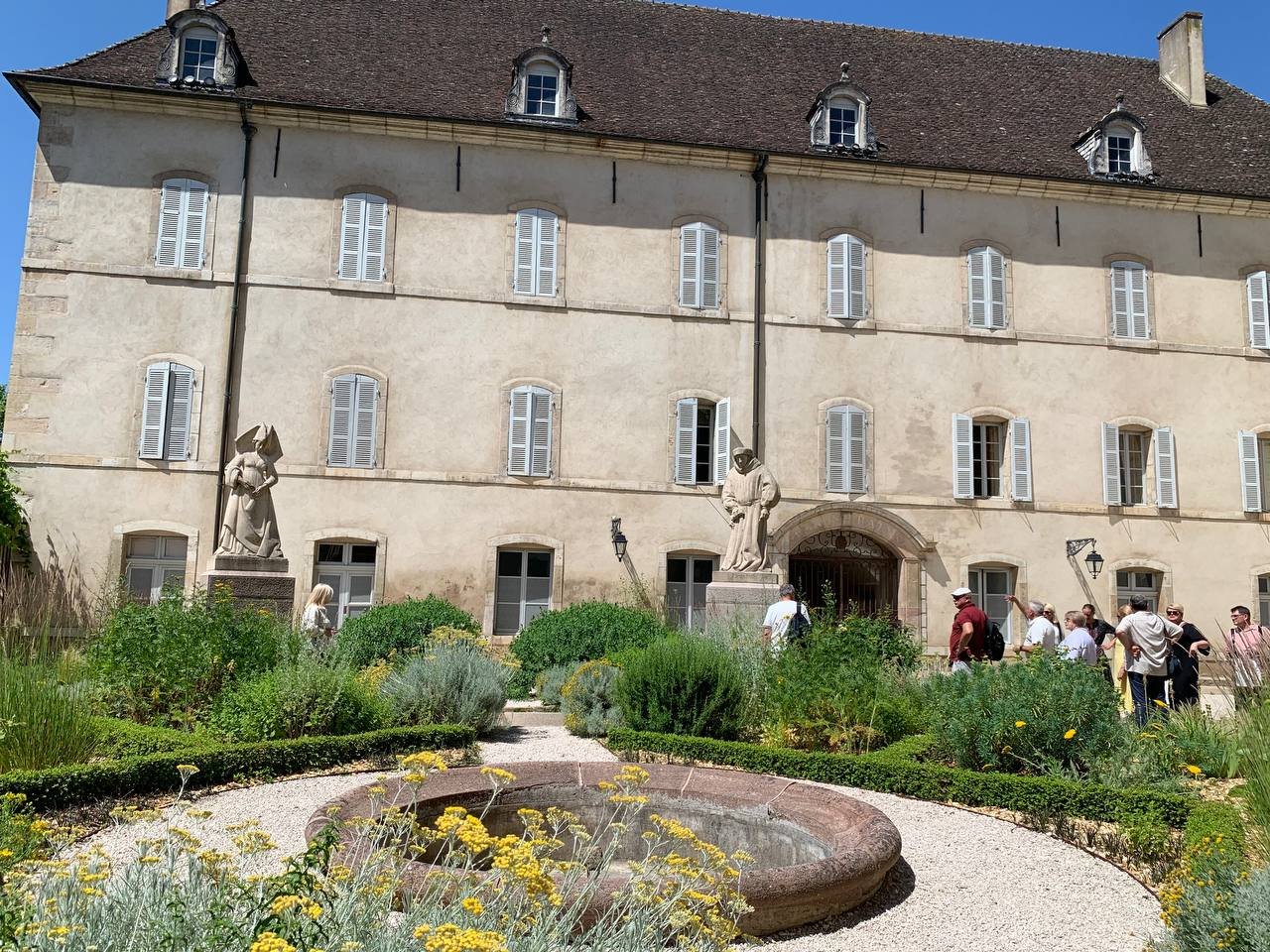
The complex included an apothecary stocked with herbs, tinctures and balms. Medicinal plants were grown in the hospital’s own garden, which still survives in one of the courtyards. The sisters used herbal preparations, syrups and balms made in the castle kitchen, as well as remedies brought from Flanders and other parts of France.

Diet was an essential part of treatment. Food played a crucial role, especially for those weakened by famine and epidemics. Patients received warm meals, wine (which, unlike the modern position of the healthcare system, was considered medicinal – and we suggest not arguing with that), bread and soups. In the hall where the beds stood, strict hygiene and order were maintained: for the fifteenth century, this was truly revolutionary – clean bedding, regular ventilation. Separate zones were introduced for different types of patients, and those with infectious diseases were placed in dedicated isolation rooms.

The architecture of the Hospices encouraged light and ventilation – both considered part of the healing process. Later, art joined wine as a therapeutic element, and the halls of the Hospices became a place for collecting paintings. Today, millions of art and history enthusiasts travel to Beaune to see Rogier van der Weyden’s Last Judgement polyptych – one of the most valuable works of Flemish art, displayed at the Hospices de Beaune.

As for our group of experts and winemakers travelling through Burgundy this summer, the wine domaine of the Hospices de Beaune was of particular interest as a unique model of a “hospital-winery”, where healthcare is funded through the proceeds of wine auctions.

The charitable mission of the Hospices also shaped its wine legacy. Over centuries, vineyard donations formed the prestigious wine estate of the Hospices de Beaune. Today, it produces wines from some of Burgundy’s most renowned appellations. Each autumn, these wines are sold at the famous Hospices de Beaune auction.

The event takes place every November and is one of the most significant dates in the international wine calendar. Enthusiasts, collectors, négociants and professionals from around the world gather in Beaune to participate in futures sales – bidding on wines still ageing in barrel.

A special highlight of the auction is the Pièce des Présidents – the charity barrel that attracts particular attention each year. In 2025, the Pommard Premier Cru Les Rugiens was sold for €400,000, with the proceeds directed to charitable projects. This tradition perfectly reflects the essence of the Hospices de Beaune – a place where Burgundy’s wine heritage has been inseparable from philanthropy for centuries.

Not only the auction

The Hospices de Beaune is not merely a destination for auction enthusiasts – buyers, agents or private collectors. Its unique blend of history, wine culture, architecture and gastronomy makes it an essential stop for anyone discovering Burgundy. Allow us to offer a few recommendations from our editors for visiting.

The connection between wine and gastronomy will be especially vivid in the coming months during a series of prestigious events linked to Saint-Vincent Tournante 2027 in Volnay. The 83rd edition of Saint-Vincent Tournante will take place on 30–31 January 2027, marking the 90th anniversary of the Volnay AOC. As part of the celebrations, the historic Bastion des Hospices de Beaune will host distinguished gastronomic banquets.

Registration is now open for two evenings:

– Héritage Vivant.  29 January 2027

–  Élégance Rare. 30 January 2027

Both events will combine fine Burgundy wines, haute cuisine and the region’s characteristic art de vivre. Renowned chefs will participate. Tickets are priced at €350 per person.

For travellers planning a wine journey through Burgundy in early 2027, these events offer a wonderful opportunity to experience several defining features of the region at once: its historical heritage, prestigious wines, gastronomy and culture of hospitality.

Hospices


⇒ Join our social networks ⇒ Optimistic D+ editors will take this as a compliment.

⇒ Every like is taken as a toast!


This summer, the Drinks+ and Wine Travel Awards team, together with everyone who joined our journey through Burgundy, visited one of Beaune’s most celebrated historic landmarks – the Hospices de Beaune. In fact, this was the very place where the first day of our educational wine tour began, and the choice was anything but accidental. […]

Fattoria La Maliosa to Host the First Porto Protocol Community Day on 14 November 2026

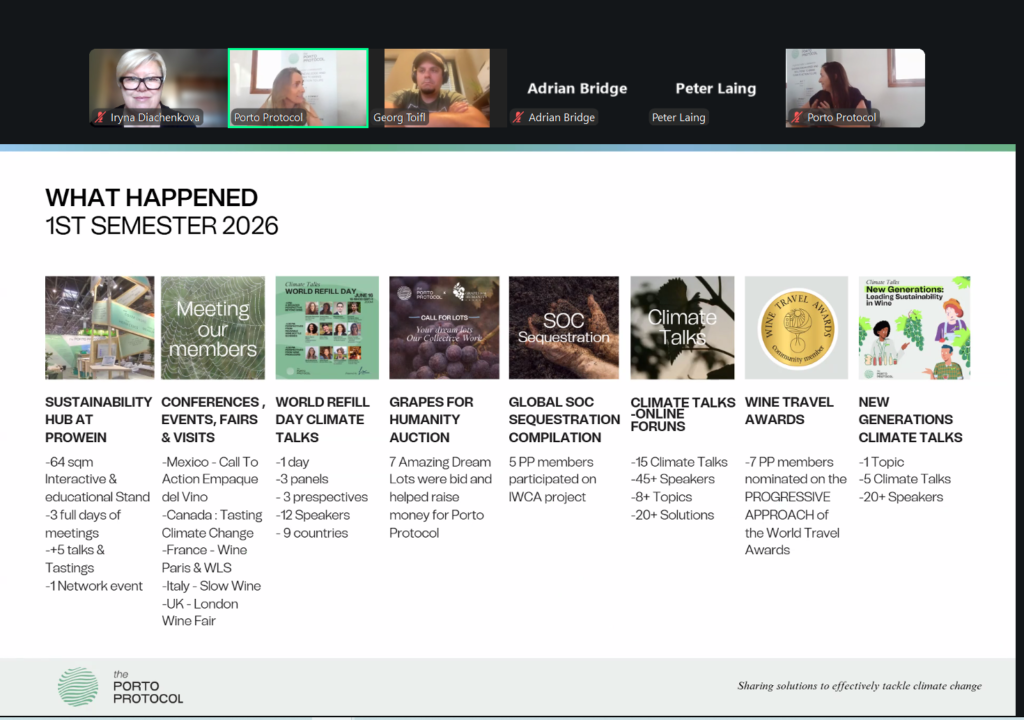
During the recent BI‑Annual Meeting of Porto Protocol – an online gathering where members reviewed the achievements of the first half of 2026, discussed the outcomes of collective work and received updates on ongoing sustainability projects – the organisation announced a landmark event: the inaugural Porto Protocol Community Day, to be held on 14 November 2026 at Fattoria La Maliosa in Tuscany.


The meeting, opened by Founder and CEO Adrian Bridge and led by coordinators Marta Mendonça and Cristina Crava, highlighted the community’s major accomplishments:

  • fifteen Climate Talks featuring over forty‑five international speakers;
  • the launch of New Generation Climate Talks in France, Italy, Portugal and California;
  • active participation in global wine fairs including ProWein, Wine Paris, London Wine Fair and Slow Wine Fair;
  • and the publication of Saving Every Drop in Wine, a 200‑page study on responsible water management, developed with contributions from thirty‑nine Porto Protocol members.

Against this backdrop, the announcement of Community Day stood out as one of the key highlights of the meeting.

Fattoria La Maliosa – recognised this season within the Wine Travel Awards for its progressive sustainable practices and celebrated alongside fellow WTA winners Spier Wine Farm and Tablas Creek Vineyard – will welcome Porto Protocol members from around the world for a day dedicated to knowledge exchange, presentations of regenerative and ecological solutions, tastings and collaborative discussions on the future of sustainable winegrowing.

The event will serve as a practical continuation of the themes raised during the BI‑Annual Meeting, reinforcing Porto Protocol’s commitment to strengthening its global community and expanding hands‑on dialogue around climate resilience in wine.


⇒ Join our social networks ⇒ Optimistic D+ editors will take this as a compliment.

⇒ Every like is taken as a toast!


During the recent BI‑Annual Meeting of Porto Protocol – an online gathering where members reviewed the achievements of the first half of 2026, discussed the outcomes of collective work and received updates on ongoing sustainability projects – the organisation announced a landmark event: the inaugural Porto Protocol Community Day, to be held on 14 November […]

Porto Protocol Reviews Its Progress and Sets the Course Ahead

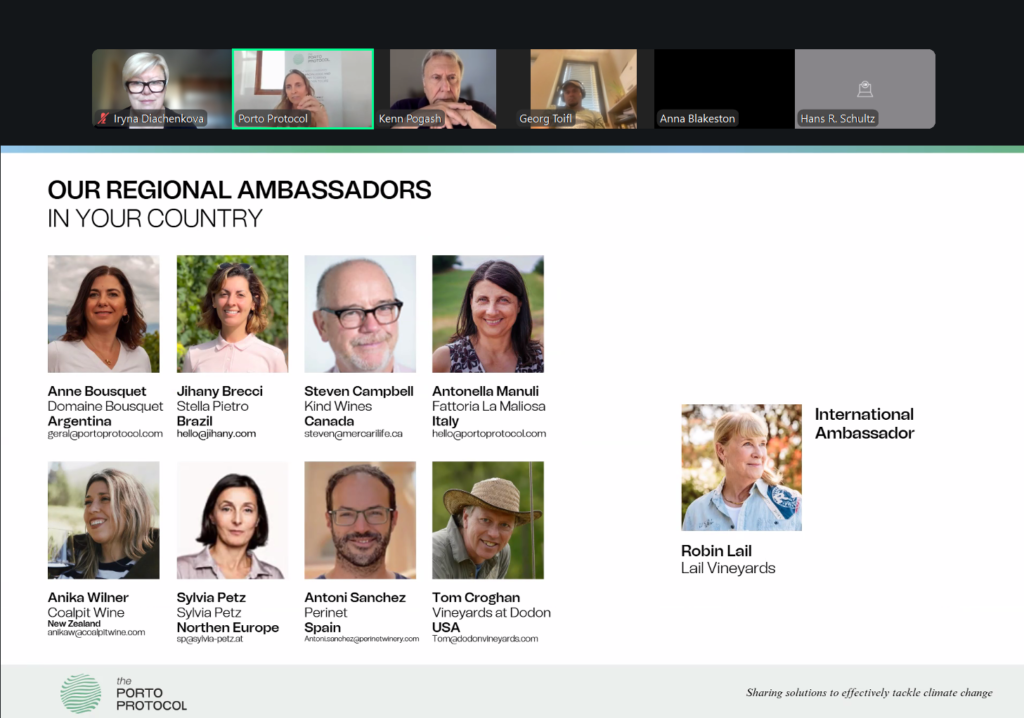
The Drinks+ and Wine Travel Awards teams, as partners and active members of the international Porto Protocol community, took part for the second time in the organisation’s BI‑Annual Meeting – the traditional online gathering of its global network. The event offered an opportunity to review the achievements of the first half of 2026, assess the results of collective work, hear updates on member‑led projects and gain insight into what lies ahead in the coming months.


The meeting opened with welcoming remarks from Porto Protocol’s Founder and CEO, Adrian Bridge, followed by coordinators Marta Mendonça and Cristina Crava, who presented the community’s key accomplishments and outlined its priorities moving forward.

Over the past year of membership, the Drinks+ and Wine Travel Awards teams have not only participated in regular online meetings but also met the Porto Protocol team in person. The organisation is highly active offline – hosting its own events, lectures, tastings, presentations and masterclasses, as well as participating in major international wine fairs.

At ProWein 2026, Porto Protocol curated the Sustainability Hub, where the Drinks+ team had the opportunity to meet and speak with representatives of the organisation. Porto Protocol was also present at Wine Paris, London Wine Fair, Slow Wine Fair, and organised events in Canada and Mexico.

Porto Protocol


Climate Talks and the New Generation of Winegrowers

In the first half of 2026, Porto Protocol organised 15 Climate Talks online forums featuring more than 45 international speakers. Participants presented over twenty practical solutions addressing the most pressing challenges in contemporary wine production.

A new format – the New Generation Climate Talks – was launched in France, Italy, Portugal and California, held in local languages. The central theme, Leading Sustainability in Wine, brought together representatives of the new generation of winegrowing families, who shared their experience in implementing sustainable practices and adapting to climate change.

“Saving Every Drop in Wine” – The Landmark Release of the Year

The organisation’s most significant achievement in the first half of the year was the publication of Saving Every Drop in Wine – a comprehensive 200‑page study dedicated to responsible water management in viticulture and winemaking.

Drinks.ua was among the first to announce the release. The report includes analytical insights, practical case studies and 28 solutions for efficient water management – from vineyard to winery. Twelve experts and 39 Porto Protocol members contributed to the study, including participants of the Wine Travel Awards, with material covering 19 wine regions worldwide. The report is available for free download.

Porto Protocol and Wine Travel Awards: A Growing Collaboration

A dedicated segment of the meeting focused on the collaboration between Porto Protocol and the Wine Travel Awards.

In the 2025-2026 season, under the patronage of Porto Protocol, seven members of the international eco‑community were nominated in the Progressive Approach category – recognising wineries that operate with forward‑thinking methods, including modern sustainable and ecological practices.

Two of these nominees – Spier Wine Farm (South Africa) and Tablas Creek Vineyard (USA) – became winners of the Wine Travel Awards, while Fattoria La Maliosa (Italy) was among the public‑vote winners. These three estates were highlighted during the meeting as exemplary leaders of sustainability and innovation, and their achievements sparked active discussion among participants.

Notably, Fattoria La Maliosa will host the first‑ever Porto Protocol Community Day in Tuscany, scheduled for 14 November 2026 – an event announced during the BI‑Annual Meeting. The gathering will be open to all Porto Protocol members and will serve as a platform for sharing experiences, presenting sustainable practices, tasting sessions and exploring new formats of collaboration.

What Lies Ahead

Among the key projects for the second half of the year, Porto Protocol announced:

  • continuation of the international Living Vineyards Tour: A Regenerative Journey Across Europe;
  • global promotion of Saving Every Drop in Wine, already downloaded more than 1,500 times;
  • preparation of the new publication 101 Climate Solutions for Wine;
  • organisation of the UK sommelier competition Wine for the Future;
  • development of additional international educational and environmental initiatives.

Porto Protocol

A Community That Drives Change

The Porto Protocol team emphasised that the organisation’s greatest strength lies in its members and ambassadors across the world. Coordinators encouraged all participants to be more active – to join events, share their practices and solutions, propose topics for future meetings and invite new members.

The organisation also reminded attendees of opportunities to support its mission through membership contributions (starting at €95 per year), charitable donations or sponsorship of events. Another way to contribute is by participating in the Porto Protocol Auction, scheduled for 15 October 2026 at WOW Porto.

Join the International Community

Porto Protocol and Wine Travel Awards unite professionals who believe that the future of wine is inseparable from international cooperation, environmental responsibility and continuous knowledge exchange.

We invite you to join Porto Protocol and take part in the new Wine Travel Awards season 2026-2027. Together, we create new values and strengthen the global wine industry.


⇒ Join our social networks ⇒ Optimistic D+ editors will take this as a compliment.

⇒ Every like is taken as a toast!


The Drinks+ and Wine Travel Awards teams, as partners and active members of the international Porto Protocol community, took part for the second time in the organisation’s BI‑Annual Meeting – the traditional online gathering of its global network. The event offered an opportunity to review the achievements of the first half of 2026, assess the […]

Ukrainian Wine at a Historic Crossroads: Between Losses and a New Lease of Life

Ukrainian winemaking, together with the entire country, has lived through five wartime years that can only be described as a stress test for survival. A near‑halving of vineyard area, declining processing volumes, the loss of part of the production infrastructure – all of this could have broken the industry, were it not for the inner resilience of Ukrainians. Drinks+ publishes data from the “Ukrainian Wine Market Study”, conducted by the Diia.Business team at the initiative of Wines of Ukraine. Respect is due to the authors – analysing statistics during wartime is a challenge in itself. And this is the first comprehensive study of the situation carried out over the past five extraordinarily difficult years.


Yet despite these dramatic figures, the study reveals a notable positive trend: in 2024–2025, the first signs of recovery appear across Ukraine. We are not seeing a leap or an explosive surge, but rather a quiet yet confident return to growth. We hope this trajectory will shape the future of Ukrainian winemaking.

Vineyards: Early Shoots of Recovery

Between 2019 and 2023, vineyard area fell almost by half – a figure that could sound like a verdict. In 2022 the decline reached –20.9%, and in 2023 a further –23.9%. These are not just statistics: they represent vanished vineyards, abandoned estates, shattered plans. Yet 2024 delivered +6.6%. It was a signal that the sector was reviving faster than experts predicted. And although 2025 tempered optimism – vineyard area for wine grapes fell by 1%, and table grapes by 44% – we suggest viewing these figures comparatively, as evidence that producers are prioritising wine varieties as a strategic choice that may reshape the market structure in the coming years.

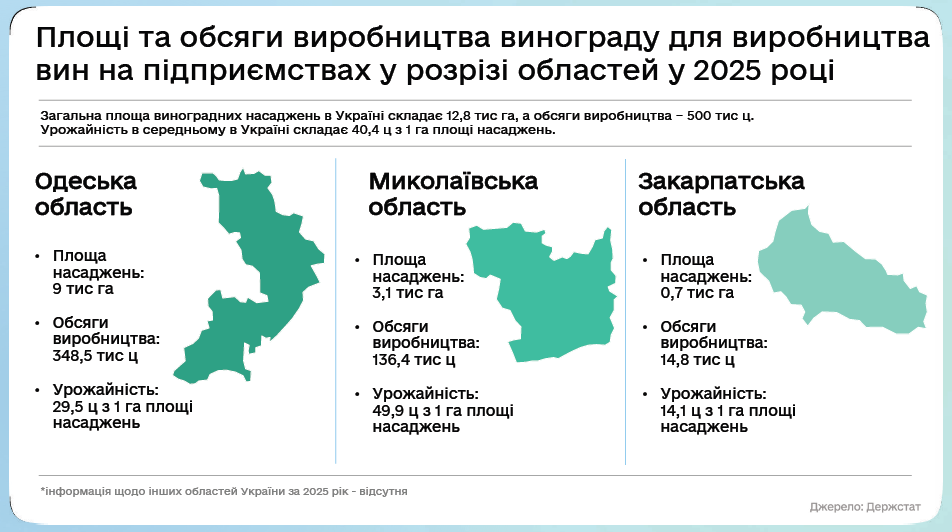
Regional Map: Three Regions Form the Core of Viticulture

  • Odesa – 9,000 ha, 348.5 thousand centners, yield 29.5 centners/ha
  • Mykolaiv – 3,100 ha, 136.4 thousand centners, yield 49.9 centners/ha
  • Zakarpattia – 700 ha, 14.8 thousand centners, yield 14.1 centners/ha

Thus, the average yield can be calculated at 40.4 centners/ha.

Українське виноробство

Outlook: if the trend continues, Mykolaiv may become the new centre of viticultural revival, as its yield already exceeds the national average by nearly a quarter. Overall, the sector continues shifting toward the southern regions, yet the study highlights the potential of Zakarpattia.

Grape Processing: A Long Decline and an Unexpected Upswing

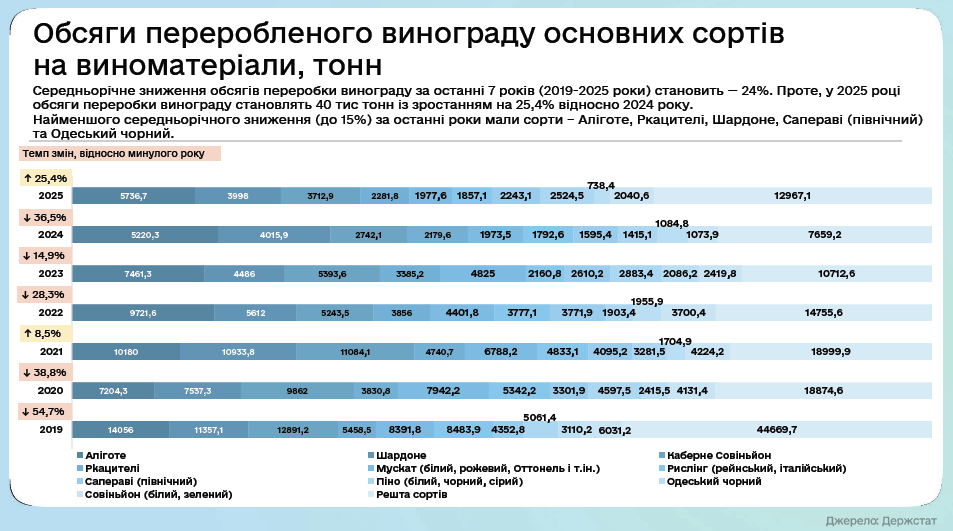
The average annual decline in grape processing volumes between 2019 and 2025 was 24%. In essence, the sector was losing nearly a quarter of its processing volume each year – a trend that could have proved fatal. Yet in 2025, processing volumes increased by 25.4% compared to the previous year.

In 2025, grape processing volumes reached 40 thousand tonnes. This is the first strong indication that producers are returning to full-scale operations and that the industry is regaining momentum.

Українське виноробство

Varietal Structure: Classics Hold the Market

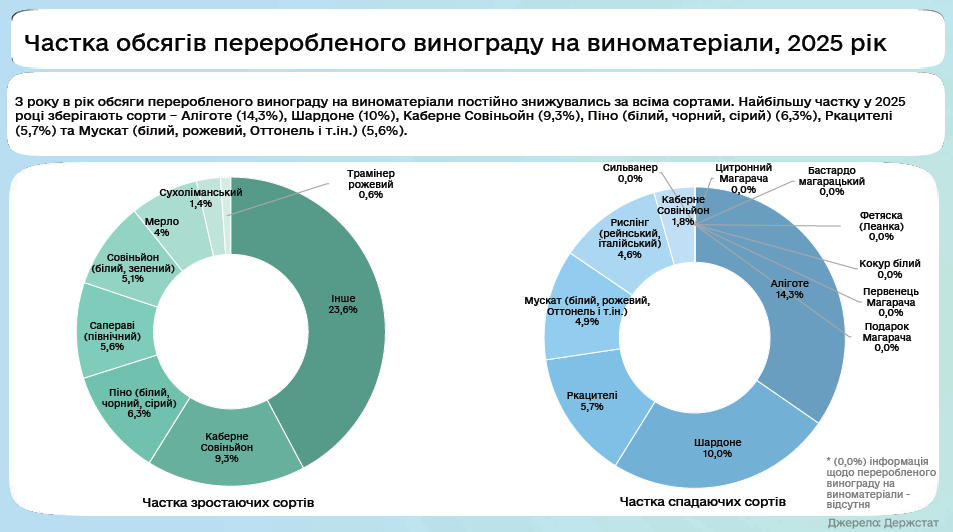
Processing leaders in 2025:

  • Pinot – 6.3%
  • Cabernet Sauvignon – 9.3%
  • Saperavi – 5.6%
  • Sauvignon Blanc – 5.1%
  • Merlot – 4%

Declining varieties:

  • Aligoté – 14.3%
  • Chardonnay – 10%
  • Cabernet Sauvignon – 1.8%
  • Rkatsiteli – 5.7%
  • Muscat – 4.9%

Although the Cabernet Sauvignon figures in the study appear inconsistent, the country’s vineyards remain dominated by Aligoté, Chardonnay, Cabernet Sauvignon, Pinot (Blanc, Noir and Gris), Rkatsiteli and Muscat (White, Pink, Ottonel, etc.). The lowest average annual decline (up to 15%) was recorded for Aligoté, Rkatsiteli, Chardonnay, Saperavi (Northern) and Odesa Black.

While classic European varieties continue to dominate, indigenous cultivars such as Odesa Black, Sukholymanskyi White and Citronnyi Magaracha are increasingly shaping the international identity of Ukrainian wine.

Українське виноробство

We did not see statistical data for Telti Kuruk, yet fresh information shows that several producers are betting on this distinctive variety and expanding plantings. And they are right. The future belongs to Ukraine’s unique indigenous grapes – autochthons are a strategic advantage.

Potential for Premium Wines

Ukraine clearly has natural prerequisites for producing wines with high ageing potential. Sugar concentration – one of the key parameters defining style and longevity – is central here.

In 2025, the highest mass concentration of sugars was demonstrated by: Traminer Pink, Sauvignon Blanc, Merlot, Odesa Black, Cabernet Sauvignon.

Outlook: if producers focus on premium wines, Ukraine may occupy a niche actively sought by international importers – wines with character, history and distinctive terroir.

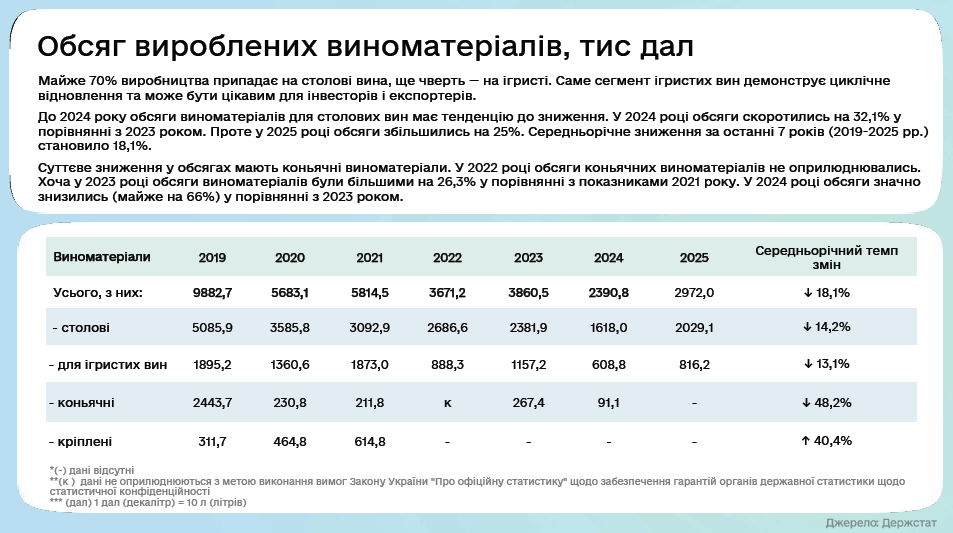
Wine Materials: Table Wines Dominate, Sparkling Returns

Production structure in 2025:

  • 68.3% – table wine materials
  • ≈25% – sparkling
  • Brandy and fortified – partially missing data

Dynamics 2019–2025:

  • Total wine materials: –18.1%
  • Table: –14.2%
  • Sparkling: –13.1%
  • Brandy: –48.2%
  • Fortified: +40.4%

Українське вино

Outlook: excluding fortified wines, the sparkling segment is among the most promising. After cyclical decline, it shows recovery – a potential entry point for investors. Ukrainian sparkling wines already have the potential to compete in Central and Western Europe.

Market Operators: Small Producers as the New Driving Force

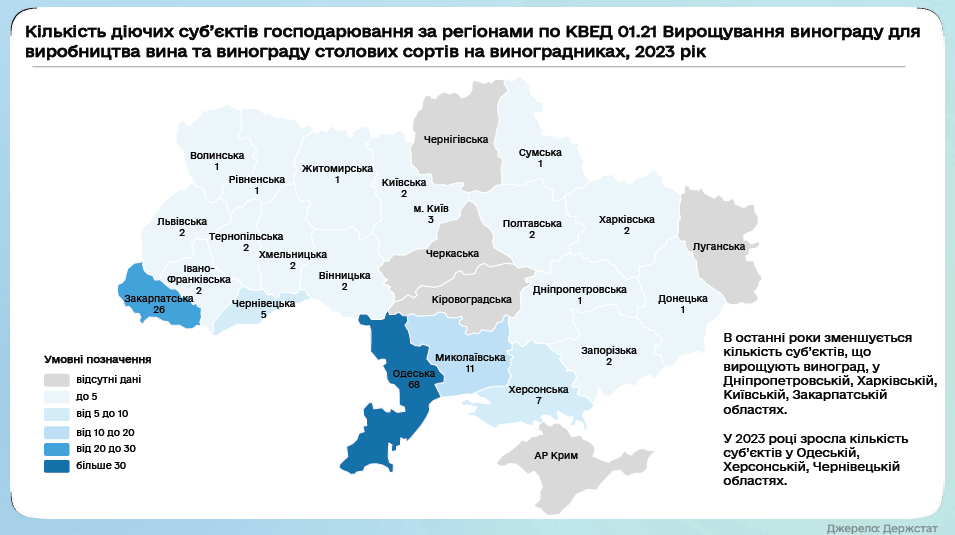
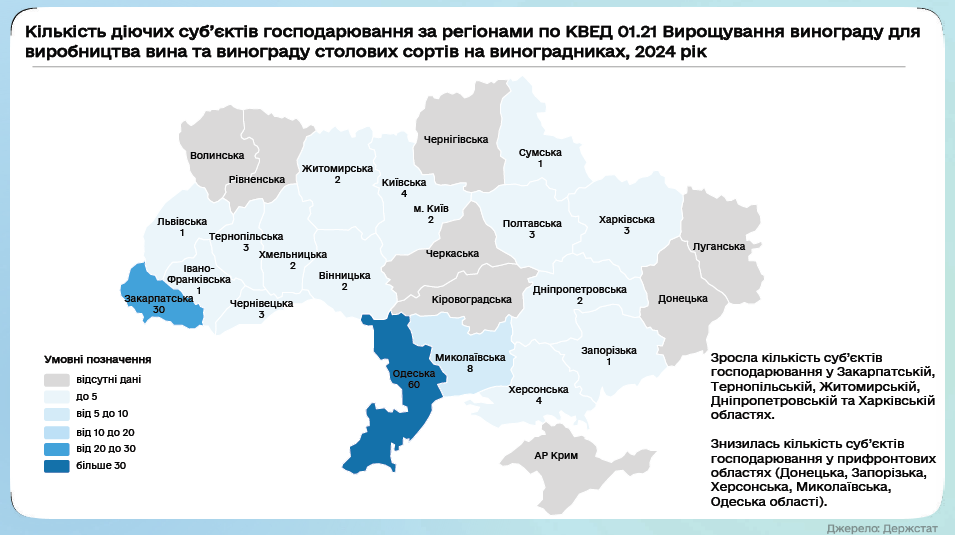
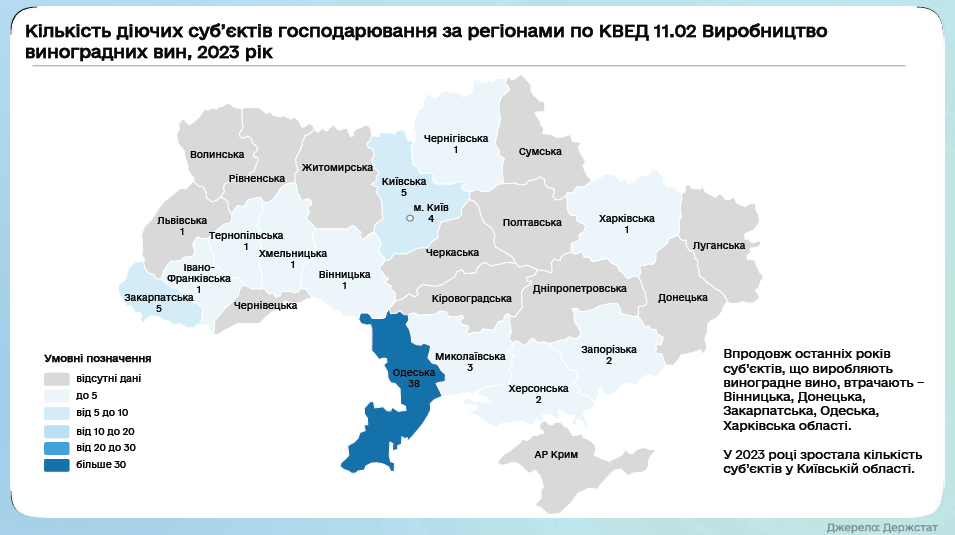
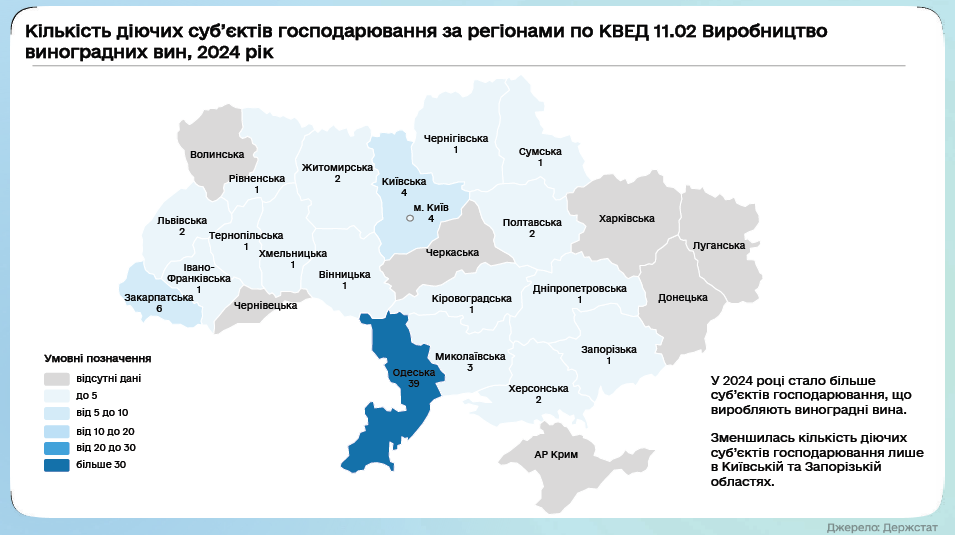
As of 2024, the industry counted 204 operators, the majority being micro and small enterprises. This makes it flexible for experimentation and stylistic exploration, yet limits technical capacity and overall scaling without cooperation with stronger partners.

Dynamics by NACE codes:

  • NACE 01.21 – growth in 2023, mixed dynamics in 2024
  • NACE 11.02 – decline in 2022, growth in 2024 above 2019 levels

NACE 01.21 shows that 2023 was a year of recovery for viticulture. After wartime losses in 2022, the sector received initial investments, restored part of the area, and new companies emerged (registry data show active registrations of viticultural enterprises in 2024–2026). The mixed dynamics of 2024 may be due to weather fluctuations (droughts, spring frosts), logistical constraints, rising costs (fuel, fertilisers), and uneven regional recovery (southern Ukraine remains at risk).

Viticulture is capital‑intensive with long payback cycles – fluctuations in 2024 are natural for a recovery period.

NACE 11.02 – grape processing and still wine production (excluding sparkling) – showed a logical decline in 2022 due to wartime destruction, loss of part of the harvest, and logistical barriers. But in 2024 it demonstrates stable recovery, and importantly, wine production exceeded the pre‑war level of 2019 – a clear sign of structural adaptation. The number of new wineries also increased (registry data show active registrations in 2024–2026).

Why is winemaking recovering faster than viticulture? Likely because some producers import wine materials or use reserves. Processing is less dependent on climatic risks. Export opportunities for Ukrainian wine are expanding (successes in EU and Asian markets).

According to industry income statistics, 2023 showed +4.2%, and in 2024 the sum reached 4,509 million UAH. If the 2023 growth repeats in 2025–2026, the industry may return to pre‑crisis levels within two years.

This dynamic is a strong signal for investors. Yes, the industry needs investment – but it is ready to receive it now. After hostilities end, it is easy to predict queues for vineyard plots or shares in wineries.

Strategic Conclusions and Forecasts for Ukraine (2025–2027)

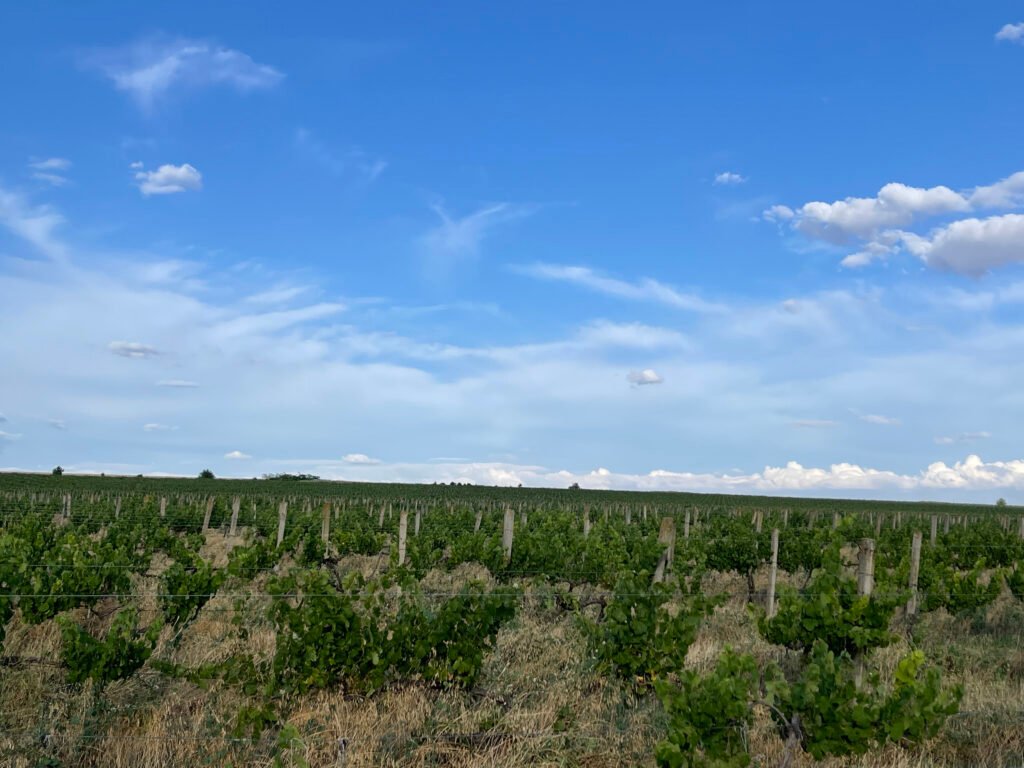
Viticulture will likely show moderate growth with high volatility. Expect gradual expansion in safer regions (Zakarpattia, Odesa, Mykolaiv – partially), investment in irrigation and technology, and an increase in small farms.

BigWines vinyards

Risks remain: climatic fluctuations, high production costs, regional security factors.

Wine production appears set for annual growth of 5–12%. Further export recovery is expected, rising domestic demand for local wines, active development of craft wineries, and integration of Ukrainian wines into international ratings.

The Ukrainian wine industry is entering a phase of structural recovery and modernisation.

Outlook: by 2027, Ukraine can form a new model of the wine industry – focused on craft, export, technology and regional diversification.

Challenges That Cannot Be Ignored

  • Loss of part of production capacity
  • Low financial resilience of enterprises
  • Long‑term decline in processing

Opportunities Producers Should Develop Today

  • Export of niche wines
  • Cooperation among small producers
  • Investment in sparkling wines
  • Positioning Ukraine as a country of indigenous varieties
  • Development of wine tourism

Drinks+ has repeated for at least five years: wine tourism, given Ukraine’s specifics and its entry into competitive European markets, must become a leading driver of the industry. It is the most logical development path for Ukrainian wineries and the most effective tool.

To promote enotourism locations (wineries, hotels, restaurants) both internationally and domestically, our media group founded the Wine Travel Awards platform – and invites all progressive and active enterprises to join. The new call for nominees begins in November 2026.

The review is based on data from Diia.Business “Ukrainian Wine Market Study” (2019–2025).


⇒ Join our social networks ⇒ Optimistic D+ editors will take this as a compliment.

⇒ Every like is taken as a toast!


Photo: Diia.Business, Big Wines vineyards

Ukrainian winemaking, together with the entire country, has lived through five wartime years that can only be described as a stress test for survival. A near‑halving of vineyard area, declining processing volumes, the loss of part of the production infrastructure – all of this could have broken the industry, were it not for the inner […]

INSIDER’S VIEW: HOW WINES FROM OCCUPIED CRIMEA ENDED UP ON THE CONCOURS MONDIAL DE BRUXELLES AWARDS LIST

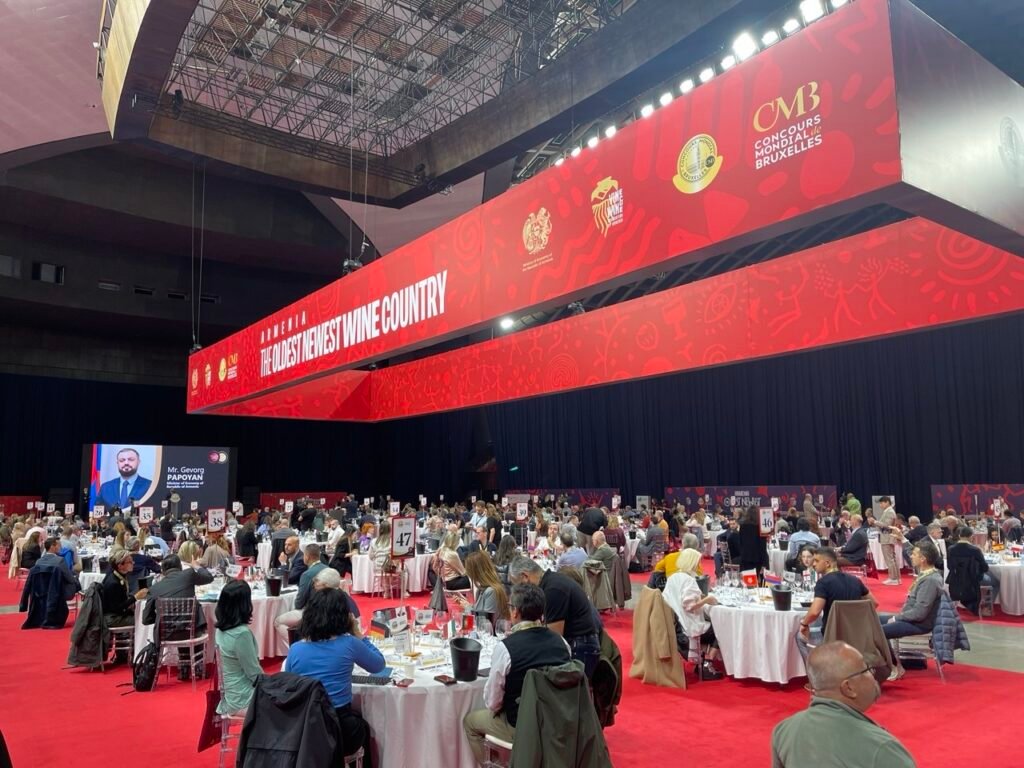
Today, the editorial team of the Drinks+ Media Group was due to publish an article about this year’s Concours Mondial de Bruxelles, held in Armenia earlier in May, a competition that Drinks+ has proudly supported as a media partner for many years. We wrote our story with a deep sense of gratitude to the organisers, whose invitations have enabled our journalists, for decades, to travel to some of the world’s most remote wine regions and taste some of its most remarkable wines. The piece also paid tribute to our host country, Armenia – its vibrant cuisine, remarkable wines and legendary hospitality. (We will return to Armenia’s wine industry in a dedicated feature.) And, of course, we were looking forward to sharing the good news that Ukrainian wines had once again been awarded medals at the 2026 Concours Mondial de Bruxelles…


Like every responsible media, we waited for the official results before publishing. When they finally appeared, however, our story took an unexpected turn. What follows is an examination of how sanctioned Russian wines and products from occupied Crimea made their way into one of the world’s most prestigious wine competitions.

Behind the Blind Tasting

The events surrounding this year’s Concours Mondial de Bruxelles 2026, held in Armenia, have sparked growing international attention. At the centre of the controversy is the competition’s decision to admit – and ultimately award – sanctioned wines from Russia and the temporarily occupied territory of Crimea under the artificially neutral designation “Crimea.” The move stands in stark contrast to the policies adopted by other leading international wine competitions. The UK’s Decanter World Wine Awards and Germany’s MUNDUS VINI continue to block Russian entries entirely while offering dedicated support and preferential conditions to Ukrainian producers. Against this backdrop, the precedent set by Concours Mondial de Bruxelles in Armenia appears all the more striking – and raises difficult questions about the motivations behind it.

Even more disturbing is the fact that Ukrainian wine professionals were invited to serve on the judging panels, while medals were ultimately awarded to wineries owned by Vladimir Putin, an internationally sanctioned leader widely accused of war crimes.

Concours Mondial de Bruxelles

Following the publication of the results, many Ukrainians took to social media asking a legitimate question: “Who were the judges?” It deserves a clear answer.

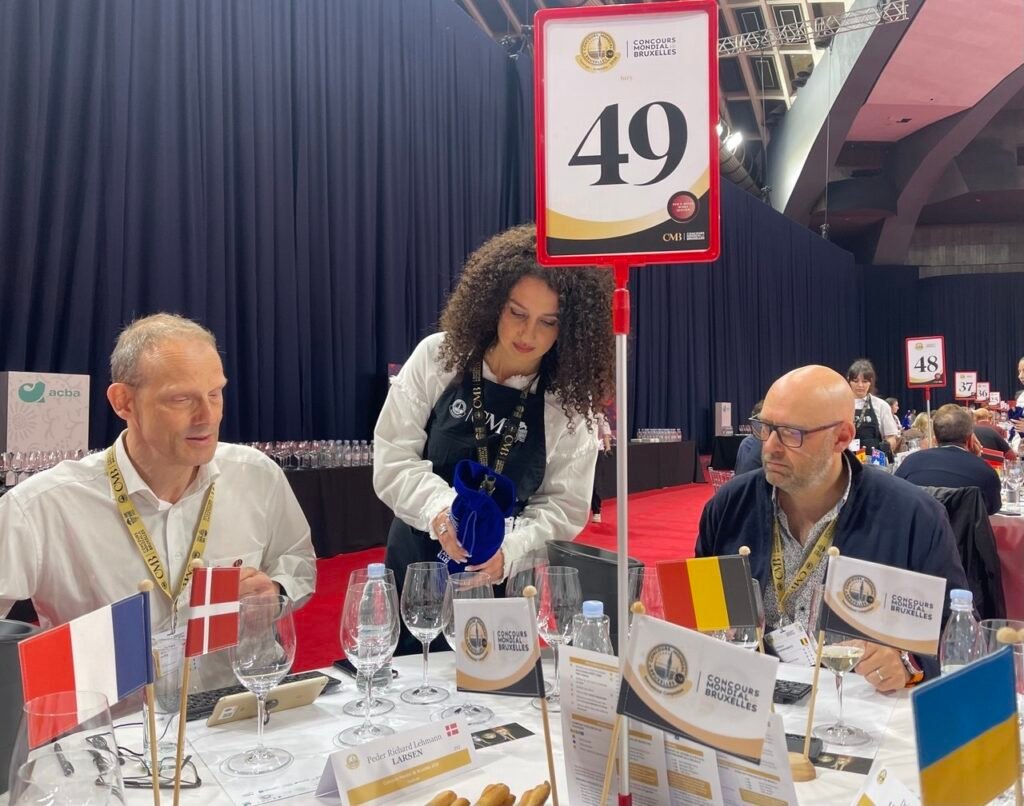
A representative of the Drinks+ editorial team was among the Ukrainian judges at Concours Mondial de Bruxelles 2026, allowing us to provide a first-hand account of the events. The report we had intended to publish – a professional account of this year’s competition – has therefore become something quite different. Only after the official results were released, almost a month after the judging had concluded, did the full picture emerge.

Instead of celebrating another successful year for Ukrainian winemakers – and there were genuine achievements worth celebrating – we are compelled to examine an apparent attempt to legitimise wines from occupied Crimea and to ease Russia’s return to respected international institutions. In that context, the presence of the Ukrainian delegation on the Concours Mondial de Bruxelles 2026 judging panels inevitably served another purpose: to project an image that a wide russian presence in the Yerevan competition was perfectly normal.

In retrospect, the credibility of Ukrainian experts appears to have been used to lend legitimacy to sanctioned wines. The Ukrainian delegation included representatives of several of the country’s leading wine institutions, among them Wines of Ukraine. 

Like most major international wine competitions, Concours Mondial de Bruxelles follows a rigorous blind tasting protocol. Samples are served without revealing the producer, country of origin or even the grape variety. Because the competition’s rules explicitly prohibit disclosing a wine’s origin or identity during judging, no member of the jury could possibly have known that some of the wines in their glasses came from occupied Crimea or Russia.

It is important to note that none of the Russian or Crimean wines were included among the samples evaluated by the Ukrainian judges (which can be easily verified through official tasting sheets and jury records). However, had this been the case, the judges would have had an opportunity to identify the presence of such entries and raise their objections with the organisers at the end of the tasting session, when the wines evaluated by the panel are disclosed – rather than only discovering the issue after the publication of the official list of award winners.

Therefore, our experts evaluated only legitimate international wine entries. The Ukrainian side learned about the presence of such entries in other competition panels only after the results were published on the competition’s website.

“Ukrainian experts were effectively used to legitimise the russian occupants’ sanctioned business on the international stage. We did not have, and could not have had, any information about which countries had been registered by the organising committee. This represents a direct violation of the principles of fair partnership and professional ethics. I expect that the Ukrainian judges, who were involuntarily drawn into this international controversy, will soon submit an official request to invalidate the scores and disqualify the competition results, at least with regard to the Crimean wines presented without the Ukrainian flag. For my part, I call on the organisers to issue an official statement clarifying that the Ukrainian judges did not participate in the evaluation or awarding of any wines from occupied territories or Russia. It would also be fair to disqualify all awarded sanctioned entries, including those from the temporarily occupied territory of Crimea. Until these steps are taken and a strict compliance system is introduced to prevent sanctioned operators from being promoted, I am suspending any future cooperation with Concours Mondial de Bruxelle,” – says Iryna Dyachenkova, a long-standing international competition judge, including at CMB, and co-founder of Drinks+, commenting on the situation.

Olha Pinevych, an expert at VH Selection, shares her perspective on the incident: “As representatives of Ukraine, we attended the event following an official invitation from CMB. However, the organisers did not inform us in advance that wines from Russia and the temporarily occupied territory of Crimea had been included in the programme. As a judge of international competitions, I consider this highly inappropriate. Since the competition rules are based on strict blind tasting, where judges see only the vintage, the actual origin of the wines became known only after the official announcement of the results. I am reassured by the fact that I know exactly the wines evaluated by my panel, and I can confirm that no such samples were included in my tasting session.”

The case history

Crimean wineries currently operating in the temporarily occupied territories and controlled by new owners holding russian passports are frequently involved in attempts to circumvent restrictions, export products illegally and legitimise their presence on international markets.

Due to strict US and EU sanctions, direct exports of Crimean wine to Western countries remain blocked. As a result, Russian companies rely on shadow schemes, rebranding strategies or Asian markets to promote their products while presenting them as “Russian” wines.

Russia seized and nationalised some of Crimea’s most prominent wineries, including Massandra, Inkerman and Novy Svet. Today, these producers are actively seeking access to markets in China, Belarus, Kazakhstan and other Asian countries. Some brands have also spent years using complex legal structures involving foreign intermediaries in an attempt to maintain at least a limited presence in international markets. At the same time, new brands linked to the occupation are emerging on the international wine map – wineries built or modernised with Russian investment after 2014 now appear on the award lists of CMB. These producers have become key instruments of what can be described as a form of cultural expansion.

They are increasingly submitting wines to international competitions in Asia that are more “accessible” to them (a recent example being the Korea Wine Challenge 2026) and participating in exhibitions in Latin America, seeking to create the impression that Crimea is either “part of russian winemaking” or, at the very least, no longer connected to Ukraine.

Why the “Crimea” category conflicts with international law

Let us examine what happened at Concours Mondial de Bruxelles as a potential legal precedent involving the breach of European law. For now, we will set aside questions of partnership, years of professional relationships and the disappointment that, given Russia’s war against Ukraine, the organisers should at least have informed Drinks+ and other invited Ukrainian judges about the participation of Russian and Crimean wines in the competition.

Instead, let us focus on the legal framework. Since the company behind Concours Mondial de Bruxelles, the Belgian company Vinopres, is registered in Belgium, it should be guided primarily by European Union legislation, meaning they should consider that, since 2014, the Council of the EU has imposed strict restrictions on the import and any commercial promotion of goods originating from Crimea unless they are accompanied by certificates issued by the authorised Ukrainian authorities (Council Regulation (EU) No 692/2014). Moreover, even the mere shipment of samples from Crimea for participation in the competition contradicts the sanctions regime. By accepting these bottles for evaluation, the European organisers effectively circumvented the restrictions.

There are also questions regarding compliance with the rules of the World Trade Organization (WTO) and the International Organisation of Vine and Wine (OIV) concerning geographical indications. It is important to remember that the international wine trade system is based on a clearly defined hierarchy: country of origin → wine region → appellation (PDO/PGI).

For competition and exhibition organisers, presenting the “Crimea” region as a separate category, without the Ukrainian flag, constitutes an apparent violation of European legislation by creating an informational framework that enables the promotion of sanctioned goods. Listing occupied Crimea as a separate territorial category – “Crimea” – rather than identifying it as “Ukraine, Crimea” represents, in our view, a violation of the principles of international trade law, which does not recognise “neutral territories” when issues of state sovereignty are concerned.

According to UN General Assembly Resolution 68/262 (“Territorial Integrity of Ukraine”), Crimea is recognised as part of the territory of Ukraine, and international organisations, companies and specialised agencies are called upon to refrain from any actions that could be interpreted as recognising a change in the status of the peninsula. The creation of a separate “Crimea” category directly plays into the interests of the occupying authorities. The use of a “neutral” geographical designation represents a legal manipulation and an attempt at commercial compromise that seriously undermines established regulatory principles.

Another aspect that may have legal implications for Crimean producers concerns potential violations of geographical indication (GI) rules. OIV standards form a foundation of international wine trade regulation, including frameworks applied by the World Trade Organization and the European Union. OIV standards and WTO intellectual property rules establish that a geographical indication cannot exist in a legal vacuum – it must be officially registered and controlled by a sovereign state.

At the same time, the internationally recognised right to use and certify geographical names associated with Crimea (for example, “Crimea” or “Southern Coast of Crimea”) belongs exclusively to the state of Ukraine. Russian companies exploiting these terroirs and vineyards are effectively engaging in the appropriation of intellectual property.


When wines wake a back door route instead of the wine route

One could say that Concours Mondial de Bruxelles 2026 allowed Russian and Crimean wines to pass –knowingly or unknowingly – through a winding path of leniency. Yet, as is often the case for those attempting to bypass regulatory mechanisms, such routes eventually meet the hard reality of international law, which leaves little room for ambiguity. Therefore, for those promoting wines from occupied territories, it is important to understand that violations of geographical indication rules and the unauthorised appropriation of Crimean terroirs may have the following serious consequences for producers:

  1. Complete criminal and civil illegality in the EU and the US

Any attempt to import Crimean wine into countries enforcing sanctions by presenting it as a “Russian region” may be classified as sanctions evasion, misrepresentation of product origin and infringement of intellectual property rights, since rights to Crimean geographical names belong to Ukraine. Such products may be subject to seizure, detention and destruction, while importers may face financial penalties or criminal proceedings.

Importantly, preventing sanctioned goods – including Russian and Crimean wines that received medals at the 2026 CMB session in Armenia – from entering the markets of the UK and the US does not depend on monitoring individual wine competition results. It is carried out through strict state mechanisms of financial compliance, customs controls and sanctions enforcement. In June 2026, the US Office of Foreign Assets Control (OFAC) and the UK Office of Financial Sanctions Implementation (OFSI) issued joint regulatory guidance on strengthened cross-border sanctions controls. Under these requirements, alcohol importers and distributors in the US and the UK are expected to apply risk-based compliance procedures, including checks of ultimate beneficial ownership (UBO).

This means that even if a wine awarded in Armenia is submitted for import through an Armenian or another supposedly neutral intermediary company, banks and customs authorities may require disclosure of the producer’s full ownership structure. If Russian ownership interests or sanctioned individuals are identified behind the chain of ownership, for example, in the case of wine brands linked to producers in occupied Crimea, the transaction may be blocked. Authorities also monitor potential trade triangulation, where goods are routed through third countries in an attempt to circumvent sanctions. Given Armenia’s role as a potential channel for Russian commercial and cultural promotion, the UK and US have introduced additional scrutiny measures related to Armenian trade routes in 2025–2026. The UK government portal GOV.UK has issued guidance for companies in Armenia and their British partners regarding the risks of unauthorised re-export and concealment of the true end user or origin of goods.

Meanwhile, the UK tax and customs authority HMRC, under new Sanctions End-Use Controls, examines not only product labelling but also the origin of raw materials and supply chains. If a wine carries, for instance, Armenian documentation, but an audit of the supply chain identifies Russian or Crimean origin, the product may be subject to seizure, while the importer may face criminal prosecution or significant financial penalties.

Therefore, under this regulatory logic, a legitimate importer in London or New York would be unlikely to accept into distribution any wine awarded at CMB 2026 if it carries a Russian connection, as this could expose the company to sanctions-related enforcement action by OFAC or OFSI.

  1. Loss of legal protection for brands

Crimean producers cannot officially register their trademarks internationally (through the WIPO system or the Madrid Agreement) under the Russian flag. This means that any company anywhere in the world could potentially copy their labels or brand names, while producers operating under the occupation would have no effective way to defend their rights in international courts.

  1. The Asian market remains a “grey zone”

Even if countries supportive of Russia, such as China, purchase these wines, they cannot obtain internationally recognised certificates of authenticity for them. As a result, these products are sold without premium status – effectively as ordinary bulk or mass-market wines – depriving Crimean wineries of the ability to legally capitalise on their unique historical terroirs on the global stage until Crimea is returned to Ukraine.

Consequences of the incident

The position taken by the organisers has placed the results of the competition as a whole under scrutiny. Any winemaker, and especially Ukrainian producers, who received awards in Yerevan this year, wants to celebrate their achievements, not have their medals become associated with a controversy linked to russian aggression.

For Ukrainian winemakers, who today create their wines under constant missile attacks and in conditions that are fundamentally incompatible with normal business operations, the Yerevan episode is particularly painful. How can the winners of Concours Mondial de Bruxelles 2026 fully enjoy their success when they now find themselves sharing the winners’ podium – entirely unexpectedly and through no fault of their own – with Vladimir Putin or other russian and Crimean winery owners whose businesses support the war against Ukraine?

At the same time, we want to express our respect and support for Ukrainian winemakers. Their achievements, earned under extraordinary conditions during a war against an aggressor, cannot be overshadowed by any actions of Russian forces, in any context. We also hope that the organisers of Concours Mondial de Bruxelles, recognising the consequences of this situation for all parties involved, will make the right decision, including the disqualification and removal of all wines originating from occupied and sanctioned territories from the awards list. The reputational damage caused by this incident far outweighs any financial benefits. Reputation has a value.

Concours Mondial de Bruxelles

Until this unfortunate moment, the organisers of the competition, Baudouin and Quentin Havaux, had spent many years building a strong family partnership in international wine communication, which had contributed significantly to the reputation and authority of Concours Mondial de Bruxelles and Vinopres. Now this reputation is at risk. 

According to figures published by wine journalist Davide Bortone, Armenia invested €1.6 million in hosting the event in Yerevan. The country had every reason to expect a positive outcome for its international image and for its talented winemakers. Unfortunately, this situation is also unlikely to benefit Armenian wine. Drinks+ will nevertheless publish a dedicated feature soon about this remarkable wine region and its impressive wine tourism destinations. 

At the same time, there has been little sign of reciprocity from Russia. Against the backdrop of growing political tensions between Moscow and Yerevan, Russia has this year expanded trade restrictions against Armenia, publicly presented as “sanitary measures,” and suspended sales of several leading Armenian wine and brandy brands on its market. We assume this may only be the beginning of further pressure.

According to our sources, several Ukrainian wine institutions are already preparing official statements regarding attempts to legitimise wines from occupied territories and the admission of samples from a sanctioned country to Concours Mondial de Bruxelles.

Concours Mondial de Bruxelles


How similar reputation cases were handled in the past

A relevant example is the widely criticised San Francisco International Wine Competition (2025). As soon as information about the participation of russian wines reached the media, American and European judges issued a clear demand to the organisers, The Tasting Alliance. They stated that their names could not be associated with a platform that legitimised sanctioned products.

The result was the complete disqualification of all 95 russian entries before the official results were announced.

Similar precedents can also be found in culture and sport, where attempts were made to reintroduce russian participants under a “neutral status.” In many cases, when international federations sought to bring russian representatives back under a neutral flag (a situation comparable to the “Crimea” category at CMB), Ukrainian representatives immediately withdrew from governing bodies or boycotted final stages of events, clearly stating that such decisions violated the principles of international law.

Another revealing example is the attempted return of Russian sommeliers to the Association de la Sommellerie Internationale (ASI). ASI is the leading global institution representing national sommelier associations. Following the beginning of Russia’s full-scale invasion, the status of the Russian Sommelier Association (RSA) was “frozen.” However, at the end of May 2026, during the ASI General Assembly in Taipei, Taiwan, a major diplomatic dispute emerged. The ASI board unexpectedly brought forward a proposal to partially restore the rights of russian sommeliers. The proposal would have allowed russian professionals to participate in international competitions and take prestigious ASI examinations, but only under a “neutral status” – without the russian flag or reference to the Russian Sommelier Association. The Ukrainian wine community and the Association of Sommeliers of Ukraine immediately condemned the initiative as unacceptable against the backdrop of daily destruction of Ukrainian vineyards and ongoing Russia’s missile attacks. Ukraine’s position was strongly supported by colleagues from the Baltic states, Poland, the United Kingdom, the United States and Scandinavian countries.

The vote ended with the proposal being rejected. The international community demonstrated solidarity, and in the final vote, 24 ASI member countries firmly opposed any relaxation of the restrictions. As a result, the sanctions and full limitations imposed on the Russian Sommelier Association and its members remained in place.

Taking previous cases into account, Drinks+ Media Group expresses its protest to the organisers of Concours Mondial de Bruxelles 2026 against placing the names of Ukrainian experts and Ukrainian wine brands on the same platform as russian wines, as well as against promoting wines from occupied territories without identifying them as “Wines of Ukraine.”

  • Drinks+ calls on the organisers of Concours Mondial de Bruxelles 2026 to disqualify all sanctioned wines, including those from occupied territories submitted under the “Crimea” category.
  • We also urge the organisers to revise their sample submission procedures to prevent products from sanctioned regions from entering the competition in the future.
  • Finally, we call for a public explanation of their position both to European and Ukrainian winemakers whose awards now appear alongside those received by producers from the aggressor state, and to the Ukrainian and other international judges invited to participate in the competition.

In our view, the situation represents a breach of the principles of good-faith partnership between the competition and its experts.

Today, Ukraine once again appeals to the international wine community for support. Until the war against Ukraine is brought to an end, Ukrainian representatives call on global wine institutions to completely block the participation of russian brands in international events, reject the illegitimate presentation of “winners,” refuse the certification of stolen Crimean vineyards, and prevent any marketing manipulation involving wines from Russia and occupied Crimea.


⇒ Join our social networks ⇒ Optimistic D+ editors will take this as a compliment.

⇒ Every like is taken as a toast!


Picture: Oleksandra Rodionova

Today, the editorial team of the Drinks+ Media Group was due to publish an article about this year’s Concours Mondial de Bruxelles, held in Armenia earlier in May, a competition that Drinks+ has proudly supported as a media partner for many years. We wrote our story with a deep sense of gratitude to the organisers, […]

Discovery Zone: New Horizons for the Global Wine Industry

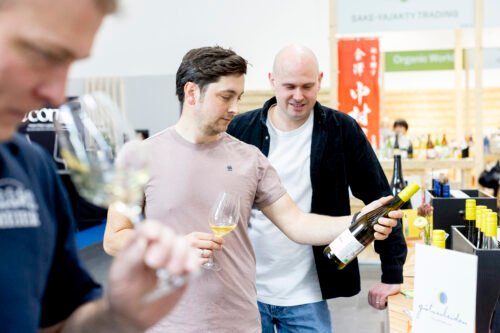
ProWein 2027 will introduce Discovery Zone, a new exhibition concept designed to showcase emerging wineries and fresh voices in the international wine sector. Applications are now open for producers who have never exhibited at ProWein and wish to present their wines, innovative ideas and distinctive winemaking approaches to an international professional audience.


Discovery Zone will serve as a dedicated platform where buyers, sommeliers, wine merchants, importers and media representatives can discover promising producers, explore new wine styles and identify the trends shaping the future of the industry. Featured themes will include Orange wines, regenerative viticulture, wineries founded by professionals from outside the traditional wine business, and wines produced from PiWi grape varieties.

ProWein 2027

Unlike the traditional exhibition layout, Discovery Zone will offer an open tasting and networking environment instead of individual exhibition stands. The emphasis is on direct interaction, allowing each participating winery to showcase a carefully selected portfolio of up to four wines while engaging in personal conversations with international trade visitors.

Applications Now Open

Participation in Discovery Zone is limited. Once the application period closes, ProWein, together with industry experts and partner organisations, will evaluate all submissions. The selection process will focus not on the size or reputation of a winery, but on how well it reflects the spirit of Discovery Zone and its ability to contribute new ideas and perspectives to the global wine community.

Only wineries making their ProWein debut are eligible to participate. Applicants must be represented by the winemaker throughout the entire exhibition and may present a maximum of four wines.

The participation fee is €2,000 and includes a fully equipped exhibition space with personalised branding, furniture, organisational support, a range of exhibitor services, and a basic listing in the official exhibitor and product database, including the standard media package.

Applications are currently open. Full participation guidelines and the application form are available on the official ProWein website.


⇒ Join our social networks ⇒ Optimistic D+ editors will take this as a compliment.

⇒ Every like is taken as a toast!


Source: prowein.com
Photo: prowein.com

ProWein 2027 will introduce Discovery Zone, a new exhibition concept designed to showcase emerging wineries and fresh voices in the international wine sector. Applications are now open for producers who have never exhibited at ProWein and wish to present their wines, innovative ideas and distinctive winemaking approaches to an international professional audience. Discovery Zone will […]

To witness Wine Paris 2027 is to begin life anew

From 15-17 February 2027, Paris will once again rise as the epicentre of global wine culture. Wine Paris 2027 is far more than a trade fair: it is a barometer of the industry, a place where the temperature of global trends is taken and new meanings are born. Today, it stands as a true locus of energy – a space for renewal, recalibration, and forward momentum.


Three thematic universes, three vectors of development, three ways to glimpse the future of beverages

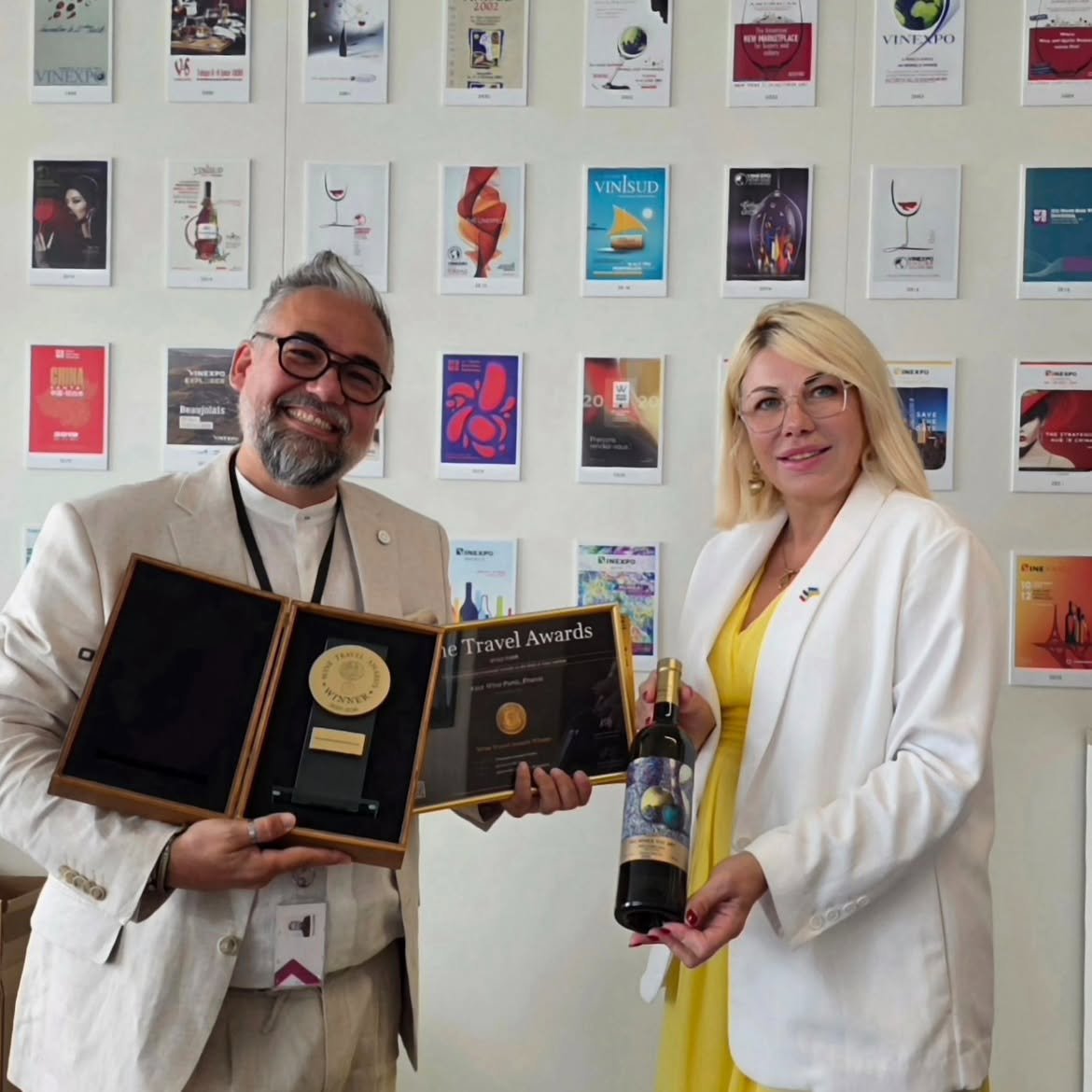
Wine Paris is an international platform where winemakers, importers, distributors, journalists, and the people shaping today’s wine culture come together. Over recent years, Wine Paris has ascended to the top tier of global expo hubs, earning the title of Wine Travel Awards 2025-2026 Winner in the category Event of the Year.

On 1 July, a discreet yet eloquent ceremony took place at the Vinexposium office in Paris: WTA ambassador Oleksandra Minenko-Decamps presented the trophy and diploma to Nicolas Cuissard, Director of Wine Paris.

This moment was more than recognition – it was an affirmation of a strategy that has transformed Wine Paris into a global centre of wine dialogue, a place where ideas not only emerge but crystallise into the trends of tomorrow.

Be Spirits

A territory where spirits speak with a resonant voice and fermented beverages perform their own arias. Here, craft distillers, mixologists, brewers, and cider makers shape a new aesthetic of bar culture. Be Spirits is a laboratory of flavour – a meeting point of artisanal brands and innovation, where tradition coexists with experimentation.

The Other Sip (No/Low)

A world of non-alcoholic and low-alcohol beverages that has long ceased to be “an alternative”. This is a space for brands responding to contemporary demands: mindful consumption, gastronomic balance, and a new culture of healthy living.

Wine Travel Awards in Paris

Wine Paris 2027 will spotlight climate change, emerging wine regions, and the new protagonists of the wine world – the very questions shaping today’s global discourse. Here, WTA nominees and winners, wine travellers, producers, journalists, and all those writing the modern wine narrative will meet once again.

Wine Paris


The WTA team is preparing to participate in Wine Paris by Vinexposium. Until February, our work includes:

  • special editions of Drinks+ magazine
  • the new WTA Guide 2025-2026
  • a professional trip to Paris and Champagne for participants and partners

We assist with:

  • decisions regarding your own stand
  • registration for the exhibition and its individual events
  • route planning and scheduling
  • logistics, accommodation, transport
  • communication with organisers and potential partners

We invite winemakers, distillers, and progressive No/Low producers

If you aim to present your brand, find importers, meet industry professionals, and make your mark on the international stage – join our journey.

Partner with us – and let us meet in Paris, where the world’s most dynamic wine and beverage ecosystem gathers.


⇒ Join our social networks ⇒ Optimistic D+ editors will take this as a compliment.

⇒ Every like is taken as a toast!


From 15-17 February 2027, Paris will once again rise as the epicentre of global wine culture. Wine Paris 2027 is far more than a trade fair: it is a barometer of the industry, a place where the temperature of global trends is taken and new meanings are born. Today, it stands as a true locus […]
Château du Clos de Vougeot: Burgundy prepares for a major event on 19 September

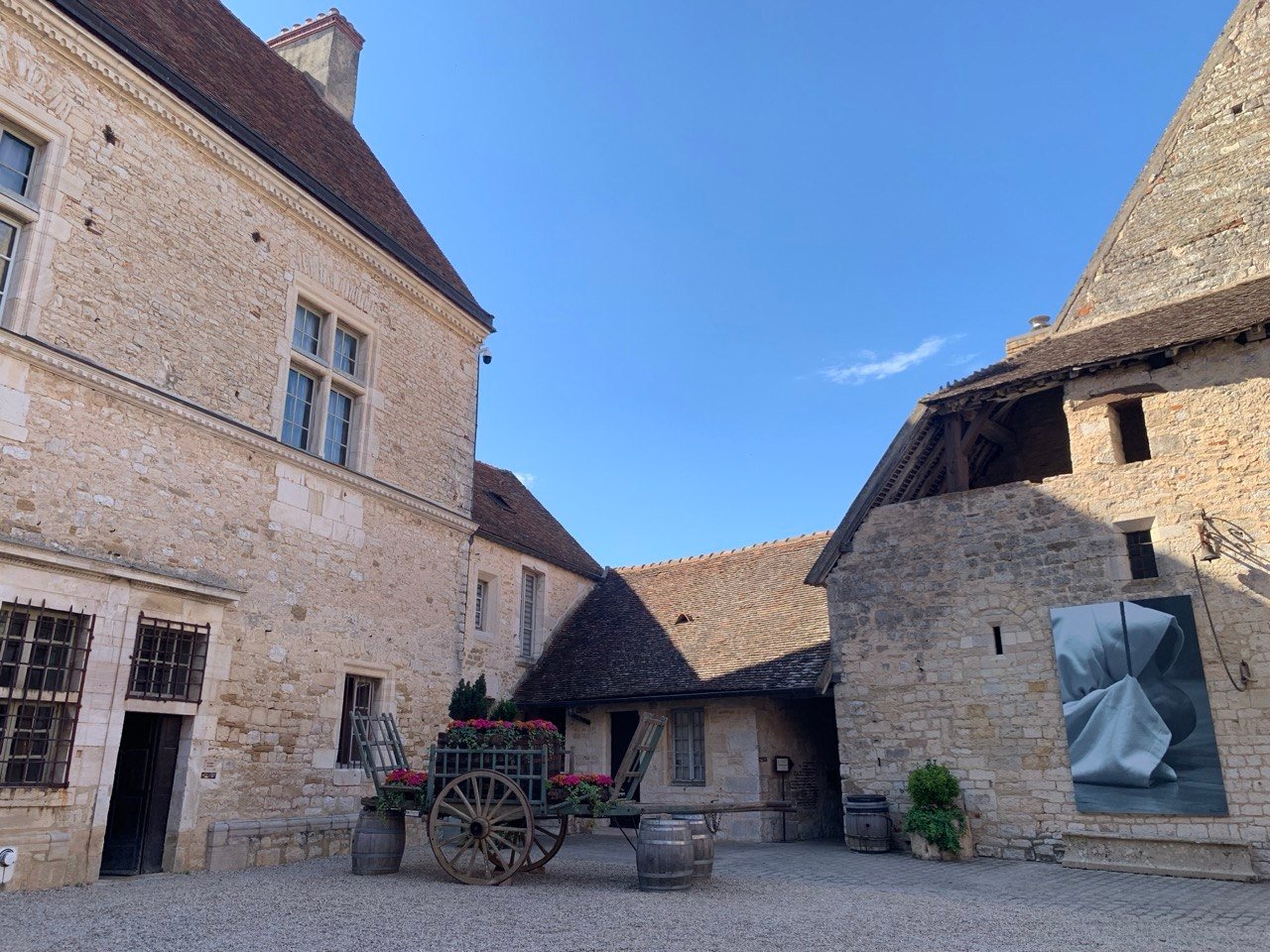
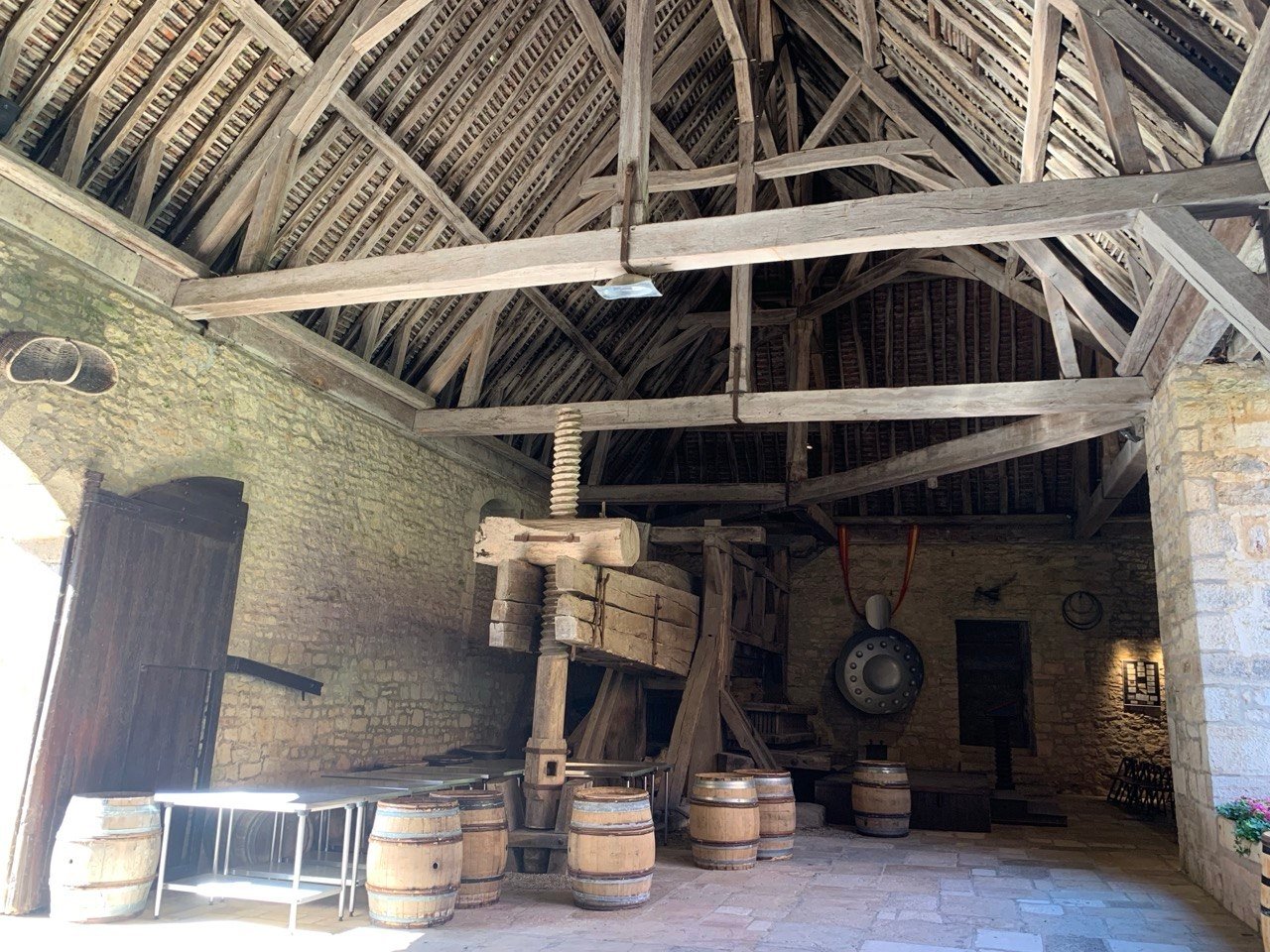
A symbol of Burgundian excellence, Château du Clos de Vougeot has embodied the French art of living for more than nine centuries – a place where viticulture, gastronomy and hospitality converge within an exceptional historic setting. Each year, this emblematic estate hosts prestigious events that bring together the international community of wine collectors, ambassadors of Burgundian culture and admirers of great wines. Below we highlight the most imminent dates.


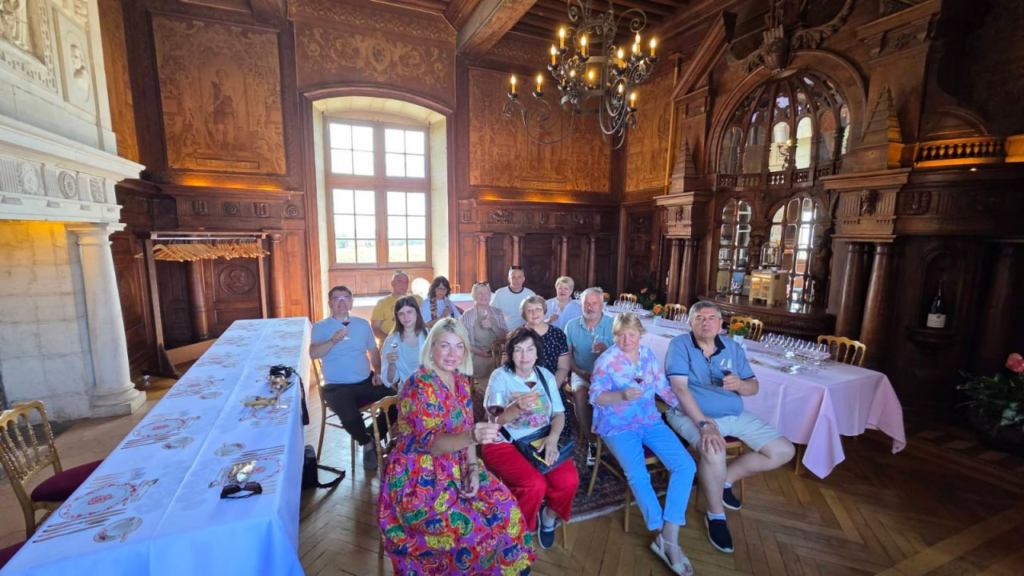
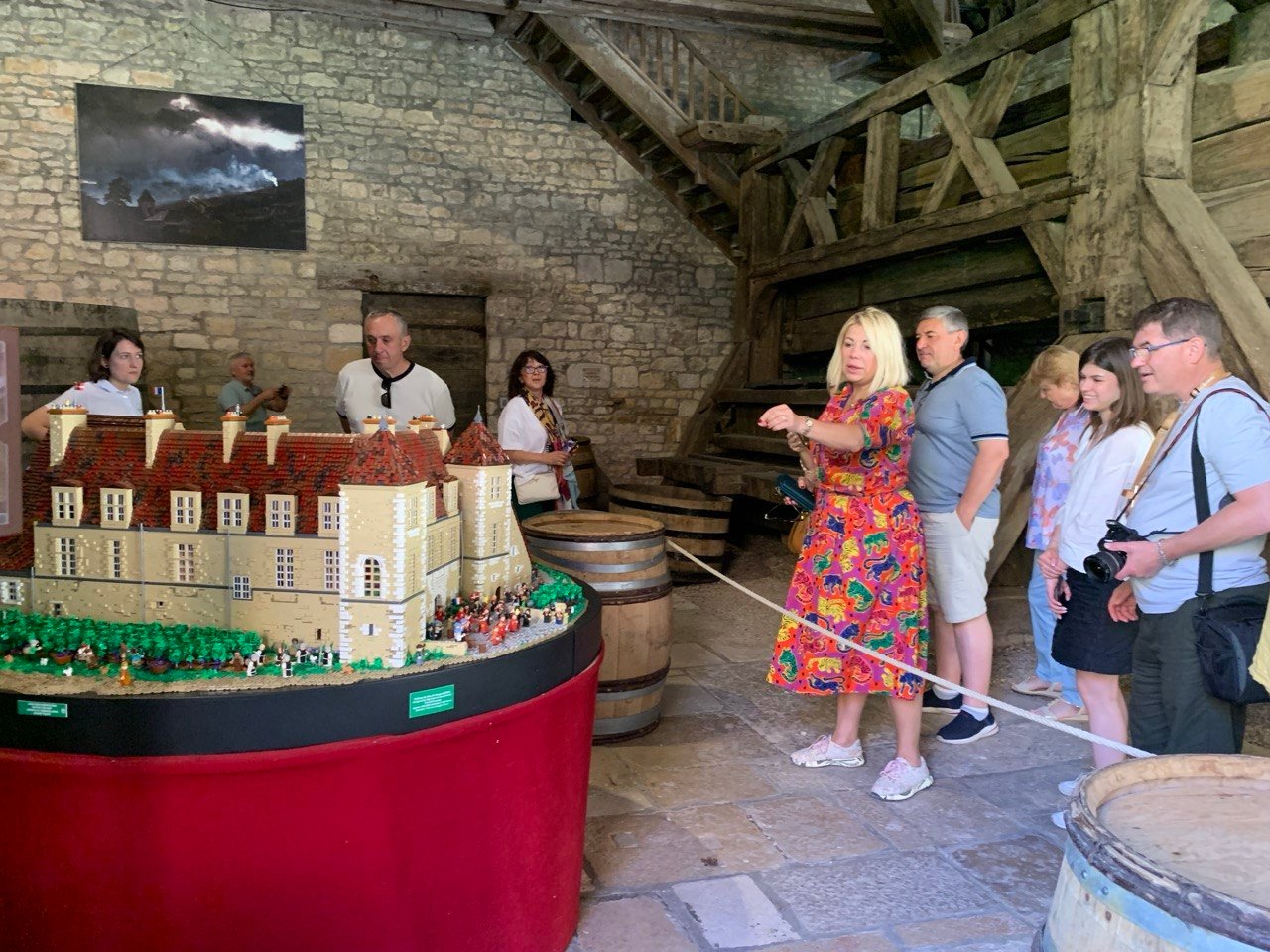
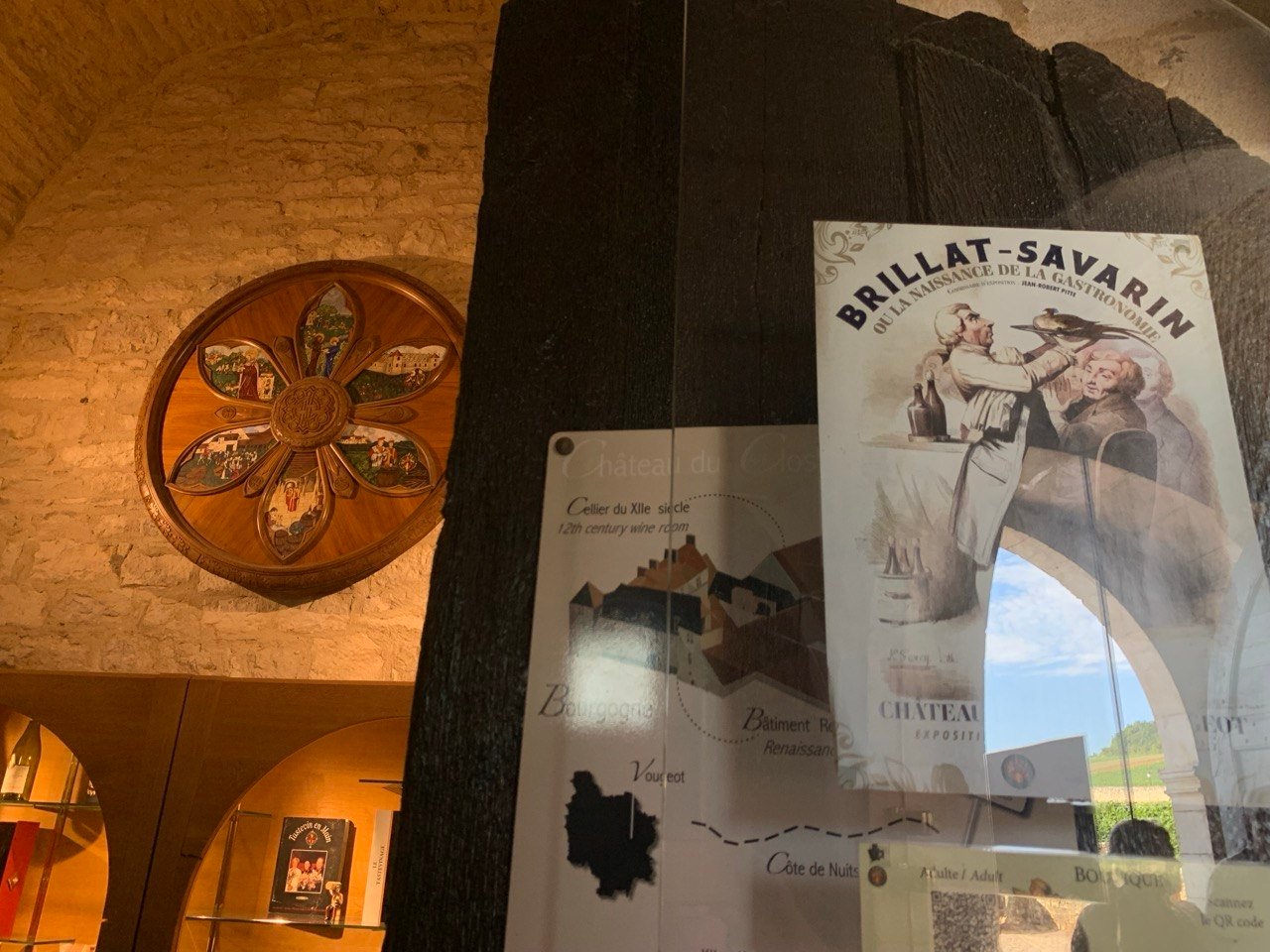
Last month, the Wine Travel Awards editorial team – accompanied by a delegation of its Ukrainian nominees, renowned winemakers and restaurateurs – visited the legendary Château du Clos de Vougeot.

Château du Clos de Vougeot

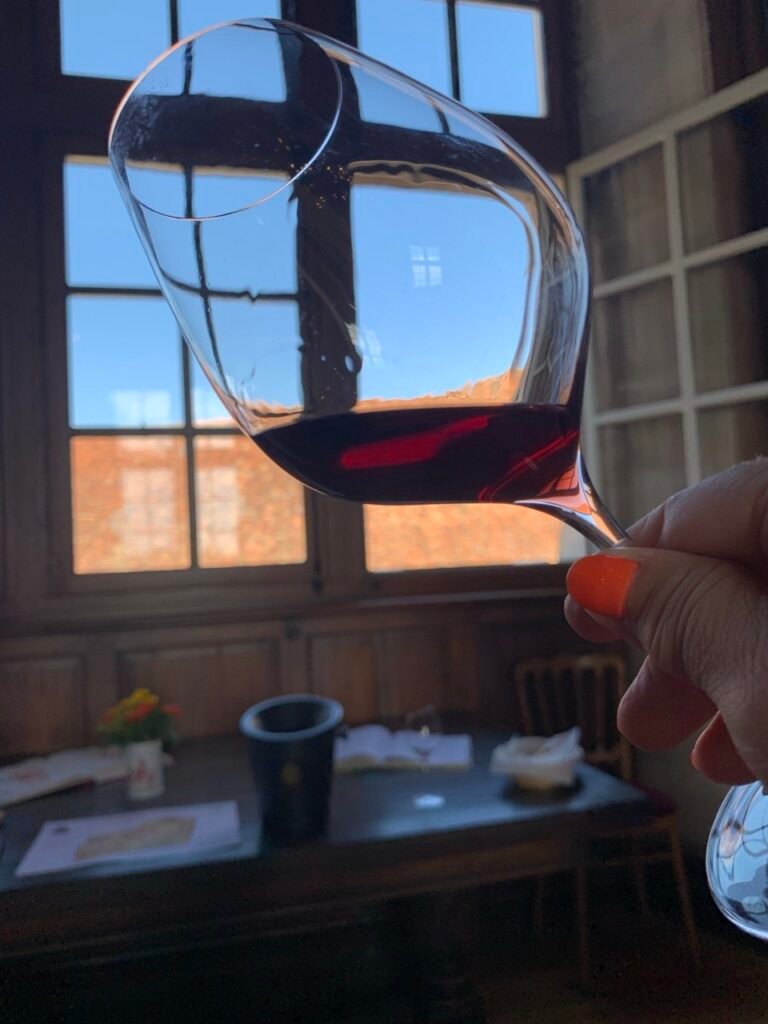
A warm welcome, an exclusive tasting in the château’s historic hall and a meeting with the team responsible for safeguarding the estate’s heritage became moments worthy of a separate feature – soon to appear on our platforms.

Meanwhile, an important announcement. On 19 September, the château will once again open its doors for one of the key events of the wine calendar – the gala dinner “Clos de Vougeot pour l’Abbaye de Cîteaux” (Acte II), a charitable evening in support of the Abbey of Cîteaux, the spiritual home of the Cistercians and a symbol of Burgundy’s millennial wine culture.

Christie’s charity auction

One of the highlights of the programme will be the Christie’s charity auction, held in two phases.

– Online bidding opens on 4 September at 12:00 (CEST) and will run until 19 September, the date of the gala dinner at Château du Clos de Vougeot.

Collectors and wine enthusiasts worldwide will be able to place bids remotely via Christie’s online platform.

– The second phase will be the live auction, held during the gala dinner on 19 September.

The auction catalogue – 148 lots, generously donated by leading domaines and wine houses of Burgundy – will be unveiled in the coming weeks.

Gastronomic programme of the gala dinner

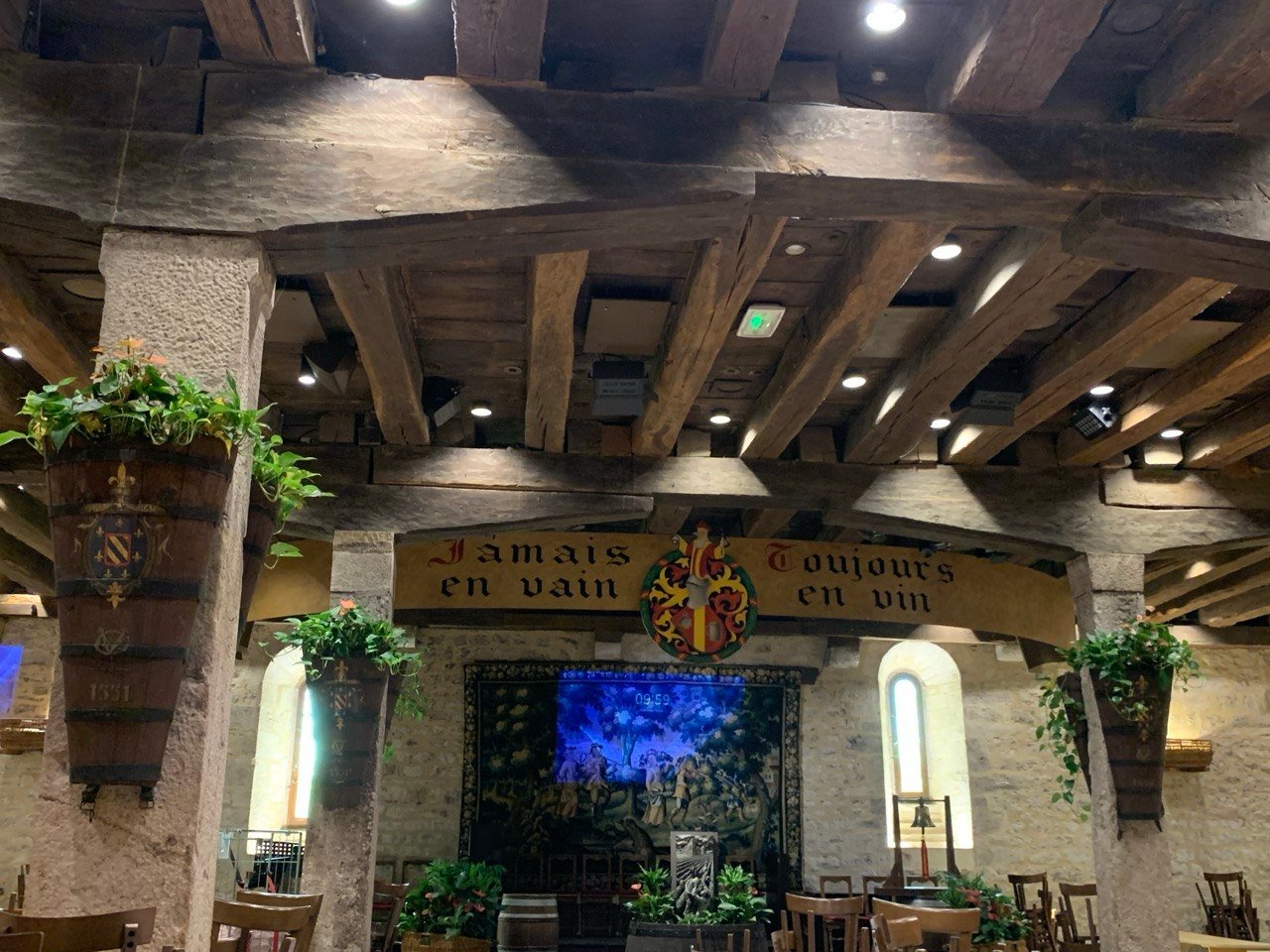
The culmination of 19 September will be the charity dinner held in the Cistercian cellar of Clos de Vougeot. In this emblematic setting, guests will experience a singular gastronomic evening at the intersection of heritage, wine and the French art of living.

Tickets for the charity dinner are available here.

The Drinks+ media group is ready to assist with consultations regarding attendance.

With only a few months to go, guests can already explore the menu created for the 19 September dinner.

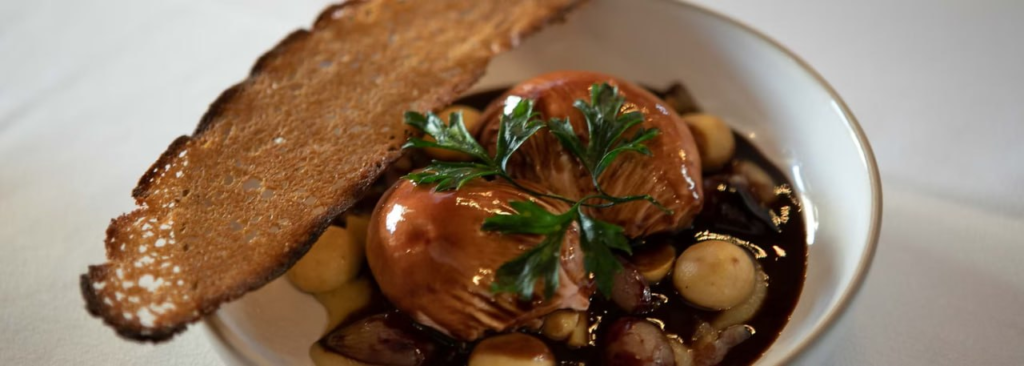
The five‑course menu, crafted by chef Alexandra Bouvret and her team, honours the spirit of Château du Clos de Vougeot – celebrating the finest traditions of Burgundian and French gastronomy and offering a perfect complement to the exceptional wines presented throughout the evening.

E S C R I T E A U (ceremonial title of the menu in the Clos de Vougeot tradition)

Château du Clos de Vougeot
Amuse‑bouches
Chassagne‑Montrachet 2023, Domaine Jean Chartron Crémant de Bourgogne Extra Brut Blanc en Bollery 2019, Louis Bouillot
Zander, pike and river trout in a delicate crayfish aspic
Meursault 2015, Domaine Coche‑Dury
Œufs en Meurette Vigneronne
Clos de Vougeot Grand Cru 2020, Cuvée de l’Abbaye de Cîteaux
**Medallion of roasted Charolais beef fillet,
spiced bacon veil and Pommes Anna** Corton Grand Cru, Cuvée Docteur Peste 2017, Hospices de Beaune
Variation around the Abbey’s cheese
Bâtard‑Montrachet Grand Cru 2018, Domaine de la Romanée‑Conti
**Moniale, a religious‑style dessert with vineyard peach
(pêche de vigne — an old heirloom peach variety growing among vineyards, known for its intense aroma)** Sauternes 1er cru supérieur 2014, Château d’Yquem
Coffee and mignardises (assortment of miniature desserts)

Château du Clos de Vougeot

Clos de Vougeot – the heart of Burgundy’s wine civilisation

It is here that the World Championship of Œufs en Meurette takes place – a gastronomic symbol of the region that gathers leading chefs from around the world. Recently, this prestigious competition received the Wine Travel Awards 2025–2026, underscoring its international recognition and cultural significance.

From 9 to 11 October, Clos de Vougeot will once again become the stage for culinary mastery. The championship has a rich history – from preserving a classic Burgundian dish to evolving into a distinguished international competition that unites gastronomy, winemaking and cultural diplomacy.

Château du Clos de Vougeot

And perhaps a touch of intrigue – this year, a contestant from Eastern Europe may join the line‑up.

Restaurateurs wishing to nominate their chef are encouraged to contact the Wine Travel Awards editorial team or reach out directly to the organisers.


Château-du-Clos-de-Vougeot5


⇒ Join our social networks ⇒ Optimistic D+ editors will take this as a compliment.

⇒ Every like is taken as a toast!


A symbol of Burgundian excellence, Château du Clos de Vougeot has embodied the French art of living for more than nine centuries – a place where viticulture, gastronomy and hospitality converge within an exceptional historic setting. Each year, this emblematic estate hosts prestigious events that bring together the international community of wine collectors, ambassadors of […]
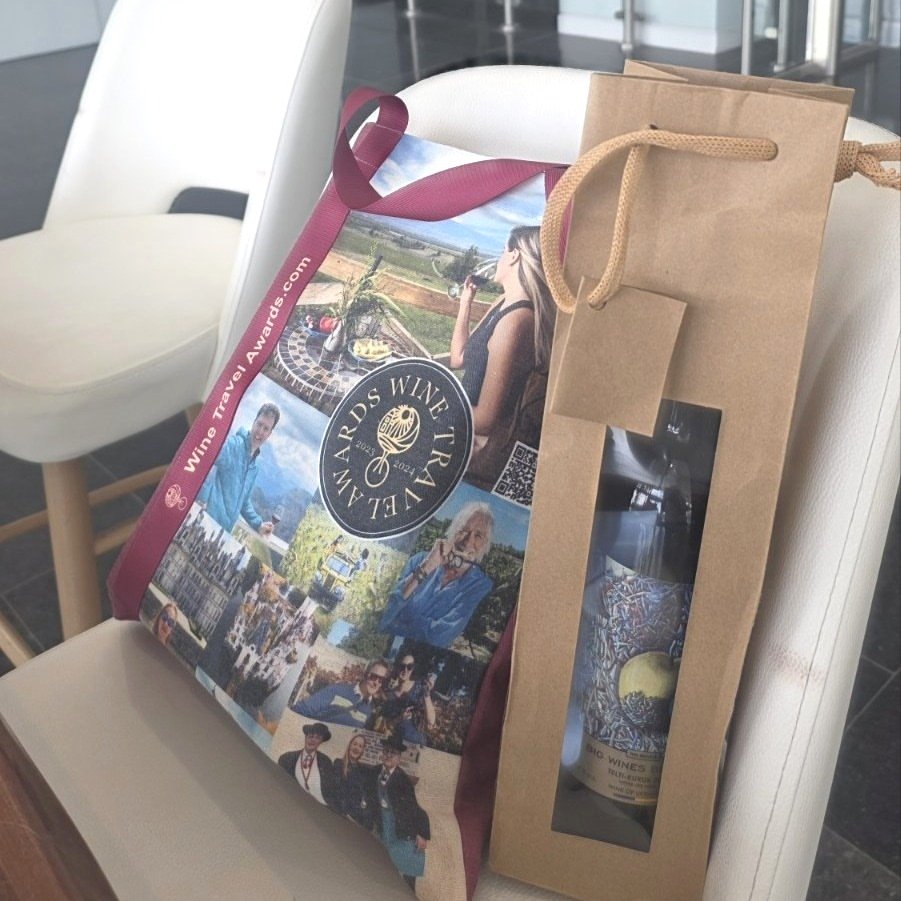
ProWein Unveils Its First Sparkling Report on the Global Sparkling Wine Market

ProWein, the world’s leading international trade fair for wines and spirits, has released its first comprehensive report exploring the key trends and future prospects shaping the global sparkling wine market.


The sparkling wine category remains one of the most dynamic segments of the wine industry. Despite shifting consumer preferences, economic uncertainty and a decline in overall wine consumption, sparkling wines continue to demonstrate remarkable resilience compared to many other wine categories. The global sparkling wine market is projected to reach approximately USD 54.7 billion in 2025. At the same time, new consumption occasions are emerging, new consumer groups are discovering sparkling wines, and innovative product segments are becoming increasingly important.

Sparkling Report

Premiumisation and Emerging Regions Drive Market Development

From traditional European sparkling wine strongholds to rapidly developing new origins, the Sparkling Report maps the changing dynamics of the sector. The study reviews major categories such as Prosecco, Champagne, Crémant, Cava, German and Austrian Sekt, Franciacorta and Lambrusco, while also drawing attention to the growing role of regions such as the United Kingdom, Hungary, California and Tasmania in the international sparkling wine market.

One of the report’s central conclusions is the continued strengthening of the premium segment. While some traditional categories are facing pressure from economic conditions and changing consumer behaviour, others continue to expand. Crémant is recording particularly strong growth and achieving record sales volumes, Prosecco continues to reinforce its leadership position internationally, and emerging regions are increasingly defining their own identities. Meanwhile, demand for premium terroir-driven sparkling wines and alcohol-free alternatives continues to gain momentum worldwide.

Alcohol-Free Sparkling Wine Emerges as a Major Growth Engine

Among the categories receiving particular attention is alcohol-free sparkling wine, which continues to gain momentum worldwide. Sales in Germany have already surpassed 22 million bottles, and industry forecasts suggest that strong double-digit growth will persist in the years ahead.

“The global sparkling wine market is undergoing an exciting transformation. Alongside established producing regions, we are seeing the emergence of new markets, new styles and new consumption occasions. With the Sparkling Report, we aim to provide the industry with valuable guidance and a concise yet comprehensive overview of current developments,” says Frank Schindler, Director of ProWein Düsseldorf.

Expanding Access to Industry Knowledge and Market Intelligence

The launch of the Sparkling Report marks another step in ProWein’s ongoing commitment to providing information, insights and educational resources for the international wine sector. Building on the foundation established by Sparkling Visions, first introduced at ProWein 2026, the new publication explores the major trends and growth drivers influencing the future of the global sparkling wine market.

The project was initiated and developed by A2 Wine & Things under the leadership of Alexandra Wrann, wine journalist and DipWSET graduate.

The full Sparkling Report is available for free download via the ProWein website.


⇒ Join our social networks ⇒ Optimistic D+ editors will take this as a compliment.

⇒ Every like is taken as a toast!


Source and photo: prowein.com


ProWein, the world’s leading international trade fair for wines and spirits, has released its first comprehensive report exploring the key trends and future prospects shaping the global sparkling wine market. The sparkling wine category remains one of the most dynamic segments of the wine industry. Despite shifting consumer preferences, economic uncertainty and a decline in […]
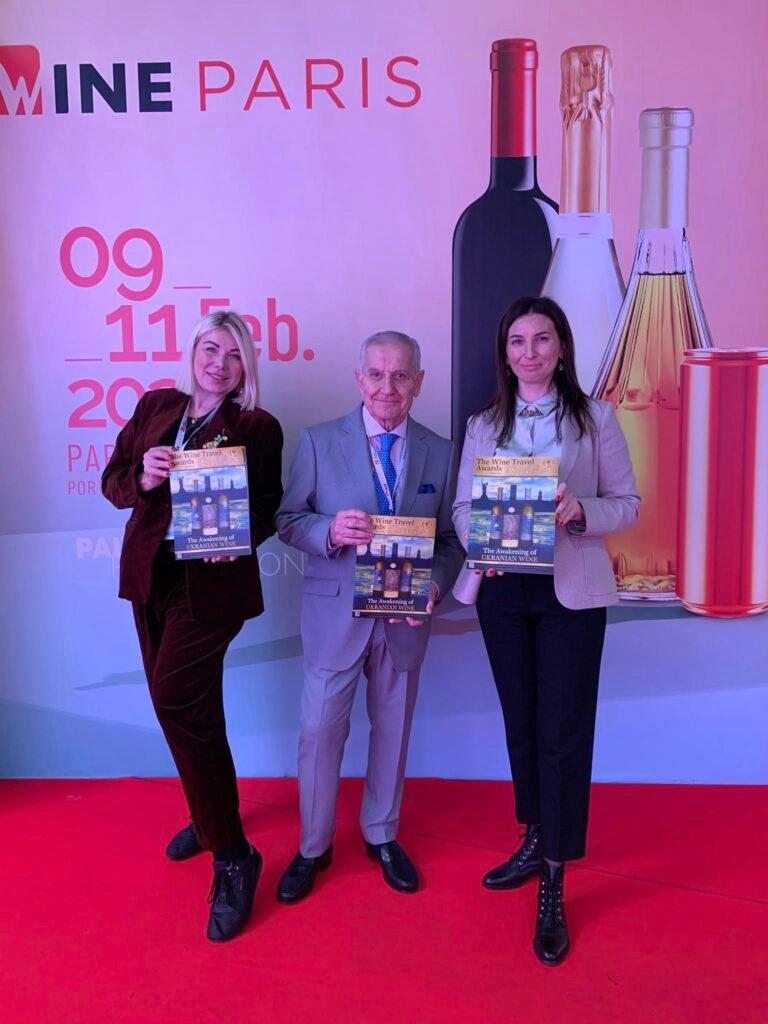
Украина