Увага!

Увага! На сайті використовуються cookie файли.

The site uses cookie files

Даний сайт має вікове обмеження.

This site has age restrictions!

Я підтверджую, що мені, на жаль, давно виповнилося 18 років
I confirm that I have 18 years!
prowein
prowein

Gastronomy and Wine Portal

Drinks at 2021 Concours Mondial de Bruxelles

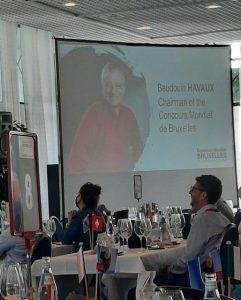
The editor-in-chief of Drinks+ magazine is a member of the jury of one of the most prestigious international competitions which started today in Luxembourg.


On June 18, the tasting sessions of the 28th international competition Concours Mondial de Bruxelles began. The organizers also invited the editor-in-chief of Drinks+ Olga Pinevich-Todoryuk to evaluate the wines presented for the competition this year. In total, the judging team consists of more than 300 reputable experts who will rotate to taste more than 10,000 samples over the course of 9 days.

wine competition

A good one thousand rosés have already been judged at the competition’s early tasting session at the start of spring, in response to market needs and to increased consumer interest for rosé wines. Award-winning producers now have the requisite promotional and marketing tools as soon as the wines reach the market. A further 9,000 wines are ready to be judged during the 9-day competition. This year, the Concours Mondial de Bruxelles tasting sessions will be held in the Grand Duchy of Luxembourg.

Concours Mondial de Bruxelles

The Concours Mondial de Bruxelles is an international competition where over 10,000 wines are entered by producers to be tasted and judged by a panel of experts. The experienced wine tasters judge the competing wines with a single-minded purpose, and that is to select wines of irreproachable quality with no biases stemming from the label or an appellation’s prestige. The competition is one of the leading events of its kind in the world.


The editor-in-chief of Drinks+ magazine is a member of the jury of one of the most prestigious international competitions which started today in Luxembourg.

New Zealand 2021 grape harvest: smaller but better

According to the experts, New Zealand’s 2021 grape harvest shows a smaller volume than last year.


New Zealand winegrowers harvested 19% fewer grapes than last year. And although the harvest in 2021 is smaller than expected, its quality is described as “exceptional” in all wine regions of the country.

Regions in the central part of the country were hit hardest – in Wairarapa, Marlborough, Nelson and North Canterbury, the volume of harvested grapes decreased by more than 20% compared to 2020. For example, Marlborough growers have already stated that this year they will not be able to meet the global demand for Sauvignon Blanc, because 2021 recorded one of the lowest harvests in the last 10 years.

The situation is quite different in Central Otago where Pinot Noir is mainly grown. This region was the only one in New Zealand to increase the harvest by 21% compared to last year.

The crop decline in 2021 is due to cooler spring weather and late frosts in some regions. In addition, New Zealand wine industry is currently facing a persistent labor shortage and the need to increase production costs.

Given the challenges posed by Covid-19, New Zealand’s wine industry is opposed to a planned increase in excise taxes on wine, which will lead to tax increases from July 1. Philip Gregan, CEO of New Zealand Winegrowers, is confident that this innovation will have a negative impact on many small wineries that operate only on the domestic market. “They have already been hit hard by the lack of foreign tourists during the pandemic and the difficulties caused by the lockdown in the hospitality sector. It would be wrong to add another tax increase to these problems,” says Gregan.

Photo: facebook.com/NZWineDirectory

According to experts, New Zealand’s 2021 grape harvest shows a smaller volume than last year.

Bordeaux, Dijon or Reims: what is the next host of the OIV?

The three wine towns are in the running to host the International Organization of Vine and Wine, the new Parisian building of which now offers only a temporary solution. Paying the rent, the French state is called upon to decide.


After the beautiful Parisian districts, which wine-growing city will welcome the International Organization of Vine and Wine next? The cities of Bordeaux, Dijon and Reims are in the running to host the UN of Wine, currently in need of premises corresponding to its stature as an intergovernmental organization.

Bringing together 48 member states in the world vineyard, the UN of Wine has just summoned the French state to find a permanent building within the year to properly accommodate its employees and regularly organized international conferences. Welcoming the headquarters of the OIV by international agreement, the French state provides the rent for the OIV and must now find a lasting solution.

Due to changes of owner and destination, the OIV left its opulent Parisian address of 18, rue d’Aguesseau (which it had occupied since 1966) for 35, rue de Monceau (still in the 8th district of Paris) at the end of 2019.

A Covid-19 pandemic and global confinements provided a possibility to reduce the lack of space in the new premises due to organizing more videoconferences. However, the approach of the OIV’s centenary (in November 2024) and the end of the mandate of its delegate general (in 2023 for Spain’s Pau Roca) seem to push the organization to want a quick resolution. Relocation to regions is now on the table while a Parisian solution seems difficult to achieve at present (exorbitant rents oblige).

Three cities have indicated their willingness to host the OIV: Bordeaux, Dijon and Reims. They are the so-called wine capitals of Gironde, Burgundy and Champagne, far from the neutral ground that Paris represented in terms of wine production.

“All the French candidate destinations are rooted in a vineyard. Bordeaux has the advantage of being the wine capital of the world,” notes Brigitte Bloch, Bordeaux city councilor in charge of the wine economy. Supported by local elected officials and the entire local wine industry, the Gironde proposal is to host the headquarters of the OIV within the Chamber of Commerce and Industry (CCI), a high place of wine history, where the classification of Médoc and Sauternes wines having been unveiled in 1855.

“The headquarters of the OIV would make perfect sense in Dijon, which is home to the only UNESCO university chair dedicated to vines and wine” defends François Labet, vice-president of the Bureau Interprofessionnel du Vin de Bourgogne (BIVB). The Vougeot winegrower believes that housing the OIV “would consolidate the place of Dijon and Burgundy as essential places in the world of wine. Being in a wine-growing area would be even more striking” for the OIV.

Emphasizing its proximity to Paris, the application of Reims offers a welcome for the OIV on the historic site of the Villa Douce, an Art Nouveau mansion. The University of Champagne Ardenne has not occupied the building since 2019. And it is currently returning at the Georges Chappaz Institute of Vine and Wine.

“We would be very honored if Champagne welcomes the OIV” indicates Maxime Toubart, president of the Syndicat Général des Vignerons de Champagne (SGV). Driven by a general mobilization (inter-profession, town hall, UNESCO chair, university …), this candidacy “is very interesting from a technical point of view, but the decision is also played on the political level, surely at the highest level of the State”, notes the winegrower of the Marne.

Upcoming arbitration

While each candidate fiercely defends their case, backed by political and economic support, the arbitration and the decision on the location of the OIV (in Paris or in a vineyard) would ultimately remain in the hands of the State. The Élysée Palace indicates that the Ministry of Agriculture is in charge of the issue. The next general assembly of the OIV, on July 11, could allow progress on this eminently diplomatic issue.

Based on the vitisphere source

Photo: OIV

The three wine towns are in the running to host the International Organization of Vine and Wine, the new Parisian building of which now offers only a temporary solution. Paying the rent, the French state is called upon to decide.

Valpolicella Superiore A Territory Opportunity Online Seminar

The Consorzio per la Tutela dei Vini Valpolicella is organizing an online seminar on 24 June.


The Valpolicella Superiore – A Territory Opportunity Online Seminar hosted by the Consorzio Valpolicella will take place on June 24, 2021.

To be able to access the content, you must register.

Valpolicella Superiore

Valpolicella Superiore – A Territory Opportunity program (Italian time +1 hour for Ukraine):

14.00- 14.45 VALPOLICELLA KEY NUMBERS AND VALPOLICELLA SUPERIORE SURVEY

Speakers: Consorzio Valpolicella President Christian Marchesini and Il Corriere Vinicolo journalist Giulio Somma.

The first block of the seminar will present the first annual Valpolicella report with historical data and detailed data on production, climate and market trends.

15.00-16.00 TERRITORY, STYLE AND MARKET OF VALPOLICELLA SUPERIORE

Speakers: wine journalist Filippo Bartolotta, wine journalist JC Viens, Gabriele Gorelli MW.

The block hosts will analyze the characteristics of the area, style, organoleptic, market, trying to trace the prospects.

A tasting of 8 samples of Valpolicella Superiore is also planned.

During the live broadcast, seminar attendees will have the opportunity to interact with speakers by sending comments and questions via chat.

You can find more detailed information here.

Photo: facebook.com/valpolicella

The Consorzio per la Tutela dei Vini Valpolicella is organizing an online seminar on 24 June.

Bocuse d’Or Ukraine 2021: for the first time in Ukraine

The National Selection of the Representative of Ukraine to participate in the Bocuse d’Or European Final 2022 will take place on June 22-23.


In 1987, one of the most famous chefs of the XX century, a famous restaurateur and chef, the father of French gastronomy Paul Bocuse founded an international competition for chefs. It is now one of the most prestigious and largest professional gastro events which involves more than 70 countries.

This year, for the first time, Ukraine will hold a qualifying round to select a chef who will represent our country at the international gastro arena Bocuse d’Or European Final 2022.

On June 1, members of the National Organizing Committee selected 46 finalists to demonstrate their professional skills and philosophy in the Qualifying Round. The team of finalists includes cooks and chefs of the best restaurants from different parts of Ukraine, winners of national and international culinary cups.

The qualifying round will take place on June 22-23 at the MHP Culinary Center (46A Viacheslava Chornovola Street, Vyshneve).

Among the invited members of the jury:

  • Maryna Kerbytska, from Kyiv, has been living and working in France for more than 15 years. She has extensive experience in Michelin-starred restaurants, including Lasserre 2* in Paris, Geranium 3* in Copenhagen, Il Carpaccio 1*, Le Royal Monceau in Paris.
  • Pavlo Guryanov is a chef, winner of international competitions, including Bocuse d’Or Estonia.
  • Mikheil Avsadzhanishvili is the President of Bocuse d’Or Georgia, a member of the jury of the culinary reality show.

The National Selection of the Representative of Ukraine to participate in the Bocuse d’Or European Final 2022 will take place on June 22-23.

Bordeaux celebrates Wine: the 2021 edition of Bordeaux Wine Festival

From June 17 to 20, the Bordeaux Wine Festival will be held in a revisited format. This year, the focus of the event is on restaurateurs and wine merchants, with the aim of covering the whole of the Metropolis. This is the first attempt for the new administration of Bordeaux, which represents the ecologists political force, to encourage producers committed to an eco-responsible approach.


This year, there will be no big crowd, neither large pavilion on the Garonne quays for winegrowers in the South-West. Instead, the Bordeaux Wine Festival will take place with restaurateurs and wine merchants in the Metropolis, in solidarity with those merchants affected by the crisis, and where visitors can attend tastings and meet producers.

“It was important to support the region’s economic recovery, and to encourage visitors to return to restaurants and wine merchants’ cellars, during the Wine Festival, but also afterwards,” explains Brigitte Bloch, President of the Tourism Office of Bordeaux Métropole. As such, we are setting up a big draw among all those who have enjoyed a drink in the partner establishments to win a meal.”

Two hundred vouchers for an amount of 90 euros are thus put into play, in connection with the establishments participating in the festival and which will host a series of events between June 17 and 20.

Beyond adaptation to the health context, the organizers thus hope “to see the wine festival reverberate throughout the city”. Sandrine Jacotot, assistant to the Bordeaux City Hall in charge of shops, would like the next editions to settle there permanently:

“Ultimately, the Festival will no longer have to focus just on the Quais de Garonne. This is an opportunity for all residents to come and meet our winegrowers in the bars, restaurants, and cellars of our neighborhoods, who are the best ambassadors of the sector. The aim is also to allow a better dialogue between producers and traders “, enthuses the elected official, wine merchant.

Faced with the under-representation of Bordeaux wines on the cards of the city’s restaurateurs – only 30% according to the figures announced by the deputy, Sandrine Jacotot hopes that the Festival will strengthen the links between restaurateurs and small producers, left outside of classic sales channels.
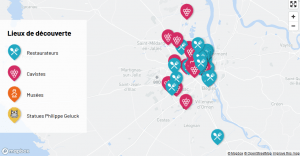
Bordeaux Wine Festival map

When red turns green

This new edition will also seek to encourage the promotion of eco-responsible wines from local production. The opportunity for the Interprofessional Council of Bordeaux Wine (CIVB), through the voice of Christophe Chateau, to insist on “65% of the surfaces of Bordeaux vineyards engaged in an eco-responsible approach”, while the appellation counts barely 7% organic vines.

Despite everything, the organizers wish to demonstrate a supportive approach above all, aware that conversions to organic – 23% of surfaces according to the CIVB – take place over a long period of time. While around thirty organic winegrowers will have their wines tasted in Darwin where a tasting concert will be held on June 19, hosted by the Young Symphony Orchestra of Entre-deux-Mers (JOSEM), made up of around sixty young people of under 25 years old.

The Aquitaine Organic Wines Union is also joining the solidarity concert organized by the radio France Bleu on June 19 at Pin Galant. It is reserved for professionals who have been “on the front line” of the health crisis. Health workers, maintenance workers, truck drivers, cashiers, and many more: on this occasion, the 450 participants will be able to leave with a free bottle of organic wine.

The entire Wine Festival program is available on its website. Tastings on heritage sailboats that will dock on the Quays, themed hikes, guided tours in museums: Bordeaux is active to offer a wide range of activities for amateurs and insiders.

Based on the materials of rue89bordeaux

From June 17 to 20, the Bordeaux Wine Festival will be held in a revisited format. This year, the focus of the event is on restaurateurs and wine merchants, with the aim of covering the whole of the Metropolis. This is the first attempt for the new administration of Bordeaux, which represents the ecologists political force, to encourage producers committed to an eco-responsible approach.


Goodbye, Armenian cognac!

Armenia decided to abandon the name “cognac” in exchange for compensation from the EU.


On June 10, 2021, the Armenian authorities made a decision which became the next stage in the implementation of the Agreement on a Comprehensive and Expanded Partnership. The Agreement was signed between the European Union and Armenia in November 2017. One of the points of the document was the regulation of the use of the name “cognac“.

The Armenian government approved a financial agreement with the EU, the text of which, in particular, provides for the gradual abandonment of the use of the term “cognac” in relation to Armenian alcoholic beverages.

The name “cognac” has the status of a protected geographical name in France and the EU and is applicable only to the type of brandy produced in the department of Charente, where the city of Cognac is located.

In the post-Soviet space, any type of brandy is called cognac, regardless of the place of production. The tradition developed and took root decades ago, when Moldovan, Georgian, Armenian, Ukrainian, Azerbaijani cognacs were produced and consumed in the USSR.

As a reminder, the Ukrainian alcoholic sector is also working in a transitional period defined by Article 208 of the Association Agreement between Ukraine and the European Union on the use of EU geographical indications to designate similar products originating from Ukraine. Domestic producers will be able to manufacture products under the names “cognac” and “champagne” until 2026.

Armenia decided to abandon the name “cognac” in exchange for compensation from the EU.

Summer wine choice offered by Raventos i Blanc

Raventos i Blanc presents its purest and most authentic still wines for the summer months.


With the beginning of the summer, wine preferences change. Raventós i Blanc proposed its characteristic recommendations of the most suitable wine for these summer months of good and warm weather.

Three fresh and novel wines are selected symbolizing three summer months. This trilogy of the three natural wines is produced by Can Sumoi’s family wine.

Having a strong vision and growing passion for natural wines, Pepe Raventós has been helping Can Sumoi vineyards to recover for four years. This is a marvelous place of the highest integrated estates in the Penedès, located 600 meters above sea level, where the Raventós i Blanc team leads the process of recovery of lost vineyards and local varieties. Their aim is to produce natural wines with minimal intervention in all processes of viticulture and winemaking.

Xarel.lo, La Rosa and Perfum 2020

Their summer wine choice represents the new vintages of three wines Xarel.lo, La Rosa and Perfum 2020.

Xarel-lo Can Sumoi 2020; a single varietal, 100% Xarel-lo, with its distinctive character and marked identity. The purest and most sincere expression of Xarel-lo.

La Rosa Can Sumoi 2020; blend of Sumoll, Xarel-lo and Parellada. The wine is complex and expressive in aroma. An aromatic and voluminous wine.

Perfum Can Sumoi 2020; blend of Malvasia, Macabeo, Moscatell and Parellada, high aromatic expression with floral and citrus aromas, a very elegant, aerial, tasty, fresh, and dry palate.

Photo: Raventos i Blanc 

Raventós i Blanc presents its purest and most authentic still wines for the summer months.

Bid for first and most valuable Moutai at Sotheby’s

Auction house Sotheby’s offers a rare collection of Moutai and the oldest Karuizawa released to bid on June 2-18.


The first-ever Moutai lot, the most famous Chinese spirit, will go under the hammer at the auction house Sotheby’s. It is estimated at up to £450,000 for its Rare Whisky & Moutai, Extraordinary Spirits from Asia & Scotland,

24 bottles of Kweichow Moutai “Sunflower” 1974 in an original wooden shipping crate are top lots on June 2-18. This is not only the first Mutai lot to be auctioned at Sotheby’s UK, but the most valuable Mutai lot that Sotheby’s has offered to date (est. £ 200-450,000), the report says.

Japanese whiskies from Yamazaki, Hibiki, Hanyu and Saburomaru will be presented at the auction house. A collection of 32 bottles of Karuizawa, all from a single collection known as The Unbeatable Collection of Karuizawa, leads the selection from Asia.

Karuizawa Cask 1960

The most notable bottle of the collection – the Karuizawa Cask # 5267 1960 – was considered the most valuable Japanese whiskey in the world when the bottle was sold at Sotheby’s in March 2020 for £ 363,000 ($ 435,273). A bottle from this cask has been auctioned for the first time since this record was set (est. at £ 240,000–450,000).

Two prominent bottles distilled at Bowmore Distillery on Islay head the Scotch Whisky on the sale. Both were distilled in the 1960s, a historic milestone of production at Bowmore, and one which is revered amongst whisky lovers and collectors.

Without doubt, Bowmore Samaroli Bouquet 1966 is a whisky cult classic. It was distilled in 1966 at Bowmore and bottled around 18 years later in 1984 by the late Silvano Samaroli. One of the greatest whiskies of all time is estimated at £35,000-48,000. Sotheby’s currently is the record holder for this bottle, setting a price of £72,600 in October 2019.

At the other end of the age range, there is the Bowmore 50 Year Old Number 1 Vaults 1966, a long-aged expression from the same vintage (est.£ 26,000-35,000). The limited production of only 74 bottles was released in 2017 and became one of the rarest manifestations of Bowmore ever produced.

Bidding on the 75-lot sale runs until 18 June.

Photo: Sotheby’s


Auction house Sotheby’s offers a rare collection of Moutai and the oldest Karuizawa released to bid on June 2-18.

Discounts for the vaccinated!

Hong Kong hotels offer tempting menu and accommodation discounts for those who have been vaccinated.


The Langham and its two sister hotels (Cordis and Eaton), owned by the Great Eagle Group, offer reduced prices on accommodation, food, and beverages if visitors are fully vaccinated. Thus, the company aims to encourage residents to vaccinate.

For vaccinated guests, the hotels offer a package called “Stay Safe and Save”, which is valid from June 1 to August 31, 2021, and offers a 50% discount on room and restaurant prices. Fully vaccinated guests at the Langham, Cordis, Eaton Hong Kong, and Ming Court (in Wanchai) hotels (no accommodation) will benefit from a 15% discount on food and beverages on the same dates.

Hong Kong hotels“We have to do our best because we want Hong Kong to achieve herd immunity faster,” said Stefan Leser, CEO of Langham Hospitality Group. “We hope that by offering discounts, we can encourage more residents to get vaccinated, then our borders will open, and safe travel will resume.”

It is one of the city businesses that has announced promotions for the vaccinated. Previously, such discounts were voiced by developers offering apartments at discounted prices for fully vaccinated Hong Kong residents. Cathay Pacific offers free flights. The Hong Kong authorities and company owners hope in this way to induce citizens to get vaccinated, as of June 1, only about 18% of the population is fully vaccinated.

Earlier, health officials said millions of unused vaccines would be unusable by mid-August. Hong Kong is one of the few places in the world where more doses of vaccine have been purchased than the population needs. The government purchased and authorized a total of 15 million doses of Sinovac and Pfizer-BionTech.

Prepared by A. Bantysheva based on materials from vino-joy.com

Photo: facebook.com/LanghamHK

Hong Kong hotels offer tempting menu and accommodation discounts for those who have been vaccinated.

Украина