

Sting: deceived but not disappointed in Il Palagio
The star was tricked into buying the Il Palagio wine estate in Tuscany.
Today Sting is considered one of the most successful celebrity winemakers. His villa Il Palagio – an old building from the mid-16th century – has been completely renovated and welcomes guests. The estate produces fine wines, the creation of which is supervised by a professional team led by the musician himself and his wife Trudie.
However, the path to success was not easy: it turns out that during the purchase of the villa the singer was simply deceived. Sting himself said this in an interview: “We were looking for a house in Italy, and we found this nice comfortable property that was rundown, as were the vineyards. We were negotiating the purchase. We liked the property a lot, even though it was in ruins. The duke asked me if I wanted to taste the wine produced by the estate and I said yes. It was an excellent wine and that convinced me to buy the vineyards as well. It was only later that we found out that the duke had served us a Barolo and not his own wine.”
Subsequently, it turned out that Sting was deceived, and the wine produced at Il Palagio does not have such excellent characteristics. The celebrity recalls with a laugh: “When we served the wine from the estate to our guests, I saw that someone was emptying their glass into a flowerbed. It was then that we decided to avenge ourselves and to show that it was possible to produced excellent wine from the vineyards at Palagio. Our whole Tuscan adventure has really been a way of getting our own back.”
The “revenge” of the star was very successful: today Sting’s winery produces more than 150 thousand bottles a year. Whites, rosés, reds and sparkles are created here, using local and imported grape varieties and organic vineyard care.
Based on thedrinksbusiness.com
The star was tricked into buying the Il Palagio wine estate in Tuscany. Today Sting is considered one of the most successful celebrity winemakers.




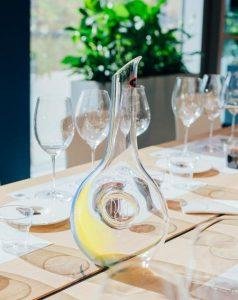
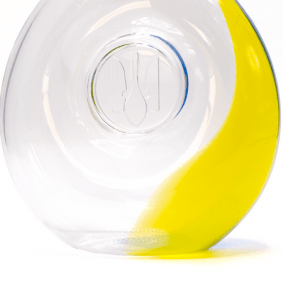 Decanter Ukraine is not just an element of decor, functional inventory for wine or an object of serving. First and foremost, it is a unique piece with its soul, a memorable artifact and decoration of the collection.