Увага!

Увага! На сайті використовуються cookie файли.

The site uses cookie files

Даний сайт має вікове обмеження.

This site has age restrictions!

Я підтверджую, що мені, на жаль, давно виповнилося 18 років
I confirm that I have 18 years!
prowein
prowein

Gastronomy and Wine Portal

BIG INTERVIEW WITH CAROLE BOUQUET

On June 3, Cité du Vin is hosting famous French actress and winemaker Carole Bouquet.


Outstanding French actress Carole Bouquet, a wine lover and winemaker, is invited to celebrate the 5th anniversary of Cité du Vin in Bordeaux.

The island of Pantelleria, situated between Sicily and Tunisia, took a particularly important place in Carole’s Bouquet heart. The island name means “daughter of the winds”.

In 2005 she launched the production of her own wine there, Sangue d’Oro. With her team, she has brought abandoned vineyards back to life to craft exceptional wines.

By taking on the challenge of resurrecting a classic wine, Passito, made in the pure tradition using dried grapes, Carole Bouquet is helping to preserve the winemaking heritage of the island. Her Sangue d’Oro is an exceptional vintage from old vines, a sweet white wine made from the Muscat of Alexandria grape variety: its aromas are very intense, and the grapes boast great resistance to extreme weather conditions.

Passito is suggested to be paired with almonds and pistachios biscuits, foie gras, roquefort cheese, almonds, or chocolate.

In 2011, she was awarded with the insignia of Commandeur of the Ordre des Arts et des Lettres by Frédéric Mitterrand, Minister for Culture and Communication, for her contributions to both culture and gastronomy.

The meeting with Carole Bouquet will take place online and in the Cité du Vin on the 3rd of June at 7 PM CET. It will be moderated by Jérôme Baudouin, editor-in-chief of La Revue du Vin de France.

You can participate in this event on site at the Cité du Vin by booking your ticket (places are limited), or online via Zoom.

Photo: Cité du Vin

On June 3, Cité du Vin is hosting famous French actress and winemaker Carole Bouquet.

LE MONDIAL DES VINS BLANCS STRASBOURG AS A REFLECTION OF GLOBAL TRENDS

The competition will present 1000 samples of the best white wines from 5 continents.


The only competition in the world dedicated to the variety of white wines will take place on October 2 and 3, 2021. The event is held under the patronage of OIV. The organizers say that the list of winners of Le Mondial des Vins Blancs Strasbourg can be seen as a reflection of global trends and evolution of viticulture on 5 continents.

From year to year, thanks to the support of official wine organizations and the best wine judges from all over the world, white wines from 20 countries compete with each other.

In 2020, the awards were received by winemakers from Austria, Chile, the Netherlands, France, Germany, Italy, Luxembourg, Romania, Slovakia, and the Czech Republic. Chile, which took part in Le Mondial des Vins Blancs Strasbourg for the first time, won DRY WINE TROPHY in the RIESLING category.

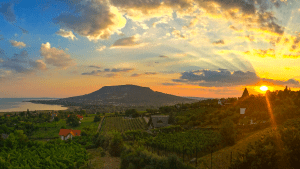
“We aim to gather 1000 samples of the best white wines in the 5 continents. After having celebrated Chile in the latest press book, the 2021 edition’s country of honour is HUNGARY. We are preparing a focus on its wines and vineyards, namely Badacsony and Villány”, the organizers say.

Le Mondial des Vins Blancs Strasbourg

The wines in the competition are divided into 12 categories:

  1. Chardonnay
  2. Chenin
  3. Gewürztraminer
  4. Muscat
  5. Pinot Blanc
  6. Pinot gris
  7. Riesling
  8. Sauvignon
  9. Sylvaner
  10. Viognier
  11. Other grape varieties
  12. Blended wines

Registration is open until August 31st. Any winery can take part in the international competition by paying €98 for a registered sample. Samples are accepted from June 1 to September 10, 2021.

Photo: mondial-vins-blancs.com, csodalatosbalaton.hu

The competition will present 1000 samples of the best white wines from 5 continents.

WINE CONSUMPTION OF DIFFERENT COUNTRIES

According to the OIV, global wine consumption fell to its lowest level since 2002.


According to the International Organization of Vine and Wine (OIV), world wine consumption fell to its lowest level since 2002: last year, world wine consumption was 234 million hectoliters. In 2020, these indicators decreased by 3%. The OIV reports that this is the lowest amount of wine drunk in any year since 2002.

The report of the International Organization of Vine and Wine says that perhaps this situation is related to Covid-19, and the drop is comparable to what was observed after the global financial crisis of 2008-2009.

“The sparkling wines category was hit the hardest in 2020, with the exception of Prosecco,” the OIV said in a report. “Bag-in-box wine sales have grown, although overall volumes remain low.”

wine consumption

According to the OIV, wine consumption in China fell by about 17% last year, a “sharp drop” for the third consecutive year. The United States remains stable compared to 2019. The International Organization of Vine and Wine attributed this to the transition to the global online commerce which helped mitigate the economic impact of the pandemic.

Top 10 countries that drink wine the most:

  • USA – 33 million hl (unchanged from 2019)
  • France – 24.7 million hl (at the level of 2019)
  • Italy – 24.5 million hectoliters (7.5% increase)
  • Germany – 19.8 million hectoliters (0.2% increase)
  • United Kingdom – 13.3 million hl (2.2% increase)
  • China – 12.4 million hl (17.4% decrease)
  • Russia – 10.3 million hectoliters (3% increase)
  • Spain – 9.6 million hectoliters (6.8% decrease)
  • Argentina – 9.4 million hectoliters (6.5% increase)
  • Australia – 5.7 million hectoliters (3.7% decrease).

Prepared by A. Bantysheva based on decanter.com

Photos: crafta.ua, vinshkaf.medium.com

According to the OIV, global wine consumption fell to its lowest level since 2002.

WSET and PROWEIN graduated 30 new wine experts

Joint young talent project by WSET & ProWein reaps the rewards. It provided a unique opportunity for 30 young wine experts from ten European countries to acquire “Level 2 Award in Wines” out of charge.


The collaboration of the Wine & Spirit Education Trust (WSET), the world’s largest education provider of wine, spirits, and sake qualifications, and ProWein, the leading international wine and spirits trade fair, as well as the largest industry meeting for professionals from viticulture, production, trade, and gastronomy, met all the aspirations. 30 young newcomers in the wine and spirit industry became certified wine experts with the “Level 2 Award in Wines”.

In the tasting session of London Wine Fair 2021, WSET Wine Educators Joseph Hallam DipWSET and Lucy Stevenson DipWSET explored the key differences between WSET’s globally recognised Level 1, 2 and 3 Awards in Wines and how these qualifications can benefit you throughout your career.
WSET & ProWein education

Focusing on the “Level 2 Award in Wines”, students develop their understanding of key production options and learning of how to taste and describe the product with confidence. This level is more complex and allowed the young talents from ten European countries (Belgium, Germany, France, Great Britain, Italy, Netherlands, Poland, Portugal, Switzerland, and Spain) to describe comprehensively how balanced the sample is diving into more details of the palate.

The final exam includes the most different range of wine peculiarities: grape growing alternatives in the vineyard, production process, climatic conditions for the vines, the most important grape sorts of the leading European wine-growing regions, different wine styles, aspects of wine storage and bottle ageing influence as well as the basics in wine service and pairing of food and wine.

As an additional feature of this educational initiative, extra tastings considering precisely one specific wine region were proposed the Level 2 students. For this opportunity, the “Verband Deutscher Prädikats- und Qualitätsweingüter” (VDP), the “Consorzio Vino Chianti Classico” and “Wines of Portugal” should be thanked. The joint efforts made the wine tasting possible to be carried out at home.

More than 40 selected white, red, rosé, sparkling and liqueur wines were delivered to the young experts (the average age was 27 years, the youngest was 22, the oldest 30). Moreover, the students attended an additional meeting via Zoom to discover more about ProWein behind the scenes introduced by Bastian Mingers, Director of ProWein.

WSET Rachel Webster“We have really enjoyed working with these talented young professionals from across Europe. In a difficult year for the industry, the aim was to develop useful and transferrable skills to help this group become future leaders. Running the course by video conference has allowed us to reach a wide and diverse audience, which has been new and exciting for us too. We’re looking forward to meeting the students in person at next year’s ProWein”, underlines Rachel Webster, Business Development Director EMEA WSET.

“I am very happy we managed to launch an international initiative for young wine talents in cooperation with the WSET – despite the COVID-19 pandemic and the cancellation of ProWein 2021 it caused. Originally, the final exam had been scheduled for the trade fair this year; this feature now had to be implemented online – which worked ever so well,” says Bastian Mingers, Director of ProWein, and adds: “But nothing can replace the real trade fair; it alone provides both fresh talent and seasoned professionals with the platform for networking, know-how and tasting.”

Photo: Messe Düsseldorf /Ctillmann

Joint young talent project by WSET & ProWein reaps the rewards. It provided a unique opportunity for 30 young wine experts from ten European countries to acquire “Level 2 Award in Wines” out of charge.

THE MUSEUM OF CHAMPAGNE WINE OPENS ITS DOORS

Several times postponed due to the Covid, the very first opening of the Museum of Champagne wine and regional archaeology should delight inhabitants of Épernay on Saturday, May 29 with a course built around an original common thread: chalk.


While everything was ready at the end of last year, the Musée du vin de Champagne et d’Archéologie régionale d’Épernay will finally open its doors on May 29. The place is simply magical. Housed in the former residence of Charles Perrier, built in a neo-Louis XIII style in 1855 and opening view onto an English garden, it alone embodies the luxury and excessiveness of champagne. The renovation required a trifle of 23 million euros.

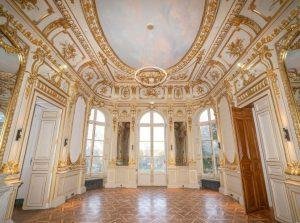
On the ground floor, the reception rooms, which notably include the ballroom, do not accommodate any display cases. They will house future events, conferences and exhibitions which should once again make the château a major center for the cultural life of champagne.

Ballroom of the Museum of Champagne

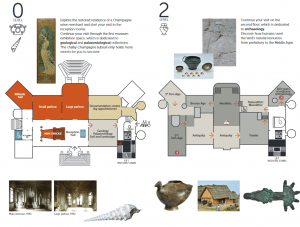
The museum is broken down into three groups, linked by an original common thread: chalk. The route begins with the rooms devoted to geology. Champagne wine lovers know that their extraordinary minerality owes a lot to the chalk of Campanian and Turonian. The reconstruction of a Lutetian beach discovered in Fleury-la-Rivière allows us to understand the genesis of this wonderful terroir.

The second pole focuses on archeology. Chalk has indeed conservative virtues which probably explains why the Marne is one of the departments that has provided the most prehistoric remains. Virtual reality headsets offer the opportunity to discover the interior of a hypogeum, a cave dug out of chalk that was used as a tomb in the Neolithic period.

Map of the Museum of Champagne

The third pole focuses on the wine of Champagne itself. It opens with an evocation of the role of the Church and the monasteries in its development. A digital terminal allows you to leaf through the evangeliary of Ebbon, a relic of those medieval times when the Abbey of Hautvillers was as renowned for its hillsides as for the quality of its copyist workshop.

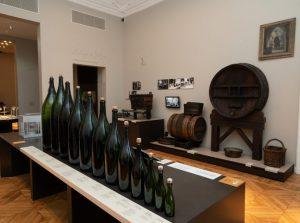
After this very suggestive introduction, we enter technical history. The circuit is not often satisfied with an alignment of traditional tools. The use of old photographs sheds light on their operation, and the presence of models of current machines prevents champagne from falling into folklore. With some, like the stirring machine, the visitor can carry out the manipulations themselves.

Wine bottles

An opening onto the imagination of champagne

Champagne is more than just a product. It is also quite an imagination, an art of living. A special room is dedicated to this dimension with screenings of extracts from films such as “Marie Antoinette” by Sofia Coppola or the contemplation of the famous “Oyster lunch”, one of the first paintings representing champagne, when the devil’s wine was first a curiosity that had to be served from very high to better enjoy the spectacle of its foam.

We will finally linger with delight on all these objects of the champagne service, unfortunately forgotten, but sometimes very ingenious: the siphon with champagne, the glass coolers, not to mention the flute with rice grains whose patterns served to mask the cloudiness of the liquid, while we had not yet mastered the technique of riddling.

The people of Champagne have constantly traveled the planet to become ambassadors of the divine bubble. They did not come back unscathed. Some have built up magnificent collections of artistic objects of all kinds brought back from their journeys. They must be placed in the context of the fashion for collecting, very widespread in the bourgeoisie of the nineteenth century, marked by romanticism and dreams of travel. Bequeathed by great local notables such as Claude Chandon de Briailles or the diplomat Jules Claine, they form a sort of cabinet of curiosities and a beautiful conclusion for this course dedicated to the world of champagne, emphasizing that the success of this wine region is the result of, first of all, its openness to the world.

Based on the materials of Terre de Vins


Several times postponed due to the Covid, the very first opening of the Museum of Champagne wine and regional archaeology should delight inhabitants of Épernay on Saturday, May 29 with a course built around an original common thread: chalk.

201 WINNERS AT THE 107TH TASTEVINAGE DE BOURGOGNE

This year, on March 19, the 107th Tastevinage exhibition was held at the Château du Clos de Vougeot with the presentation of 680 Burgundy wines. The jury-tasters selected 201 wines which compile 29.56% of the presented wines.


107 red wines, 70 white wines and 24 Crémant de Bourgognes are awarded at the 107th Tastevinage. As a result, the badge pasted on the bottle allows the domain or prize winner to keep their label.

In Burgundy, there are mainly two grape varieties. Pinot Noir is used to make red Burgundy wine with sweet raspberry, cherry, and strawberry flavors, while Chardonnay is used for Chablis and Burgundy white wine. Although among the red varieties it is also worth mentioning Gamay which is used for red Macon and Beaujolais. Among whites, a small number of Aligote and Pinot Blanc varieties grow here, and Sauvignon grows exclusively in the San Brie region.

There is a special classification of Burgundy wines: appellations Régionales (name of the region), appellations Villages (name of the village), Premiers Crus (first class), Grands Crus (upper class). Of all Burgundy wines, Grands Crus accounts for only 1% of the total wine volume, Premiers Crus – 10%. The monks from Citeaux were not mistaken in determining the terroirs and climates of Burgundy when they assigned all the vineyards surrounding the Château du Clos de Vougeot to the Grands Crus class.


Tastevinage de Bourgogne

In addition to the traditional classification, there is the Tastevinage quality brand of Burgundy wines. The organizer is the Confrérie des Chevaliers du Tastevin whose mission is to popularize everything from Burgundy, in particular its great wines and traditional cuisine, as well as to revive holidays, festivals, customs, and folklore of the region, and to develop tourism in Burgundy.

The tasted wines ranged from Chablis to Mâconnais, from the appellations of the Régionales to the Grand Cru, including Crémant de Bourgogne sparkling wines. This selection is rigorous, and the winning percentage is a testament to the severity of the selection.

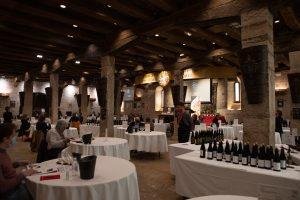
The large Cistercian cellar of Château du Clos de Vougeot brought together a jury of more than 250 tasters, selected from an elite of connoisseurs of fine taste: renowned winemakers, wine merchants, leaders of viticulture associations, brokers, oenologists, restaurateurs, government officials working in partnership with the wine industry, enthusiastic and knowledgeable wine drinkers, all surrounded by Confrérie officials and journalists present as “independent observers”. At each table, dozens of wines, presented anonymously, without mentioning the manufacturer or the merchant, are subjected to a rigorous organoleptic examination which lasts almost two hours.

The questions that judges should ask themselves are very precise. Does the wine live up to its name and harvest? Is it typical and will it improve with age? In other words, would I be happy to have this wine in my cellar and proudly serve it to my friends? Immersed in their work, the tasters evaluate wines in religious silence under the watchful but strictly neutral observation of the Confrérie organizers whose job it is to make sure everything goes smoothly.

Photographer: Bénédicte Manière


This year, on March 19, the 107th Tastevinage exhibition was held at the Château du Clos de Vougeot with the presentation of 680 Burgundy wines. The jury-tasters selected 201 wines which compile 29.56% of the presented wines.

WINE PARIS and VINEXPO PARIS IN DIGITAL FORMAT

The events of Wine Paris & Vinexpo Paris will take place on June 8, 15, 22 and 29, 2021 on the Vinexposium Connect digital platform.


The organizers of Wine Paris & Vinexpo Paris are announcing Vinexposium Connect, a digital platform with an extensive program for participants in the wine industry, which will open in June this year.

Schedule on Vinexposium Connect:

  • Tuesday 8 June. Tasting revolution
  • Tuesday 15 June. Digital Sprint
  • Tuesday 22 June. Global economy
  • Tuesday 29 June. Sustainable Development Review

“We cooperate with renowned international speakers to deliver the most rewarding and engaging performances!” say the organizers.

With Vinexposium Connect, manufacturers and buyers can stay connected and make business plans. The digital platform will be supported by the key partners of Wine Paris & Vinexpo Paris, namely IWSR, ASI, UDSF and Wine Tech & Vinocamp.

Register here.

The events will take place on June 8, 15, 22 and 29, 2021 on the Vinexposium Connect digital platform.

Sherry by Michel Rolland

“Flying” consultant, one of the world’s best oenologists, Michel Rolland launches a line of sherries together with the Spanish Araex.


Renowned wine consultant Michel Rolland and Javier Galarreta, founder and CEO of Spain’s largest wine production and export group ARAEX Grands Spanish Fine Wines, have presented a new range of fortified white wines.

The Spanish wine giant, which currently brings together producers from 11 different PDOs in Spain, announced the company intended to add several new wines to its portfolio, including a line of sherries under the Rolland Galarreta brand. The limited range of fortified products includes Amontillado, (3,500 bottles), Fino and Manzanilla – 5,000 bottles each.

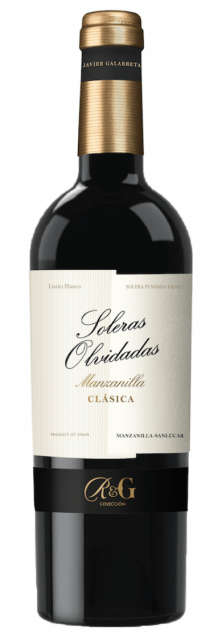
Soleras Olvidadas

The new line named Soleras Olvidadas – meaning ‘forgotten soleras’ – is produced on three bodegas in Sanlúcar de Barrameda: San Leon, Santa Ana and Miraflores. This will be the first time that the name of the famous winemaker will adorn the label of his sherry.

Galarreta shared why he had decided to widen the Rolland Galarreta wine label with a set of sherries. Since he “fell in love” with the fortified wine five years ago, Galarreta has been discovering different almacenistas – who mature the sherries in soleras – to find the ideal partner.

And Michel Rolland, one of the world’s most influential winemakers, was the best choice. He is a consultant for more than 150 estates around the world, including France, the United States, South Africa, Argentina, Chile, Spain, Italy, and India.

“Flying” consultant, one of the world’s best oenologists, Michel Rolland launches a line of sherries together with the Spanish Araex.

Indian wine market at London Wine Fair

Exploring one of the world’s most exciting emerging wine regions.


Organized by Wines in India, the U.K.’s first Indian specialist agency, and hosted by India’s first – and only – Master of Wine, Sonal Holland, this session of London Wine Fair explored India’s wine production, its unique terroirs, the country’s pioneering winemakers and an overview of the styles of wine.

India does not have the same growing and harvesting cycle as we have here in Europe. The months from June to September are characterized by frequent rainfall. Leaves and the fruit of grapes hardly ever ripen at this period. Summer is considered hot and wet while winter – cool and dry. According to the growing cycle, only the harvest that follows the dry cooler winter seasons is actually taken as the harvest for making wine.

This makes India unique. Although India is in the Northern hemisphere and north of the equator, it follows a Southern hemisphere harvesting season because the harvesting in India starts in the month of January onwards, post the winter season. Most of the harvesting starts in February and sometimes carries on till early April. India tends to follow a cycle of a Sothern hemisphere.

The winter season and the growing season for Indians is typically dry and cooler, that is less disease pressure. There can be a lot of disease pressure in India, not so much from phylloxera, but mostly from nematodes, mealybugs, and all kinds of insects. All of that get reduced to some extent because the growing season happens to be in the winter.

All the harvesting in India is take place through hand harvesting, hand picking of grapes and mostly done by women. Main reason cited for this is that women tend to be more efficient and gentler with the whole process of harvesting.

In terms of winemaking, India is in progress. We started about one-two decades ago with very little technological know-how but over the years India has made continual upgradations to its winery equipment. A lot of wineries, particularly the large-scale ones, have made significant investments in tanks, barrels, and bottling lines that would lead to better quality of wines. Today it is common to find Indian wineries having fully automated bottling line or an innovative filtration system that filter out wines up to 1.4 microns in order to ensure the highest level of hygiene and stability in wines.

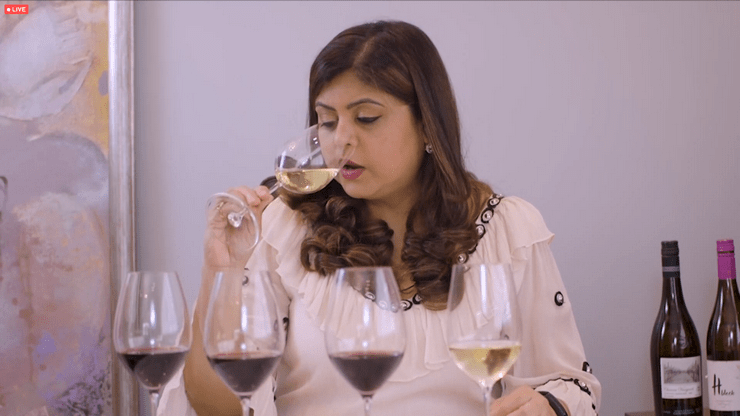
Indian wines tasting

Wineries are experimenting with various winemaking techniques like cold soak for red wines, skin contact for white wines, whole berry fermentation, gentler extraction methods for better tannin management, more elegant use of oak, and late harvest style.

India produces a diverse quality of wines in terms of styles. There are all kinds of white wines ranging from dry to sweet. “We have red wines which are both unoaked and oaked. We have a range of sparkling wines that try to emulate everything from a more prosecco style wine to slightly more complex and deeper, richer wines. We have rose of all levels of sweetness and colors”, notes Sonal Holland during her session.

Despite having a tropical climate, India does not actually have a problem with alcohol levels being outwork, and either very high or very low acid. India is home to a large variety of wines made from different grape varieties: Chenin Blanc, Syrah, Viognier, Cabernet Sauvignon, Merlot (France), Nero d’Avola, Grillo (Sicily), and Tempranillo (Spain).

Exploring one of the world’s most exciting emerging wine regions.

Drinks.ua became the official media partner of London Wine Fair 2021

Along with Decanter, The Drinks Business, and other authoritative publishing houses, our media group will cover the events of the largest online beverage trade show.


The Сommunicative Media Group Drinks+ is engaged as an information partner of one of the most significant international wine exhibitions – London Wine Fair, which gathers beverage specialists from all over the world on its site.

This year, the exhibition will be held on May 17-19 online. It promises to be a large-scale event in the wine world, to talk about which the organizers have invited the most authoritative specialized publishers, including the oldest publishing house about wine and winemaking in the UK Decanter and the influential British magazine The Drinks Business which writes for professionals in the wine and beverage industry.

Drinks+ was also honored to become an information partner of London Wine Fair and is ready to tell its readers about all the interesting and bright events of the exhibition.

mediapartner

The schedule is very eventful this time: during the three exhibition days, the organizers host several dozen master classes and conferences, the speakers of which are the world’s leading winemakers, industry experts, and wine writers.

Masterclass programme

MON 17 MAY

10:00 – Wine Trading 2021: “Where are we?”
10:00 – Discover Alternative Varieties of New Zealand
11:00 – Chenin Blanc – South Africa’s Superstar with the Kleine Zalze winemaking team
11:00 – How the drinks industry can drive diversity
12:00 – Levelling up: a taster of WSET’s Level 1, 2 and 3 Awards in Wines
12:00 – The Rise of Cyprus
14:00 – Indian Wine: Exploring one of the world’s most exciting emerging wine regions
14:00 – How do you run a sustainable business?
15:00 – Peeling Back Portugal
16:00 – Côtes du Rhône white wines
16:00 – Future Fantastic!

TUE 18 MAY
10:00 – Wine Trading 2021: “Are we there yet?”
10:00 – A fresh and breezy expression of Rhône Valley vineyards
11:00 – Can wine be part of the circular economy?
11:00 – The Wines of Felline
12:00 – Blind tasting, the WSET Diploma way
12:00 – Wines of Attica: Savatiano and beyond
14:00 – IWSR session
14:00 – Beyond Tradition Whisky
14:00 – How to succeed with DTC and e-commerce
15:00 – Organic/Biodynamic tasting with Michel Chapoutier
16:00 – International Wineries for Climate Action – How to reduce wine’s carbon footprint
16:00 – New Zealand Pinot Noir – Off the Beaten Track

WED 19 MAY
11:00 – Finding and retaining talent
12:00 – Knowledge, skills, confidence: training your team for success
12:00 – Indigenous White Varieties of Cyprus
14:00 – Spanish Wine Academy by Ramón Bilbao: Discovering Diversity in Spain

For full details and speakers – click here  

Follow the reviews of the most interesting workshops and conferences on the Drinks.ua portal!

Along with Decanter, The Drinks Business, and other authoritative publishing houses, our media group will cover the events of the largest online beverage trade show.

Украина