
Увага!

Увага! На сайті використовуються cookie файли.

The site uses cookie files

Даний сайт має вікове обмеження.

This site has age restrictions!

Я підтверджую, що мені, на жаль, давно виповнилося 18 років
I confirm that I have 18 years!
prowein
prowein

Gastronomy and Wine Portal

OIV: new presidency, official language and headquarters

The 19th OIV General Assembly approved 19 resolutions on 12th July, elected a new president and heads of working bodies. An occasion also, for the French government to propose Dijon to the OIV member states as host city for the new organisation’s headquarters, and to adopt Russian as the 6th official language of the OIV.


First and foremost, the OIV proceeded with the personnel update. The new President was elected. Luigi Moio now assumes a 3-year mandate, succeeding Regina Vanderlinde. The Scientific and Technical Committee has also been renewed with new heads of working bodies elected.

Luigi Moio has been a scientific expert for the Italian Ministry of Agricultural Policies since 1998. From 2009 to 2014 he was Chairman of the Technology Expert Group of the OIV (International Organisation of Vine and Wine) and from 2015 to 2018 of the Oenology Commission. He was the OIV’s 2nd Vice-President.
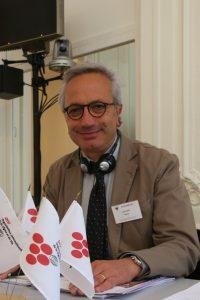
Luigi Moio

Dijon proposed as the new OIV host city

Following the elections, the long-awaited proposal from the French government concerning the new host city of the OIV headquarters was presented. Dijon was chosen by the French Ministry of Agriculture over Bordeaux and Reims candidatures.

Welcoming the headquarters of the OIV by international agreement, the French state provides the rent for the OIV and must now find a lasting solution. Due to changes of owner and destination, the OIV left its opulent Parisian address of 18, rue d’Aguesseau (which it had occupied since 1966) for 35, rue de Monceau (still in the 8th district of Paris) at the end of 2019. But it was a short-term solution as the organization needs more space in new premises.

In view of the French proposal, the OIV Member States now have a period of reflection and will vote on whether to accept it at the next meetings in October 2021.

Russian language adopted

After several months of negotiations, Russian has been adopted by the OIV Member States. This will be the 6th OIV official language to be adopted. This new measure will enable the Russian-speaking community to better understand and appropriate the international standards and practices that the OIV has adopted to improve the conditions of production and marketing of vine and wine products.

Based on the OIV press release

Photos: OIV

The 19th OIV General Assembly approved 19 resolutions on 12th July, elected a new president and heads of working bodies. An occasion also, for the French government to propose Dijon to the OIV member states as host city for the new organisation’s headquarters, and to adopt Russian as the 6th official language of the OIV.
Harvest in Italian Gattinara to be in question

Heavy hail storms hit the wine region of Gattinara, damaging up to 100% of the vines.


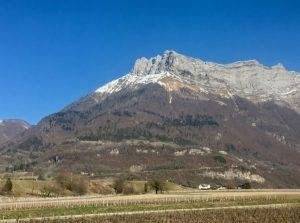
A series of powerful storms with high winds and heavy hail swept through the Italian wine-growing region of Gattinara in Piedmont, causing significant damage to the vineyards. Eyewitnesses said that large hazelnut-sized hailstones cut the leaves and damaged the skin of the young berries. According to winemakers, in some vineyards, 80-100% of the vines were affected.

Lorella Zoppis, co-owner of Antoniolo winery, noted that there has been no such damage since 1971: “Unfortunately, now there are heavy rainstorms almost every year, but usually damage from them can only be observed in certain areas. In this case, the disaster struck almost all vineyards on the territory of Gattinara, as well as part of Bramaterra, Costa della Sesia and Gemme.”

Usually, hail has a very local impact, but in recent years the intensity of storms has increased, which, according to scientists, is associated with climate change. The elements can cause especially severe damage during a period when young grapes are not yet strong enough to withstand such unfavorable conditions. It will take a few more weeks for winemakers to determine how long it will take for the vines to recover and what the actual loss is.

Heavy hail storms hit the wine region of Gattinara, damaging up to 100% of the vines.

The Minister of Agriculture comes to support champagne producers following tensions with Russia

Julien Denormandie, the Minister of Agriculture and Franck Riester, Minister Delegate in charge of Foreign Trade are visiting Epernay this Friday, July 9. They come to support champagne producers following the tensions of recent days with Russia.


It is a law that the winegrowers of Champagne find grotesque. At the end of last week, Russia signed a law which requires that only Russian sparkling wines can bear the name of “champagne”. The Minister of Agriculture, Julien Denormandie, and Franck Riester, Minister Delegate in charge of Foreign Trade are visiting Epernay this Friday July 9 to provide support to champagne producers in the face of these changes in legislation.

In France, this change in legislation has consequences: it now requires distributors of champagne brands to write on the back label the words “sparkling wine”.

The Interprofessional Committee for Champagne Wines (CIVC) deplores that this regulation does not provide Russian consumers with clear and transparent information on the origin and characteristics of the wines. It also regrets that this law signed by Vladimir Poutine calls into question more than twenty years of bilateral discussions between the EU and Russia on the protection of appellations of origin.

Support from elected officials

Marne senators Françoise Férat, Yves Detraigne and René-Paul Savary wrote a joint letter to the Minister for Foreign Trade. They ask that the champagne appellation be exclusively reserved for French producers.

The Minister of Agriculture Julien Denormandie and Franck Riester, Minister for Foreign Trade arrived at 8 a.m. today at the Maison du Champagne in Epernay. They will discuss this issue with professionals from the wine sector. After that, they will visit the Pol Roger Champagne House.


“There is no question of compromising with the defense of the interests of our champagne producers, called into question by the new Russian legislation. With our EU partners, we will not hesitate to sue Russia in the WTO if the situation calls for it.”


Photo: Radio France – Stéphane Maggiolini

Julien Denormandie, the Minister of Agriculture and Franck Riester, Minister Delegate in charge of Foreign Trade are visiting Epernay this Friday, July 9. They come to support champagne producers following the tensions of recent days with Russia.

Medal in the piggy bank of “Honey Badger”

The drink of a young Ukrainian brand “Honey Badger” was awarded at an international competition.


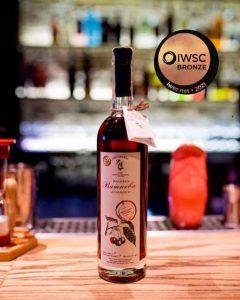
At the International Wine & Spirit Competition (IWSC), one of the most famous and prestigious international competitions in the field of alcoholic beverages, which takes place in London, the jury awarded a bronze medal to Cordial “Cherry Home” from the Ukrainian company Honey Badger.

The family business, founded in 2015, produces traditional drinks according to revived recipes that the brand owners – Yulia Kalenskaya and Artem Skubenko – are looking for throughout Ukraine. Currently, the company plans to enter export markets. And the first steps in this direction have already been taken, as evidenced by the awards received by the brand at international competitions, including a medal at the IWSC.

Honey Badger

The International Wine & Spirit Competition is one of the most famous wine and spirits competitions in the world. The jury members of the competition are leading professionals in the alcohol industry, including producers, sommeliers, distributors, and critics from all over the world. To maintain the high-quality standards of the competition, technical means are improved annually, the criteria for evaluating alcoholic beverages are clarified and toughened. Therefore, the IWSC award is a mark of the international quality standard.

Congratulations to Honey Badger and we wish you new victories!

The drink of a young Ukrainian brand “Honey Badger” was awarded at an international competition.

Tour de France: 10th stage in Savoie

For the 10th stage of the Tour de France this Tuesday July 6, cyclists followed the vineyards of Savoie. A few kilometers to follow in the first half hour before they joined the Isère, then the Drôme to find the vineyard in Valence.


After a day of rest in the high mountains, in Tignes, the Tour de France riders slowly descended. They departed from Albertville, the city that made its mark in 1992 with the Olympic Games and its events spanning one of the largest ski areas in the world. Its brilliant opening ceremony, imagined by choreographer Philippe Decouflé, was also a milestone.

Keep your eye from Fréterive

You had to keep an eye from the start of the stage because the Savoyard vineyard is not huge, with 2,100 hectares, or 1% of the French vineyard. In addition, there was only a small part that was crossed by the Tour. The first vines appeared on the north side of the road, to the right of the racers, a dozen kilometers from Albertville, very quickly, in the town of Fréterive. Immediately after, we saw the castle of Miolans in Saint-Pierre d´Albigny, the village of Saint-Jean de la Porte, then those, still in the middle of the vines, of Cruet and Arbin. This latter terroir is known for producing red wines for aging, made from the Mondeuse grape variety, whose spicy scents evoke Syrah from the Rhône.

Tour de France Savoie

Chignin and Apremont

In Montmélian, the vines continue to cover the lower slopes when the road turns slightly to north-west. Very quickly we arrived at Chignin, one of the best-known vineyards for some of its ample whites, the Chignin-Bergeron from the Roussanne grape – another nod to the northern Rhône valley. This was where the panorama opened majestically on the other side of the road: on the left, cyclists discovered Mont Granier whose slopes are home to the vines of Apremont, one of the most popular wines of Savoie. It is lively and fresh, made from the Jacquère grape like its neighbor from the Cluse de Chambéry, Abymes.

Tasting at the stages

It is not known if racers had the opportunity to discover the wine richness of the vineyards they passed through. What we do know is that the Savoie Wines association organized tastings for tourists and admirers in the stopover towns that combined liquid and solid appellations, including the many Savoyard cheeses. For the 9th stage, the CIVS, Interprofessional Committee for Savoie Wines, was in Cluses (Haute-Savoie) and presented the wines of the part of the vineyard located in this department (to the north going towards Lake Geneva) like Ayze. Since Sunday, the stands have been set up in Albertville and have done the same for wines from the Combe de Savoie with cheeses from Beaufort or Abondance. Two estates presented their production there, Pascal Paget from Chignin and Diane Gounel from the aptly named Domaine Vendange in Saint-Pierre d´Albigny.

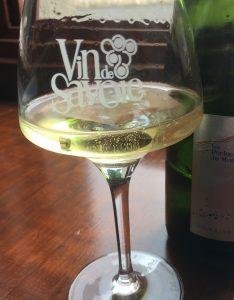
Glass of Savoie white wine

Photo I. Bachelard, CIVS

Based on the material of Terre de Vins

For the 10th stage of the Tour de France this Tuesday July 6, cyclists followed the vineyards of Savoie. A few kilometers to follow in the first half hour before they joined the Isère, then the Drôme to find the vineyard in Valence.

Heineken: beer is on your heels!

From now on, the Heineken robot refrigerator will accompany the owner on picnics.


Heineken has developed a robot that uses motion sensor technology to keep track of its owner and follow them everywhere.

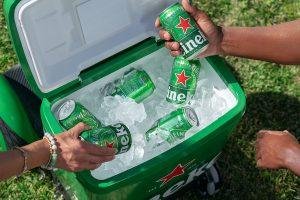
The Beer Outdoor Transporter (B.O.T.), that is how the intelligent machine is called, moves on two large and four smaller wheels. The robot holds up to 12 bottles / cans of beer in ice.

Heineken

According to Heineken, B.O.T. has “a charming personality, it talks to his owner, asking helpful questions such as “Are you thirsty?”

Heineken B.O.T.

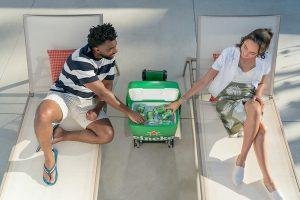
The robot, released under the motto “Wherever you go, your Heineken will follow you”, is ready to become your best companion in the summer and accompany the owner on picnics and BBQ. The developers joke that it would be nice to program B.O.T. on applying sunscreen to its owner, so he would become a completely irreplaceable companion.

Prepared by A. Bantysheva based on thedrinksbusiness.com

Photo: thedrinksbusiness.com, ideahuntr.com

From now on, the Heineken robot refrigerator will accompany the owner on picnics.

Chianti Classico: the Additional Geographical Units in 2022

Wineries in the Chianti region will now indicate certain areas on their top wine labels and will no longer use non-Italian grape varieties in those wines.


The Consorzio Chianti Classico Assembly, the official wineries’ alliance, voted earlier this month on two important issues for the region. They agreed to formally recognize 11 subzones of the Chianti Classico, known as the Unità Geografiche Aggiuntive or UGA. Members also voted to tighten the rules for wines in the Gran Selezione category. The wines of this elite category must now contain 90% Sangiovese, and the rest of the grapes must be traditional for the region.

Giovanni Manetti

“90 percent voted for the UGA and I didn’t have to do anything special to convince them,” said president of the Consorzio Giovanni Manetti. “They are all more and more aware that ‘territory matters’ and that we need to strengthen the relationship between wine and the particular piece of land on which it was born. Quality is not the only satisfaction of taste, but also uniqueness, and territory is the production factor that provides it.”

As consumers become increasingly interested in the origin of the vineyards, the changes highlight the region’s unique terroirs. The names of the 11 subzones will also be added to the labels. These are Castellina, Castelnuovo Berardenga, Gaiole, Greve, Lamole, Montefioralle, Panzano, Radda, San Casciano, San Donato in Poggio and Vagliagli.

Chianti Classico producers have been debating for a long time which is better: to simplify the labeling or to highlight the special terroirs of the historical region. The UGA decision is definitely moving towards the latter.

Initially, UGAs will only appear on labels for Gran Selezione wines, the highest quality wines in the region, accounting for about 5 percent of the wines produced from each vintage. Over the next four years, it is planned to extend the UGA concept to the rest of the Chianti Classico wines.

Wineries in the Chianti region will now label certain areas on their top wine labels and will no longer use non-Italian grape varieties in those wines.

South Africa re-introduced a ban on the sale of alcohol

The country’s government has banned restaurants and the sale of alcoholic beverages as part of the restrictions associated with the third wave of Covid-19.


South African President Cyril Ramaphosa announced the introduction of new measures aimed at protecting the country’s citizens in conditions of the growing third wave of the coronavirus pandemic. Thus, mass gatherings of people both indoors and outdoors, including visiting restaurants, are prohibited. The restaurants sector will be able to work only for take-away or delivery. In addition, a complete ban on the sale of alcohol is being introduced. The restrictive measures will last for two weeks, after which the possibility of lifting them will be considered by the government.

The South African Liquor Brand owners Association has already stated that they strongly disagreed with the decision of the authorities because they believe that “alcohol consumption is unlikely to be the driving force behind the current rise in infection rates.” In addition, such measures, according to the members of the association, can harm not only the alcohol sector, but also the country’s economy as a whole.

Since the beginning of the pandemic, the ban on alcohol in South Africa was introduced three times, and the government did not support the industry in any way and did not compensate workers for the loss of jobs because of the bans. The sector’s losses as a result of restrictive measures amounted to about 36.3 billion rand (2.5 billion USD).

The country’s government has banned restaurants and the sale of alcoholic beverages as part of the restrictions associated with the third wave of Covid-19.

Glory to Ukraine vine was planted in the Official Residence of the Ambassador of Argentina

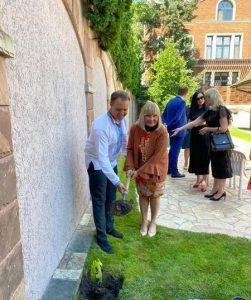
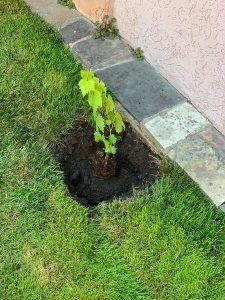
Ukrvinprom Corporation and the Embassy of the Argentine Republic in Ukraine symbolically celebrated the historic victory of the Ukrainian national football team at the Euro 2020 championship. On the territory of the Official Residence of the Ambassador of the Argentine Republic to Ukraine, a vine was planted. It belongs to the variety with the symbolic name – “Glory to Ukraine”. The event took place on the World Environment Day.


“The victory of our national team in a difficult struggle showed the character, strength of spirit and indomitability of Ukrainians. So, we, together with our Argentine friends, decided to symbolically celebrate this historic victory, which marked the Glory of Ukraine to all of Europe, the whole world. I am sincerely grateful to Ambassador Elena Leticia Mikusinski for actively promoting friendly and business relations between the two countries, in particular, Ukrainian and Argentine winemakers,” said Volodymyr Kucherenko, CEO of Ukrvinprom.

Elena Mikusinski and Volodymyr Kucherenko

“This event, as a continuation of the consistent cooperation of Argentines with Ukrainian winemakers, is of great importance to us. Argentina will always show its institutional support to Ukrainians, Ukrainian football, Ukrainian winemaking. We wish the national football team of Ukraine new victories!” – stated the Ambassador of the Argentine Republic to Ukraine Ms. Elena Leticia Mikusinski.

Glory to Ukraine vine

The event was also attended by Ambassador Extraordinary and Plenipotentiary of the Republic of Cuba to Ukraine Ms. Natacha Díaz Aguilera, Ambassador Extraordinary and Plenipotentiary of Montenegro to Ukraine Ms. Dragica Panorac, Ambassador Extraordinary and Plenipotentiary of the Republic of Croatia to Ukraine Ms. Anica Djamić and founder and president of the Business Woman Club Hanna Krysiuk.

Ukrvinprom Corporation and the Embassy of the Argentine Republic in Ukraine symbolically celebrated the historic victory of the Ukrainian national football team at the Euro 2020 championship. On the territory of the Official Residence of the Ambassador of the Argentine Republic to Ukraine, a vine was planted. It belongs to the variety with the symbolic name – “Glory to Ukraine”. The event took place on the World Environment Day.

Movie night in Chateau du Clos de Vougeot

Chateau du Clos de Vougeot celebrates the restrictions lift with the gastronomic dinner and night movies projected on the XII century wall in the wine cellar.


Innovation is what many businesses and facilities seek as the result of the pandemic impact. Developing new ideas and creating new meanings aim to reflect the current consumer needs and attract new audience to products and services one offers.

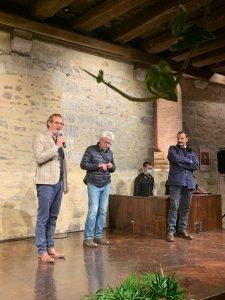
On June 30, Chateau du Clos de Vougeot held a gastronomic dinner prepared by its own chef and a cinema evening with the presence of film director Christian Vincent and winegrower-actor Jean-Marc Roulot. This was absolutely a new event format for the castle combining wine, gastronomy, and cinema art.

For an aperitif, Crémant de Bourgogne brut blanc tasteviné with traditional gougères (a baked savory choux pastry with cheese) were served at the inner yard of the Chateau. It was accompanied by a small historic narrative.

Chateau du Clos de Vougeot

During the dinner, an exceptional meal and wine pairing was proposed. Half-moons of red mullet with crayfish and summer vegetables were served with Saint Aubin blanc premier cru 2015 tasteviné. Roasted aveyron veal tenderloin with oyster mushrooms was paired with Mercurey rouge premier cru 2015 tasteviné and selection of fresh and refined Côte d´Or cheeses – with Nuits Saint Georges 1er cru «les Chaboeufs» 2015 tasteviné.

Chateau du Clos de Vougeot no longer produces wine and do not promote specific wine producers of the region. That is why you can come across the variety of Burgundy wines on the table there.

Cellar Clos de Vougeot

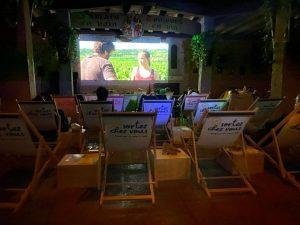
Finally, as the icing on the cake, two quality movies about French gastronomy and wine were selected to be projected on the XII century wall in the wine cellar – “Les Saveurs du Palais” by Christian Vincent (The Flavors of the Palace) and “Ce qui nous lie” by Cédric Klapisch (“Back to Burgundy”).

The atmosphere of the transatlantic boat with chaise lounge reigned at night. Besides, the projection directly on the stones gave a special dimension to the films.

Arnaud Orsel

“During the Covid period, we had to think about new possibilities for the Chateau du Clos de Vougeot. At that time, we all felt lack of culture – all the theatres and restaurants were closed,” shares Arnaud Orsel, General Intendant of the Confrérie des Chevaliers du Tastevin.

“Initially the idea of drive-vigne involved the projection of the movies on the facade of the castle in the middle of the vineyards. However, the weather conditions transported it to the XII century wine cellar. That is how we came up with the gastronomic and enological festival of films. This is an appetizer to a potential annual festival at one of the temples of Burgundy gastronomy”, he concludes.

Chateau du Clos de Vougeot celebrates the restrictions lift with the gastronomic dinner and night movies projected on the XII century wall in the wine cellar.

Украина