
Увага!

Увага! На сайті використовуються cookie файли.

The site uses cookie files

Даний сайт має вікове обмеження.

This site has age restrictions!

Я підтверджую, що мені, на жаль, давно виповнилося 18 років
I confirm that I have 18 years!
prowein
prowein

Gastronomy and Wine Portal

Francis Ford Coppola sells his winery

The largest American producer Delicato Family Wines became the buyer of the Coppola winery.


In addition, Delicato also acquires the Virginia Dare winery in Geyserville, including the Archimedes vineyard, as part of the deal.

Following the merger, Delicato will become the fifth largest producer in the United States and the third largest exporter of Californian wines.

Chris Indelicato, Chief Executive Officer, noted, “Today marks a historical milestone for the company as we welcome the Francis Ford Coppola Winery and their brands under the Delicato portfolio. As the winery has accelerated growth over the last five years, today earmarks the continuation of our family’s work and the culmination of a shared vision to lead the industry.”

Founded in 1924, Delicato Family Wines is one of the ten fastest growing wine companies in the United States. Its portfolio includes the brands Diamond Collection, Noble Vines, Gnarly Head, Z. Black Stallion and Three Finger Jack.

Francis Ford Coppola Winery produces over 40 wine brands, and the average price ranges from $ 10 to $ 30 per bottle. Vineyards occupy 2 thousand hectares of the surrounding area. One of the most significant Coppola brands that Delicato will add to its portfolio will be Coppola Diamond, the No. 3 US super premium wine brand, with the Classic Diamond Cabernet Sauvignon and the bestselling Diamond Claret in the Coppola family.

The largest American producer Delicato Family Wines became the buyer of the Coppola winery.
Dijon: crème de cassis producers win against Chinese manufacturers

The four producers of crème de cassis from Dijon (Côte d´Or) won their case against Chinese manufacturers who wanted to usurp this geographical origin yet protected by an appellation.


In Dijon (Côte d´Or), regional specialties can be bought at the market: old-fashioned mustard, Burgundy snail, not to mention crème de cassis. This liqueur created in 1941 is known throughout France. Despite the protected designation of origin, Chinese manufacturers have sought to usurp the name of this product made in the heart of Dijon. This blackcurrant, produced in Burgundy, is macerated for several weeks using a traditional technique. “We’ve been doing this for 180 years now, so obviously we want to protect our blackcurrant,” says Claire Briottet, producer.

Know-how to protect

The four producing houses of crème de cassis fought for two years to prevent these manufacturers from appropriating their know-how and especially the geographical indication of Dijon. On a Chinese bottle, however, we see that it is written “Crème de Cassis Dijon”. “Who prevented them from doing that with the aroma? We put water with sugar in the aroma and poof, we write ‘crème de cassis’,” insists Claire Briottet. More than 8 million bottles are produced each year in the region, and a third is exported to Asia, in particular.

Crème de cassis is a sweet, dark red liqueur made from blackcurrants. In Burgundy, it is usually added to crémant de bourgogne or AligotéSeveral cocktails are made with crème de cassis, including the very popular wine cocktail, kir. It may also be served as an after-dinner liqueur or as a frappé.

The four producers of crème de cassis from Dijon (Côte d´Or) won their case against Chinese manufacturers who wanted to usurp this geographical origin yet protected by an appellation.

Chilean winery revives the lost art of ampelography

The Montgras winery has released a new collection, with the help of which it intends to bring the forgotten craft of ampelography back to life.


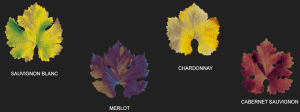
Nowadays, the ancient art of ampelography, thanks to which it is possible to identify various grape varieties by the color and shape of their leaves, has receded into the shadows due to the development of modern technologies. Today all ampelographic information about genotypes (varieties, forms, and clones) necessary for variety study, introduction, and selection, are accumulated in the data banks of the grape gene pool.

To pique the interest of young wine lovers in the arts, Montgras has launched the De Vine collection of 11 wines, each labeled with a matching grape leaf. The QR code on the back of the bottle allows consumers to learn more about each variety and the visuals of its grape leaves.

ampelography

“There are over 14,000 different grape varieties and they all look a little different, so we decided to include a real photo of the corresponding grape leaf on the label of each wine to give consumers an idea of what it looks like,” says Adolfo Hurtado Cerda, Managing Director of Montgras.

To work on the collection, the winery hired the famous designer Ximena Ureta, who has worked with Chilean wineries for 25 years. “Today, wine label design has become very important to the success of new collections, as labels can attract consumers and contribute to brand awareness in the market. It is important that the quality of the packaging matches the quality of its contents. I will celebrate the new dawn of ampelography by raising my glass of wine,” said Ureta.

Photo: montgras.cl

The Montgras winery has released a new collection, with the help of which it intends to bring the forgotten craft of ampelography back to life.

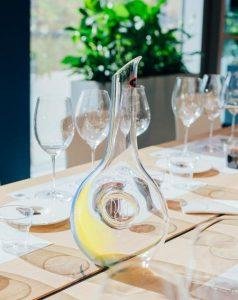
Riedel has released a collection decanter dedicated to Ukraine

On the occasion of the 30th anniversary of Ukraine’s independence, the world-famous brand Riedel has released a limited model of decanters for wine with Ukrainian symbols.


For all wine connoisseurs, the brand Riedel is considered the undisputed expert in the field of crystal and glassware. For 265 years it has been producing glasses and decanters which are highly valued on the market. Riedel’s production facilities are located in Austria and Germany, but the brand has always respected the culture and history of the countries to which it exports its products.

Maximilian Riedel with decanter Ukraine

Maximilian Riedel, President of Riedel, with a limited decanter Ukraine and a varietal glass Riedel Wine Wings

At the end of last year, Riedel’s official distributor in Ukraine, MIRS Corporation, invited the producer to congratulate Ukrainian wine fans on Ukraine’s 30th anniversary of independence. This is how the decanter Ukraine appeared, issued in a limited edition of 150 units. They can be purchased only in Ukraine and only during 2021.

decanter Ukraine

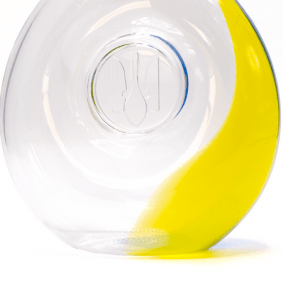
The decanter is handcrafted according to the ancient Venetian technology. Two colored glasses – yellow and blue – are melted into the dish, they symbolize the flag of Ukraine. In the center of the bowl is a Ukrainian Tryzub.decanter Ukraine with TryzubDecanter Ukraine is not just an element of decor, functional inventory for wine or an object of serving. First and foremost, it is a unique piece with its soul, a memorable artifact and decoration of the collection.


Kostiantyn Vidoborenko, Riedel brand ambassador to Ukraine, shares his impressions:

“This year Ukraine celebrates 30 years since Independence Day – a great holiday for Ukrainians. Riedel joined the greeting by releasing a decanter with Ukrainian symbols. Behind the laconic design solution is the painstaking work of masters. It is technologically difficult to melt two colors into clear glass. This is an ancient craft that has been honed for centuries by glassblowers on the island of Murano. Today, single workshops in the world work on Venetian technology, and Riedel is one of them.”

Oleh Mykhaylenko, Chairman of MIRS Corporation, adds:

“This is not the first Riedel project for the local market of Ukraine. In May of this year, MIRS Corporation together with Riedel Vice President Oleksandr Zorin, Ukrainian and French wine experts were looking for the optimal glass for the autochthonous Odessa red grape variety and the wine of the same name. We are pleased with the European brand’s attention to Ukraine. Our market is developing rapidly and opens new prospects for Western partners. MIRS Corporation, in its turn, is pleased to continue to acquaint Ukrainian consumers with wine culture and prepare special gifts for them.”

On the occasion of the 30th anniversary of Ukraine’s independence, the world-famous brand Riedel has released a limited model of decanters for wine with Ukrainian symbols.

“The Spirits G4” surpassed all analysts’ forecasts

The world’s four largest spirits producers ended the first half with revenue growth.


The four major global alcohol producers – Diageo, LVMH, Campari and Becle – have announced their results for the first half of 2021. The data released shows that the giants of the alcoholic market not only improved their performance this year compared to the same period last year but were also able to surpass the success of before-Covid 2019.

For example, the 53% revenue growth in the first half of 2021 for the French luxury goods multinational company LVMH is largely driven by the fashion and leather business. However, Moët Hennessy – part of the company which is responsible for the production of high-quality wines and spirits – increased its sales by 56% compared to the same period in 2020, when the coronavirus raged. Moreover, the company improved its performance by 14% compared to the first six months of 2019 – before the pandemic swept our planet.

Diageo also showed excellent results: the British premium spirits company announced sales growth of 16%, which exceeded experts’ expectations by 13.7%, and 6% above the level reached by Diageo in the same period in 2019.

Campari also finished the first half of 2021 with record results: Italians increased sales by 37.1% in the six months of this year and exceeded financial achievements of the before-Covid period by 22.3%.

Mexican tequila company Becle showed 9.7% higher results than last year.

Despite the fact that the story of the coronavirus has not yet been completed, and the world may face the next waves of a pandemic, the published data indicate that the main players in the alcoholic beverages sector are dealing with difficult conditions much better than they were a year ago.

Photo: drughelpline.org

The world’s four largest spirits producers ended the first half with revenue growth.

France anticipates historically low 2021 wine production

French wine production is expected to drop from 24% to 30% in 2021 and be at a “historically low” level in cause of spring frost and summer late mildew attacks, the Ministry of Agriculture said.


Earlier we reported that almost all of the French wine-growing areas had suffered several consecutive nights of frost in the first half of April, when the vines had already started to bud due to a mild winter. Farmers had tried to save their vines with braziers, candles, or other techniques, often in vain. The “biggest agronomic disaster of the beginning of the century”, announced the French Minister of Agriculture.

Climate change

To make things worse, the wine harvest was also affected by vine diseases such as powdery mildew and mildew, favoured by the rainy summer weather. It compiles between 32.6 million and 35.6 million hectolitres, according to the statistics service of the ministry, Agreste. This is in line with the estimates put forward in April by the wine industry. “Wine production in 2021 is forecast to be historically low, lower than those of 1991 and 2017, also affected by a severe frost in spring,” notes Agreste. “For now, the yield would be close to that of 1977, the year when the wine harvest was reduced by a destructive frost and summer precipitation,” it added.

The vagaries of the weather have revived discussions on the overhaul of crop insurance, considered more and more urgent in the face of the multiplication of extreme weather phenomena. A reform will be presented “at the start of the school year”, recently indicated the Ministry of Agriculture. The April frosts followed a period of great mildness that favoured the budding of crops, and the question of a possible link with climate change was quickly raised. Prime Minister Jean Castex announced in the wake of the freeze a cumulative total of one billion euros in aid for affected winegrowers. For scientists at the international World Weather Attribution network, there is little doubt that the likelihood of a late frost has been significantly increased by climate change and will be even more so in the future.

Second wine producing country in the world after Italy and leading exporting country, France intends to defend its market shares despite this drop in production in 2021. Especially since in 2020, its wine was not very well sold due to health restrictions linked to the pandemic, but also American surcharges decided by Donald Trump (they were suspended in June for five years by the administration of Joe Biden).

“The wine can be stored. The previous harvests will allow us to respond to our customers. We will be able to support our markets”, underlines Jérôme Despey, a winegrower in the Hérault.

Based on the materials of larvf.com

French wine production is expected to drop from 24% to 30% in 2021 and be at a “historically low” level in cause of spring frost and summer late mildew attacks, the Ministry of Agriculture said.

In the blue sea, in white foam…

The wreckage of an ancient Roman ship carrying wine was found off the coast of Sicily.


More recently, we talked about a unique treasure of wine and spirits discovered in the summer residence of the Greek royal family, located near Athens. And today, information about a new find came from Italy: researchers discovered the wreckage of a ship that, according to assumptions, could transport wine and olive oil in the Mediterranean Sea more than 2,000 years ago.

Ceramic amphorae, which were used in ancient Roman times to store and transport wine, were found on the seabed near the wreck of an ancient ship off the north-western coast of Sicily. Scientists date the find to the second century BC.

Experts used a remote-controlled robot to examine the shipwreck at a depth of 92 meters, near the coastal town of Isola delle Femmine and near Palermo.

The amphorae found on the seabed are of the Dressel 1 A type, thick-walled vessels that appeared in ancient Rome at the end of the 2nd century BC and were used to store and transport liquids.

“The Mediterranean Sea has consistently provided us with valuable insights into our history and finds at the bottom of the sea will help to better reconstruct the details and characteristics of the maritime trade of ancient Rome,” said Valeria La Vigni, Sicily’s naval superintendent who leads the project.

Photo: ARPA Sicilia/Soprintendenza del Mare della Regione Siciliana

The wreckage of an ancient Roman ship carrying wine was found off the coast of Sicily.

Champagne vines become farther apart

In Champagne, the centuries-old rule for the distance between planted vines was changed.


France is one of the few countries where the wine industry is strictly regulated by rules based on the experience and traditions of generations. However, the challenges of our time, in particular, climate change, have led to the fact that even here they are forced to make changes to the seemingly unshakable centuries-old rules of national viticulture. So, in 2018, the French National Institute of Origin and Quality (INAO) added a third category of acceptable grape varieties capable of “adapting to the climate and the environment”. And this year, Bordeaux officially approved six new grape varieties that best adapt to global warming conditions.

Now the changes have touched another world-famous French wine region – Champagne, where they approved a change to the long-standing rule on the maximum distance between vines. This rule states that rows of vineyards cannot be located more than 1.5 meters from each other: adherents of the rule are sure that vines at a greater distance would not have to compete strongly for water and nutrients, which would lead to a bountiful harvest with low quality berries.

The regional winegrowers’ association Syndicat General des Vignerons del la Champagne (SGV) conducted research on this issue and concluded that reducing the planting density of vineyards would bring many benefits without compromising the quality of the champagne, for example, it would make it easier to care for vines using modern technologies.

Based on this, the SGV board approved changes to increase the distance between vines up to 2.2 m. In addition, according to the SGV study, vineyards with lower planting densities can reduce greenhouse gas emissions by 20% with the use of better equipment.

Critics of the innovation are concerned that the use of modern equipment in the vineyards could damage the reputation of the region, known in the world for the hand-picking of grapes, carried out for several centuries. In addition, the use of technology will deprive many of the people currently employed in the vineyards of their jobs.

SGV President Maxime Toubart said the rules still need additional INAO approval and will not be binding: “It will just make our work in the vineyards easier and bring significant economic benefits. This is not a dogma, but another additional tool to be more successful in our aspiration to produce quality products – wines that deserve to be called champagne.”

Photo: decanter.com

In Champagne, the centuries-old rule for the distance between planted vines was changed.

The 30-year-old Macallan cask will go under the hammer

Bonhams will be holding a rare whiskey sale in Hong Kong on August 20, featuring a 30-year-old cask of Macallan 1991 Scotch whisky.


Distilled in December 1991, the Macallan whiskey was poured into a Sherry cask in 2017, giving the drink a unique flavour with notes of clove, resin, dried fruit, and soft tannins. The high alcohol content (about 51.5%) opens up the possibility of both subsequent long-term storage and bottling.

Daniel Lam, Bonhams director of wine and spirits in Asia, commented on the upcoming auction: Whisky casks hitting 30 years old or above are exceedingly rare in the current market. This 1991 Macallan cask on offer in our August sale is an all-rounder of its class: it comes from a prestigious distiller, is casked in top-notch wood, a high-alcohol content and an attractive estimate. We expect a lot of interest as the market now matures towards collecting casks.”

The cask is estimated at approximately HK$ 4 million ($ 514,300 USD).

In November 2019, Bonhams already put up for auction a 30-year-old whiskey cask of Macallan Distillery, when the lot was sold for HK$ 4,464,000, which became the world record for the sale of whiskey in a cask.

Photo: bonhams.com

Bonhams will be holding a rare whiskey sale in Hong Kong on August 20, featuring a 30-year-old cask of Macallan 1991 Scotch whisky.

Sotheby’s and Distillers’ Charity to hold joint auctions

The famous auction house and the charitable division of the London Worshipful Company of Distillers have agreed to cooperate on the sale of unique Scotch whiskey samples to support disadvantaged young people in Scotland.


The partnership will last six years, during which three auctions will be held, where ultra-rare and unique drinks will be presented for sale. The first auction, titled “The Distillers One of One”, will take place at Barnbugle Castle near Edinburgh on December 3, 2021. The auction will feature over 40 lots showcasing the craftsmanship, innovation and value of Scotch whiskey, with a total initial cost of lots of 250,000 pounds.

All funds raised through the auction will go to a foundation created by The Distillers’ Charity, which aims to support disadvantaged young people in Scotland, change their living conditions and provide them with opportunities for positive change in their lives.

Jonathan Driver, Master of The Worshipful Company of Distillers, said: “Our ties with the Scotch Whisky Industry have been invaluable in creating this landmark sale, and the generosity shown has been overwhelming. Across the spectrum of the industry from independents to family-owned and global companies, we have come together in a collective endeavour to support the youth of today in Scotland through practical training and education. We are also delighted to have Sotheby’s on board to help with our philanthropic mission which will have far-reaching benefits for decades to come.”

The famous auction house and the charitable division of the London Worshipful Company of Distillers have agreed to cooperate on the sale of unique Scotch whiskey samples to support disadvantaged young people in Scotland.

Украина