
Увага!

Увага! На сайті використовуються cookie файли.

The site uses cookie files

Даний сайт має вікове обмеження.

This site has age restrictions!

Я підтверджую, що мені, на жаль, давно виповнилося 18 років
I confirm that I have 18 years!
prowein
prowein

Gastronomy and Wine Portal

Connected label: NFC technology modernizes wine packaging

The dressing of wine gets inspiration from the “contactless” technology of our bank cards. NFC (Near Field Communication) technology opens up new possibilities for the wine trade within smartphone reach. A guarantee of authenticity and a logistical tool, radio frequency identification (RFID) is becoming an asset in digital marketing.


What is NFC technology?

The NFC tag, also called an inlay, is a passive transmitter that uses radio waves. The electronic chip transmits information through its antenna which captures the energy supplied by any smartphone, Android, or iPhone, placed near the tag. A thin and small support, it slips invisibly under the freshly printed adhesive label or is added as a chip on your already labeled wines.

Avery Dennison is the world’s largest technology partner with multiple R&D centers and production sites in every region of the world. Initially a traceability tool, like its use in the pharmaceutical and food sectors, the NFC tag has become an asset in customer relations. “Big houses use it to guarantee the authenticity of their products around the world,” explains Benoit Jourde, Business Development Manager at Avery Dennison. “It is more reliable than a QR code and can even become a pledge of inviolability, a definite asset in limiting counterfeiting.”

What is a connected label for?

NFC technology allows the traceability of each bottle to better understand its distribution channel.

The bottle is localized each time it passes a dedicated reading gantry. If your bottle is destined for the US market and it is scanned in China, you immediately identify which link in the distribution chain has caused a problem. The consumer who connects to the bottle also becomes an ally in targeted market knowledge. Thanks to geolocation, you can know in real time where the bottle is located and whether the consumer is scanning it in a store, restaurant or at home.

David Lamballais, Development and Innovation Director for the Tag & Play solution explains how technology has naturally found its place in wine packaging: “Historically, we are a family printing company created more than 50 years ago. In 2010, we incorporated NFC technology as a simple addition to the label design. The use of logistics appeals to customers, but marketing applications open the door to a multitude of possibilities.”

The widespread use of smartphones, purchases influenced by online research and the desire for a direct connection with the brand are all favorable criteria for using the NFC tag for commercial purposes.
Boisset Collection

Communication without limit with the consumer

For the winegrower or the merchant, introducing NFC technology means the possibility of communicating and creating a link directly with his customer. Solutions such as the Tag & Play marketing and communication platform put technology within reach of winegrowers and offer an adapted digital offer. “The NFC tag allows secure redirection to the winery’s website or to any web content chosen by the winemaker.”

NFC technology can thus provide access to information as precise as the parcel where the grape was harvested, the date of harvest or bottling. The information can be updated, such as indicating the ideal tasting time for example. The NFC tag provides an original interactive user experience that tends to become more and more customizable.

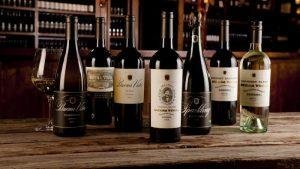
Boisset wines have implemented NFC technology first for the sake of authentication on their JCB range in order to offer a tasting experience to their VIP customers from their salon in Yountvil (California, USA). Collectors and members of wine clubs quickly appreciated being able to have information available to them, even in a more prioritized way of giving exceptional wines. Extended to other ranges this year, the connected label provides access to the founder’s personal stories or videos on the origins of the wines.

NFC technology heralds the future of the label. The dressing of your wine is thus designed in your image and goes beyond the paper medium to appeal to the consumer.

Photo: Boisset Collection, Resource Label Group

The dressing of wine gets inspiration from the “contactless” technology of our bank cards. NFC (Near Field Communication) technology opens up new possibilities for the wine trade within smartphone reach. A guarantee of authenticity and a logistical tool, radio frequency identification (RFID) is becoming an asset in digital marketing. What is NFC technology? The NFC […]

Growth abnormalities in the Champagne vines

This spring, the Champagne vines are observed to have growth irregularities in some of their plots once again. The phenomenon remains unexplained for the moment. The Champagne Committee is carrying out studies to identify the causes.


This year in Champagne, the winegrowers once again observed shoot anomalies in some of their plots. What are the symptoms? Abnormally short internodes, a “shriveled” aspect of the shoots, leaves with asymmetric contours. This causes reduced vegetative growth and a lack of vigor.

“This is a problem that has been lasting for a few years in the oldest plots. However, it was brought up to us in 2019 in Barsuraubois. But we have the feeling that the phenomenon is spreading, with cases that have been reported to us all over the place: in Sézannais, the Ardre Valley, in Cuis, Chouilly, Barséquanais…”, lists Constance Demestihas, from the Champagne Committee.

Nutritional imbalances and disruption of sap circuits

Since last year, the interprofession has been carrying out investigations to determine the causes of these physiological disorders. The first analyzes revealed “nutritional imbalances and disruption of sap flow” in the “abnormal” vines.

But currently, the Champagne Committee does not know the origin, nor the link it may have with the shoot anomalies observed. This year, it will therefore continue its work and carry out in-depth monitoring of water and nutritional constraints on a network of affected plots. The Committee will also perform virological diagnoses at the end of the season.

Photo: Champagne Committee

This spring, the Champagne vines are observed to have growth irregularities in some of their plots once again. The phenomenon remains unexplained for the moment. The Champagne Committee is carrying out studies to identify the causes.

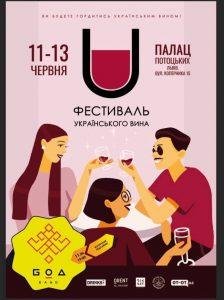
Go_A is the music headliner of the Ukrainian Wine Festival!

On June 11, the heroes of Eurovision, the Ukrainian Go_A_band will end the first day of the Ukrainian Wine Festival.


Go_A band is like Ukrainian wine. Young, but already mature. As ones that will thunder all over the world and not stay unnoticed. On June 11, Go_A_band will end the first day of the Ukrainian Wine Festival with an hour concert in the courtyard of the Pototski Palace at 7 pm.

The first Ukrainian Wine Festival will take place on June 11-13 on the territory of the Pototski Palace (in Lviv).

The best products of domestic wine, titans of the wine business and craft winemakers will come together to prove that wines made in Ukraine are not worse, or even better than European or New World wines to which everyone is accustomed.

Exquisite gastronomy at the festival will complement the taste of Ukrainian wines. In addition, the festival will host a variety of tastings which will be held by representatives of iconic Ukrainian brands. And the best domestic winemakers will take part in the Competition “The best Ukrainian wine 2021”. The professional jury will choose the best white, red, rosé, and sparkling wine.

Ukrainian Wine Festival

There will be a Wine and Art zone. Both wine and art are narrators of amazing stories. They are a pleasure glorified since ancient times. They are incredible associations and feelings, tasted through fascination with color, aroma, and taste.

From today, the unique Radio Wine UA, created especially for the festival, is on the air. All connoisseurs of good Ukrainian wine and quality music will be able to immerse themselves in the atmosphere of the festival by simply turning on the radio.

Buying a ticket to the Festival until June 10 (UAH 125 / person / day), you get a tasting glass, because if you taste wine, it is worth doing it beautifully and aesthetically. The organizers also strongly remind about the culture and responsible consumption of alcoholic beverages, social distance, and the mask regime.

The ticket price for “early birds” for the Go_A_band concert is UAH 250.

Tickets to the ground floor worth UAH 800 are also on sale.

  • Tickets for the June 11 concert can be purchased here.
  • Tickets for the Ukrainian Wine Festival here.
  • More about the festival on the Facebook and Instagram pages.

On June 11, the heroes of Eurovision, the Ukrainian band Go_A_band will end the first day of the Ukrainian Wine Festival.

Pinot grigio haute couture

The designer of the fashion house Moschino has designed pinot grigio of the famous Italian winery Ecco Domani.


A professional career of Jeremy Scott, creative director of the world’s most famous Italian fashion brand Moschino, began in 1996 when he moved to Paris after graduating from Pratt Institute in New York. In the same year, the Italian company Ecco Domani released its first pinot grigio.

In subsequent years, Jeremy Scott declared himself as a rebel from the fashion world and one of the most promising couturiers of our time, having worked with a number of world stage and film stars. And Ecco Domani became one of the most recognizable pinot grigio brands in the world. Now they have teamed up to create a limited-edition wine collection.

Having received an offer from an Italian wine brand, Scott immediately decided that the new line would be a tribute to the 90s – the time when both he and the winery were just starting their activities: “The 90s are a bright and bold pop culture, so, I used this frantic energy in the design of the bottles, combined with colorful graphics.”

Ecco Domani & Jeremy Scott 2020 Pinot Grigio hits store shelves in June for $12 a bottle.

The designer of the fashion house Moschino has designed pinot grigio of the famous Italian winery Ecco Domani.

Soufflet Vigne enters French market with KeyKeg PET

The supplier Soufflet Vigne is investing in the wine deployment of the KeyKeg PET packaging range, with the exclusive distribution of the Dutch brand on the French territory.


KeyKeg PET is an innovation that meets the expectations of players in the wine industry and French consumers. Like many agricultural sectors, the French wine industry is in search of innovations.

French winegrowers are particularly turning to new technologies to better meet consumer expectations.

Thus, in the distribution of wine, customers appreciate entertainment and new drinking experiences. These trends are leading wine merchants to change their business concepts and turn to bars and restaurants to diversify the shopping experience and attract younger customers.

The concept of wine in the barrel KeyKeg, developed by OneCircle, meets these new expectations. Thanks to the use of sophisticated packaging in lightweight PET barrels, its large volume, and its system for reducing the size of the packaging once emptied, the KeyKeg barrel provides:

  • better inventory management across the entire distribution chain,
  • a gain in transport costs and a reduction in waste,
  • a much wider range of wine by the glass for customers.The KeyKeg wine range, available in 10 L, 20 L and 30 L, is now stored and distributed in France by Soufflet Vigne.

Soufflet Vigne

Conquering the French market

Through this partnership with Soufflet Vigne, OneCircle, a Dutch company, aims to establish itself in the various French vineyards. Soufflet Vigne directly and exclusively on the wine market sells the KeyKeg and its accessories as well as the technical after-sales service for filling the KeyKeg. This partnership is first reflected in the takeover, by Soufflet Vigne, of the French customers of OneCircle.

From this sales, marketing, and logistics dynamic, Soufflet Vigne’s objective is to win new customers and bring OneCircle real development on the French market. For Soufflet Vigne, it is also a question of expanding its range of containers and offering an innovative product exclusively in France. The distribution of KeyKeg is part of the innovation policy for the wine industry and offers its customers, future customers and French consumers new possibilities for the distribution and consumption of wine.

A partnership between two companies serving the sustainable sector

The OneCircle company conducts technological research and the development of innovations that meet consumer expectations and are committed to respecting the environment. For nearly 30 years, Soufflet Vigne has offered winegrowers and cooperative cellars a full range of products and services, as well as technical advice, from planting to vine maintenance, including breeding and the conditioning of the wine.

Present in the heart of most of the great French vineyards (Beaujolais, Bordelais, Burgundy, Chablis, Champagne, Languedoc-Roussillon, Provence, Sancerre, Rhône Valley), Soufflet Vigne is committed to developing innovative solutions that create value for the wine sector, respecting the environment of users and consumers. Beyond its expertise in wine-growing areas, Soufflet Vigne shares values ​​similar to those of OneCircle, in particular in its commitment to sustainable, high-performance and quality sectors, with the objective of enhancing all stages of production of the wine, from the vine to the glass.

Based on the materials from Soufflet Vigne

The supplier Soufflet Vigne is investing in the wine deployment of the KeyKeg PET packaging range, with the exclusive distribution of the Dutch brand on the French territory.

BIG INTERVIEW WITH CAROLE BOUQUET

On June 3, Cité du Vin is hosting famous French actress and winemaker Carole Bouquet.


Outstanding French actress Carole Bouquet, a wine lover and winemaker, is invited to celebrate the 5th anniversary of Cité du Vin in Bordeaux.

The island of Pantelleria, situated between Sicily and Tunisia, took a particularly important place in Carole’s Bouquet heart. The island name means “daughter of the winds”.

In 2005 she launched the production of her own wine there, Sangue d’Oro. With her team, she has brought abandoned vineyards back to life to craft exceptional wines.

By taking on the challenge of resurrecting a classic wine, Passito, made in the pure tradition using dried grapes, Carole Bouquet is helping to preserve the winemaking heritage of the island. Her Sangue d’Oro is an exceptional vintage from old vines, a sweet white wine made from the Muscat of Alexandria grape variety: its aromas are very intense, and the grapes boast great resistance to extreme weather conditions.

Passito is suggested to be paired with almonds and pistachios biscuits, foie gras, roquefort cheese, almonds, or chocolate.

In 2011, she was awarded with the insignia of Commandeur of the Ordre des Arts et des Lettres by Frédéric Mitterrand, Minister for Culture and Communication, for her contributions to both culture and gastronomy.

The meeting with Carole Bouquet will take place online and in the Cité du Vin on the 3rd of June at 7 PM CET. It will be moderated by Jérôme Baudouin, editor-in-chief of La Revue du Vin de France.

You can participate in this event on site at the Cité du Vin by booking your ticket (places are limited), or online via Zoom.

Photo: Cité du Vin

On June 3, Cité du Vin is hosting famous French actress and winemaker Carole Bouquet.

LE MONDIAL DES VINS BLANCS STRASBOURG AS A REFLECTION OF GLOBAL TRENDS

The competition will present 1000 samples of the best white wines from 5 continents.


The only competition in the world dedicated to the variety of white wines will take place on October 2 and 3, 2021. The event is held under the patronage of OIV. The organizers say that the list of winners of Le Mondial des Vins Blancs Strasbourg can be seen as a reflection of global trends and evolution of viticulture on 5 continents.

From year to year, thanks to the support of official wine organizations and the best wine judges from all over the world, white wines from 20 countries compete with each other.

In 2020, the awards were received by winemakers from Austria, Chile, the Netherlands, France, Germany, Italy, Luxembourg, Romania, Slovakia, and the Czech Republic. Chile, which took part in Le Mondial des Vins Blancs Strasbourg for the first time, won DRY WINE TROPHY in the RIESLING category.

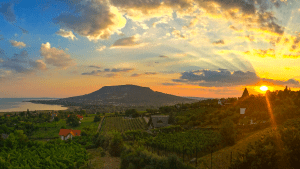
“We aim to gather 1000 samples of the best white wines in the 5 continents. After having celebrated Chile in the latest press book, the 2021 edition’s country of honour is HUNGARY. We are preparing a focus on its wines and vineyards, namely Badacsony and Villány”, the organizers say.

Le Mondial des Vins Blancs Strasbourg

The wines in the competition are divided into 12 categories:

  1. Chardonnay
  2. Chenin
  3. Gewürztraminer
  4. Muscat
  5. Pinot Blanc
  6. Pinot gris
  7. Riesling
  8. Sauvignon
  9. Sylvaner
  10. Viognier
  11. Other grape varieties
  12. Blended wines

Registration is open until August 31st. Any winery can take part in the international competition by paying €98 for a registered sample. Samples are accepted from June 1 to September 10, 2021.

Photo: mondial-vins-blancs.com, csodalatosbalaton.hu

The competition will present 1000 samples of the best white wines from 5 continents.

WINE CONSUMPTION OF DIFFERENT COUNTRIES

According to the OIV, global wine consumption fell to its lowest level since 2002.


According to the International Organization of Vine and Wine (OIV), world wine consumption fell to its lowest level since 2002: last year, world wine consumption was 234 million hectoliters. In 2020, these indicators decreased by 3%. The OIV reports that this is the lowest amount of wine drunk in any year since 2002.

The report of the International Organization of Vine and Wine says that perhaps this situation is related to Covid-19, and the drop is comparable to what was observed after the global financial crisis of 2008-2009.

“The sparkling wines category was hit the hardest in 2020, with the exception of Prosecco,” the OIV said in a report. “Bag-in-box wine sales have grown, although overall volumes remain low.”

wine consumption

According to the OIV, wine consumption in China fell by about 17% last year, a “sharp drop” for the third consecutive year. The United States remains stable compared to 2019. The International Organization of Vine and Wine attributed this to the transition to the global online commerce which helped mitigate the economic impact of the pandemic.

Top 10 countries that drink wine the most:

  • USA – 33 million hl (unchanged from 2019)
  • France – 24.7 million hl (at the level of 2019)
  • Italy – 24.5 million hectoliters (7.5% increase)
  • Germany – 19.8 million hectoliters (0.2% increase)
  • United Kingdom – 13.3 million hl (2.2% increase)
  • China – 12.4 million hl (17.4% decrease)
  • Russia – 10.3 million hectoliters (3% increase)
  • Spain – 9.6 million hectoliters (6.8% decrease)
  • Argentina – 9.4 million hectoliters (6.5% increase)
  • Australia – 5.7 million hectoliters (3.7% decrease).

Prepared by A. Bantysheva based on decanter.com

Photos: crafta.ua, vinshkaf.medium.com

According to the OIV, global wine consumption fell to its lowest level since 2002.

WSET and PROWEIN graduated 30 new wine experts

Joint young talent project by WSET & ProWein reaps the rewards. It provided a unique opportunity for 30 young wine experts from ten European countries to acquire “Level 2 Award in Wines” out of charge.


The collaboration of the Wine & Spirit Education Trust (WSET), the world’s largest education provider of wine, spirits, and sake qualifications, and ProWein, the leading international wine and spirits trade fair, as well as the largest industry meeting for professionals from viticulture, production, trade, and gastronomy, met all the aspirations. 30 young newcomers in the wine and spirit industry became certified wine experts with the “Level 2 Award in Wines”.

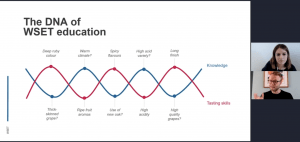
In the tasting session of London Wine Fair 2021, WSET Wine Educators Joseph Hallam DipWSET and Lucy Stevenson DipWSET explored the key differences between WSET’s globally recognised Level 1, 2 and 3 Awards in Wines and how these qualifications can benefit you throughout your career.

WSET & ProWein education

Focusing on the “Level 2 Award in Wines”, students develop their understanding of key production options and learning of how to taste and describe the product with confidence. This level is more complex and allowed the young talents from ten European countries (Belgium, Germany, France, Great Britain, Italy, Netherlands, Poland, Portugal, Switzerland, and Spain) to describe comprehensively how balanced the sample is diving into more details of the palate.

The final exam includes the most different range of wine peculiarities: grape growing alternatives in the vineyard, production process, climatic conditions for the vines, the most important grape sorts of the leading European wine-growing regions, different wine styles, aspects of wine storage and bottle ageing influence as well as the basics in wine service and pairing of food and wine.

As an additional feature of this educational initiative, extra tastings considering precisely one specific wine region were proposed the Level 2 students. For this opportunity, the “Verband Deutscher Prädikats- und Qualitätsweingüter” (VDP), the “Consorzio Vino Chianti Classico” and “Wines of Portugal” should be thanked. The joint efforts made the wine tasting possible to be carried out at home.

More than 40 selected white, red, rosé, sparkling and liqueur wines were delivered to the young experts (the average age was 27 years, the youngest was 22, the oldest 30). Moreover, the students attended an additional meeting via Zoom to discover more about ProWein behind the scenes introduced by Bastian Mingers, Director of ProWein.

WSET Rachel Webster“We have really enjoyed working with these talented young professionals from across Europe. In a difficult year for the industry, the aim was to develop useful and transferrable skills to help this group become future leaders. Running the course by video conference has allowed us to reach a wide and diverse audience, which has been new and exciting for us too. We’re looking forward to meeting the students in person at next year’s ProWein”, underlines Rachel Webster, Business Development Director EMEA WSET.
“I am very happy we managed to launch an international initiative for young wine talents in cooperation with the WSET – despite the COVID-19 pandemic and the cancellation of ProWein 2021 it caused. Originally, the final exam had been scheduled for the trade fair this year; this feature now had to be implemented online – which worked ever so well,” says Bastian Mingers, Director of ProWein, and adds: “But nothing can replace the real trade fair; it alone provides both fresh talent and seasoned professionals with the platform for networking, know-how and tasting.”

Photo: Messe Düsseldorf /Ctillmann

Joint young talent project by WSET & ProWein reaps the rewards. It provided a unique opportunity for 30 young wine experts from ten European countries to acquire “Level 2 Award in Wines” out of charge.

THE MUSEUM OF CHAMPAGNE WINE OPENS ITS DOORS

Several times postponed due to the Covid, the very first opening of the Museum of Champagne wine and regional archaeology should delight inhabitants of Épernay on Saturday, May 29 with a course built around an original common thread: chalk.


While everything was ready at the end of last year, the Musée du vin de Champagne et d’Archéologie régionale d’Épernay will finally open its doors on May 29. The place is simply magical. Housed in the former residence of Charles Perrier, built in a neo-Louis XIII style in 1855 and opening view onto an English garden, it alone embodies the luxury and excessiveness of champagne. The renovation required a trifle of 23 million euros.

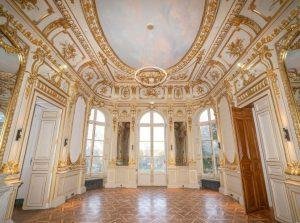
On the ground floor, the reception rooms, which notably include the ballroom, do not accommodate any display cases. They will house future events, conferences and exhibitions which should once again make the château a major center for the cultural life of champagne.

Ballroom of the Museum of Champagne

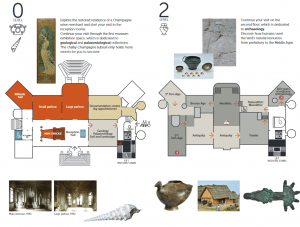
The museum is broken down into three groups, linked by an original common thread: chalk. The route begins with the rooms devoted to geology. Champagne wine lovers know that their extraordinary minerality owes a lot to the chalk of Campanian and Turonian. The reconstruction of a Lutetian beach discovered in Fleury-la-Rivière allows us to understand the genesis of this wonderful terroir.

The second pole focuses on archeology. Chalk has indeed conservative virtues which probably explains why the Marne is one of the departments that has provided the most prehistoric remains. Virtual reality headsets offer the opportunity to discover the interior of a hypogeum, a cave dug out of chalk that was used as a tomb in the Neolithic period.

Map of the Museum of Champagne

The third pole focuses on the wine of Champagne itself. It opens with an evocation of the role of the Church and the monasteries in its development. A digital terminal allows you to leaf through the evangeliary of Ebbon, a relic of those medieval times when the Abbey of Hautvillers was as renowned for its hillsides as for the quality of its copyist workshop.

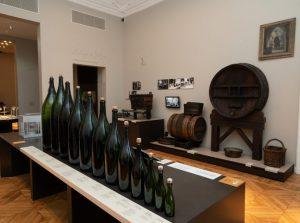
After this very suggestive introduction, we enter technical history. The circuit is not often satisfied with an alignment of traditional tools. The use of old photographs sheds light on their operation, and the presence of models of current machines prevents champagne from falling into folklore. With some, like the stirring machine, the visitor can carry out the manipulations themselves.

Wine bottles

An opening onto the imagination of champagne

Champagne is more than just a product. It is also quite an imagination, an art of living. A special room is dedicated to this dimension with screenings of extracts from films such as “Marie Antoinette” by Sofia Coppola or the contemplation of the famous “Oyster lunch”, one of the first paintings representing champagne, when the devil’s wine was first a curiosity that had to be served from very high to better enjoy the spectacle of its foam.

We will finally linger with delight on all these objects of the champagne service, unfortunately forgotten, but sometimes very ingenious: the siphon with champagne, the glass coolers, not to mention the flute with rice grains whose patterns served to mask the cloudiness of the liquid, while we had not yet mastered the technique of riddling.

The people of Champagne have constantly traveled the planet to become ambassadors of the divine bubble. They did not come back unscathed. Some have built up magnificent collections of artistic objects of all kinds brought back from their journeys. They must be placed in the context of the fashion for collecting, very widespread in the bourgeoisie of the nineteenth century, marked by romanticism and dreams of travel. Bequeathed by great local notables such as Claude Chandon de Briailles or the diplomat Jules Claine, they form a sort of cabinet of curiosities and a beautiful conclusion for this course dedicated to the world of champagne, emphasizing that the success of this wine region is the result of, first of all, its openness to the world.

Based on the materials of Terre de Vins


Several times postponed due to the Covid, the very first opening of the Museum of Champagne wine and regional archaeology should delight inhabitants of Épernay on Saturday, May 29 with a course built around an original common thread: chalk.

Украина