
Увага!

Увага! На сайті використовуються cookie файли.

The site uses cookie files

Даний сайт має вікове обмеження.

This site has age restrictions!

Я підтверджую, що мені, на жаль, давно виповнилося 18 років
I confirm that I have 18 years!
prowein
prowein

Gastronomy and Wine Portal

The forum “The wine industry in Eastern Europe: challenges, realities and future prospects”

Drinks+ is a media partner of the International Economic Forum which will be held on July 30-31 online.

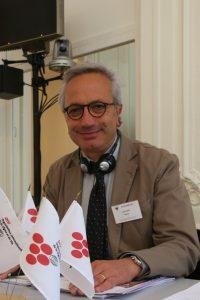
For the first time, an international event organized by OenoCo International will address the issues and challenges facing the wine sector in Eastern and Central Europe. The Forum aims to bring together producers, importers-exporters, sommeliers and wine educators to exchange ideas on the latest developments in the region’s wine industry.

The forum will consider the current state of affairs and problems in this area, offer professional solutions focused on the needs of manufacturers in Central and Eastern Europe, as well as possible ways to expand exports and enter new international markets. The Forum is also aimed at uniting the efforts of the international community of wine professionals, local and international business, as well as government bodies, academia, civil society in order to increase the competitiveness of the wine sector in the economies of Central and Eastern Europe.

The International Economic Forum will be held for 2 days in an interactive mode with panels and webinars where participants can listen to famous speakers.

Forum program:

30 July

10:00- 10:10 am Opening Remarks

10:15- 10:45 am – Petar Raychev, SCEB Vice President & General Manager CPG, Bulgaria, “Wine Production In a Circular Economy: Minimum-Waste Technologies”

11:00- 11:30 am – Antonio Rallo, Sicilia Doc winemaker and President of Consorzio Sicilia Doc, Italy.

13:00- 13:30 – Caroline Gilby, MW, United Kingdom, “Role of a native grapes in building a marketing narrative”

13:40- 14:10 – Polly Hammond, 5forests, New Zealand, “More Human Than Human: How the Eastern European Wine Industry can leverage digital to overcome challenges, build relationships, grow brands…and sell more wine.”

15:00- 15:30 – Gheorghe Arpentin, R&D Purcari, Republic of Moldova

15:40- 16:10 – Nicolae Minciuna, Oenologist Engineer, Republic of Moldova, “Wine Tourism and its impact on local communities”


31 July

10:15- 10:45 am – Elizabeth Gabay, MW, France

11:00- 11:30 am – Robert Joseph, Editorial Consultant and Columnist of Meininger’s Wine Business International, Co-owner of Greener Planet and Grand Noir Wines- Germany, “Land or Brand? Local Grapes or International? Does the future for Eastern Europe like in appellations and traditional indigenous grape varieties? Or in brands and international ones? The answer is not as clear cut as some people would like to imagine.”

13:00- 13:30 – Tony Sasa, Director of Sales Il Palagio Wines, Italy, “The success story of Palagio to penetrate key wine markets”

13:40 -14:10 – Paula Stanca, OenoCo, Launching of Consortium-Introduction of the CWC

15:00- 15:30 – Tomislav Ivanovic, Vinopedia, Serbia, “The emergence of  Balkans’ native grapes as reference examples within the vast category of grape varietals.”

15:40- 16:10 – Scott Carney, Dean of Wine Studies, Institute of Culinary Education(ICE), United States, “Making the market move!”

The detailed program of the forum can be found here.

Drinks+ is a media partner of the International Economic Forum which will be held on July 30-31 online.
A cache of rare wines and spirits found in Greece

An amazing treasure of rare wines and spirits was found at the Tatoi Palace, the former summer residence of the Greek royal family, located near Athens.


The former country palace of the Greek kings, erected on the beautiful forest-covered mountain Parnis in Attica, keeps many secrets, one of which was revealed a few days ago. During the restoration work in the premises of the residence, a cache was discovered containing more than 4,000 bottles of wines, alcoholic and non-alcoholic drinks.

Among the rare pieces found in the collection are bottles of Château Margaux, Château de Vincennes and Château Mouton Rothschild, as well as Chivas whiskey in a ceramic bottle, released in a limited edition in honour of the coronation of Queen Elizabeth II, as well as cans of soft drinks.

Tatoi Palace

The Greek Ministry of Culture, which announced the find, considers it “historically significant” and hopes that as 300 cases have yet to be opened, other treasures of wine are on the way to be revealed.

The Achaia Claus winery team, which was invited to the palace for a consultation, is collecting information and cataloguing. The winery, founded in 1861, is one of the oldest in Greece.

“The Tatoi wine and spirits collection, in addition to its significant collector value, is also of great scientific and research interest. The restoration work to showcase the former royal estate is complex. For the evaluation of the wine collection, we are working with specialist scientists who have know-how, both on an oenological level and for its historic validation,” said the minister of culture, Lina Mendoni.

After the completion of the restoration work and the study of the collection, part of it suitable for exposure will be exhibited to the public in the palace basements.

Prepared by I.Chernova based on thedrinksbusiness.com

An amazing treasure of rare wines and spirits was found at the Tatoi Palace, the former summer residence of the Greek royal family, located near Athens.

Spearhead: Scotch whiskey from infrared barrels

Scotland introduced Spearhead Scotch whiskey for production of which infrared barrels have been used.


Spearhead whole grain Scotch whiskey is produced in the Loch Lomond distillery, which is located in the city of Alexandria in the west of Scotland. The uniqueness of the drink is that it is aged in American oak barrels from bourbon, which have been additionally toasted with infrared light.

According to the creators, this procedure allows you to maximize the natural aromas of wood and give the drink “a complex and rich range of sweet notes.” The Scotch whiskey is characterized by a soft velvety taste with notes of violets, black currants, blackberries, vanilla pod, caramel and dark chocolate, making it a light neat dram, or an exciting base for longer drinks and cocktails.

Calum Leslie, Head of Innovation at Loch Lomond Group, said: “We have been working very hard to create an innovative new Scotch Whisky and we are pleased to finally launch Spearhead to market.”

“While this style of whisky is very popular in the Irish and American markets, there isn’t anything comparable in the Scotch sector. Spearhead is one of a kind, championing the single grain, and taking a non-traditional approach to whisky making that will resonate with people new to Scotch. It’s the perfect whisky for those who prefer the sweetness of a bourbon or enjoy a long-whisky based serve, with Spearhead taking a twist on some classic cocktails,” he concludes.

The new Scotch whiskey is already available in the UK for £30 a bottle and will hit supermarket shelves around the world by the end of summer.

Photo: asiantrader.biz

Scotland introduced Spearhead Scotch whiskey for production of which infrared barrels have been used.

Sparkling tea in the line of alcohol-free beverages

Premium sparkling tea brand Saicho goes along with the expending low-to-no alcohol trend and offers ‘non-alcoholic drink that would speak the language of wine’.


Saicho bottles sparkling tea in new formats of 200ml and 750ml. By forming a current proposition, the company hopes to respond to a need of consumers in the low ABV market. Offering a ‘unique and refreshing’ alternative to alcohol drinks may help the Saicho brand to build stronger connection with their consumer base.

“Rather like a single estate wine, each tea has been selected from different regions, harvested at a certain time to create varying acidities, sweetness and mouthfeel that would complement certain foods and flavours rather than overpower them”, Saicho indicated.

Here we talk about completely new experience of food and drink pairing. 24 hours are needed to cold-brew Saicho teas. They are ‘lightly sweetened’ with grape juice. Darjeeling, Jasmine and Hojicha compose the tea range.

Charlie Winkworth-Smith, founder of Saicho, reflected on the launch: “At Saicho we are on a mission to bring sparkling tea to the drinks receptions and dining tables of the world. Whether eating in a fine dining restaurant, enjoying a drink at a wine bar or just at home with family and friends, the new size bottles allow Saicho teas to be enjoyed in new ways and are a direct response to the suggestions of our customers and stockists. We hope that our knowledge, passion, hard work and hands-on approach shines through in every glass.”

The price of 750ml Saicho tea bottle compiles £10.99. And 200ml will be sold in packs of 6 for £19.99.

Photo: Saicho

Premium sparkling tea brand Saicho goes along with the expending low-to-no alcohol trend and offers ‘non-alcoholic drink that would speak the language of wine’.

Moët Hennessy and Campari Group launch a joint project

Renowned alcoholic beverage producers Moët Hennessy and Campari Group intend to create Europe’s largest e-commerce platform.


Premium spirits producer Moët Hennessy and Italian wine, spirits and soft drinks producer Campari Group have entered into an agreement to create and develop a premium online sale platform for wines and spirits. The new project will be based on Tannico, an online premium alcohol store owned by the Campari Group. The companies plan to make the online platform the European leader in e-commerce.

Tannico already holds about 30% of the European wine and spirits e-commerce market, the companies said, with sales of over € 70 million (US $ 82.9 million) last year. The company will be headed by the current CEO of Tannico, Marco Magnocavallo.

“With the joint support of Moët Hennessy and Campari, the Tannico platform will be able to consolidate the fragmented European e-commerce sector, offer quality, large-scale and integrated market entry and meet the needs of all wine and spirits suppliers,” said Magnocavallo.

Renowned alcoholic beverage producers Moët Hennessy and Campari Group intend to create Europe’s largest e-commerce platform.

OIV: new presidency, official language and headquarters

The 19th OIV General Assembly approved 19 resolutions on 12th July, elected a new president and heads of working bodies. An occasion also, for the French government to propose Dijon to the OIV member states as host city for the new organisation’s headquarters, and to adopt Russian as the 6th official language of the OIV.


First and foremost, the OIV proceeded with the personnel update. The new President was elected. Luigi Moio now assumes a 3-year mandate, succeeding Regina Vanderlinde. The Scientific and Technical Committee has also been renewed with new heads of working bodies elected.

Luigi Moio has been a scientific expert for the Italian Ministry of Agricultural Policies since 1998. From 2009 to 2014 he was Chairman of the Technology Expert Group of the OIV (International Organisation of Vine and Wine) and from 2015 to 2018 of the Oenology Commission. He was the OIV’s 2nd Vice-President.

Luigi Moio

Dijon proposed as the new OIV host city

Following the elections, the long-awaited proposal from the French government concerning the new host city of the OIV headquarters was presented. Dijon was chosen by the French Ministry of Agriculture over Bordeaux and Reims candidatures.

Welcoming the headquarters of the OIV by international agreement, the French state provides the rent for the OIV and must now find a lasting solution. Due to changes of owner and destination, the OIV left its opulent Parisian address of 18, rue d’Aguesseau (which it had occupied since 1966) for 35, rue de Monceau (still in the 8th district of Paris) at the end of 2019. But it was a short-term solution as the organization needs more space in new premises.

In view of the French proposal, the OIV Member States now have a period of reflection and will vote on whether to accept it at the next meetings in October 2021.

Russian language adopted

After several months of negotiations, Russian has been adopted by the OIV Member States. This will be the 6th OIV official language to be adopted. This new measure will enable the Russian-speaking community to better understand and appropriate the international standards and practices that the OIV has adopted to improve the conditions of production and marketing of vine and wine products.

Based on the OIV press release

Photos: OIV

The 19th OIV General Assembly approved 19 resolutions on 12th July, elected a new president and heads of working bodies. An occasion also, for the French government to propose Dijon to the OIV member states as host city for the new organisation’s headquarters, and to adopt Russian as the 6th official language of the OIV.

Harvest in Italian Gattinara to be in question

Heavy hail storms hit the wine region of Gattinara, damaging up to 100% of the vines.


A series of powerful storms with high winds and heavy hail swept through the Italian wine-growing region of Gattinara in Piedmont, causing significant damage to the vineyards. Eyewitnesses said that large hazelnut-sized hailstones cut the leaves and damaged the skin of the young berries. According to winemakers, in some vineyards, 80-100% of the vines were affected.

Lorella Zoppis, co-owner of Antoniolo winery, noted that there has been no such damage since 1971: “Unfortunately, now there are heavy rainstorms almost every year, but usually damage from them can only be observed in certain areas. In this case, the disaster struck almost all vineyards on the territory of Gattinara, as well as part of Bramaterra, Costa della Sesia and Gemme.”

Usually, hail has a very local impact, but in recent years the intensity of storms has increased, which, according to scientists, is associated with climate change. The elements can cause especially severe damage during a period when young grapes are not yet strong enough to withstand such unfavorable conditions. It will take a few more weeks for winemakers to determine how long it will take for the vines to recover and what the actual loss is.

Heavy hail storms hit the wine region of Gattinara, damaging up to 100% of the vines.

The Minister of Agriculture comes to support champagne producers following tensions with Russia

Julien Denormandie, the Minister of Agriculture and Franck Riester, Minister Delegate in charge of Foreign Trade are visiting Epernay this Friday, July 9. They come to support champagne producers following the tensions of recent days with Russia.


It is a law that the winegrowers of Champagne find grotesque. At the end of last week, Russia signed a law which requires that only Russian sparkling wines can bear the name of “champagne”. The Minister of Agriculture, Julien Denormandie, and Franck Riester, Minister Delegate in charge of Foreign Trade are visiting Epernay this Friday July 9 to provide support to champagne producers in the face of these changes in legislation.

In France, this change in legislation has consequences: it now requires distributors of champagne brands to write on the back label the words “sparkling wine”.

The Interprofessional Committee for Champagne Wines (CIVC) deplores that this regulation does not provide Russian consumers with clear and transparent information on the origin and characteristics of the wines. It also regrets that this law signed by Vladimir Poutine calls into question more than twenty years of bilateral discussions between the EU and Russia on the protection of appellations of origin.

Support from elected officials

Marne senators Françoise Férat, Yves Detraigne and René-Paul Savary wrote a joint letter to the Minister for Foreign Trade. They ask that the champagne appellation be exclusively reserved for French producers.

The Minister of Agriculture Julien Denormandie and Franck Riester, Minister for Foreign Trade arrived at 8 a.m. today at the Maison du Champagne in Epernay. They will discuss this issue with professionals from the wine sector. After that, they will visit the Pol Roger Champagne House.


“There is no question of compromising with the defense of the interests of our champagne producers, called into question by the new Russian legislation. With our EU partners, we will not hesitate to sue Russia in the WTO if the situation calls for it.”


Photo: Radio France – Stéphane Maggiolini

Julien Denormandie, the Minister of Agriculture and Franck Riester, Minister Delegate in charge of Foreign Trade are visiting Epernay this Friday, July 9. They come to support champagne producers following the tensions of recent days with Russia.

Medal in the piggy bank of “Honey Badger”

The drink of a young Ukrainian brand “Honey Badger” was awarded at an international competition.


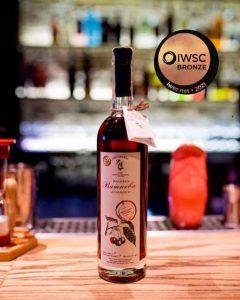
At the International Wine & Spirit Competition (IWSC), one of the most famous and prestigious international competitions in the field of alcoholic beverages, which takes place in London, the jury awarded a bronze medal to Cordial “Cherry Home” from the Ukrainian company Honey Badger.

The family business, founded in 2015, produces traditional drinks according to revived recipes that the brand owners – Yulia Kalenskaya and Artem Skubenko – are looking for throughout Ukraine. Currently, the company plans to enter export markets. And the first steps in this direction have already been taken, as evidenced by the awards received by the brand at international competitions, including a medal at the IWSC.

Honey Badger

The International Wine & Spirit Competition is one of the most famous wine and spirits competitions in the world. The jury members of the competition are leading professionals in the alcohol industry, including producers, sommeliers, distributors, and critics from all over the world. To maintain the high-quality standards of the competition, technical means are improved annually, the criteria for evaluating alcoholic beverages are clarified and toughened. Therefore, the IWSC award is a mark of the international quality standard.

Congratulations to Honey Badger and we wish you new victories!

The drink of a young Ukrainian brand “Honey Badger” was awarded at an international competition.

Tour de France: 10th stage in Savoie

For the 10th stage of the Tour de France this Tuesday July 6, cyclists followed the vineyards of Savoie. A few kilometers to follow in the first half hour before they joined the Isère, then the Drôme to find the vineyard in Valence.


After a day of rest in the high mountains, in Tignes, the Tour de France riders slowly descended. They departed from Albertville, the city that made its mark in 1992 with the Olympic Games and its events spanning one of the largest ski areas in the world. Its brilliant opening ceremony, imagined by choreographer Philippe Decouflé, was also a milestone.

Keep your eye from Fréterive

You had to keep an eye from the start of the stage because the Savoyard vineyard is not huge, with 2,100 hectares, or 1% of the French vineyard. In addition, there was only a small part that was crossed by the Tour. The first vines appeared on the north side of the road, to the right of the racers, a dozen kilometers from Albertville, very quickly, in the town of Fréterive. Immediately after, we saw the castle of Miolans in Saint-Pierre d´Albigny, the village of Saint-Jean de la Porte, then those, still in the middle of the vines, of Cruet and Arbin. This latter terroir is known for producing red wines for aging, made from the Mondeuse grape variety, whose spicy scents evoke Syrah from the Rhône.

Tour de France Savoie

Chignin and Apremont

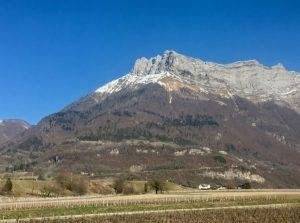
In Montmélian, the vines continue to cover the lower slopes when the road turns slightly to north-west. Very quickly we arrived at Chignin, one of the best-known vineyards for some of its ample whites, the Chignin-Bergeron from the Roussanne grape – another nod to the northern Rhône valley. This was where the panorama opened majestically on the other side of the road: on the left, cyclists discovered Mont Granier whose slopes are home to the vines of Apremont, one of the most popular wines of Savoie. It is lively and fresh, made from the Jacquère grape like its neighbor from the Cluse de Chambéry, Abymes.

Tasting at the stages

It is not known if racers had the opportunity to discover the wine richness of the vineyards they passed through. What we do know is that the Savoie Wines association organized tastings for tourists and admirers in the stopover towns that combined liquid and solid appellations, including the many Savoyard cheeses. For the 9th stage, the CIVS, Interprofessional Committee for Savoie Wines, was in Cluses (Haute-Savoie) and presented the wines of the part of the vineyard located in this department (to the north going towards Lake Geneva) like Ayze. Since Sunday, the stands have been set up in Albertville and have done the same for wines from the Combe de Savoie with cheeses from Beaufort or Abondance. Two estates presented their production there, Pascal Paget from Chignin and Diane Gounel from the aptly named Domaine Vendange in Saint-Pierre d´Albigny.

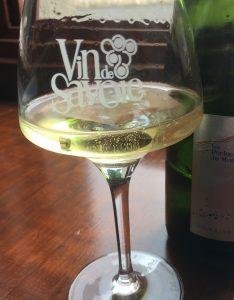
Glass of Savoie white wine

Photo I. Bachelard, CIVS

Based on the material of Terre de Vins

For the 10th stage of the Tour de France this Tuesday July 6, cyclists followed the vineyards of Savoie. A few kilometers to follow in the first half hour before they joined the Isère, then the Drôme to find the vineyard in Valence.

Украина